
“It’s affordable and the schools are solid, but you’re driving everywhere — there’s not much of a ‘downtown’ feel here.” That’s a sentiment you’ll hear echoed across Miami Gardens, a city where family-oriented infrastructure meets the reality of car-dependent suburban life in metro Miami.
Miami Gardens sits as Florida’s largest predominantly African American city, a place with strong community identity and real pride in its schools and residential character. But the emotional experience of living here is shaped by a persistent tension: affordability and space come with tradeoffs in walkable convenience, local dining variety, and the kind of spontaneous social texture that denser neighborhoods offer. For families prioritizing stability, school access, and quieter residential streets, Miami Gardens tends to feel like a solid fit. For individuals expecting walkable errands, vibrant nightlife, or a neighborhood you can explore on foot, the city often feels limiting.
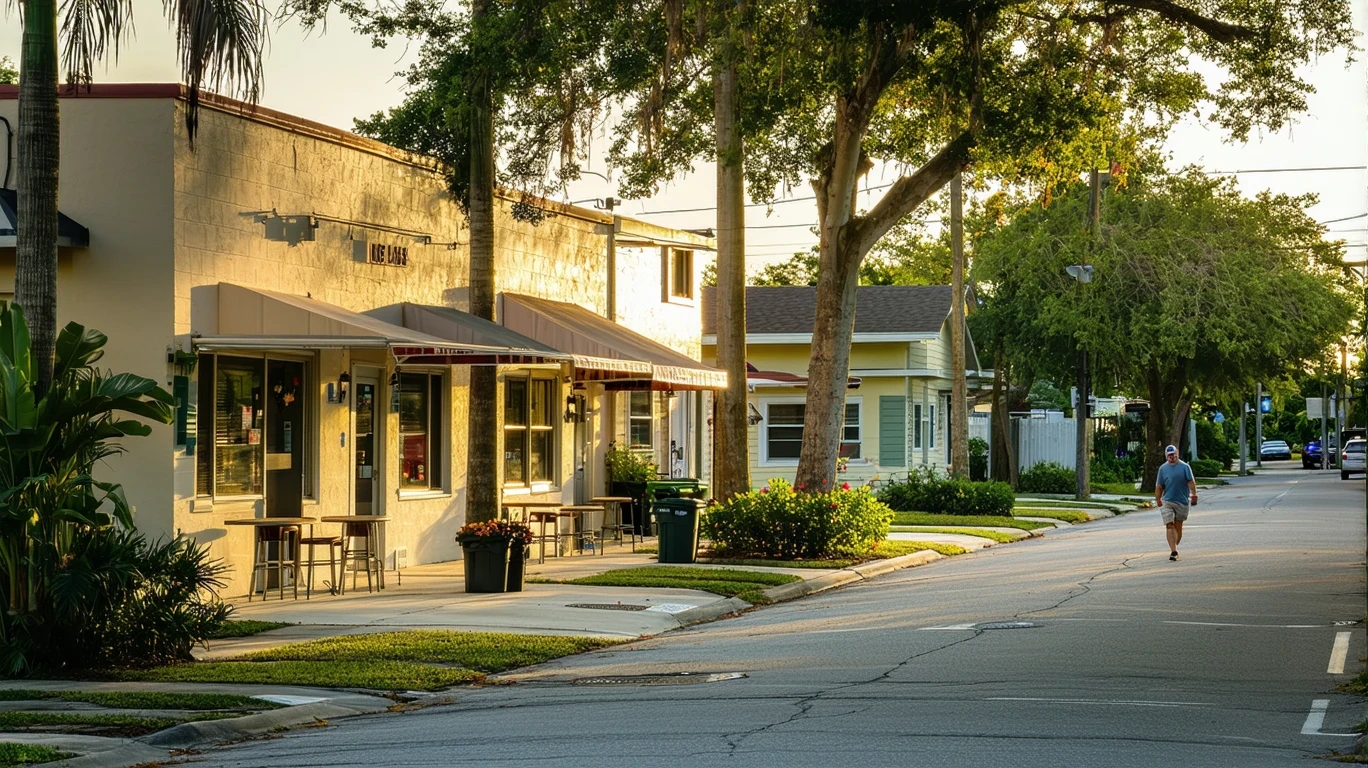
What Shapes the Everyday Feel of Miami Gardens
The structure of daily life here is defined by how people move and where they go for basics. Miami Gardens has rail transit access, which sets it apart from many suburban peers — but the practical utility of that connectivity is constrained by how errands actually work. Food and grocery options are sparse relative to road density, and while some grocery access exists in pockets, the overall pattern requires planning and driving. You’re not walking to grab dinner or picking up milk on the way home from the bus stop.
This creates a rhythm where convenience is tied to car ownership and route familiarity. Households that already operate this way — families with school drop-offs, weekend shopping trips, and structured routines — tend to adapt easily. But for remote workers, young professionals, or anyone hoping to reduce car dependency, the friction becomes a daily presence. The city has moderate pedestrian infrastructure in some areas, and schools are plentiful, but the errands layer doesn’t support a low-friction, walkable lifestyle.
Healthcare access is local and routine-focused: clinics and pharmacies are present, but there’s no hospital within city limits. For regular needs, that works. For emergencies or specialized care, you’re heading elsewhere. It’s a pattern that reinforces the broader theme: Miami Gardens handles the predictable well, but asks you to leave town for the exceptional.
Social Media Buzz in Miami Gardens
Online discussion about Miami Gardens tends to center on identity, pride, and the gap between how residents see the city and how it’s perceived externally. On platforms like Facebook and local community groups, you’ll find strong defensive pride — people pushing back against stereotypes, celebrating local events, and emphasizing the city’s family-friendly character.
But there’s also a recurring thread of frustration about limited local options. “I love my neighborhood, but I’m tired of driving to Aventura or Pembroke Pines for anything decent,” is a common refrain. The tone isn’t angry — it’s more weary acknowledgment. People want more local restaurants, better retail variety, and spaces that feel designed for adults without kids in tow.
Complaints about traffic and commute length show up frequently, especially from residents working in downtown Miami, Fort Lauderdale, or Brickell. “You pay less in rent, but you pay in time on the road,” one commenter noted. The tradeoff is visible and felt daily.
There’s also conversation about change and development — some optimism about new projects, but also caution. “We need more here, but I don’t want it to turn into another overdeveloped mess,” reflects a tension between wanting growth and protecting the residential calm that drew people in the first place.
Local News Tone
Coverage of Miami Gardens tends to frame the city through a lens of civic progress, community events, and ongoing debates about infrastructure and investment. Headlines often reflect these recurring themes:
- “City Leaders Discuss Plans for Commercial Growth”
- “Residents Celebrate Local School Achievements”
- “Community Voices Concerns Over Traffic and Connectivity”
- “New Retail Development Sparks Mixed Reactions”
- “Miami Gardens Works to Define Its Identity in Metro Region”
The tone is generally civic-minded but not celebratory. There’s acknowledgment of challenges — particularly around economic development, retail gaps, and the need for more local amenities — but also recognition of strengths like school quality and community engagement. The city is often portrayed as “working toward” rather than “having arrived,” which mirrors how many residents describe their own experience.
Review-Based Public Perception
Public reviews of Miami Gardens — whether on Google, Yelp, or neighborhood platforms — reveal a pattern: people who wanted suburban affordability and family infrastructure tend to feel satisfied, while those who expected walkable convenience or vibrant social options feel disappointed.
Positive reviews emphasize space, safety in certain neighborhoods, and school access. “Great place to raise kids — quiet streets, good schools, and you’re still close to everything in Miami,” is a typical comment. Families with young children and structured routines often describe the city as exactly what they needed.
Neutral-to-critical reviews focus on the lack of local dining, limited nightlife, and the need to drive for nearly everything. “It’s fine if you have a car and don’t mind driving 20 minutes for dinner, but it’s not a place where you can just walk around and discover things,” one reviewer wrote. The expectation mismatch is clear: people hoping for texture and spontaneity often feel the city falls short.
There’s also mention of neighborhood variation. Newer planned areas tend to feel more polished and maintained, while older pockets can feel neglected or overlooked. This creates uneven experiences depending on where exactly you land within city limits.
Comparison to Nearby Cities
| Dimension | Miami Gardens | Pembroke Pines | North Miami Beach |
|---|---|---|---|
| Overall Vibe | Residential, family-focused, car-dependent | Polished suburban, more retail variety | Denser, more walkable pockets, urban edge |
| Walkable Errands | Sparse, requires planning and driving | Moderate, some walkable centers | Better access, more neighborhood options |
| Dining & Nightlife | Limited local options, drive elsewhere | More chain and local variety | Greater variety, more independent spots |
| Community Feel | Strong identity, civic pride | Suburban comfort, less distinct identity | More transient, diverse, less cohesive |
| Commute Burden | Long for downtown Miami workers | Moderate, central Broward location | Shorter to Miami core, denser traffic |
Miami Gardens offers a distinct tradeoff: you get affordability, space, and strong school access, but you sacrifice walkable convenience and local variety. Pembroke Pines feels more polished and offers better retail and dining options, but it lacks the community identity and cultural specificity that Miami Gardens residents value. North Miami Beach provides more urban texture and walkability, but it’s denser, more expensive, and less family-oriented in character.
If you prioritize residential calm, school quality, and don’t mind driving for errands and entertainment, Miami Gardens makes sense. If you want more spontaneous access to dining, nightlife, and walkable neighborhoods, you’ll likely feel constrained here and might prefer North Miami Beach. If you want suburban comfort with better retail variety but less cultural identity, Pembroke Pines could be a better match.
What Locals Are Saying
“We moved here for the schools and the space, and we got exactly that. It’s quiet, the neighbors are friendly, and my kids are thriving. But yeah, we drive everywhere — that’s just how it is.”
— Parent of two, longtime resident
“I work remotely and I’m going a little stir-crazy. There’s nowhere to just walk to for coffee or lunch. I end up driving to Aventura or Wynwood on weekends just to feel like I’m around people.”
— Remote worker, moved during pandemic
“It’s affordable, and that matters. I can actually save money here, which I couldn’t do in Brickell or Coral Gables. The tradeoff is I’m in my car a lot, but I knew that coming in.”
— Young professional, renting
“The city gets a bad rap, but honestly, my street is clean, my neighbors look out for each other, and I feel safe. I just wish we had more local restaurants and things to do without leaving town.”
— Retiree, homeowner
“I love the community pride here — people really care about Miami Gardens. But I do think we’re overlooked compared to other parts of the metro. We deserve better investment and more options.”
— Civic-minded resident, active in local groups
“It’s fine for now, but I don’t see myself staying long-term. I want to be somewhere with more going on, where I don’t have to plan every errand like a mission.”
— Newcomer, early 30s
“If you’re raising a family and you want space without paying Coral Gables prices, this is a smart choice. Just make sure you’re okay with driving — because you will be.”
— Parent, moved from Hialeah
Does Miami Gardens Feel Like a Good Fit?
Miami Gardens works best for households that value residential stability, school access, and affordability within metro Miami — and who are comfortable with car-dependent routines. Families with structured schedules, parents prioritizing education, and residents who don’t mind driving for errands and entertainment tend to feel aligned with what the city offers.
It tends to frustrate individuals expecting walkable convenience, spontaneous social options, or vibrant local dining and nightlife. Remote workers, young professionals seeking texture, and anyone hoping to reduce car dependency often feel the friction of limited local access and the need to leave town for variety.
The city’s emotional profile is shaped by pride, affordability, and strong community identity — but also by the gap between what residents want locally and what’s currently available. If you’re deciding whether Miami Gardens fits your life, consider how much weight you place on housing pressure versus walkable access, and whether you’re willing to trade convenience for space and savings. For a clearer picture of where money goes and how daily routines shape costs, exploring the full financial and lifestyle requirements can help you predict whether this city will feel like home — or just a place you’re passing through.
How this article was built: In addition to public economic data, this article incorporates location-based experiential signals derived from anonymized geographic patterns—such as access density, walkability, and land-use mix—to reflect how day-to-day living actually feels in Miami Gardens, FL.
The perspectives shown reflect commonly expressed local sentiment and recurring themes in public discussion, rather than individual accounts.