

Miami Gardens vs Miami, 2026: Lower home prices but longer commutes. Walkable errands vs car-dependent grocery runs. Hospital access vs clinic-only care. Vertical density vs mixed residential blocks. Same metro, same humidity, completely different cost structures.
People compare Miami Gardens and Miami because they’re both in the Miami-Fort Lauderdale metro, share the same tropical climate and regional economy, yet deliver fundamentally different experiences of where cost pressure concentrates. Miami Gardens offers more accessible homeownership entry points and strong school infrastructure, but daily logistics lean heavily on cars and longer commutes. Miami provides denser urban amenities, shorter average commutes, and walkable access to groceries and healthcare, but housing entry barriers sit significantly higher. The decision isn’t about which city costs less overall—it’s about which cost structure aligns with how your household actually operates in 2026.
This comparison focuses on mechanism, not math. Where does each city front-load costs? Where does ongoing exposure accumulate? Which households feel the difference most acutely, and why? The answers depend on whether you prioritize housing entry affordability, daily convenience without a car, commute time, or access to full-service healthcare.
Housing Costs
Miami Gardens and Miami present opposing housing trade-offs within the same metro region. Miami Gardens shows a median home value of $299,700 and median gross rent of $1,583 per month. Miami’s median home value sits at $433,900, with median gross rent at $1,494 per month. These figures reveal different cost structures: Miami Gardens concentrates pressure at the rental stage but lowers the barrier to homeownership, while Miami raises the entry threshold for buyers but shows slightly lower median rent.
The difference matters most for first-time buyers and families seeking space. Miami Gardens’ lower home values make down payments and mortgage qualification more accessible, particularly for households with steady income but limited savings. The mixed-height building character and residential-commercial land use mix support a range of housing types, from single-family homes to smaller multifamily buildings. Miami’s more vertical urban form and higher home values shift pressure toward renters and those prioritizing proximity to walkable amenities over square footage. Rent in Miami may appear lower at the median, but availability, competition, and unit size vary significantly across neighborhoods.
For renters, Miami Gardens’ higher median rent reflects a market where single-family rentals and larger units dominate, increasing per-unit costs but also providing more space per dollar. Miami’s rental market includes more compact apartments and denser buildings, which can lower headline rent but also reduce living space and privacy. Families managing children, remote work setups, or multi-generational households often find Miami Gardens’ housing stock better suited to their spatial needs, even if monthly rent runs higher. Singles and couples prioritizing walkability and shorter commutes may accept Miami’s smaller units in exchange for reduced transportation time and car dependence.
| Housing Type | Miami Gardens | Miami |
|---|---|---|
| Median Home Value | $299,700 | $433,900 |
| Median Gross Rent | $1,583/month | $1,494/month |
| Typical Housing Form | Mixed single-family and low-rise multifamily | More vertical, denser apartment buildings |
Housing takeaway: Households prioritizing homeownership entry and larger living spaces face lower barriers in Miami Gardens, where home values and down payment requirements sit more accessibly. Renters seeking walkable neighborhoods and shorter commutes may find Miami’s denser, more vertical housing stock better aligned with their priorities, even if per-square-foot costs run higher. The decision hinges on whether housing pressure concentrates at entry (favoring Miami Gardens) or ongoing logistics and commute friction (favoring Miami).
Utilities and Energy Costs
Both cities share identical electricity rates at 15.92¢/kWh and natural gas pricing at $23.62/MCF, reflecting their position within the same regional utility infrastructure and climate zone. This eliminates rate-based differences and shifts focus entirely to usage patterns, housing stock, and household behavior. In South Florida’s extended cooling season, air conditioning dominates utility exposure for most of the year, with heating needs limited to rare cool snaps.
Miami Gardens’ mixed building height and prevalence of single-family homes create different thermal dynamics than Miami’s more vertical, denser apartment buildings. Larger standalone homes in Miami Gardens expose households to higher baseline cooling loads due to greater exterior surface area, more windows, and often older construction with less efficient insulation. Families occupying these homes during peak summer months face sustained high usage, even with thermostat discipline. Miami’s apartment-dominant housing stock benefits from shared walls, reduced exterior exposure, and newer construction standards in many buildings, which can lower per-unit cooling costs despite identical rates.
Household size and home age interact directly with utility predictability. Single adults or couples in Miami’s compact apartments experience more stable, lower usage even during peak heat. Families with children in Miami Gardens’ larger homes face higher volatility, as cooling needs scale with square footage and occupancy patterns (children home during summer break, multiple rooms in use). Older single-family homes in Miami Gardens may lack modern insulation, efficient windows, or updated HVAC systems, amplifying seasonal spikes. Renters in both cities have limited control over structural efficiency, but Miami’s denser, newer housing stock reduces exposure to the most inefficient building types.
Utility cost pressure in both cities is less about rates and more about housing form, occupancy, and control. Miami Gardens households managing larger homes face higher ongoing cooling costs and less predictability, particularly in older construction. Miami households in apartments or newer buildings experience more stable usage, though individual unit conditions vary. Neither city offers a clear advantage in utility costs—the difference lies in how housing type and household size interact with South Florida’s relentless cooling season.
Utility takeaway: Households in larger, older single-family homes (more common in Miami Gardens) experience higher cooling exposure and less predictability during the extended summer season. Those in compact, newer apartments (more prevalent in Miami) benefit from shared-wall efficiency and lower baseline usage. The primary driver isn’t the rate—it’s the housing stock and how much conditioned space the household occupies.
Groceries and Daily Expenses
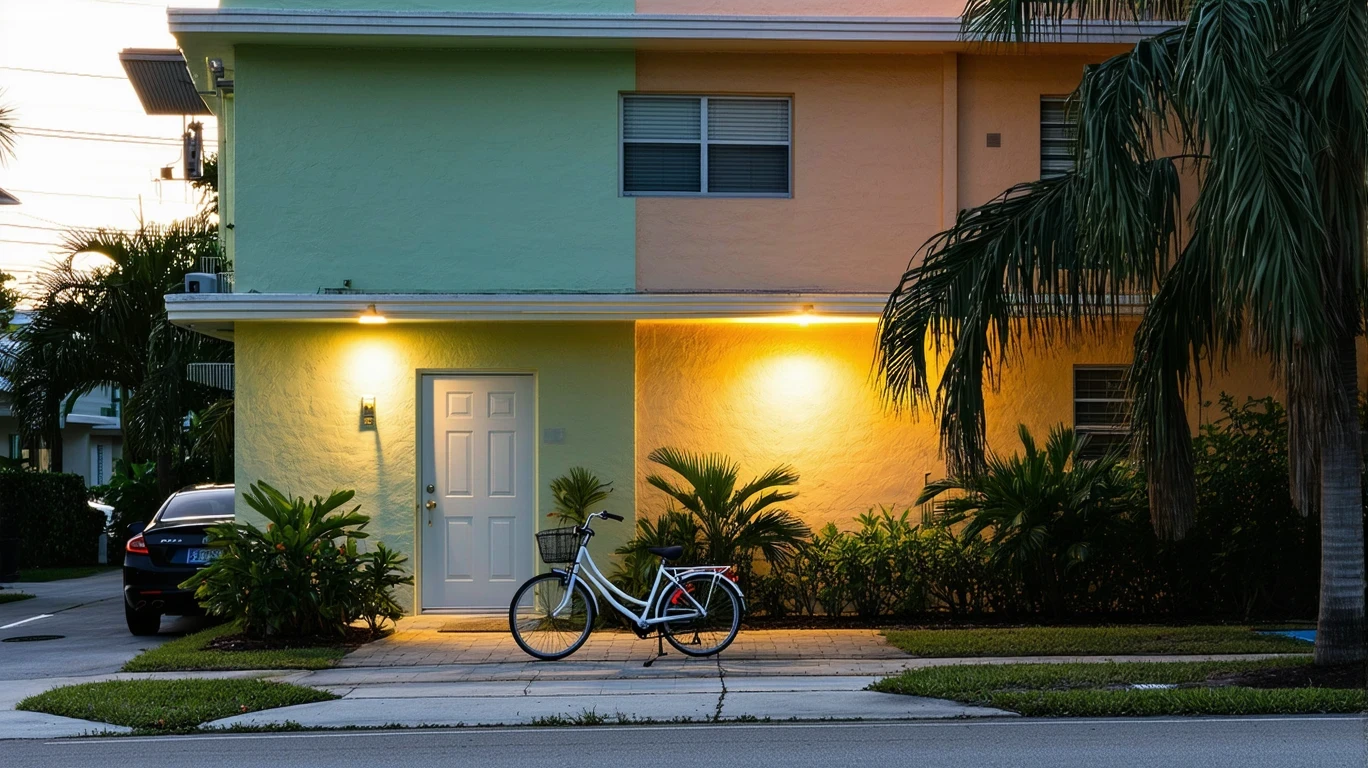
Miami Gardens and Miami diverge sharply in how households access groceries and manage daily spending, driven by differences in store density, walkability, and convenience infrastructure. Miami Gardens shows sparse food and grocery accessibility, with establishments spread across corridors and commercial zones that require intentional car trips. Miami’s broadly accessible food and grocery density means more options within walking or short driving distance, reducing the friction of restocking staples and increasing exposure to impulse purchases and convenience spending.
In Miami Gardens, grocery shopping tends to consolidate into fewer, larger trips. Households plan around big-box stores or regional supermarkets, often driving several miles and stocking up to minimize frequency. This pattern favors bulk buying and reduces per-item costs, but it also demands more upfront cash flow, larger pantry and refrigerator capacity, and reliable transportation. Families with predictable meal routines and storage space benefit from this structure. Singles or couples in smaller apartments face more friction: fewer nearby options, less storage, and higher reliance on cars even for small top-up runs.
Miami’s denser food landscape supports more frequent, smaller shopping trips. Walkable access to grocery stores, corner markets, and prepared food options reduces the need for bulk purchasing but increases exposure to convenience spending. Grabbing a coffee, picking up a rotisserie chicken, or stopping for takeout becomes easier and more habitual. This flexibility benefits households with unpredictable schedules or limited storage, but it also raises the risk of spending creep—small, frequent purchases that add up faster than planned bulk buys.
Dining out and prepared food access follow the same pattern. Miami Gardens’ car-oriented layout concentrates restaurants along major corridors, making casual dining a deliberate outing rather than a spontaneous option. Miami’s walkable blocks and higher density of cafes, food trucks, and quick-service spots increase the temptation to eat out or order in, particularly for households without the time or space to cook regularly. Families managing children and structured meal schedules may find Miami Gardens’ layout easier to navigate without constant convenience temptation. Singles and dual-income couples working long hours may value Miami’s access to quick, walkable food options, even if it costs more over time.
Grocery takeaway: Households with storage space, predictable routines, and cars benefit from Miami Gardens’ bulk-buying structure, which lowers per-item costs but demands more planning and transportation. Those prioritizing walkable convenience and flexibility may prefer Miami’s denser food access, though it increases exposure to frequent, smaller purchases and dining-out temptation. The cost difference is less about prices and more about how access shapes spending habits.
Taxes and Fees
Both Miami Gardens and Miami operate under Florida’s tax structure: no state income tax, reliance on property taxes to fund local services, and a statewide sales tax base with local additions. This shared framework means the primary differences emerge in property tax exposure (driven by assessed home values), local fees, and the prevalence of homeowners association (HOA) dues in different housing types.
Property taxes in both cities are calculated on assessed home values, so Miami’s higher median home value of $433,900 translates to higher annual property tax bills compared to Miami Gardens’ $299,700 median. Homeowners in Miami face greater ongoing tax obligations, even if millage rates are similar. This difference compounds over time, particularly for long-term residents who remain in the same home as assessments adjust. Renters in both cities experience property taxes indirectly, as landlords factor them into rent, but the visibility and control differ: Miami renters may see higher baseline rents partly driven by landlords’ higher tax burdens.
HOA fees vary by housing type and neighborhood. Miami Gardens’ mixed single-family and low-rise multifamily housing stock includes many properties without HOA obligations, reducing recurring fees for homeowners who prioritize autonomy over bundled services. Miami’s more vertical, denser developments often include condos and planned communities with mandatory HOA fees covering building maintenance, shared amenities, insurance, and landscaping. These fees add predictability (services are bundled) but also reduce flexibility (fees are non-negotiable and can increase). Families seeking lower fixed costs and more control over maintenance spending may prefer Miami Gardens’ prevalence of standalone homes. Households valuing convenience and offloaded maintenance responsibilities may accept Miami’s higher HOA prevalence.
Local fees—trash collection, water, stormwater management, parking permits—vary by jurisdiction and housing type but generally remain modest in both cities. Miami’s denser urban form can introduce parking fees or permit costs in certain neighborhoods, particularly near commercial districts or transit hubs. Miami Gardens’ car-oriented layout reduces parking friction but may require higher transportation spending to access services. Neither city imposes unusual or outsized local fees compared to regional norms, so the tax and fee difference primarily hinges on property tax exposure and HOA structure.
Tax and fee takeaway: Homeowners in Miami face higher property tax obligations due to elevated home values, while Miami Gardens’ lower median home prices reduce ongoing tax exposure. HOA fees are more prevalent in Miami’s denser, vertical housing stock, adding predictability but reducing control. Households prioritizing lower fixed costs and autonomy benefit from Miami Gardens’ standalone housing options, while those valuing bundled services and reduced maintenance responsibility may accept Miami’s higher HOA prevalence.
Transportation & Commute Reality
Miami Gardens and Miami both offer rail transit service, but the cities diverge sharply in how residents actually move through daily life. Miami Gardens shows an average commute time of 32 minutes, with 60.4% of workers experiencing long commutes and only 9.9% working from home. Gas prices sit at $4.09 per gallon. Miami’s average commute runs 28 minutes, with 47.0% facing long commutes, 8.0% working from home, and gas at $3.88 per gallon. These differences reflect not just distance, but the friction of car dependence versus walkable access.
Miami Gardens’ mixed pedestrian-to-road ratio and sparse daily errands accessibility mean most households rely heavily on cars for groceries, errands, healthcare, and commuting. Even with rail service present, the layout of residential neighborhoods and commercial corridors makes walking or biking impractical for routine tasks. Families managing school drop-offs, grocery runs, and medical appointments face compounding car dependence, where every trip requires planning, fuel, and time. The 60.4% long-commute rate signals that many workers travel well beyond the city limits, likely to jobs in Miami, Fort Lauderdale, or other metro hubs. This pattern increases fuel costs, vehicle wear, and time lost to traffic.
Miami’s walkable pockets and notable bike infrastructure reduce car reliance for many daily tasks. Broadly accessible food and grocery density means households can walk or bike to restock staples, grab coffee, or pick up prescriptions without starting the car. The 28-minute average commute and lower long-commute percentage suggest more workers live closer to job centers or benefit from transit options that actually connect to employment hubs. Singles and couples without children often find Miami’s layout eliminates the need for a second car, or even a first one in some neighborhoods. Families with children still rely on cars for school and activities, but shorter trip distances and walkable errands reduce cumulative time and fuel costs.
The transportation difference isn’t just about commute minutes—it’s about how much of daily life requires a car. Miami Gardens households face higher baseline car dependence, even for routine errands, which compounds fuel costs, maintenance, insurance, and time. Miami households in walkable neighborhoods can offload some trips to walking or biking, reducing both cash outflow and schedule friction. Neither city eliminates the need for a car entirely, but Miami’s infrastructure reduces how often you need to use it.
Cost Structure Comparison
Housing pressure dominates differently in each city. Miami Gardens front-loads affordability at the homeownership entry point, with lower home values reducing down payment and mortgage qualification barriers. Ongoing costs—larger homes, higher cooling exposure, longer commutes—accumulate over time. Miami concentrates pressure at the entry stage, with higher home values and competitive rental markets raising the threshold to secure housing. Once inside, denser buildings, walkable errands, and shorter commutes reduce ongoing friction and transportation costs.
Utilities introduce similar exposure in both cities due to identical rates and shared climate, but housing stock determines actual impact. Miami Gardens’ prevalence of single-family homes increases cooling loads and volatility, particularly for families in older construction. Miami’s apartment-dominant stock and newer buildings deliver more predictable, lower baseline usage. The difference isn’t the rate—it’s the building type and how much conditioned space the household occupies.
Daily living and groceries shift cost pressure from prices to access. Miami Gardens’ sparse food accessibility forces car-dependent bulk shopping, which lowers per-item costs but demands storage, transportation, and planning. Miami’s broadly accessible grocery and food density enables frequent, smaller trips and walkable convenience, but increases exposure to impulse purchases and dining-out creep. Families with predictable routines benefit from Miami Gardens’ bulk structure. Singles and dual-income couples value Miami’s flexibility, even if convenience costs more.
Transportation patterns create the starkest behavioral difference. Miami Gardens’ 32-minute average commute, 60.4% long-commute rate, and car-dependent errands mean most households spend significant time and fuel moving through daily life. Miami’s 28-minute average commute, lower long-commute percentage, and walkable infrastructure reduce both time and cash outflow for transportation. The gap compounds for families managing multiple trips daily—school, work, groceries, activities—where Miami Gardens’ layout adds friction and Miami’s density removes it.
The better choice depends on which costs dominate the household. Households sensitive to housing entry barriers and prioritizing homeownership may prefer Miami Gardens, accepting higher transportation and utility exposure in exchange for accessible home values. Households sensitive to time costs, commute friction, and car dependence may prefer Miami, accepting higher housing entry thresholds in exchange for walkable convenience and shorter daily trip distances. For families, the decision often hinges on whether space and school access (Miami Gardens) outweigh commute time and errands friction (Miami). For singles and couples, walkability and convenience (Miami) often outweigh the appeal of lower home prices in a car-dependent layout (Miami Gardens).
How the Same Income Feels in Miami Gardens vs Miami
Single Adult
Housing becomes the first non-negotiable, and Miami’s higher home values or competitive rental market can consume a larger share of gross income upfront, leaving less flexibility for discretionary spending. Miami Gardens offers lower housing entry costs, but car dependence eliminates the savings: fuel, insurance, and maintenance become unavoidable. Flexibility exists in Miami through walkable errands and the option to skip car ownership entirely in some neighborhoods, reducing fixed transportation costs. In Miami Gardens, the car is non-negotiable, and longer commutes add time costs that compress evenings and weekends, even if rent runs lower.
Dual-Income Couple
Housing entry in Miami demands more combined savings for down payments or deposits, but shorter commutes and walkable errands free up time for both partners to work, exercise, or manage household tasks without constant driving. Miami Gardens’ lower home prices ease the entry barrier, but both partners likely need cars if they work in different parts of the metro, doubling transportation exposure. Flexibility disappears faster in Miami Gardens when both partners face long commutes and car-dependent errands, compressing time for cooking, fitness, or leisure. In Miami, walkable access to groceries and services reduces the need for constant trip planning, even if housing costs sit higher.
Family with Kids
Housing space becomes non-negotiable first, and Miami Gardens’ lower home values and larger single-family stock provide more room for children, home offices, and storage without stretching budgets as far. Miami’s higher home values and smaller units force tradeoffs between space and location, often pushing families toward longer commutes or accepting less square footage. School access and family infrastructure are present in both cities, but Miami Gardens’ car-dependent layout means every school drop-off, activity, and grocery run requires driving, compounding fuel and time costs. Miami’s walkable pockets and denser amenities reduce some trip friction, but families still rely on cars for most logistics, and parking, traffic, and density add their own friction. The role of commute friction and errands logistics determines which city feels more sustainable: Miami Gardens offers space but demands constant driving, while Miami offers convenience but raises housing entry barriers and compresses living space.
Decision Matrix: Which City Fits Which Household?
| Decision factor | If you’re sensitive to this… | Miami Gardens tends to fit when… | Miami tends to fit when… |
|---|---|---|---|
| Housing entry + space needs | Down payment size, mortgage qualification, square footage per dollar | You prioritize accessible homeownership and larger living spaces over proximity to walkable amenities | You prioritize location and accept smaller units or higher entry costs in exchange for walkable access and shorter commutes |
| Transportation dependence + commute friction | Time spent commuting, fuel costs, car reliance for errands | You accept longer commutes and car dependence in exchange for lower housing entry costs and more space | You prioritize shorter commutes and walkable errands, reducing car reliance and time lost to traffic |
| Utility variability + home size exposure | Cooling costs, building efficiency, predictability of monthly bills | You manage larger homes and accept higher cooling exposure in exchange for space and lower housing entry costs | You occupy compact apartments or newer buildings, benefiting from shared-wall efficiency and lower baseline usage |
| Grocery strategy + convenience spending creep | Bulk buying vs frequent trips, walkable access vs car-dependent shopping | You plan bulk shopping trips, have storage space, and avoid convenience spending through intentional routines | You value walkable access to groceries and prepared food, accepting higher exposure to frequent, smaller purchases |
| Fees + friction costs (HOA, services, upkeep) | Ongoing fixed costs, control over maintenance, bundled vs unbundled services | You prefer standalone homes with lower HOA prevalence, accepting more maintenance responsibility for lower fixed costs | You accept higher HOA fees in denser buildings, valuing bundled services and reduced maintenance responsibility |
| Time budget (schedule flexibility, errands, logistics) | Daily trip planning, errand consolidation, time lost to driving | You consolidate errands into fewer car trips and accept longer commutes in exchange for housing affordability and space | You reduce daily driving through walkable errands and shorter commutes, freeing time for work, fitness, or leisure |
Lifestyle Fit
Miami Gardens and Miami offer distinct lifestyle textures shaped by urban form, mobility infrastructure, and access to amenities. Miami Gardens’ mixed building height and residential-commercial land use create a suburban feel with pockets of walkability, but most daily life requires a car. The city’s strong school infrastructure supports families, and moderate park density provides outdoor access, though water features and green spaces are present rather than integrated throughout. Rail transit exists, but the car-oriented layout means most residents drive for groceries, healthcare, and recreation. Families seeking space, school access, and a quieter residential environment often find Miami Gardens’ structure aligns with their priorities, even if it demands more driving.
Miami’s walkable pockets, notable bike infrastructure, and more vertical urban form create a denser, faster-paced environment where daily errands, dining, and recreation happen within shorter distances. Broadly accessible food and grocery options mean less reliance on cars for routine tasks, and integrated park density with water features provides more spontaneous outdoor access. Hospital presence and denser healthcare infrastructure reduce the need to travel far for medical care. The city’s college-town character adds cultural and recreational variety, with more nightlife, dining, and entertainment options within walking or short driving distance. Singles, couples, and young professionals often prioritize Miami’s walkability and convenience, while families weigh the tradeoff between smaller living spaces and reduced commute friction.
Commute times and transportation flexibility shape daily routines differently in each city. Miami Gardens’ 32-minute average commute and 60.4% long-commute rate mean many residents spend significant time traveling to work, often outside the city. The car-dependent layout compounds this with additional driving for errands and activities, leaving less discretionary time. Miami’s 28-minute average commute and lower long-commute percentage reflect more workers living closer to job centers or benefiting from transit options that connect to employment hubs. Walkable errands and bike infrastructure reduce the need to drive for every task, freeing up time and reducing transportation costs. Households managing tight schedules—dual-income couples, parents juggling work and school drop-offs—often feel the time savings more acutely in Miami, even if housing costs sit higher.
Miami Gardens: Strong school density supports families, with moderate park access and water features providing outdoor options. Miami: Hospital presence and integrated park density deliver more immediate access to healthcare and recreation, with walkable blocks reducing the need for constant driving.
Frequently Asked Questions
Is Miami Gardens or Miami cheaper for renters in 2026?
Miami shows a median gross rent of $1,494 per month compared to Miami Gardens’ $1,583 per month, but the difference reflects housing type more than affordability. Miami Gardens’ rental market includes more single-family homes and larger units, which raise per-unit costs but provide more space. Miami’s denser apartment stock lowers headline rent but often delivers smaller units with less privacy. Renters prioritizing space and quieter neighborhoods may find Miami Gardens’ higher rent justified, while those valuing walkability and shorter commutes may accept Miami’s compact units. The decision depends on whether space or location matters more, not which city costs less overall.
How do commute costs compare between Miami Gardens and Miami in 2026?
Miami Gardens shows a 32-minute average commute, 60.4% long-commute rate, and gas prices at $4.09 per gallon, while Miami’s 28-minute average commute, 47.0% long-commute rate, and $3.88 per gallon gas prices reflect shorter trip distances and less car dependence. Miami Gardens’ car-oriented layout means most households drive for work, errands, and activities, compounding fuel and time costs. Miami’s walkable infrastructure and denser job centers reduce the need to drive for every task, lowering both transportation spending and time lost to traffic. Households managing multiple daily trips—work, school, groceries—feel the commute difference more acutely, as Miami Gardens’ layout adds friction and Miami’s density removes it.
Which city is better for families: Miami Gardens or Miami in 2026?
Miami Gardens offers lower home values at $299,700, larger single-family housing stock, and strong school density, making it easier for families to secure space and access family-oriented infrastructure. Miami’s higher home values at $433,900 and denser, more vertical housing stock raise entry barriers and reduce square footage per dollar, but shorter commutes and walkable errands reduce daily logistics friction. Families prioritizing homeownership entry, space, and school access often prefer Miami Gardens, accepting longer commutes and car dependence. Families valuing time savings, walkable convenience, and reduced driving may prefer Miami, accepting higher housing costs and smaller units. The better fit depends on whether space or logistics friction dominates the household’s priorities.
Do utilities cost more in Miami Gardens or Miami in 2026?
Both cities share identical electricity rates at 15.92¢/kWh and natural gas prices at $23.62/MCF, so utility costs depend entirely on housing type, size, and efficiency rather than rates. Miami Gardens’ prevalence of single-family homes increases cooling exposure due to larger square footage and more exterior surface area, particularly in older construction. Miami’s denser apartment stock benefits from shared walls and newer building standards, reducing baseline usage and volatility. Families in larger homes face higher ongoing cooling costs in Miami Gardens, while singles and couples in compact apartments experience more predictable, lower usage in Miami. The difference is driven by housing form, not the rate structure.
How does grocery shopping differ between Miami Gardens and Miami in 2026?
Miami Gardens shows sparse food and grocery accessibility, requiring car trips to regional supermarkets or big-box stores, which favors bulk buying and reduces per-item costs but demands storage and transportation. Miami’s broadly accessible grocery density enables walkable or short-distance shopping, supporting frequent, smaller trips and reducing the need for bulk purchasing. Households with storage space, predictable routines, and cars benefit from Miami Gardens’ structure, while those prioritizing convenience and flexibility prefer Miami’s walkable access. The cost difference emerges less from prices and more from how access shapes spending habits: Miami Gardens encourages planned bulk trips, while Miami increases exposure to frequent convenience purchases and dining-out temptation.
Conclusion
Miami Gardens and Miami present opposing cost structures within the same metro region, shaped by housing form, mobility infrastructure, and access to daily amenities. Miami Gardens delivers lower housing entry barriers, larger living spaces, and strong family infrastructure, but demands higher car dependence, longer commutes, and greater exposure to transportation and utility costs. Miami raises housing entry thresholds and compresses living space, but reduces commute friction, enables walkable errands, and provides denser access to healthcare, groceries, and recreation. Neither city costs less overall—the difference lies in where pressure concentrates and which households feel it most.
Households prioritizing homeownership entry, space, and school access often