
McKinney sits in the Dallas metro with a median home value of $400,400 and median rent of $1,740 per month—figures that reflect costs roughly 18% above the national baseline. For newcomers weighing where money goes each month, the rent-versus-buy decision here isn’t just about mortgage math; it’s about understanding how McKinney’s suburban structure, car-dependent errands, and limited walkable density shape long-term housing exposure. This article breaks down what drives housing costs in McKinney, how renting and owning differ in practice, and which households fit the city’s cost profile.
The Housing Market in McKinney Today
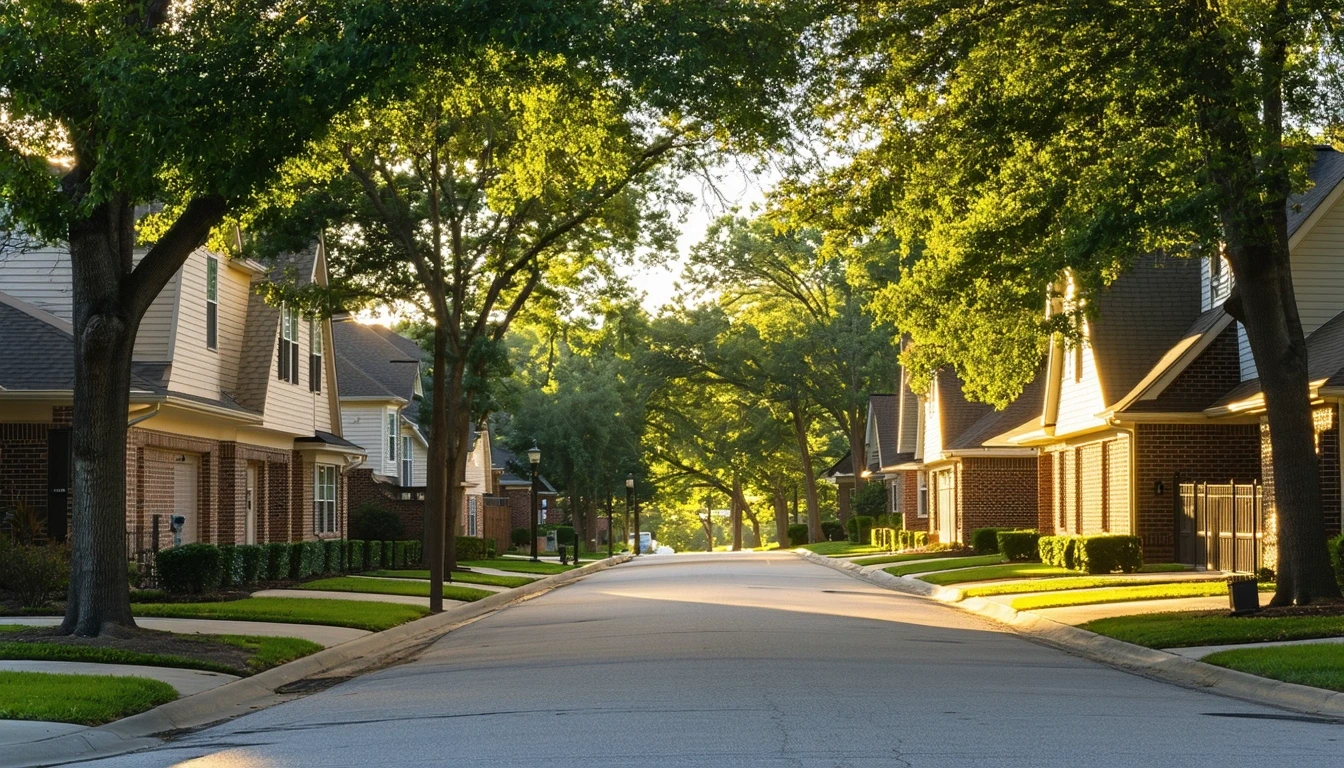
McKinney’s housing market serves dual-income households, retirees, and commuters drawn to the Dallas metro’s outer suburbs. The $400,400 median home value positions McKinney as a moderately expensive ownership market, while the $1,740 median rent reflects demand from households prioritizing flexibility or saving toward a down payment. What newcomers often misunderstand is that McKinney’s cost structure isn’t shaped by dense urban amenities or transit access—it’s shaped by space, car dependency, and corridor-clustered commercial development. The city’s mixed pedestrian infrastructure and limited family-oriented density mean that both renters and owners rely heavily on vehicles for errands, school runs, and healthcare visits. This car-first layout doesn’t penalize ownership directly, but it does mean that housing location matters less for walkability and more for commute tolerance and highway access.
McKinney’s designation as a retirement city adds another layer: the housing stock attracts equity-holding retirees seeking suburban quiet and routine healthcare access, which supports price stability but also limits turnover in the ownership market. For renters, this means fewer single-family rental options and more reliance on apartment complexes clustered near commercial corridors. The result is a housing market where ownership is the long-term default for most households, and renting functions primarily as a transitional phase or a flexibility strategy.
Renting in McKinney
At $1,740 per month, McKinney’s median gross rent sits well above the national baseline, reflecting the city’s position within the Dallas metro and its appeal to commuters and pre-ownership households. Rental pressure here is driven less by scarcity and more by the fact that most rental stock is apartment-based, clustered along commercial corridors where food and grocery options are moderately accessible. Renters who prioritize walkable errands or transit access will find McKinney’s structure limiting—most daily trips require a car, and the mixed pedestrian infrastructure means that even well-located apartments don’t eliminate driving for groceries, healthcare, or family needs.
For renters, location choice in McKinney is less about neighborhood walkability and more about commute direction and proximity to highway access. Those working in Dallas or Plano will find that rental affordability trades off against drive time, and the city’s corridor-clustered errands mean that convenience is more about parking lot access than foot traffic. Renters should also expect that utilities—especially electricity during McKinney’s extended cooling season—add meaningful monthly exposure beyond the base rent figure. The city’s hot summers drive air conditioning usage for months on end, and apartment renters often face less control over insulation quality or thermostat efficiency than single-family renters or owners.
Rental volatility in McKinney follows broader Dallas metro trends: lease renewals can shift meaningfully year over year, and renters have limited leverage to stabilize costs beyond locking in longer lease terms. For households earning near or above the $113,286 median household income, rent at $1,740 per month represents a manageable but not trivial share of gross income. For single earners or households below the median, rent can become the dominant cost driver, especially when combined with car dependency and utility exposure.
Owning a Home in McKinney
Ownership in McKinney centers on the $400,400 median home value, a figure that reflects the city’s suburban appeal, space availability, and proximity to Dallas employment centers. For buyers, this price point demands either substantial equity or dual-income stability, and it positions McKinney as a market where ownership is a long-term commitment rather than a speculative entry. What distinguishes ownership here from renting isn’t just the upfront cost—it’s the shift in exposure. Owners take on property taxes, maintenance, insurance, and in many cases HOA fees, all of which behave differently than rent over time.
Property taxes in Texas are a structural reality, and while the specific rate isn’t provided in the data, buyers should expect that annual tax bills represent a significant and recurring cost that rises with assessed home values. Unlike rent, which resets at lease renewal, property taxes compound over time as assessments adjust, and owners have limited control over this exposure beyond appealing valuations or voting on local levies. Maintenance is another ownership-specific cost that varies with home age, climate exposure, and build quality. McKinney’s hot summers stress roofing, HVAC systems, and exterior materials, and owners bear the full cost of replacement and repair without the landlord buffer that renters enjoy.
HOA presence in McKinney varies by neighborhood, and buyers should verify whether a given property falls under HOA governance. Where HOAs exist, they can bundle landscaping, amenity access, and exterior maintenance, but they also introduce monthly fees and rule enforcement that some buyers find restrictive. For retirees or low-maintenance households, HOA-managed communities can reduce upkeep burden; for families or hands-on owners, they can feel like an added layer of cost and control loss.
Insurance costs in McKinney reflect Texas weather exposure—particularly hail, wind, and occasional severe storms—and buyers should expect that premiums vary with home age, roof condition, and coverage limits. Ownership also introduces the possibility of major capital expenses (roof replacement, HVAC failure, foundation issues) that renters never face, and these costs don’t follow a predictable schedule. The tradeoff is control: owners can invest in efficiency upgrades, lock in fixed-rate financing, and build equity, but they also absorb all volatility and long-term risk.
Apartment vs House in McKinney — Cost Behavior Comparison
| Expense Category | Apartment | House |
|---|---|---|
| Cooling exposure | Moderate; shared walls reduce some load, but limited insulation control | Dominant; full envelope exposure during extended summer heat |
| Maintenance responsibility | Landlord handles HVAC, roof, exterior; renter handles interior only | Owner absorbs all costs: HVAC replacement, roof, foundation, landscaping |
| Errands friction | Corridor-clustered; requires car for most grocery and routine trips | Corridor-clustered; requires car for most grocery and routine trips |
| Governance and fees | Lease terms and renewal volatility; no HOA | Property taxes, possible HOA fees, insurance; long-term cost compounding |
Why these categories? The table isolates cost behaviors that differ meaningfully in McKinney’s climate and infrastructure. Cooling exposure varies by building type due to Texas heat, maintenance splits by ownership structure, and governance reflects the shift from lease volatility to tax and HOA exposure. Errands friction is identical because McKinney’s corridor-clustered layout affects renters and owners equally—neither housing type eliminates car dependency. Categories like water, trash, or internet are omitted because they don’t vary structurally between apartments and houses in this market; they’re either bundled similarly or billed separately in both cases.
Utilities & Upkeep Differences
Utility exposure in McKinney is shaped primarily by the city’s extended cooling season and reliance on electricity for air conditioning. At 15.41¢ per kWh, electricity rates sit moderately above the national average, and the real cost driver is usage intensity during hot months. Apartment renters benefit somewhat from shared walls and smaller square footage, which reduce cooling load, but they also face less control over insulation quality, window efficiency, and thermostat programming. House owners absorb the full thermal envelope—larger spaces, more windows, and often older HVAC systems—which translates to noticeably higher summer bills. The difference isn’t marginal; it’s a dominant seasonal cost that owners must plan for and renters should verify isn’t underestimated in their budget.
Natural gas, priced at $16.51 per MCF, plays a smaller role in McKinney than in colder climates. Heating exposure exists during brief winter cold snaps, but it’s far less intense than the summer cooling burden. For houses with gas water heaters or ranges, the cost is steady but minor compared to electricity. Apartment renters may have gas bundled or billed separately depending on the property, and the variability is low enough that it rarely drives housing decisions.
Maintenance and upkeep differences between apartments and houses in McKinney are driven by climate stress and ownership structure. House owners face recurring exposure to roof wear (hail and wind), HVAC strain (extended cooling season), and landscaping demands (heat and drought). These aren’t hypothetical risks—they’re predictable expenses that compound over time. Apartment renters offload these costs to landlords, but they also lose the ability to invest in efficiency upgrades or control repair timing. For retirees or low-maintenance households, apartment living in McKinney reduces physical and financial upkeep burden. For families or hands-on owners, house ownership offers control and equity building, but it demands both capital reserves and tolerance for irregular, high-cost repairs.
Rent vs Buy: Long-Term Exposure in McKinney
The rent-versus-buy decision in McKinney isn’t about calculating a breakeven year—it’s about understanding how cost exposure behaves over time and which structure fits a household’s risk tolerance and timeline. Renters face lease renewal volatility, where rent can shift meaningfully year over year with limited predictability. This volatility is highest in tight markets or during periods of metro-wide rent growth, and renters have few tools to control it beyond locking in longer leases or relocating. The tradeoff is flexibility: renters can leave without transaction costs, avoid maintenance surprises, and shift housing spend up or down as income changes.
Owners, by contrast, lock in a large portion of housing cost through fixed-rate financing, but they also take on exposure to property taxes, insurance, and maintenance—all of which tend to rise over time. Property taxes in Texas are a structural cost that compounds as home values appreciate, and owners cannot avoid this exposure short of selling. Insurance premiums shift with weather risk, claims history, and replacement cost estimates, and maintenance expenses arrive irregularly but inevitably. The result is a cost profile that starts more predictable than renting but becomes less controllable over long holding periods.
For households planning to stay in McKinney for many years, ownership offers the ability to build equity, control the property, and eliminate lease renewal risk. For those with shorter timelines, uncertain income, or low tolerance for maintenance surprises, renting preserves flexibility and offloads long-term risk. Neither path is universally cheaper—each trades different exposures, and the right choice depends on how a household values control, predictability, and exit optionality.
FAQs About Housing Costs in McKinney
Is McKinney affordable for renters on a single income?
At $1,740 per month median rent, McKinney is challenging for single earners unless income is well above the metro median. Renters should also budget for car dependency, utilities during the cooling season, and limited walkable errands access, all of which add to monthly exposure beyond base rent.
How does McKinney’s home value compare to nearby Dallas suburbs?
McKinney’s $400,400 median home value reflects its position as a moderately expensive outer suburb within the Dallas metro. It’s not the highest-cost option, but it’s well above the national baseline and demands either substantial equity or dual-income stability for most buyers.
Do most McKinney neighborhoods have HOAs?
HOA presence varies widely by neighborhood in McKinney. Buyers should verify HOA status, fee structure, and rule enforcement before purchasing, as these factors meaningfully affect long-term cost and control.
What drives utility costs in McKinney?
Electricity dominates utility exposure due to McKinney’s extended cooling season and reliance on air conditioning. Houses face higher bills than apartments because of larger square footage and full thermal envelope exposure, and the cost intensity is highest during summer months.
Is McKinney a good market for first-time homebuyers?
McKinney works for first-time buyers with stable dual income or substantial savings, but the $400,400 median home value is a high entry point. Buyers should also plan for property taxes, maintenance, and car dependency, all of which add to the total cost of ownership beyond the purchase price.
Making Housing Choices in McKinney
Housing costs in McKinney are shaped by the city’s suburban structure, car-dependent errands, and extended cooling season. Renters face lease volatility and limited walkable access but retain flexibility and avoid maintenance exposure. Owners take on property taxes, insurance, and upkeep risk in exchange for equity building, cost predictability, and long-term control. Neither path eliminates the need for a vehicle, and both require planning for electricity costs during hot months.
For dual-income households and retirees with equity, McKinney’s ownership market offers suburban space and stability. For single earners, short-term residents, or those prioritizing flexibility, renting preserves optionality despite higher baseline costs. The city’s corridor-clustered errands and limited family infrastructure mean that housing tradeoffs extend beyond the rent-or-buy question—they also include commute tolerance, car dependency, and access to schools and healthcare. Understanding how these factors interact with housing costs is what turns raw price data into a decision framework that fits your household’s timeline, income, and risk tolerance.
How this article was built: In addition to public economic data, this article incorporates location-based experiential signals derived from anonymized geographic patterns—such as access density, walkability, and land-use mix—to reflect how day-to-day living actually feels in McKinney, TX.