
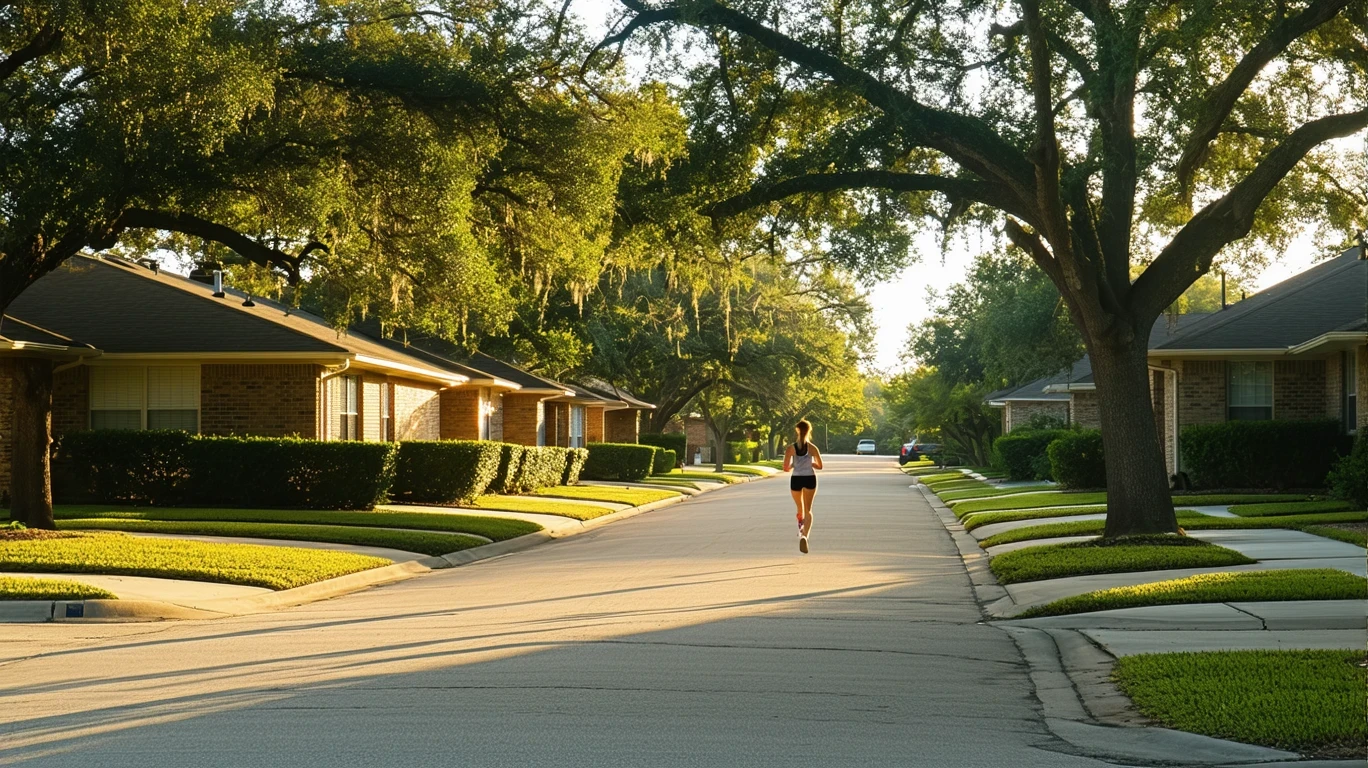
Manor and Austin sit just 15 miles apart in the Austin metro, but the way households experience cost pressure in each city differs sharply in 2026. Manor’s median home value of $289,000 creates a lower entry barrier than Austin’s $461,500, yet the two cities demand different tradeoffs around transportation access, daily errands, and healthcare infrastructure. Families drawn to Manor often prioritize space and predictable housing costs, while those choosing Austin trade higher housing entry for transit infrastructure, walkable access to groceries and services, and reduced car dependence. The decision isn’t about which city costs less overall—it’s about which cost pressures a household can absorb and which tradeoffs align with how they actually live day to day.
Both cities share the same utility rates and gas prices, so differences in ongoing expenses come down to housing stock, commute patterns, and the friction costs embedded in daily logistics. Manor’s low-rise character and corridor-clustered food access mean most households rely heavily on cars, while Austin’s rail transit, notable cycling infrastructure, and broadly accessible grocery options create more flexibility for those who can navigate without driving everywhere. Understanding where cost pressure concentrates—and where it can be controlled—matters more than comparing totals, because the same gross income feels entirely different depending on whether a household is managing front-loaded housing costs or ongoing transportation and convenience expenses.
Housing Costs
Manor’s housing market centers on single-family homes, with a median value of $289,000 that reflects newer construction and family-oriented neighborhoods. This creates a lower entry barrier for buyers compared to Austin, where the median home value reaches $461,500 and reflects a mix of older central neighborhoods, newer vertical development, and intense competition for housing near transit and employment centers. For renters, the dynamic reverses slightly: Manor’s median gross rent sits at $1,611 per month, while Austin’s comes in at $1,549 per month. This difference reflects Manor’s housing stock skewing toward single-family rentals and larger units, while Austin offers more apartments and smaller formats that bring monthly obligations down even as purchase prices climb.
The structural difference matters most for households deciding between renting and owning. In Manor, renters face higher monthly obligations but often gain more space, yards, and parking—costs that feel justified for families needing room to spread out. In Austin, renters access a broader range of unit types, including studios and one-bedrooms in walkable neighborhoods where car ownership becomes optional, reducing transportation pressure even as rent stays elevated. For buyers, Manor’s lower purchase price translates to smaller down payments and lower mortgage principal, but the tradeoff comes in the form of car dependence and longer commutes. Austin’s higher entry cost buys proximity to jobs, transit, and services, which can offset housing expense through reduced transportation and time costs.
First-time buyers often find Manor more accessible purely on the basis of down payment requirements and mortgage approval thresholds, but long-term cost exposure depends on how much a household spends on commuting, vehicle maintenance, and the time cost of car-dependent errands. Families prioritizing square footage and outdoor space tend to absorb Manor’s housing costs more easily, while couples and single adults who value walkability and transit access may find Austin’s higher entry cost justified by the reduction in other ongoing expenses. The housing decision isn’t just about monthly payment—it’s about which ongoing pressures a household can manage and which lifestyle structure reduces friction over time.
| Housing Type | Manor | Austin |
|---|---|---|
| Median Home Value | $289,000 | $461,500 |
| Median Gross Rent | $1,611/month | $1,549/month |
| Typical Housing Form | Single-family, low-rise | Mixed: apartments, townhomes, single-family |
Housing takeaway: Manor offers lower entry costs for homeownership but higher rental obligations, with cost pressure concentrated in the upfront purchase decision and ongoing car dependence. Austin’s higher purchase prices create a steeper entry barrier, but renters gain access to smaller, more affordable units in neighborhoods where transit and walkability reduce transportation costs. Families seeking space and predictable mortgage payments tend to absorb Manor’s structure more easily, while households prioritizing flexibility and reduced car reliance may find Austin’s housing pressure justified by the infrastructure that surrounds it.
Utilities and Energy Costs
Both Manor and Austin share the same electricity rate of 15.69¢/kWh and natural gas price of $19.31/MCF, so differences in utility exposure come down to housing stock, home size, and cooling demands rather than rate structures. Manor’s low-rise, single-family character means most households manage larger floor plans and more exterior wall surface, which increases cooling loads during the extended summer season when triple-digit heat drives air conditioning use for months. Austin’s more vertical urban form includes a higher share of apartments and attached units, where shared walls and smaller footprints reduce per-household cooling exposure even when temperatures climb.
Seasonality dominates utility costs in both cities, with summer cooling representing the primary driver of variability. Older single-family homes in either city—common in parts of Austin’s central neighborhoods and throughout Manor’s established areas—tend to experience higher baseline usage due to less efficient insulation and older HVAC systems. Newer construction in Manor benefits from modern building standards that improve efficiency, but the larger home sizes typical of suburban development offset those gains. In Austin, newer apartments and mixed-use buildings often include more efficient systems and benefit from reduced exposure due to unit size and orientation, though older homes in central Austin face similar challenges to Manor’s aging stock.
Households in Manor managing single-family homes should expect utility costs to spike during peak summer months, with cooling representing the largest share of the bill and limited opportunities to reduce exposure beyond thermostat discipline and efficiency upgrades. In Austin, renters in smaller apartments gain more predictability due to reduced square footage, while homeowners in single-family neighborhoods face similar seasonal volatility to Manor. The key difference lies in housing type: Manor’s market skews heavily toward larger homes, while Austin offers more pathways to smaller, more efficient living formats that reduce ongoing utility obligations without requiring behavioral changes.
Utility takeaway: Manor households experience higher utility exposure due to larger home sizes and single-family dominance, with summer cooling driving the majority of seasonal volatility. Austin’s mix of housing types creates more variability in exposure—renters in apartments face lower, more predictable bills, while single-family homeowners encounter similar pressures to Manor. Families managing larger homes in either city should plan for extended cooling seasons, while households prioritizing predictability may find Austin’s smaller unit options reduce ongoing utility obligations without sacrificing comfort.
Groceries and Daily Expenses

Grocery costs in Manor and Austin reflect the same regional price environment, with staples like bread at $1.81/lb, eggs at $2.45/dozen, and ground beef at $6.60/lb appearing consistently across both cities. The difference in day-to-day spending pressure comes from access patterns and convenience friction rather than price differences. Manor’s corridor-clustered food and grocery infrastructure means most households drive to centralized shopping areas, which encourages bulk purchasing and planned trips but increases reliance on cars and limits spontaneous access to fresh items or quick errands. Austin’s broadly accessible grocery density creates more flexibility—households can walk, bike, or make quick stops without committing to a full shopping trip, which reduces the need for large pantry stockpiles and opens up more opportunities for price comparison across nearby stores.
Dining out and convenience spending follow similar structural patterns. Manor’s layout pushes households toward chain restaurants and drive-through options concentrated along major corridors, where convenience comes with predictable pricing but limited variety. Austin’s mixed residential and commercial land use means more neighborhood cafes, food trucks, and local spots within walking distance, which increases the temptation to spend on prepared food but also provides more control over frequency and budget. Families managing larger grocery volumes in Manor benefit from big-box access and warehouse club proximity, which supports cost-effective bulk buying, while single adults and couples in Austin gain flexibility from smaller, more frequent purchases that reduce food waste and storage pressure.
The friction cost of grocery shopping differs sharply between the two cities. In Manor, every grocery run requires a car, planning, and time, which encourages households to consolidate trips and stock up—efficient for families with storage space and predictable consumption, but less flexible for smaller households or those with variable schedules. In Austin, the ability to walk or bike to a nearby store reduces the transaction cost of each trip, making it easier to adjust spending based on weekly needs and sales without committing to large upfront purchases. This structural difference doesn’t change the price of groceries, but it shifts how households experience the cost—Manor rewards planning and bulk efficiency, while Austin rewards flexibility and access.
Grocery takeaway: Manor and Austin share the same grocery prices, but access patterns create different cost experiences. Manor households manage grocery spending through planned trips and bulk purchasing, which works well for families with cars and storage but increases friction for smaller households. Austin’s dense, accessible grocery infrastructure reduces the transaction cost of shopping and supports more flexible spending patterns, though proximity to dining options increases the temptation for convenience spending. Families prioritizing bulk efficiency fit Manor’s structure, while households valuing spontaneous access and reduced car dependence benefit from Austin’s layout.
Taxes and Fees
Property taxes represent the primary ongoing tax burden for homeowners in both Manor and Austin, with rates determined by overlapping jurisdictions including county, school district, and municipal levies. Manor homeowners benefit from lower assessed values—median home value of $289,000 compared to Austin’s $461,500—which translates to lower absolute tax bills even if effective rates remain similar. This creates a structural advantage for Manor buyers who prioritize predictable, lower ongoing obligations, though the tradeoff comes in the form of fewer municipal services and infrastructure compared to Austin’s more developed urban core.
Sales taxes apply uniformly across the metro area, so differences in consumption tax exposure come down to spending patterns rather than rate structures. Households in Manor who rely on cars for all errands may spend more on fuel and vehicle-related purchases, while those in Austin who walk, bike, or use transit reduce taxable consumption in transportation categories. HOA fees appear more frequently in Manor’s newer subdivisions, where they often cover landscaping, amenity access, and neighborhood maintenance—costs that feel predictable but add to the monthly obligation beyond mortgage and taxes. Austin’s older neighborhoods typically lack HOAs, though condo and townhome developments include similar fees that bundle services and reduce individual maintenance responsibility.
Recurring city-specific fees—trash collection, water, wastewater—vary by provider and housing type, but the structural difference lies in bundling and predictability. Manor’s newer developments often include these costs in HOA dues or as separate line items billed monthly, creating more transparency but also more individual responsibility for managing payments. Austin’s denser neighborhoods may bundle utilities into rent or condo fees more frequently, reducing the number of separate bills households manage but sometimes obscuring the true cost of services. Long-term homeowners in either city face property tax increases as assessed values rise, though Manor’s lower starting point provides more room for appreciation before tax burdens become prohibitive.
Tax and fee takeaway: Manor homeowners face lower absolute property tax bills due to lower home values, though HOA fees in newer subdivisions add predictable monthly costs that offset some of the savings. Austin homeowners manage higher property taxes tied to elevated home values, but older neighborhoods often avoid HOA fees entirely. Renters in both cities remain insulated from property tax exposure directly, though landlords pass through costs in the form of rent. Households planning to stay long-term should weigh Manor’s lower entry tax burden against Austin’s more developed infrastructure and services, recognizing that tax exposure grows with home value appreciation in both cities.
Transportation & Commute Reality
Transportation costs in Manor and Austin diverge sharply based on infrastructure rather than fuel prices—both cities see gas at $3.62/gal, but the need to drive, distance traveled, and availability of alternatives create entirely different cost structures. Manor’s bus-only transit and corridor-clustered errands mean nearly every household relies on personal vehicles for commuting, groceries, healthcare, and daily logistics. This creates ongoing exposure to fuel costs, vehicle maintenance, insurance, and the time cost of driving, with limited ability to reduce dependence even for households willing to adjust behavior. Austin’s rail transit presence and notable cycling infrastructure provide viable alternatives for households living near transit corridors or in neighborhoods with broadly accessible grocery and service density, allowing some residents to reduce or eliminate car ownership entirely.
Commute patterns reinforce these structural differences. Austin’s average commute time of 24 minutes reflects a mix of short urban trips, transit use, and longer suburban drives, with the city’s walkable pockets and rail service creating options for those prioritizing proximity to work and services. Manor lacks comparable transit infrastructure, so most commuters drive to jobs in Austin or other parts of the metro, adding both time and fuel costs that compound over weeks and months. Households in Manor managing two-car families face doubled exposure to fuel, maintenance, and insurance, while those in Austin living near transit or within biking distance of work can reduce transportation costs to a transit pass or occasional rideshare.
The friction cost of car dependence extends beyond fuel and maintenance. In Manor, every errand requires planning around vehicle availability, parking, and drive time, which increases the logistical burden for households managing multiple schedules or tight time budgets. Austin’s infrastructure allows more spontaneous trips on foot, bike, or transit, reducing the transaction cost of daily errands and creating more flexibility for households juggling work, school, and appointments. This doesn’t eliminate transportation costs in Austin, but it shifts the nature of the expense—Manor households pay for car dependence in both money and time, while Austin households can trade housing proximity for reduced transportation obligations.
Cost Structure Comparison
Housing pressure dominates the cost experience in both cities, but the nature of that pressure differs. Manor’s lower median home value of $289,000 creates a more accessible entry point for buyers, concentrating cost pressure in the decision to purchase rather than in ongoing monthly obligations. Austin’s median home value of $461,500 raises the entry barrier significantly, but the infrastructure surrounding that housing—rail transit, broadly accessible groceries, hospital presence—reduces ongoing costs in transportation, time, and convenience. Renters face the inverse dynamic: Manor’s higher median rent of $1,611/month reflects larger units and single-family formats, while Austin’s $1,549/month median includes more apartments and smaller footprints that reduce rent but also reduce space.
Utilities introduce similar seasonal volatility in both cities due to shared rates and extended cooling seasons, but Manor’s low-rise, single-family dominance means most households manage larger homes with higher baseline usage. Austin’s more vertical urban form and mix of housing types create more variability—renters in apartments experience lower, more predictable utility costs, while single-family homeowners face exposure comparable to Manor. The difference lies in choice: Austin offers more pathways to smaller, more efficient housing that reduces utility obligations without requiring behavioral changes, while Manor’s market skews toward larger homes that increase exposure regardless of household size.
Transportation costs separate the two cities most clearly. Manor’s car dependence creates ongoing exposure to fuel, maintenance, insurance, and time costs that compound across every errand and commute, with no viable alternatives for most households. Austin’s rail transit, cycling infrastructure, and walkable neighborhoods allow some households to reduce or eliminate car ownership, shifting transportation costs from ongoing fuel and maintenance to upfront housing proximity. Families in Manor absorb transportation costs as a fixed part of suburban life, while households in Austin can trade higher housing costs for reduced car reliance—a tradeoff that becomes more valuable as fuel prices rise or household schedules tighten.
Daily errands and grocery access follow the same structural pattern. Manor’s corridor-clustered food density rewards planning and bulk purchasing, which works well for families with cars and storage but increases friction for smaller households or those with variable schedules. Austin’s broadly accessible grocery infrastructure reduces the transaction cost of each trip, creating more flexibility and reducing the need for large pantry stockpiles. The cost of groceries remains the same, but the friction cost of acquiring them differs—Manor demands more planning and car dependence, while Austin allows more spontaneous, low-friction access.
The decision between Manor and Austin isn’t about which city costs less—it’s about which cost pressures a household can absorb and which tradeoffs align with how they live. Households sensitive to housing entry barriers may prefer Manor’s lower purchase prices and accept ongoing car dependence, while those sensitive to transportation costs and time friction may find Austin’s higher housing entry justified by the infrastructure that reduces ongoing obligations. For families prioritizing space and predictable mortgage payments, Manor’s structure fits better. For households valuing transit access, walkability, and reduced car reliance, Austin’s cost structure—despite higher housing entry—creates more flexibility and control over ongoing expenses.
How the Same Income Feels in Manor vs Austin
Single Adult
For a single adult, housing becomes the first non-negotiable cost, and the choice between Manor and Austin determines how much flexibility remains afterward. In Manor, lower home purchase prices reduce the barrier to ownership, but car dependence eliminates flexibility around transportation—fuel, insurance, and maintenance become fixed costs with no viable alternatives. In Austin, higher rent or mortgage payments claim more of the budget upfront, but proximity to transit and walkable errands creates room to reduce or eliminate car ownership, shifting transportation from a fixed cost to a controllable variable. The same gross income feels tighter in Austin initially due to housing, but more flexible over time if transit access and walkable infrastructure reduce ongoing obligations.
Dual-Income Couple
For a dual-income couple, the cost structure shifts based on whether both partners commute and how much time flexibility matters. In Manor, lower housing entry costs free up income for other priorities, but managing two cars becomes nearly unavoidable, doubling exposure to fuel, maintenance, and insurance while adding logistical friction around errands and schedules. In Austin, higher housing costs claim more of the combined income, but rail transit and cycling infrastructure allow couples to consider one-car or no-car arrangements, reducing ongoing transportation obligations and creating more schedule flexibility. The same income feels more predictable in Manor if both partners accept car dependence, but more flexible in Austin if proximity to work and services reduces the need to drive everywhere.
Family with Kids
For families, space needs and school access become non-negotiable, and the cost structure diverges sharply. In Manor, lower home prices and larger floor plans provide the space families need without stretching the budget, but car dependence intensifies—every school drop-off, grocery run, and activity requires driving, increasing both time and fuel costs. In Austin, higher housing costs make it harder to secure comparable space, but strong family infrastructure and broadly accessible services reduce the logistical burden of managing multiple schedules, and rail transit creates options for older kids to move independently. The same income feels more stable in Manor if the family prioritizes space and accepts car-dependent logistics, but more manageable in Austin if proximity to schools, parks, and transit reduces the daily friction of coordinating multiple household members.
Decision Matrix: Which City Fits Which Household?
| Decision Factor | If You’re Sensitive to This… | Manor Tends to Fit When… | Austin Tends to Fit When… |
|---|---|---|---|
| Housing entry + space needs | Down payment size, mortgage approval thresholds, square footage per dollar | You prioritize lower purchase prices and larger floor plans over proximity to transit and services | You value walkability and transit access enough to accept higher entry costs and smaller living formats |
| Transportation dependence + commute friction | Fuel costs, vehicle maintenance, time spent driving, commute predictability | You accept car dependence as a fixed cost and prioritize housing affordability over transportation flexibility | You want to reduce or eliminate car ownership and value rail transit and cycling infrastructure |
| Utility variability + home size exposure | Seasonal bill spikes, cooling costs, home efficiency, predictability of ongoing expenses | You manage a single-family home and accept higher cooling exposure in exchange for space and outdoor access | You prefer smaller, more efficient housing formats that reduce baseline usage and seasonal volatility |
| Grocery strategy + convenience spending creep | Frequency of shopping trips, bulk purchasing efficiency, access to variety, temptation to dine out | You plan grocery trips in advance and value big-box access over spontaneous walkable options | You prefer flexible, frequent access to groceries and services within walking or biking distance |
| Fees + friction costs (HOA, services, upkeep) | Predictability of monthly obligations, bundled services, maintenance responsibility, hidden costs | You accept HOA fees in newer subdivisions in exchange for amenities and predictable maintenance coverage | You prefer older neighborhoods without HOA fees or accept condo fees that bundle utilities and services |
| Time budget (schedule flexibility, errands, logistics) | Coordination of multiple schedules, ability to run errands without a car, spontaneous access to services | You manage a predictable schedule and accept that every errand requires planning and driving | You value spontaneous access to errands and services and benefit from reduced logistical friction |
Lifestyle Fit
Manor and Austin offer sharply different lifestyle textures shaped by infrastructure, density, and access patterns. Manor’s low-rise character and corridor-clustered services create a suburban rhythm where most activities require a car, planning, and dedicated time. Families with young children benefit from integrated park access and present family infrastructure, including schools and playgrounds that meet density thresholds, making it easier to find outdoor space and age-appropriate amenities within driving distance. The city’s walkable pockets provide some pedestrian infrastructure, but the overall texture remains car-oriented, with limited spontaneous access to dining, entertainment, or cultural activities. Households drawn to Manor typically prioritize space, newer construction, and predictable routines over walkability and urban amenities.
Austin’s more vertical urban form and broadly accessible daily errands create a lifestyle centered on proximity and flexibility. Rail transit and notable cycling infrastructure allow residents near transit corridors to move around the metro without relying solely on cars, while mixed residential and commercial land use means groceries, cafes, and services sit within walking distance for many neighborhoods. Strong family infrastructure—both schools and playgrounds meeting density thresholds—supports families, while hospital presence and pharmacy access provide more comprehensive healthcare options than Manor’s routine local clinics. The city’s integrated green space and water features offer outdoor recreation without requiring long drives, and the density of food and entertainment options supports more spontaneous social and cultural engagement. Households choosing Austin typically value walkability, transit access, and the ability to reduce car dependence even if it means accepting smaller living spaces and higher housing costs.
The lifestyle tradeoff between Manor and Austin mirrors the cost structure: Manor rewards households who prioritize space, predictability, and lower housing entry, while Austin fits those who value infrastructure, access, and the flexibility to reduce ongoing transportation and time costs. Families managing multiple schedules may find Manor’s car-dependent logistics more challenging, while those in Austin benefit from the ability to walk, bike, or use transit for errands and commutes. Single adults and couples in Manor face limited walkable social options and higher reliance on driving for entertainment, while those in Austin gain access to a broader range of dining, cultural, and recreational activities within biking or transit distance. The choice isn’t about which city offers a better lifestyle in absolute terms—it’s about which structure aligns with how a household wants to spend time, money, and energy day to day.
Manor quick facts: Integrated park density and water features provide outdoor recreation options. Walkable pockets exist but overall texture remains car-oriented.
Austin quick facts: Rail transit connects neighborhoods and employment centers across the metro. Mixed land use and broadly accessible groceries support walkable, low-friction daily routines.
Frequently Asked Questions
Is Manor or Austin cheaper for families trying to buy a home in 2026?
Manor offers a lower entry barrier with a median home value of $289,000 compared to Austin’s $461,500, making it more accessible for families prioritizing down payment size and mortgage approval. However, the cost structure differs—Manor’s lower purchase price comes with higher car dependence and ongoing transportation costs, while Austin’s higher entry cost buys proximity to transit, walkable errands, and services that reduce ongoing expenses. Families willing to manage car-dependent logistics and prioritize space will find Manor’s housing costs easier to absorb, while those valuing transit access and reduced transportation obligations may find Austin’s higher entry justified by the infrastructure that surrounds it.
How do transportation costs differ between Manor and Austin in 2026?
Both cities share the same gas price of $3.62/gal, but transportation cost pressure differs based on infrastructure and dependence. Manor’s bus-only transit and corridor-clustered services mean nearly every household relies on personal vehicles for commuting, errands, and daily logistics, creating ongoing exposure to fuel, maintenance, and insurance costs with no viable alternatives. Austin’s rail transit and notable cycling infrastructure allow households near transit corridors to reduce or eliminate car ownership, shifting transportation costs from ongoing fuel and maintenance to upfront housing proximity. Families in Manor should expect to manage two-car households, while those in Austin can consider one-car or no-car arrangements depending on neighborhood and commute patterns.
Do Manor and Austin have similar utility costs in 2026?
Manor and Austin share the same electricity rate of 15.69¢/kWh and natural gas price of $19.31/MCF, so utility cost differences come from housing stock and home size rather than rate structures. Manor’s low-rise, single-family dominance means most households manage larger floor plans with higher cooling exposure during extended summer heat, while Austin’s more vertical urban form includes more apartments and attached units that reduce per-household usage. Renters in Austin’s smaller units experience lower, more predictable utility bills, while single-family homeowners in either city face similar seasonal volatility driven by air conditioning demand. Households managing larger homes in Manor should plan for higher baseline usage, while those in Austin’s apartments benefit from reduced square footage and shared-wall efficiency.
Which city is better for households trying to reduce car dependence in 2026?
Austin provides far more infrastructure to support reduced car dependence, with rail transit, notable cycling infrastructure, and broadly accessible grocery and service density that allow households near transit corridors to walk, bike, or use public transportation for most daily needs. Manor’s bus-only transit and corridor-clustered errands mean car ownership remains essential for nearly all households, with limited alternatives even for those willing to adjust behavior. Households prioritizing walkability and transit access will find Austin’s infrastructure supports that lifestyle, while those in Manor should expect to rely on personal vehicles for commuting, groceries, healthcare, and most errands.
How does the cost of renting compare between Manor and Austin in 2026?
Manor’s median gross rent of $1,611/month sits slightly higher than Austin’s $1,549/month, but the difference reflects housing type rather than affordability. Manor’s rental market skews toward single-family homes and larger units that provide more space, yards, and parking, while Austin offers more apartments and smaller formats that reduce monthly rent but also reduce square footage. Renters prioritizing space and outdoor access may find Manor’s higher rent justified by the housing format, while those valuing walkability and reduced car dependence may prefer Austin’s lower rent combined with transit access and walkable errands that reduce transportation costs. The choice depends on whether a household prioritizes space or infrastructure, not just the monthly rent figure.
Conclusion
Manor and Austin present distinct