
Housing in Manor sits at the intersection of Austin metro access and small-city affordability. With a median home value of $289,000 and median rent at $1,611 per month, the city offers an entry point that feels within reach compared to the core metro—but ownership here isn’t just about the purchase price. Property taxes, summer cooling costs, and the realities of a commuter-oriented location all shape what housing actually costs over time. Understanding how these factors interact determines whether Manor’s housing market fits your household or creates friction you didn’t anticipate.
This article breaks down rent, ownership, and long-term exposure in Manor, explaining how housing costs behave in a low-rise suburb where errands cluster along corridors, green space is woven throughout, and getting around still leans heavily on a car despite pockets of walkability.
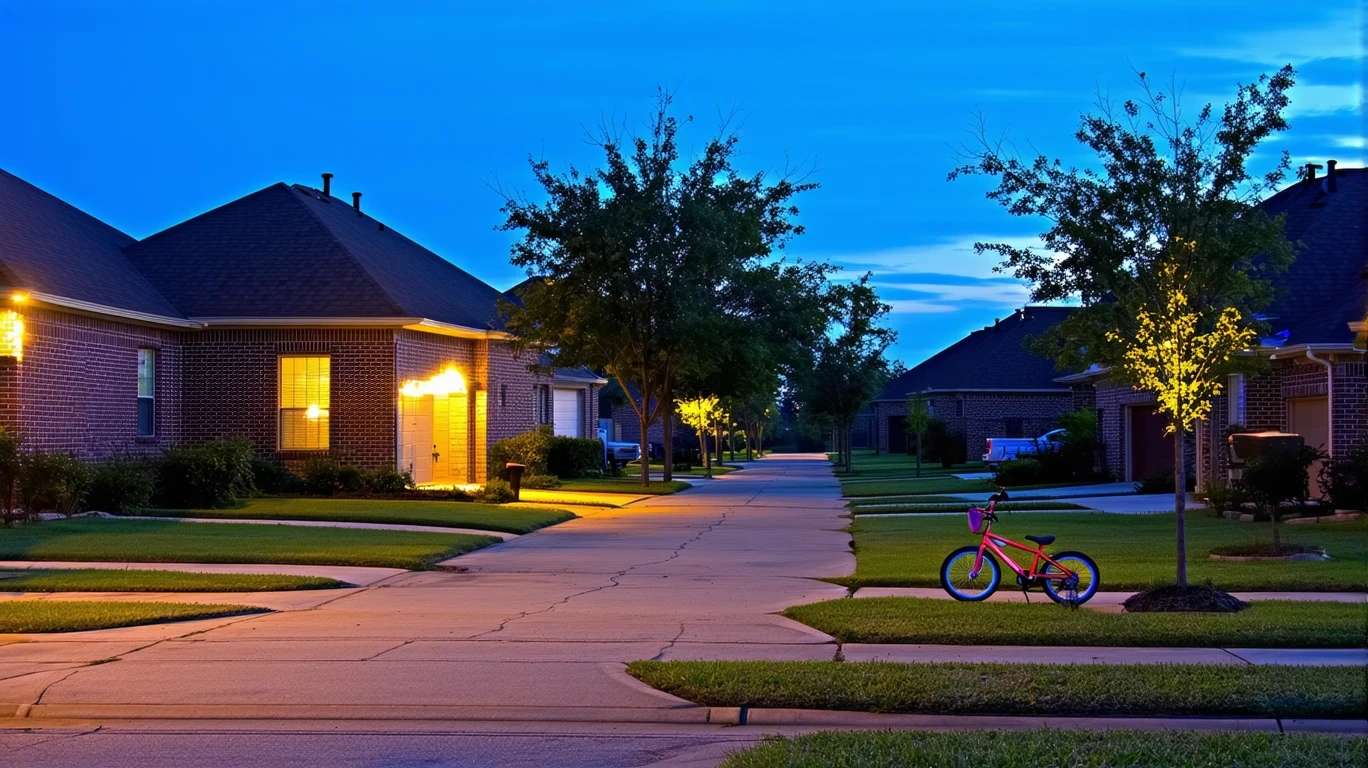
The Housing Market in Manor Today
Manor’s housing market reflects its role as a growing suburb on Austin’s eastern edge. The median home value of $289,000 positions it as one of the more accessible ownership markets in the metro, appealing to households priced out of closer-in neighborhoods or seeking more space for the dollar. But accessibility here comes with tradeoffs: you’re buying into a city where most daily errands require a car, where transit means bus service rather than rail, and where the infrastructure is still catching up to population growth.
What shapes Manor distinctly is its low-rise character and the way development has unfolded. The city has integrated parks and green space at a high density, with water features present throughout, creating an outdoor-oriented environment that appeals to families and anyone prioritizing yard access or recreational proximity. At the same time, food and grocery options cluster along corridors rather than spreading evenly, meaning convenience depends heavily on where within Manor you land. Walkable pockets exist—pedestrian infrastructure exceeds typical suburban ratios in certain areas—but these are exceptions, not the baseline.
For newcomers, the most common misunderstanding is assuming Manor functions like a denser, more established suburb. It doesn’t. You’re moving into a city that’s still building out its commercial base, where household logistics require more planning than proximity, and where the appeal is space, affordability, and outdoor access rather than urban convenience.
Renting in Manor
At $1,611 per month, median rent in Manor reflects moderate pressure for a metro-adjacent location. You’re paying less than you would closer to Austin’s core, but you’re also accepting a different daily experience: longer drives for work, groceries that require intentional trips rather than quick stops, and a reliance on your own vehicle for nearly everything outside your immediate neighborhood.
Rental availability in Manor tends to follow the broader development pattern—units cluster in specific complexes and corridors rather than spreading evenly across the city. This means your rent doesn’t just buy space; it buys proximity to the limited areas where errands, dining, and services concentrate. A unit near these corridors reduces friction. A unit farther out increases your dependence on driving and planning, even for routine tasks.
For renters, Manor works best if you value flexibility and want to avoid the long-term exposure that comes with ownership in a high-tax state. You’re insulated from property tax increases, maintenance surprises, and the volatility of cooling costs in a region where air conditioning dominates summer bills. But you’re also accepting that rent renewals will likely reflect the metro’s broader growth trajectory, and that the convenience you might expect from suburban rent isn’t fully built out here yet.
Owning a Home in Manor
Buying a home in Manor at $289,000 feels achievable compared to much of the Austin metro, but the purchase price is only the start of the cost story. Ownership in Texas means property taxes that behave more like recurring rent than a fixed obligation—they rise with assessed values, and in a growing suburb like Manor, those assessments tend to move upward as the city develops and demand increases. The feed doesn’t include a specific tax rate, but the exposure is structural: you’re locking in a mortgage payment while leaving a significant portion of your housing cost vulnerable to external decisions.
Maintenance exposure in Manor is shaped by the extended cooling season. Triple-digit summer heat means air conditioning isn’t optional, and HVAC systems work harder and longer than they would in milder climates. Roof wear, exterior paint, and landscaping all face stress from sustained heat and occasional severe weather. These aren’t catastrophic costs, but they’re predictable and recurring, and they add up in ways that renters never see.
Governance is another ownership variable. Homeowners’ associations exist in parts of Manor, and while the feed doesn’t specify prevalence, it’s common in newer suburban developments. An HOA can bundle services like landscaping or neighborhood amenities, but it also introduces fees, rules, and another layer of cost that doesn’t go away. Whether that structure feels like value or constraint depends on your household priorities.
What makes ownership in Manor distinct is the combination of accessible entry, ongoing tax and maintenance exposure, and a setting where daily logistics still require a car and advance planning. You’re not buying into a walkable, amenity-rich environment. You’re buying space, outdoor access, and a lower starting price—but you’re also taking on the long-term cost behavior of a suburb that’s still filling in.
Apartment vs House in Manor — Cost Behavior Comparison
The table below isolates cost categories where apartments and houses in Manor behave differently due to local conditions—climate, infrastructure, and housing stock. Rows are included only where the distinction is meaningful in this city. Generic differences that apply everywhere are omitted.
| Expense Category | Apartment | House |
|---|---|---|
| Cooling Costs | Lower square footage and shared walls reduce exposure; landlord may control thermostat access or system quality | Larger footprint and standalone structure mean dominant summer bills; owner controls system efficiency and settings |
| Outdoor Maintenance | None; complex handles landscaping | Required and heat-intensive; lawn care, irrigation, and exterior upkeep face stress from extended summer heat |
| Property Taxes | Embedded in rent; invisible and uncontrollable | Direct, recurring, and variable; rises with assessed value in a growing suburb |
| Errands Access | More likely located near corridor clusters where grocery and services concentrate | More variable; some neighborhoods require longer drives to reach the same amenities |
| Parking & Vehicle Dependence | Assigned or shared parking; car still required for most errands despite some walkable pockets | Driveway or garage; vehicle dependence identical but storage more flexible |
Why these categories: Cooling exposure differs sharply due to Manor’s extended heat season and the size gap between apartments and houses. Outdoor maintenance is climate-stressed and unavoidable for homeowners. Property taxes are a structural Texas exposure that apartment renters never see directly. Errands access varies because Manor’s commercial infrastructure clusters rather than spreads, making location within the city more consequential. Parking is functionally similar—both require a car—but the form differs.
Categories like water, trash, and internet were excluded because they don’t vary meaningfully by housing type in Manor’s current infrastructure. The table reflects what actually changes your cost experience here, not what exists everywhere.
Utilities & Upkeep Differences
Utility exposure in Manor is dominated by cooling. The extended summer season and triple-digit heat mean air conditioning runs for months, not weeks, and the electricity rate of 15.69¢/kWh translates that usage into a recurring cost that apartment renters experience as smaller (due to less square footage and shared walls) and house owners experience as a major seasonal expense. In a house, you control the system, the thermostat, and the efficiency upgrades—but you also absorb the full cost of cooling a larger, standalone structure in a climate that doesn’t offer much relief until fall.
Natural gas, priced at $19.31/MCF, plays a smaller role. Heating needs are minimal in Manor, and gas is more commonly tied to water heating or cooking than to climate control. This isn’t a city where winter drives your utility bill; summer does.
Maintenance differences between apartments and houses in Manor aren’t just about responsibility—they’re about intensity. A house here means managing a roof that bakes under sustained heat, exterior surfaces that degrade faster, and landscaping that requires irrigation and care in conditions that stress plants and turf. Apartment renters avoid all of this. Homeowners don’t just pay for it; they plan around it, because deferred maintenance in this climate accelerates wear in ways that colder or milder regions don’t see.
The upkeep gap widens further when you consider that Manor’s housing stock is relatively low-rise and suburban, meaning single-family homes dominate ownership. You’re not comparing a house to a condo with shared systems—you’re comparing full responsibility to none. That difference is structural, not seasonal.
Rent vs Buy: Long-Term Exposure in Manor
Renting in Manor means accepting that your housing cost will likely rise over time, but in a predictable rhythm—lease renewals, market adjustments, and metro growth all push in the same direction. You don’t control the increases, but you’re also not exposed to the compounding variables that homeowners face: property tax reassessments, maintenance surprises, insurance adjustments, and the long-term cost of cooling a house through summer after summer.
Owning in Manor means locking in your mortgage payment but leaving significant cost categories open to change. Property taxes in Texas don’t stay fixed—they rise with assessed values, and in a growing suburb, those values tend to move upward as infrastructure develops and demand increases. Maintenance costs don’t decrease as your home ages; they increase, especially in a climate where heat and weather stress systems and surfaces. Cooling costs remain high as long as you live there, and while efficiency upgrades can reduce usage, they don’t eliminate the exposure.
The tradeoff isn’t savings versus loss—it’s predictability versus control. Renters face less volatility and can leave without transaction costs. Owners gain stability in their mortgage payment and the ability to make decisions about their property, but they absorb all the risks that come with a fixed asset in a variable cost environment. Over time, those risks compound, especially in a city where the infrastructure is still catching up and where the tax base is adjusting to growth.
What makes Manor distinct in this tradeoff is that you’re not buying into a mature, stable suburb. You’re buying into a city that’s still building out its commercial base, still filling in its amenities, and still adjusting to population growth. That creates opportunity for appreciation, but it also means the cost environment is less settled than it would be in an older, fully developed market.
FAQs About Housing Costs in Manor
Is buying a home in Manor, TX affordable compared to the rest of the Austin metro?
At $289,000, Manor’s median home value is lower than much of the Austin metro, making it one of the more accessible entry points for ownership. But affordability isn’t just about the purchase price—it’s about property taxes, cooling costs, and the reality that you’re buying into a commuter-oriented suburb where daily logistics require a car and advance planning. The entry point is real, but the long-term cost behavior includes variables that don’t show up in the listing price.
How does renting in Manor compare to owning over time?
Renting insulates you from property tax increases, maintenance surprises, and the volatility of cooling costs in a climate where air conditioning dominates summer bills. Owning gives you control and locks in your mortgage payment, but it exposes you to recurring costs that rise over time—taxes, upkeep, and utilities. The choice depends on whether you value flexibility and lower volatility (renting) or stability and decision-making power (owning), not on which one costs less in absolute terms.
What drives housing costs in Manor beyond the rent or mortgage payment?
For renters, it’s the indirect absorption of property taxes and the likelihood of rent increases tied to metro growth. For owners, it’s property taxes that rise with assessed values, maintenance costs driven by extended heat and weather exposure, and cooling bills that dominate summer budgets. In both cases, transportation costs add another layer—Manor’s layout and limited transit mean most households depend on a car for daily errands, and that dependence doesn’t go away regardless of housing type.
Does Manor’s housing market favor apartments or single-family homes?
Manor’s housing stock is predominantly low-rise and single-family, with apartments clustering in specific complexes and corridors. If you’re renting, apartments near those corridors reduce friction by putting you closer to where errands and services concentrate. If you’re buying, you’re almost certainly looking at a house, which means taking on the full maintenance and cooling exposure that comes with a standalone structure in a hot climate. The market doesn’t favor one over the other—it just offers different tradeoffs depending on what you’re willing to manage.
How does Manor’s location affect housing costs?
Manor sits on the eastern edge of the Austin metro, which makes it more affordable than closer-in suburbs but also more dependent on commuting and driving. That geography shapes housing costs indirectly: you’re paying less for the home itself, but you’re absorbing higher transportation costs and longer travel times to reach employment centers, amenities, and services that aren’t yet built out locally. The housing savings are real, but they come with a tradeoff in time and vehicle dependence.
Making Housing Choices in Manor
Housing in Manor offers an accessible entry point into the Austin metro, but it’s not a simplified version of urban or close-in suburban living. The median home value of $289,000 and median rent of $1,611 per month reflect a market where the starting price is lower, but the cost structure includes variables that require planning and acceptance: property taxes that rise with growth, cooling costs driven by extended heat, and a layout where errands cluster rather than spread, making location within the city more consequential than it might seem.
Renting works for households that value flexibility, want to avoid ownership volatility, and can accept that convenience here requires a car and intentional trip planning. Owning works for those who want control, can manage the recurring exposure of taxes and maintenance, and are comfortable with a suburb that’s still developing its commercial and transit infrastructure. Neither path is inherently cheaper—they just distribute costs and risks differently.
What matters most is understanding how Manor’s structure shapes daily life. Walkable pockets exist, green space is integrated, and outdoor access is strong—but the baseline is still car-dependent, and the amenities you might expect from a suburb of this size aren’t fully built out yet. If that tradeoff aligns with your priorities, Manor’s housing market offers real opportunity. If it doesn’t, the savings won’t compensate for the friction.
For more detail on what a budget has to handle in Manor, including how transportation and utilities interact with housing costs, or to explore Manor affordability: what’s easy, what’s expensive across all major categories, those resources provide the next layer of context. And if you’re planning a move, understanding moving company costs and options can help you navigate the logistics of getting here.
How this article was built: In addition to public economic data, this article incorporates location-based experiential signals derived from anonymized geographic patterns—such as access density, walkability, and land-use mix—to reflect how day-to-day living actually feels in Manor, TX.