
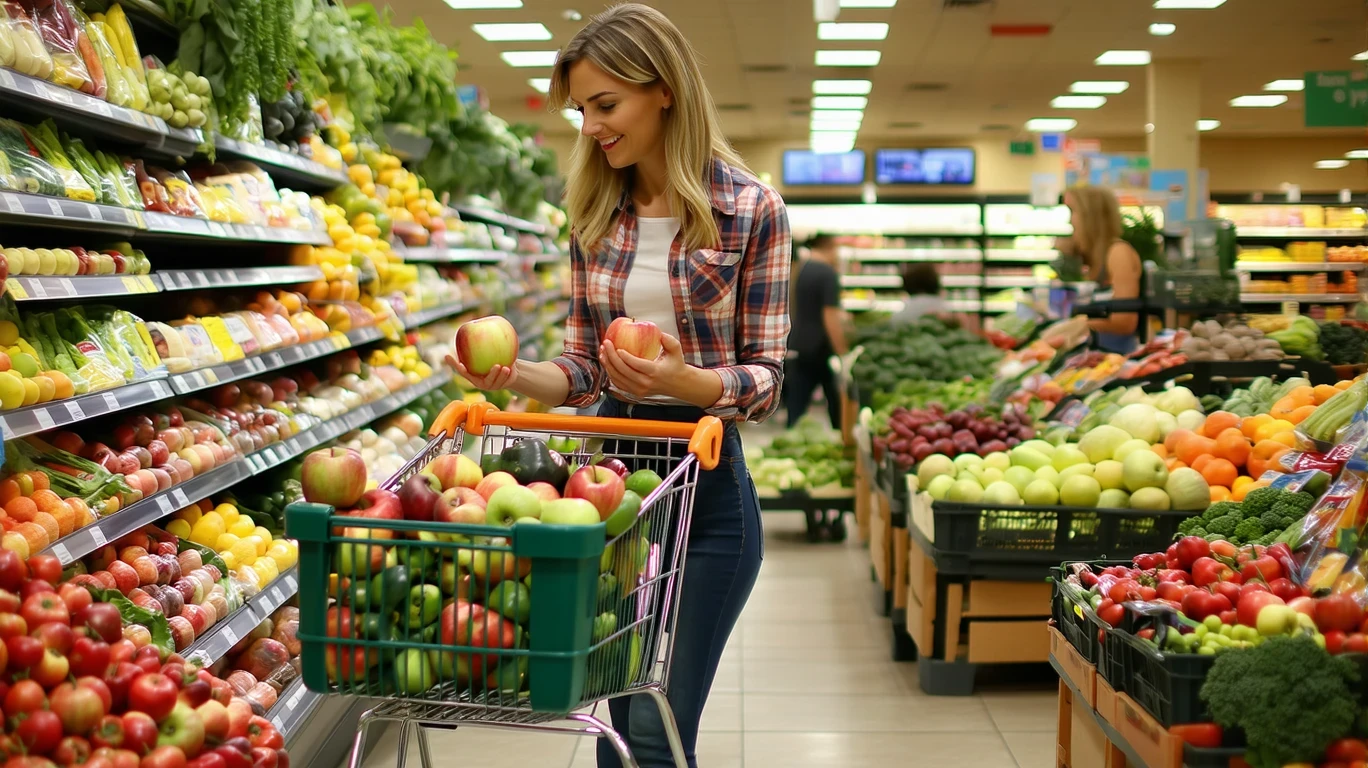
How Grocery Costs Feel in Manor
Grocery prices in Manor, TX run slightly below the national average, reflecting a regional price environment that offers modest relief compared to higher-cost metros. With a regional price parity index of 98—meaning prices sit about 2% below the national baseline—residents experience food costs that feel neither particularly cheap nor expensive, but rather aligned with what many suburban Texas communities see. This positioning matters most when compared to rapidly inflating coastal markets or high-demand urban cores, where the same basket of staples can cost substantially more. For households moving from pricier regions, Manor’s grocery landscape often registers as a quiet financial upside; for those relocating from lower-cost rural areas, the difference may feel negligible.
Who notices grocery costs most in Manor depends less on the baseline prices and more on household composition and income elasticity. Singles and young couples without children tend to feel grocery expenses more acutely on a per-person basis, since they can’t leverage bulk purchasing or split costs across multiple meals as efficiently as larger households. Families with children face the highest absolute spending, but Manor’s median household income of $96,657 per year provides most families with enough cushion to absorb weekly grocery runs without severe trade-offs. Retirees on fixed incomes, however, remain the most price-sensitive group—not because they buy more, but because any upward drift in staple prices directly pressures budgets with limited flexibility.
The experience of grocery shopping in Manor also reflects the city’s spatial layout. With food and grocery options clustered along commercial corridors rather than distributed evenly across neighborhoods, residents typically plan intentional trips rather than making spontaneous stops. This corridor-clustered accessibility means that comparing prices across multiple stores in a single outing requires deliberate routing, and households that prioritize savings often build their shopping patterns around specific retailers rather than convenience. The result is a grocery landscape where cost pressure is less about Manor’s baseline prices and more about how strategically households navigate store choice and trip frequency.
Grocery Price Signals (Illustrative)
Item-level prices in Manor illustrate how staple goods tend to compare locally, offering a sense of relative positioning rather than a complete shopping list. These figures are derived estimates based on national baselines adjusted by regional price parity, not observed checkout prices, and they serve as anchors for understanding cost texture rather than precise budgeting tools. The table below reflects common grocery staples and their illustrative price points, helping households gauge whether Manor’s food costs align with their expectations.
| Item | Illustrative Price |
|---|---|
| Bread (per pound) | $1.81/lb |
| Cheese (per pound) | $4.59/lb |
| Chicken (per pound) | $2.01/lb |
| Eggs (per dozen) | $2.45/dozen |
| Ground Beef (per pound) | $6.60/lb |
| Milk (per half-gallon) | $3.95/half-gallon |
| Rice (per pound) | $1.05/lb |
Derived estimate based on national baseline adjusted by regional price parity; not an observed local price.
These prices suggest that protein and dairy—chicken, ground beef, cheese, and milk—represent the categories where households feel the most variability week to week, while pantry staples like rice and bread remain relatively stable. Ground beef at $6.60 per pound sits in the mid-range nationally, meaning families that rely heavily on red meat will notice this line item more than those who rotate between chicken, beans, or plant-based proteins. Eggs and milk, both everyday essentials for families with children, track close to national averages, reinforcing the idea that Manor doesn’t impose a significant premium or discount on core breakfast and baking ingredients.
What these illustrative prices don’t capture is the spread between store tiers. A household shopping exclusively at discount-focused retailers may see ground beef closer to $5 per pound, while a premium grocer could charge $8 or more for organic or specialty cuts. This variance—often 30% to 50% depending on category and brand—means that the “average” price is less useful than understanding which stores align with a household’s budget tolerance and quality preferences. Manor’s grocery cost pressure, in practice, is shaped more by where you shop than by the city’s baseline pricing.
Store Choice & Price Sensitivity
Grocery price pressure in Manor varies significantly by store tier, and understanding this spectrum is essential for households trying to control food spending without sacrificing quality or convenience. Discount-tier grocers—typically no-frills chains focused on private-label products, limited selection, and high volume—offer the lowest baseline prices, often 20% to 30% below mid-tier competitors on staples like bread, eggs, and canned goods. These stores appeal most to budget-conscious families, retirees on fixed incomes, and anyone willing to trade brand variety for consistent savings. The trade-off is less about quality and more about selection: fewer organic options, limited prepared foods, and a shopping experience optimized for speed rather than browsing.
Mid-tier grocers—the mainstream supermarkets that dominate suburban shopping—strike a balance between price, selection, and convenience. These stores stock national brands alongside store brands, offer loyalty programs, and provide enough variety to support diverse dietary preferences without the premium markup. For most Manor households, mid-tier stores represent the default grocery experience: predictable pricing, weekly sales that reward planning, and enough accessibility that trips don’t require long drives. Families with children, dual-income couples, and anyone juggling time constraints often gravitate here, accepting slightly higher prices in exchange for one-stop shopping that includes pharmacy, deli, and bakery services.
Premium-tier grocers—whether specialty chains, organic-focused markets, or upscale supermarkets—charge noticeably more, sometimes 40% to 60% above discount pricing on comparable items, but they cater to households prioritizing organic certification, sustainable sourcing, or prepared meal convenience. In Manor, where median household income supports discretionary spending, premium stores attract health-conscious families, professionals with limited cooking time, and anyone willing to pay for curated selection and customer service. The cost pressure here isn’t about affordability in absolute terms—it’s about whether the premium aligns with household values and whether the convenience justifies the markup over cooking from scratch at a mid-tier store.
Because Manor’s grocery options cluster along commercial corridors rather than spreading evenly across neighborhoods, store choice often requires intentional travel. Households that prioritize savings may drive farther to reach a discount grocer, while those valuing convenience stick closer to home even if prices run higher. This spatial dynamic means that grocery cost pressure in Manor isn’t just about income—it’s also about time, car access, and willingness to plan trips around price rather than proximity. Families that shop strategically across tiers—buying bulk staples at discount stores and filling gaps at mid-tier grocers—often achieve the best balance between cost control and household satisfaction.
What Drives Grocery Pressure Here
Income plays a moderating role in how grocery costs feel in Manor. With a median household income of $96,657 per year, most families can absorb typical grocery spending without making severe trade-offs in other budget categories. This income level positions Manor households well above the threshold where food costs force difficult choices between quality and quantity, and it allows for flexibility in store tier selection and occasional premium purchases. However, income distribution matters: households earning significantly below the median—particularly single-income families, service workers, or retirees—experience grocery costs as a more binding constraint, where even modest price increases in staples like eggs or milk require behavioral adjustments.
Household size amplifies grocery sensitivity in predictable ways. A single adult or couple without children may spend less in absolute terms, but they face higher per-person costs because they can’t leverage bulk purchasing as effectively and often see fresh produce spoil before it’s fully consumed. Families with children, especially those with teenagers, face the highest total grocery bills, but they benefit from economies of scale: buying larger packages, cooking in batches, and spreading fixed costs like pantry staples across more meals. The pressure families feel depends less on baseline prices and more on whether their income keeps pace with the volume demands of feeding multiple people daily. In Manor, where household incomes tend to support family structures, most parents report grocery costs as manageable but not trivial—a line item that requires attention but doesn’t dominate monthly budgets.
Regional distribution and access patterns also shape how grocery pressure manifests. Manor’s corridor-clustered food accessibility means that households living farther from commercial strips face longer drives to reach preferred stores, adding time and fuel costs to the grocery equation. For families with two working parents, this spatial friction often tips the balance toward convenience over price, leading to more frequent trips to nearby mid-tier stores rather than weekly bulk runs to discount grocers. The result is that grocery costs in Manor reflect not just what items cost, but also how much effort and planning households invest in minimizing those costs. Families that treat grocery shopping as a strategic errand—batching trips, using sales cycles, and mixing store tiers—experience less financial pressure than those who shop reactively or prioritize proximity above all else.
Seasonal variability, while not extreme in Manor’s relatively stable climate, still influences grocery costs in subtle ways. Summer months see fresh produce prices drop as local and regional harvests increase supply, while winter can push prices higher for out-of-season fruits and vegetables. Protein prices fluctuate with national supply chains and demand cycles, and holidays like Thanksgiving and Christmas create temporary spikes in turkey, ham, and baking ingredients. These seasonal shifts don’t fundamentally alter Manor’s grocery landscape, but they do create windows where strategic shoppers can save by adjusting menus to match what’s abundant and affordable. Households that cook flexibly—building meals around what’s on sale rather than fixed recipes—tend to smooth out these seasonal bumps more effectively than those committed to year-round consistency.
Practical Ways People Manage Grocery Costs
Behavioral strategies offer the most reliable levers for controlling grocery spending in Manor, and they require no special programs or upfront investment—just intentionality and consistency. Shopping with a list remains the foundational tactic: households that plan meals for the week and buy only what’s needed avoid impulse purchases and reduce waste from unused ingredients. This approach works especially well when paired with sales cycles, where families build their weekly menus around what’s discounted rather than shopping the same items regardless of price. The discipline here isn’t about deprivation—it’s about aligning purchasing decisions with value rather than habit.
Buying in bulk reduces per-unit costs on non-perishable staples like rice, pasta, canned goods, and frozen proteins, and it’s particularly effective for larger households that can consume volume before expiration dates become a concern. Families that dedicate pantry or freezer space to bulk storage often see their effective grocery costs drop, not because prices in Manor are lower, but because they’re buying at the most efficient package size and avoiding the premium charged for single-serving convenience. The trade-off is upfront cash outlay and storage capacity, which makes this strategy more accessible to homeowners with garages or extra closets than renters in smaller units.
Store brand substitution—choosing private-label products over national brands—delivers immediate savings without sacrificing quality in most categories. Staples like flour, sugar, canned tomatoes, and frozen vegetables perform nearly identically regardless of label, and the price gap can reach 20% to 40% depending on the item. Manor households that default to store brands for commodities and reserve national brands for items where taste or texture differences matter—like certain cereals, condiments, or snacks—often find they’ve reduced their grocery bills without noticing a meaningful change in meal satisfaction. The key is treating brand loyalty as a choice rather than a default.
Cooking from scratch rather than relying on prepared foods or meal kits reduces costs by eliminating the labor markup built into convenience products. A whole chicken costs less per pound than pre-cut breasts, and a pot of beans cooked from dry costs a fraction of canned equivalents. The trade-off is time and skill: households with two working parents or demanding schedules may find that the time saved by buying pre-prepped ingredients justifies the higher cost, especially when the alternative is eating out. In Manor, where commute patterns and work-from-home percentages vary, the calculus differs by household—but for those with flexibility, cooking from scratch remains one of the highest-return strategies for controlling grocery spending.
Groceries vs Eating Out (Directional)
The trade-off between cooking at home and eating out shapes how households experience grocery costs in Manor, and the decision hinges less on absolute prices and more on time, convenience, and lifestyle preferences. Cooking at home consistently costs less per meal than restaurant dining or takeout, often by a factor of two to four depending on the type of cuisine and restaurant tier. A home-cooked dinner built around chicken, rice, and vegetables might cost $3 to $5 per person in ingredients, while the same meal at a casual dining restaurant could run $12 to $18 per person before tip. For families with children, this gap multiplies quickly, making frequent restaurant meals a significant budget pressure even for households with strong incomes.
However, the comparison isn’t purely financial. Eating out saves time—no meal planning, no cooking, no cleanup—and for dual-income households or parents managing complex schedules, that time often carries real value. The question becomes whether the premium paid for restaurant meals is worth the hours reclaimed, and the answer varies by household. Families that cook most nights and treat dining out as an occasional convenience or social experience tend to keep grocery costs central to their food budget, while those who eat out multiple times per week often see groceries as supplemental rather than primary. In Manor, where the cost structure allows for discretionary spending, many households strike a balance: cooking staple meals at home during the week and dining out on weekends or when schedules compress.
Prepared foods from grocery stores—rotisserie chickens, deli salads, meal kits—occupy a middle ground between cooking from scratch and full restaurant dining. These options cost more than raw ingredients but less than sit-down meals, and they appeal to households seeking convenience without the full restaurant markup. In Manor’s mid-tier and premium grocers, prepared food sections have expanded to meet demand from time-pressed professionals and families, offering a way to avoid cooking without leaving the grocery store. The trade-off is flexibility: prepared foods come as-is, with limited customization, and they don’t teach cooking skills or build pantry staples the way cooking from scratch does. For households trying to control costs, prepared foods work best as an occasional fallback rather than a daily default.
FAQs About Grocery Costs in Manor (2026)
Is it cheaper to shop in bulk in Manor? Buying in bulk reduces per-unit costs on non-perishable staples and works especially well for larger households that can consume volume before expiration. The savings come from package efficiency rather than Manor-specific pricing, so the strategy depends more on storage space and upfront budget than location.
Which stores in Manor are best for low prices? Discount-tier grocers offer the lowest baseline prices, often 20% to 30% below mid-tier competitors on staples, while mid-tier stores balance price and selection. Premium grocers charge more but cater to organic and specialty preferences, so the “best” store depends on whether you prioritize cost, convenience, or product range.
How much more do organic items cost in Manor? Organic products typically carry a premium of 30% to 60% over conventional equivalents, depending on category and store tier. The markup reflects certification and sourcing rather than Manor-specific factors, so households prioritizing organic should expect higher grocery bills regardless of the city’s overall price level.
How do grocery costs for two adults in Manor tend to compare to nearby cities? Manor’s regional price parity of 98 suggests groceries run slightly below the national average, positioning the city favorably compared to higher-cost metros but similarly to other suburban Texas communities. The difference households notice depends more on store choice and shopping habits than baseline city-to-city price gaps.
How do households in Manor think about grocery spending when cooking at home? Most households treat grocery costs as manageable but not trivial, with families focusing on strategic shopping—using sales, mixing store tiers, and cooking from scratch—to control spending. Income levels in Manor support flexibility, so grocery pressure tends to reflect household priorities and planning discipline more than absolute affordability constraints.
Do seasonal price changes affect grocery costs in Manor? Seasonal variability influences fresh produce and protein prices, with summer often bringing lower costs on fruits and vegetables and holidays creating temporary spikes in specific items. These shifts are modest and reflect national supply patterns rather than Manor-specific dynamics, so households that cook flexibly around what’s abundant tend to smooth out seasonal bumps.
How does grocery shopping in Manor work for households without cars? Manor’s corridor-clustered grocery accessibility means most shopping requires intentional travel, and households without cars face longer walks or reliance on rideshare or delivery services. This spatial layout adds friction and cost for car-free households, making grocery access less convenient than in cities with denser, neighborhood-scale food retail.
How Groceries Fit Into the Cost of Living in Manor
Grocery costs in Manor represent a moderate but consistent line item in household budgets, sitting below housing and often comparable to utilities in terms of monthly impact. For most families, food spending doesn’t dominate the cost structure the way rent or mortgage payments do, but it’s also not trivial—especially for larger households or those prioritizing organic and specialty products. The key is that grocery costs in Manor feel controllable: households that shop strategically, cook from scratch, and navigate store tiers effectively can keep food spending predictable and aligned with their broader financial goals. Those who shop reactively or prioritize convenience over price will see higher bills, but even then, Manor’s income levels and modest baseline pricing prevent groceries from becoming a crisis-level expense for most residents.
Understanding how groceries interact with other cost categories helps clarify where households should focus their attention. Housing costs—whether rent or mortgage—typically claim the largest share of income, and utilities add seasonal variability that can surprise new residents. Groceries, by contrast, offer more immediate control: you can adjust spending week to week by changing stores, buying different products, or cooking more meals at home. This flexibility makes grocery costs a useful lever for households trying to free up budget room for savings, debt repayment, or discretionary spending, but it also means that grocery spending often reflects broader household priorities rather than pure necessity.
For a complete picture of where money goes in Manor—including housing, utilities, transportation, and other essentials—the Monthly Budget article provides the detailed breakdown needed to plan realistically. Groceries are one piece of that puzzle, and while they matter, they’re rarely the deciding factor in whether Manor feels affordable. Instead, grocery costs reveal how households navigate trade-offs between time, quality, and price, and they offer a window into the daily rhythms of life in a city where planning and intentionality pay off more than passive consumption. Approach grocery shopping in Manor with strategy, and it becomes a manageable, even empowering, part of the household budget.
How this article was built: In addition to public economic data, this article incorporates location-based experiential signals derived from anonymized geographic patterns—such as access density, walkability, and land-use mix—to reflect how day-to-day living actually feels in Manor, TX.