
Carol and Dennis had circled Lynnwood on the map three times in six months. They loved Seattle’s energy but not its price tag. They wanted walkable streets, not another car-dependent suburb. And they needed healthcare close—but did it have to be right there? As they toured neighborhoods north of the city, one question kept surfacing: could Lynnwood give them the independence they wanted in retirement without the compromises they feared?
For retirees evaluating the Seattle metro area, Lynnwood occupies an interesting middle ground. It’s not the cheapest place to retire in Washington, but it offers something many lower-cost towns don’t: infrastructure that actually supports aging in place. The city earns a retirement suitability score of 72 out of 100—a solid rating driven by walkable neighborhoods, integrated parks, accessible errands, and Washington’s lack of state income tax. What pulls that score down is the absence of a hospital within city limits and a regional cost structure that runs about 51% above the national baseline, creating real pressure for retirees entering the housing market on fixed income.
Why Retirees Choose Lynnwood
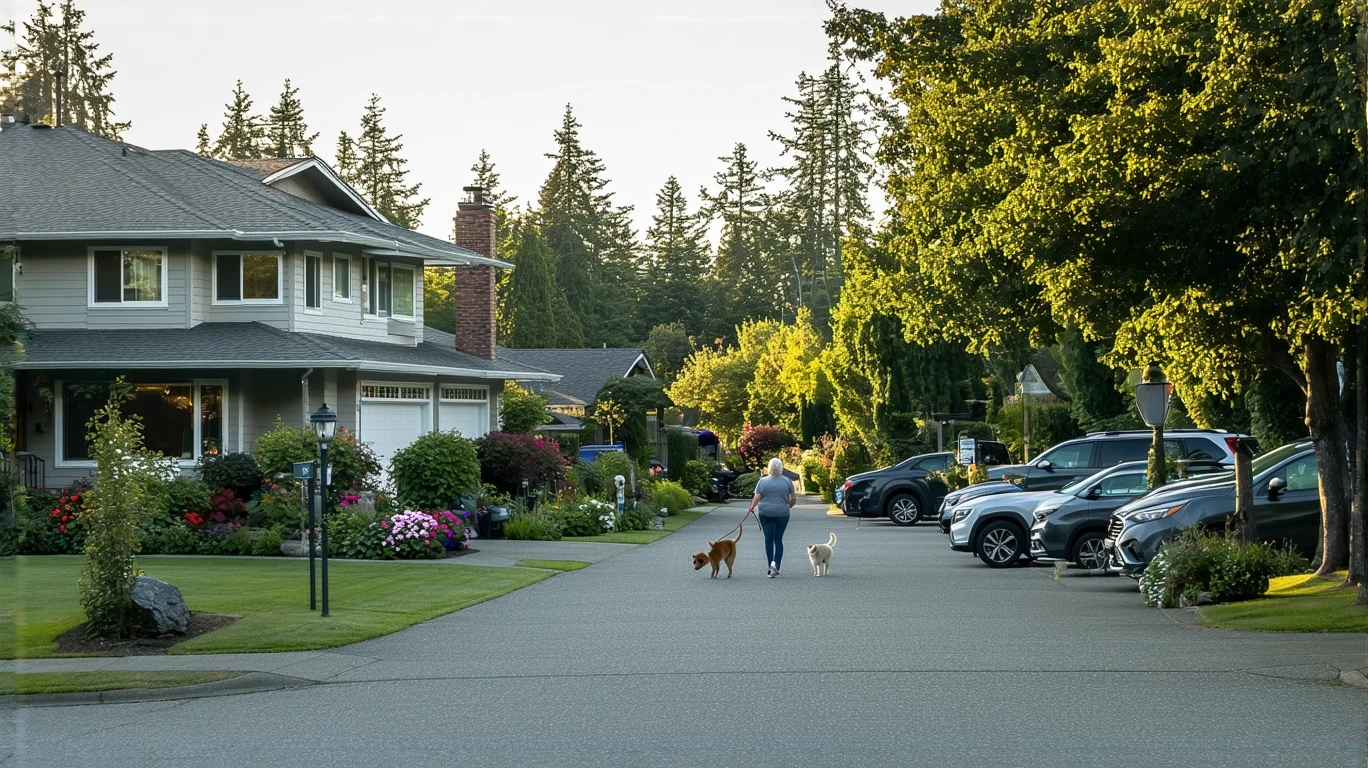
Lynnwood’s appeal to retirees isn’t about postcard views or resort-style amenities. It’s about daily function. The city’s pedestrian infrastructure is substantial—walkable pockets throughout the area mean you’re not trapped in a car for every errand. Rail transit access provides a real alternative to driving, which matters enormously as reflexes slow or night vision fades. And the density of grocery stores, pharmacies, and everyday services means less planning, less driving, and more spontaneity in how you structure your day.
The parks aren’t just plentiful—they’re integrated into the residential fabric, making it easy to build movement into your routine without needing a gym membership or a car trip. For retirees who want to stay active, that kind of access reduces friction. You’re more likely to walk when the park is three blocks away than when it requires a drive and a parking spot.
Washington’s tax structure also plays a significant role. The state collects no income tax, which means Social Security benefits, pension income, and retirement account withdrawals aren’t taxed at the state level. For retirees with substantial retirement income, that’s a meaningful advantage over states like Oregon or California. Property taxes do continue, and there’s no broad senior homestead exemption, but the income tax savings can offset that burden depending on your financial profile.
Healthcare Access for Seniors
Here’s where Lynnwood requires a clear-eyed assessment. The city has clinics and pharmacies—routine care, prescription access, and preventive services are locally available. But there is no hospital within city limits. That’s not a dealbreaker for everyone, but it’s a factor you need to weigh honestly based on your health profile and risk tolerance.
If you’re managing chronic conditions that are stable, need regular check-ups, or require physical therapy and routine specialist visits, Lynnwood’s local healthcare infrastructure can handle that. Medicare is widely accepted, and the presence of multiple clinics means you have options for primary care. Pharmacies are accessible, and many offer delivery or mail-order coordination for maintenance medications.
But if you have a cardiac event, a stroke, or a serious fall, you’re traveling for emergency care. The nearest hospital systems are in nearby communities, and while response times for emergency services are generally strong, the reality is that advanced care requires leaving Lynnwood. For some retirees, that’s fine—they’re healthy, they drive, and they’re comfortable with a 15- or 20-minute trip for anything serious. For others, especially those with complex medical histories or mobility limitations, that distance adds a layer of risk and stress that’s hard to ignore.
Specialist availability tends to cluster around hospital systems, so expect to travel for cardiology, orthopedics, or other specialty care. That’s common in suburban settings, but it’s worth mapping out where your specialists are before you move, not after.
Senior-Friendly Amenities and Services
Lynnwood’s mixed-use character and transit access create a foundation that supports independent living as you age. Because errands are broadly accessible and walkable pockets exist throughout the city, you’re not forced into a car-dependent routine. That matters when driving becomes harder, whether due to vision changes, medication side effects, or simple preference.
The city’s rail transit connection provides a real alternative for trips into Seattle or to other parts of the metro area. For retirees who want to stay socially connected, attend cultural events, or visit family without coordinating rides, that’s a significant quality-of-life asset. Senior shuttle services and ride programs typical of suburban areas add another layer of mobility support, though specifics vary and should be confirmed locally.
Shopping accessibility is strong. Grocery stores are plentiful, and many offer delivery or curbside pickup—services that become more valuable as carrying heavy bags or navigating crowded aisles becomes less appealing. Pharmacies are similarly accessible, and most coordinate with Medicare Part D plans and offer automatic refills.
Libraries and community centers typically offer programming aimed at older adults—everything from book clubs and lecture series to fitness classes and technology workshops. Lifelong learning opportunities, whether through community colleges or nonprofit organizations, are common in the metro area, and Lynnwood’s location makes those resources reachable without long commutes.
Cost of Living for Retirees
Lynnwood’s cost structure is the single biggest barrier for retirees considering a move. The regional price level runs about 51% above the national baseline, and that premium touches nearly everything—housing, healthcare, groceries, services. If you’re moving to Lynnwood on a fixed income, you need to run the numbers carefully and honestly.
The median home value sits at $596,200, which is out of reach for many retirees unless they’re selling a comparably priced home elsewhere or bringing substantial savings. For those who already own in Lynnwood, that value represents stability and equity, but for newcomers, it’s a steep entry point. Condos and townhomes in 55+ communities may offer a lower price tier, but you’re still operating in a high-cost region.
Renters face a median gross rent of $1,611 per month, and that’s before utilities. For retirees on Social Security and modest savings, that rent level consumes a large share of income. It’s manageable if you have a pension or significant retirement accounts, but it’s tight if you’re relying primarily on Social Security.
Property taxes in Washington are based on assessed value and don’t disappear in retirement. The state offers a property tax exemption program for senior and disabled homeowners with limited income and equity, but eligibility thresholds are strict. Most middle-income retirees won’t qualify, so plan for property taxes as an ongoing expense.
Utilities in Lynnwood reflect the Pacific Northwest climate—you’ll heat in winter, but cooling costs are generally modest. Electricity runs 13.81¢/kWh, and natural gas is priced at $17.38/MCF. A typical winter month might use around 1 MCF of gas for heating, translating to a base cost in that range before distribution fees. Some utilities offer senior rate assistance or budget billing programs, which can help smooth seasonal swings.
Healthcare costs for retirees depend heavily on your Medicare supplement choice and out-of-pocket exposure. In a high-cost region, expect premiums for Medigap or Medicare Advantage plans to reflect local pricing. Prescription costs vary by plan, but the presence of multiple pharmacies creates some competitive pressure.
Monthly Retirement Budget in Lynnwood
Here’s what a typical monthly retirement budget might look like in Lynnwood, based on average senior spending patterns and local costs. These are illustrative figures to help frame your planning—not guarantees.
| Category | Modest Retirement | Comfortable Retirement |
|---|---|---|
| Housing (rent or mortgage) | $1,600 | $2,400 |
| Healthcare (premiums + out-of-pocket) | $450 | $650 |
| Food (groceries + occasional dining) | $500 | $750 |
| Transportation (car, insurance, gas, transit) | $350 | $500 |
| Utilities (electric, gas, water, internet) | $200 | $250 |
| Entertainment & hobbies | $150 | $400 |
| Miscellaneous (clothing, personal care, gifts) | $200 | $350 |
| Total | $3,450 | $5,300 |
Estimates based on average senior spending patterns and local costs. Figures are illustrative and before taxes or one-time expenses.
A modest retirement budget assumes owned housing with a small mortgage or low rent, limited travel, and careful spending. A comfortable budget allows for a nicer living situation, more dining out, hobbies, and travel. Both assume Medicare coverage and relatively stable health.
Community and Social Opportunities
Retirement isn’t just about managing costs—it’s about staying connected. Lynnwood’s mixed-use neighborhoods and walkable pockets make it easier to run into neighbors, frequent the same coffee shop, or join a walking group that meets at a nearby park. That kind of informal social infrastructure matters more as formal work networks fade.
Senior centers and community programs typically offer everything from fitness classes and art workshops to volunteer coordination and social events. For retirees who want structure and routine, those programs provide a ready-made community. For those who prefer independence, the density of parks, libraries, and cafes means you can build your own social rhythm without needing organized activities.
Faith communities are present across denominations, and many offer programming specifically for older adults—whether that’s Bible study, service projects, or social gatherings. Volunteer opportunities abound, from food banks and literacy programs to environmental restoration and mentorship roles. For retirees who want to stay engaged and contribute, Lynnwood’s location within the broader Seattle metro area provides access to a wide range of causes and organizations.
Cultural activities—concerts, theater, lectures, museums—are reachable via transit or a short drive into Seattle. Seasonal events and farmers markets provide regular opportunities to get out and engage with the community. And for retirees with family in the area, Lynnwood’s accessibility and transit connections make it easy for relatives to visit without navigating downtown traffic or parking.
Aging in Place Considerations
Aging in place isn’t just about staying in the same house—it’s about whether your environment supports you as your needs change. Lynnwood’s walkable pockets, transit access, and broadly accessible errands create a foundation that works for many seniors, even as driving becomes less appealing or feasible.
Home modification services—grab bars, ramps, stairlifts, widened doorways—are available through contractors and occupational therapists familiar with aging-in-place needs. Some retirees tackle modifications proactively; others wait until mobility changes force the issue. Either way, the infrastructure exists locally.
In-home care availability is typical for a suburban area near a major metro. Home health aides, physical therapists, and visiting nurses can provide support that allows you to remain at home longer. Assisted living facilities and memory care communities are present in the region, though costs reflect the high regional price level.
The Pacific Northwest climate is generally mild, but it’s worth considering how cool, damp winters affect you personally. Arthritis and joint pain can flare in cold, wet weather, and shorter daylight hours in winter can affect mood. On the other hand, summers are temperate and rarely oppressively hot, which is easier on cardiovascular systems than extreme heat.
Walkability becomes more important as balance and endurance shift. Lynnwood’s pedestrian infrastructure means you can still get to a pharmacy, a park, or a coffee shop on foot even if you’re no longer comfortable driving. That independence is worth a great deal to many retirees.
FAQs About Retirement in Lynnwood
What’s the average cost of retirement in Lynnwood?
A modest retirement might run around $3,450 per month, while a more comfortable lifestyle could reach $5,300 or more. Housing is the largest variable—owned homes with paid-off mortgages reduce monthly costs significantly, while renters face a median of $1,611 per month before utilities.
How good is healthcare access for seniors?
Routine healthcare is accessible locally through clinics and pharmacies, and Medicare is widely accepted. However, there is no hospital in Lynnwood, so emergency and specialist care require travel to nearby communities. If you have complex medical needs, map out where your providers are before committing to the area.
Are there active senior communities?
Lynnwood offers a mix of independent living in standard neighborhoods and some 55+ communities. The city’s walkability, parks, and transit access support active lifestyles, and community programs provide social connection. It’s not a resort-style retirement destination, but it’s far from isolating.
What are the tax implications of retiring in Washington?
Washington has no state income tax, so Social Security, pensions, and retirement account withdrawals aren’t taxed at the state level. That’s a significant advantage. Property taxes do continue in retirement, and sales tax is relatively high, but for retirees with substantial income, the lack of income tax often outweighs those factors.
Making the Move: Is Lynnwood Right for Your Retirement?
Lynnwood works best for retirees who value urban infrastructure—walkability, transit, accessible errands—and who are either already established in the housing market or moving from an equally expensive area. The lack of state income tax is a real financial advantage, and the city’s parks, mixed-use character, and transit access support independent living as mobility changes.
But the cost structure is unforgiving for retirees on modest fixed income, and the absence of a hospital is a legitimate concern for those with complex health needs. If you’re entering the housing market as a renter or buyer, run the numbers carefully. If you need frequent access to specialists or emergency care, map out drive times and consider whether that distance feels manageable in a crisis.
For Carol and Dennis, the decision came down to priorities. They valued walkability and transit more than rock-bottom costs. They were healthy enough that the hospital distance felt acceptable. And they appreciated that Lynnwood didn’t force them to choose between urban amenities and suburban calm. It wasn’t perfect—nothing is—but it fit the life they wanted to build.
How this article was built: In addition to public economic data, this article incorporates location-based experiential signals derived from anonymized geographic patterns—such as access density, walkability, and land-use mix—to reflect how day-to-day living actually feels in Lynnwood, WA.