
“We moved to Lemon Grove for the schools, but stayed for the neighbors.”
That sentiment captures something essential about this San Diego suburb: it’s a place where infrastructure and community tend to align in ways that surprise newcomers. Lemon Grove sits just east of downtown San Diego, close enough to feel the metro’s energy but far enough to maintain its own rhythm. What emerges in local conversation isn’t a debate about whether it’s “good” or “bad,” but rather a recurring question: does the tradeoff between suburban form and unexpected accessibility match what you actually need day-to-day?
For families with kids, the answer tends to be yes. Schools and playgrounds are woven throughout the city, parks feel integrated rather than isolated, and running errands doesn’t require the kind of logistical choreography that defines many suburban communities. For people who expected car-dependent sprawl and found rail transit, grocery density, and green space instead, Lemon Grove feels like a pleasant miscalculation. But for those seeking urban walkability, nightlife texture, or on-site medical care, the city’s low-rise suburban character and healthcare gaps create friction that no amount of park access can fully resolve.
What People Feel About Living Here
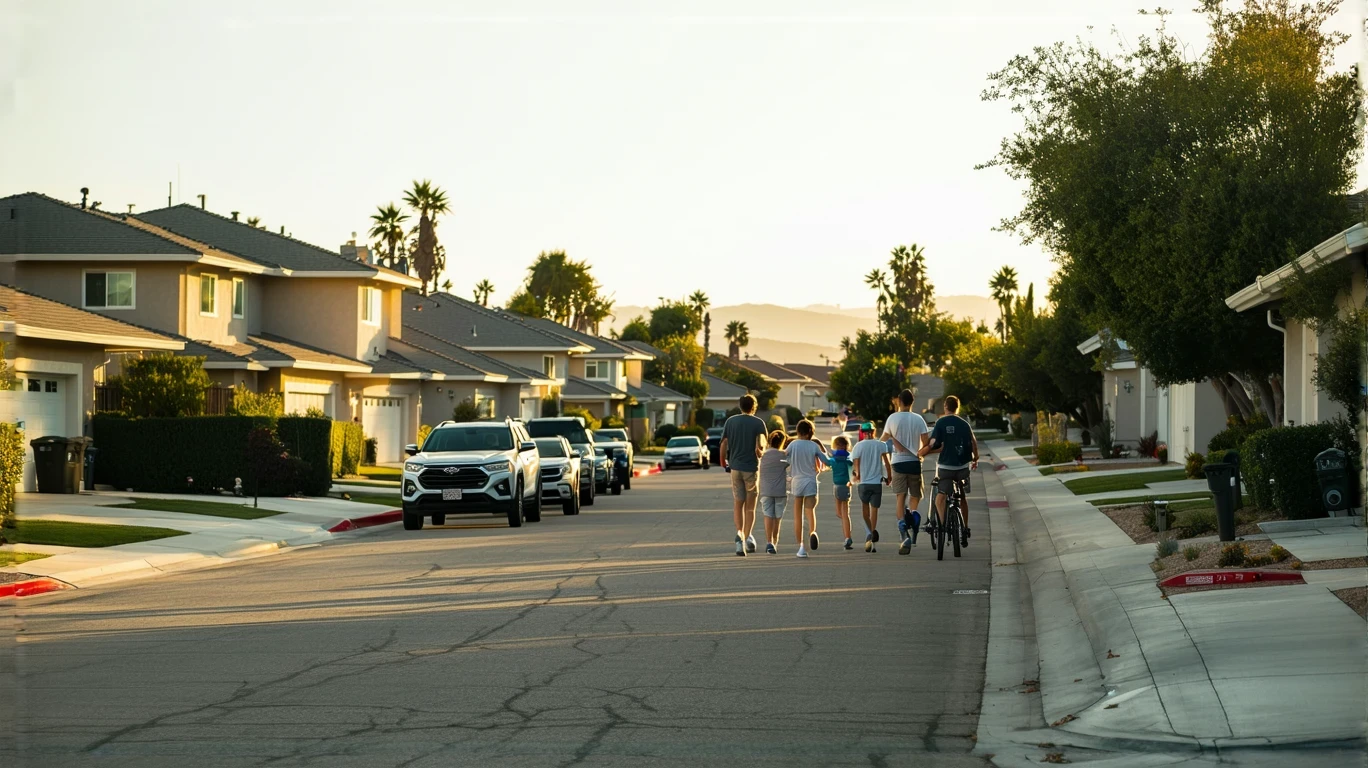
The emotional center of Lemon Grove revolves around a specific kind of relief: the relief of finding more than you expected without paying for what you didn’t want. People talk about being able to walk to the grocery store from certain blocks, catching the trolley into downtown San Diego without the stress of parking, and having multiple parks within easy reach of home. These aren’t the hallmarks of a dense urban core, but they’re also not the hallmarks of a place where every trip requires a car and a plan.
What tends to feel rewarding here is the combination of family infrastructure and green space. Parents describe a rhythm where kids can bike to school, families can spend weekend mornings at the park without driving, and the presence of other families creates a low-key sense of community cohesion. The city doesn’t demand participation, but it makes casual connection easy.
What tends to feel limiting is the healthcare gap and the mismatch between accessibility and urban texture. There’s no hospital in Lemon Grove, and even routine medical care beyond a pharmacy often means a trip to La Mesa or another neighboring area. For households managing chronic conditions, aging parents, or young children, that absence becomes a recurring source of planning friction. Similarly, people who moved here hoping for walkable urbanism often find that while errands are accessible, the experience still feels suburban—low-rise, car-present, and lacking the spontaneity of denser neighborhoods.
The kinds of people who feel “at home” here tend to value practical accessibility over aesthetic urbanism, prioritize family logistics over nightlife options, and appreciate green space as a daily amenity rather than a weekend destination. The kinds of people who feel restless tend to want more vertical density, more healthcare infrastructure, or more evening activity beyond chain restaurants and quiet streets.
Social Media Buzz in Lemon Grove
Local online discussion tends to organize around a few recurring emotional categories: pride in the trolley connection, frustration with being overlooked in favor of flashier suburbs, and protective affection for the city’s parks and school quality. Platforms like Facebook groups and regional subreddit threads reflect a community that knows it’s not the headline city in the metro but feels undervalued nonetheless.
One common thread sounds like this: “People sleep on Lemon Grove because they think it’s just another suburb, but we’ve got the trolley, actual grocery stores you can walk to, and parks that aren’t just dirt and a swing set.” There’s a recurring sense that the city delivers more functional accessibility than its reputation suggests, and locals feel both validated and annoyed when newcomers express surprise.
Another theme centers on cost pressure and comparison: “We’re paying San Diego prices but we don’t have a hospital, and that feels like a gap that should matter more in the conversation.” This isn’t anger—it’s more like fatigue with being asked to accept metro-level costs without metro-level services. The healthcare absence comes up often, usually framed as an inconvenience that becomes a bigger deal over time.
A third category is quieter but persistent: affection for the parks and green space. People post photos of weekend mornings at local parks, mention the presence of water features, and describe the city’s outdoor environment as one of its most consistently rewarding aspects. It’s not dramatic praise, but it’s steady and genuine.
Local News Tone
Coverage of Lemon Grove tends to frame the city through the lens of metro integration and evolving identity. The tone isn’t crisis-oriented or celebratory—it’s transitional. Stories often explore how the city is navigating growth, infrastructure investment, and its role within the broader San Diego region.
Simulated topic buckets that reflect recurring themes include:
- “Trolley Access Reshapes Daily Commutes for Suburban Families”
- “Residents Weigh Convenience Against Missing Healthcare Services”
- “Parks and Green Space Anchor Community Identity”
- “Lemon Grove Balances Affordability Pressure with Metro Proximity”
- “Schools and Playgrounds Draw Young Families to Established Neighborhoods”
The framing tends to acknowledge both what’s working—transit, errands access, family infrastructure—and what’s missing—hospitals, urban texture, evening activity. There’s rarely a declared winner in these narratives; instead, the coverage reflects a city in conversation with itself about what it wants to become.
Review-Based Public Perception
On platforms like Google Reviews, Yelp, and neighborhood apps, Lemon Grove earns praise and criticism that align closely with expectation matching. People who wanted suburban comfort with better-than-average access tend to write positive reviews. People who wanted walkable urbanism or comprehensive services tend to write disappointed ones.
Positive sentiment often highlights errands accessibility and park quality. Reviewers mention being able to walk to grocery stores such as regional chains, appreciate the trolley connection for avoiding downtown parking, and describe parks as clean, well-maintained, and genuinely usable. Families specifically call out the presence of playgrounds and schools, framing the city as a place where quality of life factors align for households with kids.
Neutral-to-mixed reviews tend to focus on the gap between accessibility and urban feel. One recurring sentiment sounds like: “You can get to what you need, but it still feels like you’re in the suburbs—wide streets, low buildings, not much going on after dark.” This isn’t necessarily a complaint, but it reflects a mismatch for people who expected the trolley and grocery density to come with more urban texture.
Critical reviews almost always mention healthcare. The absence of a hospital comes up repeatedly, often framed as a dealbreaker for families with young kids, retirees, or anyone managing ongoing medical needs. The presence of pharmacies helps with routine prescriptions, but it doesn’t resolve the friction of needing to leave the city for anything more serious.
Neighborhood variation is sometimes noted in general terms—newer planned areas versus older pockets—but the differences tend to be about home age and lot size rather than walkability or amenity access, which feel relatively consistent across the city.
Comparison to Nearby Cities
| Aspect | Lemon Grove | La Mesa | Spring Valley |
|---|---|---|---|
| Transit Access | Trolley present, strong metro link | Trolley present, more urban stops | Bus-dependent, less rail access |
| Errands Walkability | Broadly accessible, high grocery density | Village feel, more pedestrian texture | Car-oriented, lower density |
| Family Infrastructure | Strong schools and playgrounds | Strong, more established reputation | Present but less integrated |
| Healthcare | Limited, no hospital | Hospital present, full services | Limited, similar gaps |
| Urban Feel | Low-rise suburban, mixed mobility | More vertical, walkable downtown | Suburban, car-dominant |
La Mesa offers more urban texture and on-site healthcare, which makes it a better fit for people who want a walkable downtown experience or need hospital access without leaving the city. It tends to feel more polished and established, but that often comes with higher housing pressure and more competition for rentals and homes.
Spring Valley shares Lemon Grove’s suburban form but lacks the trolley connection and the same level of errands accessibility. It tends to appeal to people who prioritize larger lots and lower density over transit access, but it requires more driving for daily logistics.
Lemon Grove sits between these two: more accessible than Spring Valley, less urban than La Mesa. If you value family infrastructure, green space, and rail transit but can manage the healthcare gap and don’t need downtown walkability, Lemon Grove tends to deliver more alignment than its reputation suggests. If you need hospital access or want evening street life, La Mesa is the clearer choice. If you want maximum space and don’t mind car dependency, Spring Valley offers that tradeoff.
What Locals Are Saying
“We thought we’d have to drive everywhere, but I walk to the grocery store twice a week and my kids bike to school. It’s not urban, but it’s not as car-dependent as I expected.”
“The trolley is a game-changer for getting downtown. I don’t love the suburban vibe, but not dealing with San Diego parking makes up for a lot.”
“The parks here are genuinely great—clean, well-kept, and there are enough of them that you’re not fighting for space on weekends. That matters more than I thought it would.”
“No hospital is a real problem. We had a scare with our toddler and had to drive to La Mesa, and that ten minutes felt a lot longer than it should have. It’s the one thing I’d change.”
“I moved here for affordability compared to other San Diego suburbs, but the cost of gas and groceries still stings. You’re not escaping metro prices, you’re just getting fewer services for them.”
“It’s quiet, family-oriented, and people actually talk to each other at the park. If you’re looking for nightlife or walkable urbanism, this isn’t it. But if you want a place where your kids can grow up with other kids around, it works.”
“I’ve been here twenty years and watched it change. The trolley brought more people, the parks got better, but we still don’t have a hospital and that’s embarrassing for a city this size.”
Does Lemon Grove Feel Like a Good Fit?
Lemon Grove’s emotional profile is defined by the gap between expectation and delivery—and whether that gap works in your favor. For families with kids who value school quality, park access, and the ability to run errands without constant driving, the city tends to feel like a well-kept secret. The trolley connection adds a layer of metro access that many suburban communities lack, and the integrated green space creates a rhythm of outdoor life that doesn’t require weekend road trips.
For people managing healthcare needs, seeking urban walkability, or wanting evening activity beyond chain dining, the city’s limitations become recurring sources of friction. The absence of a hospital isn’t just an inconvenience—it’s a planning burden that affects daily decision-making. The low-rise suburban form means that even with grocery density and transit access, the experience still feels car-present and horizontally spread.
This tends to work for households that prioritize logistics over aesthetics, value green space as a daily amenity, and can manage healthcare through neighboring cities. This tends to frustrate households that need on-site medical infrastructure, want spontaneous walkable urbanism, or expected metro prices to come with metro-level services across the board.
Lemon Grove doesn’t ask you to love it unconditionally. It asks whether the tradeoffs it offers—accessible errands, strong family infrastructure, rail transit, integrated parks, and suburban form—match the tradeoffs you’re willing to make. For the right household, the answer is a quiet, confident yes. For others, the healthcare gap and urban texture mismatch make neighboring cities a better fit.
If you’re still weighing whether Lemon Grove aligns with your needs, exploring where money goes each month and how daily logistics shape your routine can help clarify whether the city’s strengths outweigh its limitations.
How this article was built: In addition to public economic data, this article incorporates location-based experiential signals derived from anonymized geographic patterns—such as access density, walkability, and land-use mix—to reflect how day-to-day living actually feels in Lemon Grove, CA.
The perspectives shown reflect commonly expressed local sentiment and recurring themes in public discussion, rather than individual accounts.