
Monthly Expenses: Needs vs. Wants in Lemon Grove
| Category | Type | What Drives It |
|---|---|---|
| Housing | Need | San Diego metro pressure; space vs. cost tradeoffs |
| Utilities | Need | Electricity 34.71¢/kWh; cooling-season exposure |
| Transportation | Need | Gas $5.76/gal; rail option available but car still useful |
| Groceries | Need | Broadly accessible locally; regional price level 11% above national average |
| Healthcare | Need | Limited local access; travel required for most medical care |
| Dining Out | Want | Discretionary; food establishment density high |
| Recreation | Want | Park density high; water features present; outdoor access integrated |
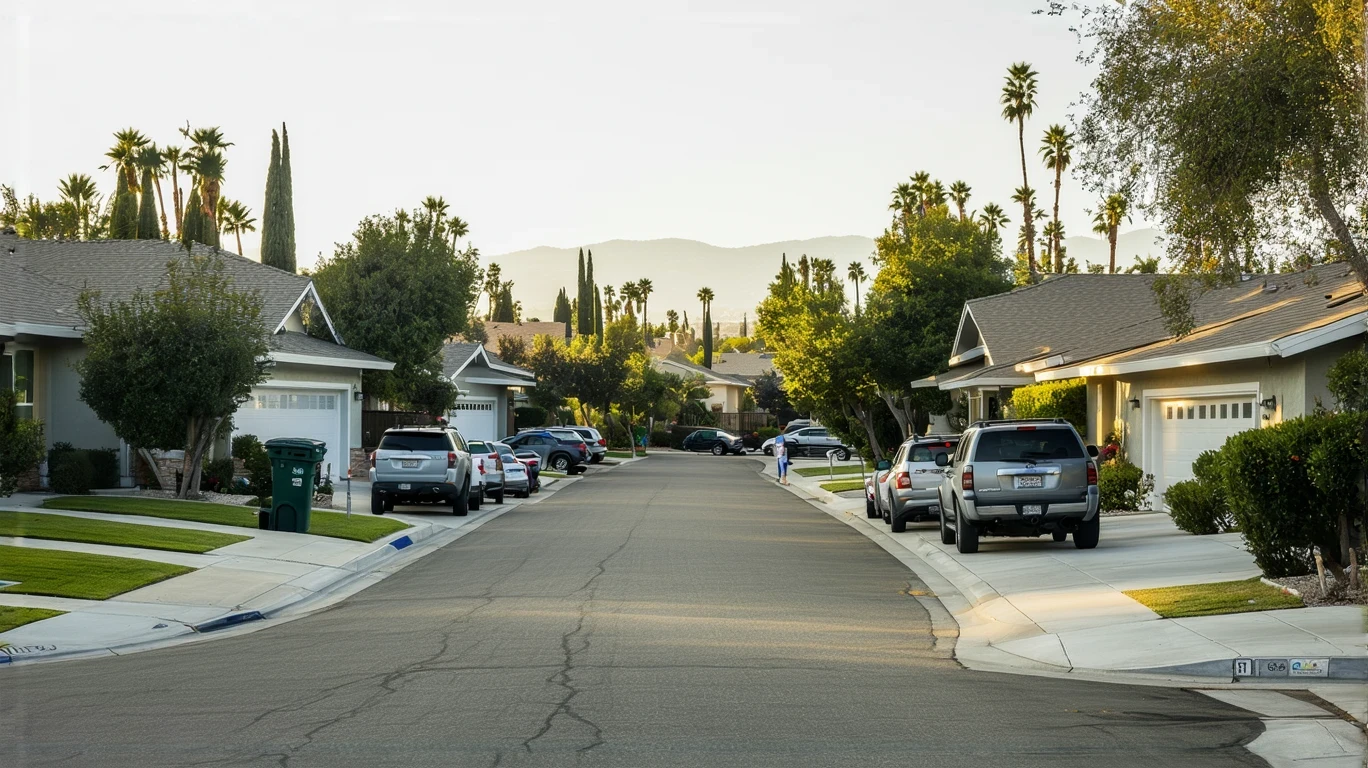
What “Living Comfortably” Means in Lemon Grove
Comfort in Lemon Grove isn’t about luxury—it’s about having enough margin that your bills don’t dictate every decision. It means you can run the air conditioning during hot stretches without calculating the cost daily. It means choosing where to live based on what works for your household, not just what you can barely afford. It means absorbing an unexpected car repair or medical bill without unraveling your month.
In this low-rise suburban community within the San Diego metro, comfort also means accepting certain realities: electricity rates of 34.71¢ per kilowatt-hour shape how you think about cooling. Gas prices at $5.76 per gallon influence whether you drive or take the rail line that serves the area. The fact that grocery stores and food options are broadly accessible nearby matters more than you’d expect—it means fewer long drives and more control over your time.
Comfort here is contextual. What feels spacious and manageable to someone coming from a denser, pricier metro might feel stretched to someone expecting more square footage or lower utility bills. The outdoor environment is genuinely strong—park density is high, water features are present, and green space is woven into daily life. For households that value that access, it’s a meaningful asset. For those prioritizing other factors, it’s just background.
Expectations matter as much as income. Lemon Grove offers a suburban structure with solid family infrastructure—schools and playgrounds are present throughout—but limited local healthcare access. That tradeoff works well for some households and creates friction for others. Comfort depends on whether your lifestyle aligns with what the place actually provides.
Where Income Pressure Shows Up First
Housing pressure in Lemon Grove flows from its position within the broader San Diego metro, where demand consistently outpaces supply. Even in a smaller city like this, that regional dynamic shapes what’s available and what it costs. The tradeoff isn’t whether housing will stretch your budget—it’s whether you’re willing to accept less space, an older building, or a longer commute to make the math work.
Utility costs hit next, and they hit harder than many newcomers expect. The electricity rate of 34.71¢ per kilowatt-hour is notably elevated, and in a climate where cooling dominates summer months, that rate translates directly into monthly volatility. Households that assume utility bills will behave like they did in other regions often find themselves recalibrating within the first few billing cycles. Natural gas, priced at $23.78 per thousand cubic feet, adds to the exposure during cooler months, though heating demand here is far lighter than cooling.
Transportation costs layer on top. Gas at $5.76 per gallon makes every commute decision more expensive, whether you’re driving to work, ferrying kids to activities, or running errands. The presence of rail transit offers an alternative for some trips, but the mixed mobility texture—moderate pedestrian infrastructure relative to roads—means most households still rely on a car for day-to-day logistics. The question isn’t whether you’ll drive; it’s how much you’ll drive and whether you can structure your routine to minimize it.
For families, pressure compounds. Strong family infrastructure—schools and playgrounds distributed throughout the area—reduces logistical friction, but limited local healthcare access creates a different burden. Routine medical needs beyond a pharmacy require travel, and that travel costs time and money. Families with young children or members with ongoing health needs feel this gap more acutely than others.
The cost structure in Lemon Grove rewards households that can absorb variability. If your income leaves little room for month-to-month swings in utilities or transportation, the pressure arrives quickly and doesn’t ease.
How the Same Income Feels Different by Household
A single adult living in Lemon Grove faces a different set of pressures than a couple or a family, even at similar income levels. For someone on their own, housing costs claim a larger share of take-home pay because there’s no one to split rent or mortgage payments with. Utility bills—especially during summer months when electricity costs spike—hit harder on a single income. The broadly accessible grocery and food options nearby help reduce transportation costs and time spent driving, which matters when you’re managing everything solo.
The rail transit option provides real value for single adults whose work or social life aligns with the line. It’s a way to avoid some of the high gas costs and the wear of daily driving. Limited local healthcare access is less of a burden if you’re young and healthy, though it becomes more noticeable if you need regular medical care. The integrated outdoor environment—high park density, water features, green space woven into the area—offers low-cost recreation, which helps when discretionary income is tight.
Couples experience the same place differently. Sharing housing costs immediately eases the largest pressure point, and dual incomes create more flexibility around utility volatility and transportation expenses. The low-rise character and outdoor access appeal to couples looking for a quieter, less dense environment than what’s typical closer to the urban core. The mixed mobility texture—some walkable areas, but still car-dependent overall—works fine when two people can coordinate errands and commutes. Healthcare limitations matter less if both partners are healthy, though they become more visible if either has ongoing medical needs.
Families encounter a different equation entirely. The strong family infrastructure here—schools and playgrounds present throughout—reduces logistical complexity and supports daily routines. The integrated green space and high park density provide free or low-cost outlets for children, which matters when budgets are stretched. But utility costs scale with household size, and transportation expenses multiply when multiple people need to get to different places. Limited local healthcare access creates real friction for families with young children or anyone requiring regular medical attention—every appointment means travel, and travel means time and gas money.
Households at similar income levels often experience very different pressure depending on how many people are sharing costs, how much driving they can avoid, and how well their needs align with what Lemon Grove actually offers. Income alone doesn’t determine comfort—structure and expectations do.
The Comfort Threshold (Qualitative)
The comfort threshold in Lemon Grove isn’t a number—it’s the point where your income stops dictating every tradeoff. It’s when you can choose housing based on what fits your household, not just what you can technically afford. It’s when a high electricity bill during a hot month is annoying but not destabilizing. It’s when you can absorb an unexpected expense without immediately cutting back elsewhere.
Comfort arrives when transportation costs become predictable rather than a monthly gamble. That might mean your commute is short enough that high gas prices don’t dominate your budget, or it means you’ve structured your routine to use the rail line for some trips. It means you’re not constantly calculating whether a drive is worth it.
For families, the threshold includes having enough margin that strong family infrastructure and outdoor access feel like assets rather than consolations. It means the lack of local healthcare access is an inconvenience you can manage, not a crisis every time someone needs care. It means you can take advantage of the broadly accessible grocery and food options without every shopping trip being a budget negotiation.
The transition happens when bills stop shaping behavior. When you can run the air conditioning without guilt. When you can replace a worn-out appliance without waiting for tax season. When saving becomes something you do regularly, not something you hope to do eventually.
Comfort in Lemon Grove is about alignment. If your income provides enough cushion to handle the specific pressures this place creates—utility volatility, transportation costs, housing tradeoffs—then it works. If it doesn’t, the gap between income and expenses becomes the defining feature of daily life.
Why Online Cost Calculators Get Lemon Grove Wrong
Most cost-of-living calculators treat Lemon Grove as a data point, not a place. They’ll tell you the regional price level is 11% above the national average, or they’ll estimate a monthly total based on generic assumptions about household size and spending. What they won’t tell you is how the specific structure of life here creates pressures that don’t show up in averages.
Calculators assume utilities are a fixed percentage of income, but they don’t account for how an electricity rate of 34.71¢ per kilowatt-hour interacts with a climate where cooling dominates summer months. They don’t explain that utility bills here swing more than in places with milder weather or lower rates. They give you a number, but they don’t tell you that the number will vary significantly depending on the season and how much exposure you’re willing to tolerate.
Transportation estimates are similarly misleading. A calculator might include a line item for gas and car maintenance, but it won’t explain how the mixed mobility texture here—some walkable areas, but still car-dependent overall—shapes your actual costs. It won’t tell you that rail transit is present but that most households still drive for daily errands. It won’t account for how gas at $5.76 per gallon changes the math on every trip, or how the broadly accessible grocery and food options nearby can reduce driving if you structure your routine around them.
Healthcare costs are especially distorted. Calculators include insurance premiums and maybe a co-pay estimate, but they don’t factor in the time and travel costs created by limited local healthcare access. They don’t explain that routine medical care beyond a pharmacy requires leaving the area, and that travel requirement adds friction and expense that doesn’t appear in any budget template.
The biggest gap is lifestyle assumptions. Calculators don’t know whether you value the integrated outdoor environment—high park density, water features, green space—or whether you’d trade that for lower utility bills. They don’t know whether strong family infrastructure matters to you, or whether limited healthcare access is a dealbreaker. They give you a total, but they don’t help you understand whether your expectations match what Lemon Grove actually delivers.
People feel surprised after moving because the totals were accurate but the texture was wrong. The calculator said it was affordable, but it didn’t explain where the pressure would come from or how daily routines would need to adapt. It didn’t prepare them for the specific tradeoffs this place requires.
How to Judge Whether Your Income Fits Lemon Grove
Start by asking how much margin you have after housing. Not whether you can technically afford rent or a mortgage, but whether you’ll have enough left over to absorb the other pressures that define life here. If monthly expenses leave you with little flexibility, the utility volatility and transportation costs will arrive quickly and won’t ease.
Consider your tolerance for seasonal swings. Electricity bills here don’t stay flat—they spike during hot months when cooling demand is high. Can you absorb a significantly higher bill in summer without cutting back elsewhere? If variability creates stress, that’s a signal that your income might not provide the cushion this place requires.
Think about your transportation routine. How much will you need to drive? Can you structure your commute or daily errands to take advantage of the rail line, or will you be in the car constantly? At $5.76 per gallon, every mile adds up. If your work or household logistics require extensive driving, that cost will be a persistent pressure. The broadly accessible grocery and food options nearby help, but only if you can organize your routine to minimize longer trips.
Evaluate your healthcare needs. If you or anyone in your household requires regular medical care, the limited local access here means travel for most appointments. That’s time and money, and it’s a recurring friction point. If your health needs are minimal, it’s less of an issue. If they’re significant, it’s a gap you’ll feel often.
Ask yourself what you expect from daily life. Do you value outdoor access and green space? Lemon Grove delivers that—park density is high, water features are present, and the environment supports an active outdoor lifestyle. If that matters to you, it’s a genuine asset. If it doesn’t, it won’t compensate for other limitations.
For families, consider whether the strong infrastructure here—schools and playgrounds distributed throughout—aligns with your needs. If you have children, that infrastructure reduces logistical complexity and supports routines. If you don’t, it’s less relevant.
Finally, ask how much flexibility you expect month to month. Lemon Grove works well for households that can handle variability and adapt to the specific pressures here. It works less well for those who need predictability and tight control over every expense. If your income leaves little room for adjustment, the gap between what you earn and what this place costs will define your experience.
How this article was built: In addition to public economic data, this article incorporates location-based experiential signals derived from anonymized geographic patterns—such as access density, walkability, and land-use mix—to reflect how day-to-day living actually feels in Lemon Grove, CA.
FAQs About Living Comfortably in Lemon Grove
Is Lemon Grove affordable compared to the rest of San Diego County?
Lemon Grove sits within the San Diego metro, which means it shares the broader regional housing pressure, but it typically offers more accessible price points than areas closer to the coast or urban core. That doesn’t make it inexpensive—it means the tradeoffs are different. You’re more likely to find space and a suburban structure here, but you’ll still face elevated utility and transportation costs. Affordability is relative, and it depends entirely on what you’re comparing it to and what you’re willing to accept.
How much do utilities really cost in Lemon Grove?
Electricity is billed at 34.71¢ per kilowatt-hour, which is notably elevated and drives significant seasonal variability. During hot months, cooling costs dominate, and bills swing higher than many newcomers expect. Natural gas is priced at $23.78 per thousand cubic feet, adding to heating costs during cooler months, though heating demand here is lighter than in many other regions. The key isn’t the average—it’s whether your income can absorb the swings without forcing you to cut back elsewhere.
Can you live in Lemon Grove without a car?
Rail transit is present and offers a real alternative for some trips, but the mixed mobility texture here means most households still rely on a car for day-to-day logistics. Grocery and food options are broadly accessible nearby, which reduces the need for long drives, but the overall structure still favors car ownership. If your work and routine align with the rail line, you can reduce driving significantly. If they don’t, you’ll feel the limitations quickly.
Is Lemon Grove a good place for families?
Lemon Grove offers strong family infrastructure—schools and playgrounds are distributed throughout, and park density is high with integrated green space. That structure supports daily routines and provides low-cost outlets for children. The limitation is healthcare: local access is limited, meaning most medical care requires travel. For families with young children or ongoing health needs, that creates recurring friction. For families whose members are generally healthy, it’s less of an issue. The place works well for families whose needs align with what it offers.
What’s the biggest financial surprise people face after moving to Lemon Grove?
Utility bills. Many newcomers underestimate how much the elevated electricity rate and seasonal cooling demand will affect their monthly costs. The second surprise is transportation: gas prices at $5.76 per gallon make every commute and errand more expensive than expected, especially for households that assumed they’d drive less. The third is where money goes—costs that seemed manageable in theory feel tighter in practice because the specific pressures here don’t match the generic assumptions most people bring with them.