
‘We moved to La Mesa for the schools, but stayed for the neighbors.’ That’s the kind of thing you hear often here—a quiet pride in a place that doesn’t shout but delivers. La Mesa sits just east of San Diego, close enough to feel the pull of the coast but far enough inland to carve out its own rhythm. It’s a city where people tend to feel grounded rather than dazzled, where the tradeoff isn’t perfection versus compromise, but predictability versus excitement.
Understanding whether La Mesa feels like home depends less on what the city has and more on what you’re hoping to escape or find. For some, it’s the relief of suburban order without complete car dependence. For others, it’s the frustration of being neither fully walkable nor fully rural. The vibe here isn’t neutral—it’s specific, and it rewards alignment.
The Emotional Landscape of La Mesa
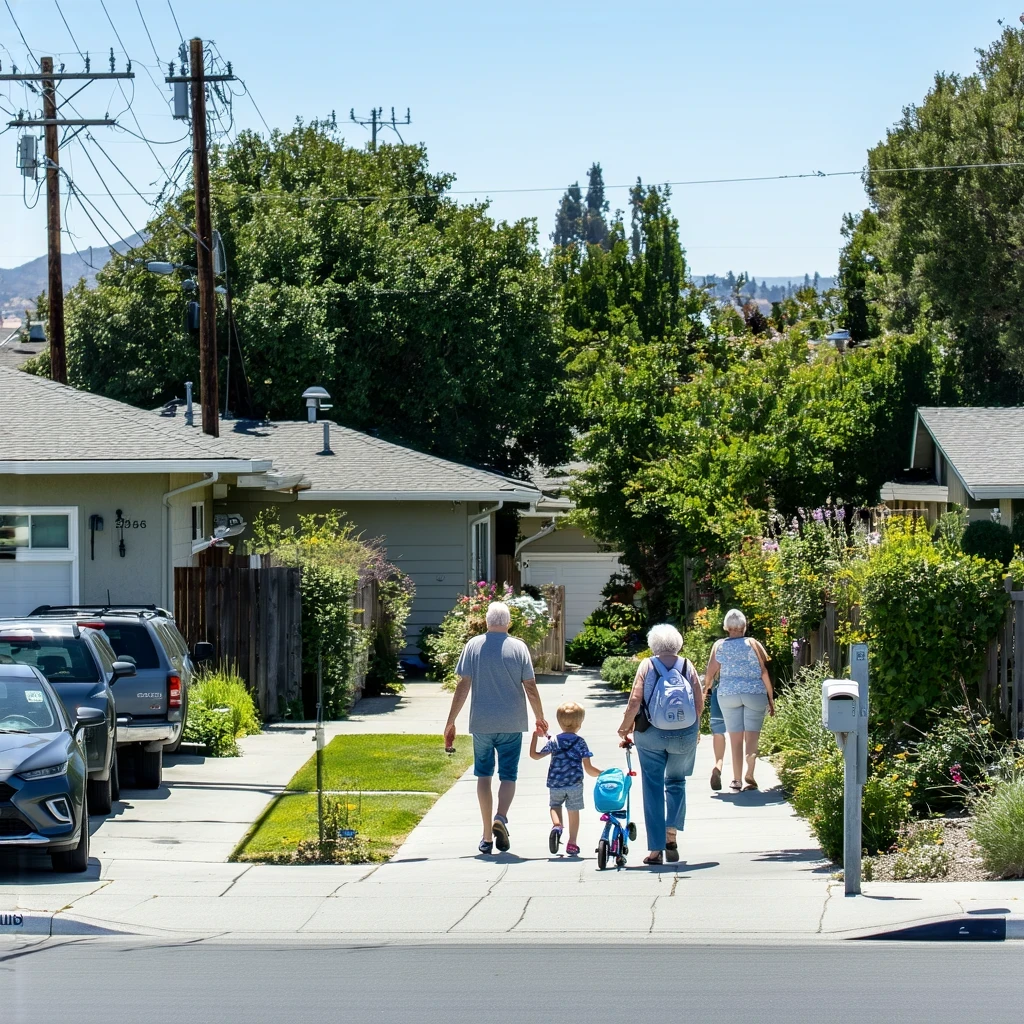
La Mesa’s emotional tone is rooted in a tension between preservation and access. People who thrive here tend to value neighborhood continuity, the ability to run errands without a production, and the security of having a hospital, parks, and schools within reach. The city’s low-rise character keeps the streetscape human-scaled, and the presence of rail transit offers a psychological escape hatch even if most residents still drive daily.
What tends to feel rewarding: grocery and food access that reduces daily friction, integrated green space that makes outdoor life feel natural rather than planned, and a community identity that hasn’t been swallowed by sprawl or gentrification. La Mesa residents often describe a sense of being “in the mix” without being overwhelmed—close to San Diego’s jobs and culture, but insulated from its intensity and cost.
What tends to feel limiting: the mixed walkability means you can stroll some blocks and errands, but the car remains the practical default for most households. For younger singles or those seeking dense nightlife, late-hour spontaneity, or walkable entertainment districts, La Mesa can feel like a place you leave on weekends rather than live fully during them. The city’s strength—its suburban steadiness—is also its constraint.
Who feels at home: families who want safety and access without coastal prices, retirees seeking healthcare security and outdoor space, remote workers who value day-to-day costs predictability and the option of rail transit for occasional commutes. Who feels restless: young professionals craving walkable nightlife, car-free idealists, and renters stretched thin by costs that don’t quite match the amenities of denser urban cores.
Social Media Buzz in La Mesa
On platforms like Facebook neighborhood groups, Reddit threads, and X (formerly Twitter), La Mesa’s online conversation tends to circle around a few recurring emotional themes: pride in “village” identity, concern about traffic and parking in commercial areas, and debate over what kinds of growth preserve character versus erode it.
There’s a protective tone when outsiders dismiss La Mesa as “just another suburb.” Locals push back, pointing to the walkable pockets, the farmer’s market culture, the tree-lined streets that feel intentional rather than cookie-cutter. But there’s also fatigue—particularly around congestion near shopping corridors and the challenge of finding street parking during busy hours.
“It’s not perfect, but it’s ours,” one commenter might say. “You get the San Diego perks without the San Diego rent,” another adds. A third voice chimes in: “I just wish we had more to do after 9 p.m. without driving twenty minutes.” The conversation isn’t angry; it’s negotiated. People aren’t trying to leave—they’re trying to articulate what they’ve gained and what they’ve traded away.
Local News Tone
Local coverage of La Mesa tends to frame the city through the lens of managed growth, community identity, and infrastructure adaptation. Headlines don’t scream crisis or transformation—they hum with the steady friction of a place figuring out how to evolve without losing itself.
Simulated topic themes you might encounter:
- “Community Debates What Growth Should Look Like”
- “New Dining Options Arrive as Neighborhood Character Evolves”
- “Residents Weigh Convenience Against Parking Pressure”
- “Local Parks See Increased Use as Outdoor Culture Grows”
- “Transit Access Expands, But Most Still Drive”
The tone is rarely celebratory or alarmist. Instead, it reflects a community in conversation with itself—aware of tradeoffs, protective of what works, cautious about what might change. There’s an undercurrent of pragmatism: people here aren’t waiting for La Mesa to become something else. They’re asking how to keep it functional as pressures mount.
Review-Based Public Perception
On Google reviews, Yelp, and Nextdoor-style platforms, La Mesa’s public perception splits along expectation lines. Those who wanted suburban comfort with urban-adjacent convenience tend to leave warm reviews. Those who expected walkable urbanism or nightlife density tend to express mild disappointment.
Praise often centers on errands accessibility—the ability to hit multiple grocery stores, pharmacies, and cafes without a long drive. The presence of a hospital gets mentioned frequently by older residents and parents, who describe it as a “relief” and a “safety net.” Parks come up often, particularly among families and dog owners, who appreciate that green space feels integrated rather than isolated.
Complaints are rarely harsh but often wistful. “Great for raising kids, but not much for singles,” one review reads. “Love the neighborhood feel, but wish I didn’t need my car for everything,” says another. A third notes, “It’s quiet and safe, which is exactly what we wanted—but if you’re looking for nightlife, look elsewhere.”
Neighborhood variation exists but tends to be described in broad strokes: newer planned areas feel more polished and car-dependent, while older pockets near the village core offer more walkable texture and architectural variety. The difference isn’t dramatic—it’s more about whether your block has sidewalks and street trees or cul-de-sacs and driveways.
Comparison to Nearby Cities
| Aspect | La Mesa | El Cajon | Lemon Grove |
|---|---|---|---|
| Overall Vibe | Suburban steadiness with village pride | Grittier, more working-class, less polished | Quieter, more residential, fewer amenities |
| Walkability Feel | Mixed—pockets of pedestrian life, car still practical | Car-dominant, limited pedestrian texture | Very car-dependent, minimal walkable areas |
| Errands Accessibility | High—grocery and food options abundant | Moderate—options present but more spread out | Limited—fewer choices, more driving required |
| Community Identity | Protective of “village” character, cohesive | Diverse, evolving, less unified identity | Low-key, family-oriented, under-the-radar |
| Cost Perception | Expensive but less than coastal San Diego | More affordable, trade-off in polish | Budget-friendly, fewer amenities |
La Mesa occupies a middle emotional ground between El Cajon’s rougher edges and Lemon Grove’s quieter anonymity. If you want more affordability and don’t mind a grittier feel, El Cajon offers that trade. If you want maximum quiet and minimal commercial activity, Lemon Grove delivers—but you’ll sacrifice errands convenience and walkable texture. La Mesa’s appeal is in the balance: enough access to feel functional, enough neighborhood character to feel rooted, and enough proximity to San Diego to feel connected without being consumed.
None of these cities “wins.” The question is which set of tradeoffs matches your daily life. La Mesa tends to work for people who want suburban order with urban-adjacent optionality. It tends to frustrate people who want either extreme—pure walkability or pure space.
What Locals Are Saying
“We looked at places closer to the coast, but the prices were insane. La Mesa gave us a yard, good schools, and we’re still twenty minutes from the beach. It’s not flashy, but it works.”
“I love that I can walk to coffee and the farmer’s market, but I still need my car for almost everything else. It’s not as walkable as I hoped, but it’s better than pure suburbia.”
“Moved here when I retired. The hospital being nearby was a big factor, and the parks are great for daily walks. It’s calm without being isolated.”
“As a single person in my twenties, La Mesa feels a little sleepy. I drive to North Park or downtown for anything social. It’s fine, just not where the energy is.”
“The neighbors actually talk to each other here. We’ve lived in three different cities, and this is the first place where people know our names.”
“Traffic near the shopping areas can be a pain, especially on weekends. Parking is tight. But once you’re in the neighborhoods, it’s peaceful.”
“I work remotely, and La Mesa is perfect for that. I’m not paying coastal rent, I can get groceries in five minutes, and if I need to go into the office, the trolley is there. It’s practical.”
Does La Mesa Feel Like a Good Fit?
La Mesa doesn’t ask you to fall in love at first sight. It asks you to notice what’s missing from your current life and decide whether what it offers fills that gap. If you’re stretched thin by coastal prices, exhausted by urban chaos, or craving a place where errands don’t require strategy, La Mesa tends to feel like relief. If you’re seeking walkable nightlife, car-free living, or the buzz of constant activity, it tends to feel like a compromise you’re not ready to make.
The city’s vibe is rooted in access without overwhelm—a place where you can get what you need without fighting for it, where green space is woven into daily life rather than reserved for weekends, and where the presence of rail transit offers psychological flexibility even if most people still drive. It’s a place that rewards people who value neighborhood continuity, healthcare security, and the ability to run a full day of errands without a production.
This tends to work for: families prioritizing schools and safety, retirees seeking calm with access, remote workers wanting quality of life factors without coastal costs, and professionals willing to trade nightlife for financial breathing room. This tends to frustrate: young singles seeking spontaneous social scenes, car-free idealists, and renters who feel the housing tradeoffs don’t align with the amenities.
La Mesa isn’t trying to be everything. It’s trying to be steady, accessible, and livable. Whether that feels like home depends entirely on what you’re hoping to escape—and what you’re willing to drive twenty minutes to find.
How this article was built: In addition to public economic data, this article incorporates location-based experiential signals derived from anonymized geographic patterns—such as access density, walkability, and land-use mix—to reflect how day-to-day living actually feels in La Mesa, CA.
The perspectives shown reflect commonly expressed local sentiment and recurring themes in public discussion, rather than individual accounts.