
La Mesa’s housing market sits at the intersection of San Diego metro demand and limited low-rise supply. With a median home value of $684,200 and median rent at $1,819 per month, the city reflects coastal California’s structural cost pressure—but the experience of living here depends heavily on whether you rent or own, and which neighborhood tradeoffs you accept.
This article breaks down how housing costs actually behave in La Mesa: what drives rent and ownership exposure, how apartments and houses differ in practice, and what changes when you commit to staying long-term. It’s built for people deciding whether La Mesa fits their housing budget, not just their lifestyle.
How this article was built: In addition to public economic data, this article incorporates location-based experiential signals derived from anonymized geographic patterns—such as access density, walkability, and land-use mix—to reflect how day-to-day living actually feels in La Mesa, CA.
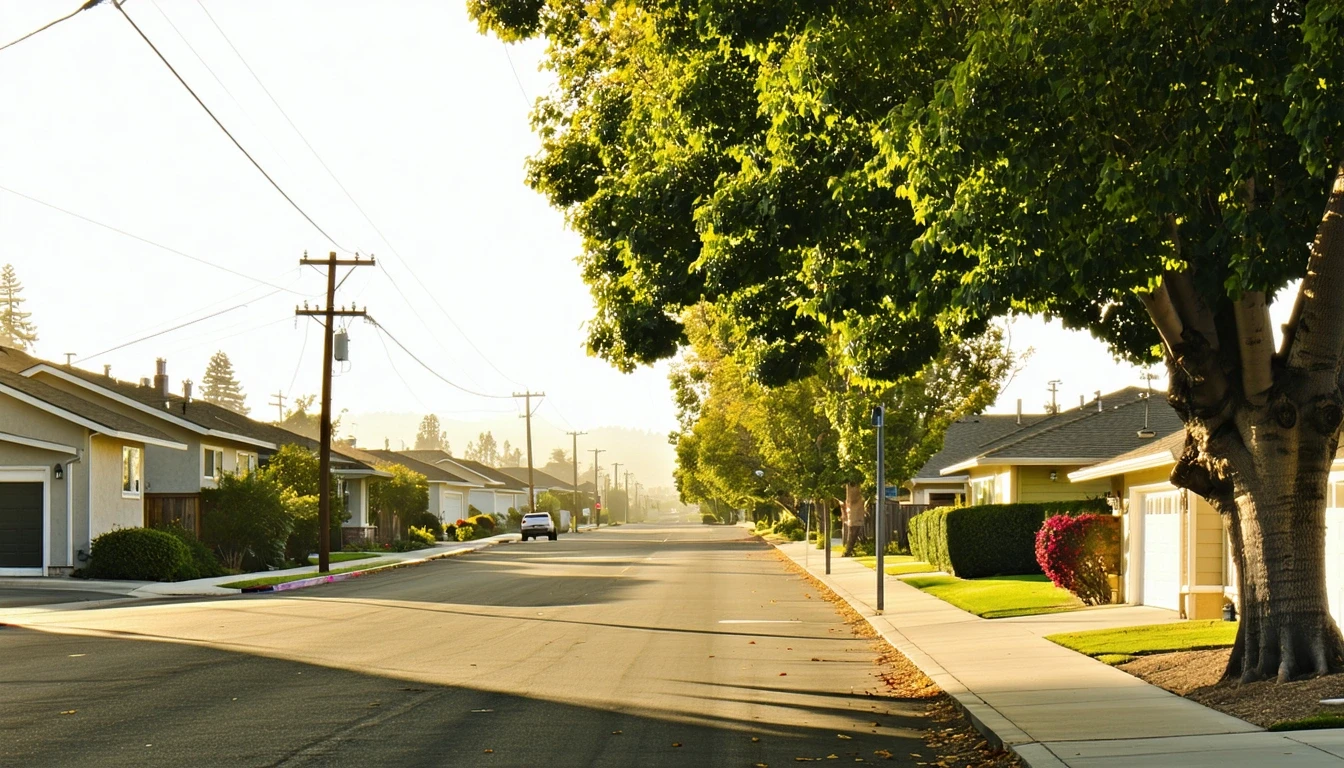
The Housing Market in La Mesa Today
La Mesa operates as a commuter-accessible suburb within the San Diego metro, and that role shapes everything about its housing market. The city’s low-rise building character limits how quickly supply can respond to demand, while its mixed land use and rail transit access make certain neighborhoods appealing to households trying to reduce car dependency. The result is a market where location within La Mesa matters more than citywide averages suggest.
Home values at $684,200 reflect both metro-wide price pressure and La Mesa’s specific appeal: families value the school infrastructure, commuters appreciate the rail line, and walkable commercial corridors offer daily errands accessibility that reduces the need for constant driving. But these advantages don’t lower the entry cost—they justify it. Buyers competing here are often weighing La Mesa against cheaper inland alternatives or pricier coastal options, and the decision hinges on how much transit access and errand convenience are worth in monthly budget terms.
For renters, the $1,819 median gross rent represents roughly 26% of the city’s median household income of $83,649 per year—technically under the traditional 30% affordability threshold. But that figure masks significant variation: renters near walkable corridors or transit nodes pay a premium for reduced transportation costs, while those in car-dependent pockets face the combined burden of rent plus vehicle expenses. The rental market here doesn’t behave like a bedroom community with uniform pricing; it segments by access and convenience.
What newcomers often misunderstand is that La Mesa’s housing costs aren’t just about the price per square foot—they’re about how the city’s layout and infrastructure change your household operating costs. A slightly higher rent near the trolley line may reduce your need for a second car, flipping the affordability calculation. Similarly, ownership in a low-rise neighborhood means direct responsibility for aging infrastructure, landscaping in a dry climate, and utility bills shaped by California’s high electricity rates.
Renting in La Mesa
Renting in La Mesa means navigating a market where location determines not just your rent, but your entire monthly spending pattern. The $1,819 median gross rent is a starting point, not a ceiling, and the variation reflects real differences in how much you’ll spend on transportation, time, and convenience once you’re settled.
The city’s rental stock is predominantly low-rise: small apartment buildings, duplexes, and single-family homes converted to rentals. This limits turnover and keeps vacancy pressure low, which gives landlords pricing power during lease renewals. California’s relatively weak rent control framework means most tenants face annual increases tied to market conditions, not predictable caps. If you’re renting near a walkable commercial corridor or within walking distance of a trolley stop, expect that premium to persist and grow.
Renters who prioritize errands accessibility—grocery stores, pharmacies, and daily services within a short trip—will find that La Mesa delivers in specific pockets. The city’s high food and grocery density means you’re not locked into long drives for basics, which matters when gas sits at $5.34 per gallon. But accessibility isn’t uniform: some neighborhoods require a car for everything, while others let you consolidate errands on foot or by bike in limited areas.
The rental experience here also hinges on how utilities are billed. Many landlords pass through water, trash, and sometimes gas separately, meaning your “rent” is really rent plus variable monthly costs. Electricity at 34.71¢ per kWh makes summer cooling a noticeable line item, especially in units without modern insulation or efficient HVAC. Renters in older buildings should budget for higher utility swings than the lease alone suggests.
For households considering long-term renting, the key tension is volatility versus flexibility. You’re not building equity, but you’re also not responsible for property tax increases, maintenance surprises, or HOA governance. In a market where home values exceed $680,000, that tradeoff keeps many households renting longer than they initially planned—not because they can’t afford to buy, but because ownership here demands a different kind of financial resilience.
Owning a Home in La Mesa
Ownership in La Mesa begins with a $684,200 median home value, but the ongoing cost structure is where the market’s character becomes clear. Property taxes in California are governed by Proposition 13, which caps assessment increases at 2% per year for existing owners but resets to full market value at sale. That means new buyers face a higher tax burden than long-term residents, and the disparity grows over time. While the tax rate itself isn’t provided in available data, the principle is consistent: your entry year determines your baseline, and that baseline shapes decades of exposure.
Homeowners here also navigate maintenance costs shaped by the local climate and housing stock age. La Mesa’s warm, dry summers reduce heating expenses but elevate cooling demand, and at 34.71¢ per kWh, running air conditioning in a larger single-family home becomes a dominant summer cost. Landscaping in a low-rainfall climate requires either higher water bills or drought-tolerant redesigns, both of which represent ongoing decisions rather than one-time fixes.
HOA fees are common in some neighborhoods, particularly in planned developments or condo complexes, but prevalence varies widely. Where HOAs exist, they often bundle services like exterior maintenance, landscaping, and trash collection—but they also introduce governance constraints and fee increases that operate independently of your property tax or mortgage. Buyers should verify HOA scope and fee history before assuming predictability.
The ownership advantage in La Mesa isn’t just equity accumulation—it’s control over cost exposure. Owners can invest in insulation, efficient HVAC, or solar to reduce utility volatility. They can time major repairs and choose contractors. They’re insulated from rent increases and landlord decisions. But that control comes with responsibility: when the water heater fails or the roof needs replacement, there’s no landlord to call. In a market where homes are expensive and aging, that responsibility is both financial and logistical.
For families, ownership also aligns with the city’s school infrastructure and park access. The moderate school density and integrated green space make La Mesa appealing for households planning to stay long enough to justify transaction costs. But the entry price means many families are choosing between La Mesa ownership and renting somewhere closer to work, and that tradeoff hinges on how much stability and space matter relative to commute time and liquidity.
Apartment vs House in La Mesa — Cost Behavior Comparison
The distinction between renting an apartment and renting or owning a house in La Mesa isn’t just about square footage—it’s about which costs you control, which you absorb, and how the city’s climate and infrastructure shape your monthly exposure.
| Expense Category | Apartment | House |
|---|---|---|
| Cooling Costs (Summer) | Lower due to smaller footprint and shared walls; electricity at 34.71¢/kWh still creates noticeable bills in peak months | Higher due to larger square footage and greater exterior exposure; central AC in older homes can dominate summer utility bills |
| Water & Landscaping | Often included in rent or billed as flat fee; no landscape maintenance responsibility | Direct billing; dry climate requires either higher water costs or investment in drought-tolerant landscaping |
| Maintenance Control | Landlord responsible for HVAC, appliances, and structural repairs; tenant has no control over timing or quality | Owner responsible for all systems; can invest in efficiency upgrades but absorbs full cost of failures |
| Parking & Storage | Typically limited; may require separate fee for covered or assigned spaces | Garage or driveway included; supports multi-car households or storage needs common in low-density areas |
Why these categories? La Mesa’s warm, dry climate and high electricity rates make cooling and water the primary variables between apartment and house living. The city’s low-rise character means most houses are detached single-family homes with full utility exposure, while apartments benefit from shared infrastructure and landlord-managed systems. Categories like heating or snow removal were excluded because they don’t vary meaningfully in this climate; similarly, trash and basic services are often bundled regardless of housing type.
Utilities & Upkeep Differences
Utility and maintenance costs in La Mesa are shaped by two forces: California’s high energy rates and the city’s dry, warm climate. These aren’t abstract variables—they directly determine whether your housing costs stay predictable or swing month to month.
Electricity at 34.71¢ per kWh is more than double the national average, and that rate applies to every kilowatt-hour you use for cooling, appliances, and lighting. For context, a typical household using around 1,000 kWh per month would face an illustrative bill near $347 before fees and taxes. In a house with central air conditioning running through La Mesa’s extended summer, that figure can climb substantially. Apartments with smaller footprints and shared walls face lower absolute costs, but the rate itself doesn’t change.
Natural gas at $23.78 per MCF is relevant primarily for heating and water heating, and in La Mesa’s mild winters, heating demand is minimal. Most households see gas costs rise only during cooler months, and even then, the exposure is modest compared to summer electricity. The bigger upkeep difference between apartments and houses isn’t the fuel—it’s who manages the systems and absorbs the replacement cost when they fail.
Homeowners in La Mesa are directly responsible for HVAC maintenance, and in an aging housing stock, that means periodic failures of air conditioning units, water heaters, and appliances. Replacing a central AC system or a water heater isn’t a minor expense, and the timing is rarely convenient. Renters, by contrast, call the landlord—but they also have no control over whether the system is efficient, outdated, or barely functional.
Landscaping is another upkeep distinction that matters in a low-rainfall climate. Houses with traditional grass lawns face either high water bills or the cost of converting to drought-tolerant plants and hardscaping. Apartment renters typically have no landscape responsibility, and even when water is billed separately, the cost is distributed across units. For homeowners, landscape decisions are both a cost and a long-term investment in curb appeal and property value.
Rent vs Buy: Long-Term Exposure in La Mesa
The rent-versus-buy decision in La Mesa isn’t a simple math problem—it’s a choice between two different risk profiles, each shaped by California’s regulatory environment and the city’s expensive housing market.
Renters face volatility in annual increases but retain flexibility. California law allows most landlords to raise rent annually without caps tied to inflation or prior increases, meaning your $1,819 rent today could be $2,000 next year if the market tightens. That unpredictability makes long-term budgeting harder, but it also means you can leave without transaction costs if your income, job, or household needs change. In a metro where commute patterns and employment shift frequently, that liquidity has value.
Owners face predictable property tax growth under Proposition 13, which caps assessment increases at 2% per year as long as you don’t sell. Your tax baseline is set by your purchase price, so buying at $684,200 locks in a foundation that grows slowly and predictably. But property taxes are only one piece of ownership cost. Insurance premiums, HOA fees (where applicable), and maintenance expenses all operate on their own timelines, and none of them are capped by statute. A roof replacement, HVAC failure, or insurance rate hike can create budget shocks that renters never face.
Equity accumulation is ownership’s primary long-term advantage, but in a market where home values are already high, the benefit depends on continued appreciation and your ability to stay long enough to recover transaction costs. Selling a $684,200 home involves realtor commissions, transfer taxes, and closing costs that can easily exceed $40,000. If you move within a few years, those costs erode much of the equity you’ve built, especially in the early years of a mortgage when most of your payment goes to interest.
Maintenance unpredictability is another long-term difference. Renters are insulated from capital expenses—when the water heater fails, the landlord pays. Owners absorb every failure, and in La Mesa’s aging housing stock, those failures are a matter of when, not if. The tradeoff is control: owners can invest in efficiency upgrades, solar panels, or modernized systems that reduce operating costs over time. Renters can’t make those investments, even when they’d lower monthly bills.
The decision ultimately hinges on how long you plan to stay and how much cost uncertainty you can tolerate. Renting makes sense for households prioritizing flexibility, avoiding maintenance risk, or unable to clear the down payment and closing cost hurdle. Ownership makes sense for households with stable income, long time horizons, and the financial cushion to handle surprise expenses. In La Mesa’s expensive market, both paths are viable—but neither is clearly cheaper without knowing your specific situation and timeline.
FAQs About Housing Costs in La Mesa
Is renting or buying cheaper in La Mesa over five years?
The answer depends on rent increases, maintenance costs, and your down payment size, all of which vary by household. Renting avoids transaction costs and maintenance risk but exposes you to annual rent increases. Ownership builds equity and stabilizes property tax growth under Proposition 13 but requires a large upfront investment and ongoing responsibility for repairs. Neither path is universally cheaper—it’s a tradeoff between flexibility and long-term cost control.
How much do utilities typically cost in a La Mesa house?
Electricity at 34.71¢ per kWh is the dominant variable. For illustrative context, a household using around 1,000 kWh per month might see a bill near $347 before fees and taxes, with higher costs in summer when cooling demand peaks. Natural gas at $23.78 per MCF adds modest heating and water heating costs in cooler months. Actual bills depend on home size, insulation, and system efficiency.
Does La Mesa have rent control?
No. California state law allows most landlords to raise rent annually without caps, though some tenant protections exist for longer-term leases. Renters should expect rent increases tied to market conditions, not predictable limits.
What’s the property tax situation for new buyers in La Mesa?
California’s Proposition 13 caps annual assessment increases at 2% for existing owners, but resets to full market value when a property sells. New buyers purchasing at $684,200 face a tax baseline higher than long-term residents, and that baseline determines their exposure for as long as they own the home. The exact rate depends on local levies, but the structure is consistent statewide.
Are there neighborhoods in La Mesa where you can live without a car?
La Mesa has rail transit access and high errands accessibility in specific areas, making car-light living structurally feasible near walkable commercial corridors and trolley stops. But the city’s overall layout still favors car ownership, especially for households with kids or jobs outside the immediate area. Reducing from two cars to one is more realistic than eliminating cars entirely.
Making Housing Choices in La Mesa
La Mesa’s housing market rewards households who understand the difference between entry cost and operating cost. A $684,200 home value or $1,819 rent is just the starting point—the real expense depends on where you live within the city, how you use transportation, and whether you’re prepared for the ongoing costs that come with California’s high utility rates and aging housing stock.
Renters gain flexibility and avoid maintenance risk, but they’re exposed to annual rent increases and have no control over landlord decisions or building quality. Owners gain equity and tax predictability under Proposition 13, but they absorb every repair, every rate hike, and every system failure. Neither path is cheaper in isolation—it depends on your timeline, risk tolerance, and ability to absorb cost shocks.
What makes La Mesa distinct is the variation within the city. Rail access, errands accessibility, and walkable pockets create neighborhoods where transportation costs drop enough to offset higher rent or purchase prices. Families value the school infrastructure and park access, but they’re also navigating a market where ownership requires income well above the median. For a fuller picture of how these housing decisions fit into overall living costs, it’s worth understanding what drives expenses beyond rent or mortgage.
The housing decision here isn’t about finding the cheapest option—it’s about matching your household’s needs, timeline, and financial structure to the cost behavior that fits. La Mesa offers both paths, but only if you’re clear about which tradeoffs you’re willing to accept.