
It’s 7:15 on a Tuesday morning, and Maria is walking her daughter three blocks to the trolley station near their apartment. They pass tidy front yards and a neighbor watering plants, the air still cool under a cloudy sky. By 7:40, her daughter is on her way to school downtown, and Maria is headed to her office in the Gaslamp Quarter—no freeway stress, no parking hunt, just a predictable ride on the rail line. For her family, living near the station made all the difference. But two miles east, her coworker starts his SUV for the same commute, because from his neighborhood, the trolley isn’t an option.
That contrast captures the transportation reality in La Mesa: rail service opens doors for some households, but most people here still rely on a car for daily life. Understanding which group you’ll fall into depends on where you live, where you work, and how much flexibility you need day to day.
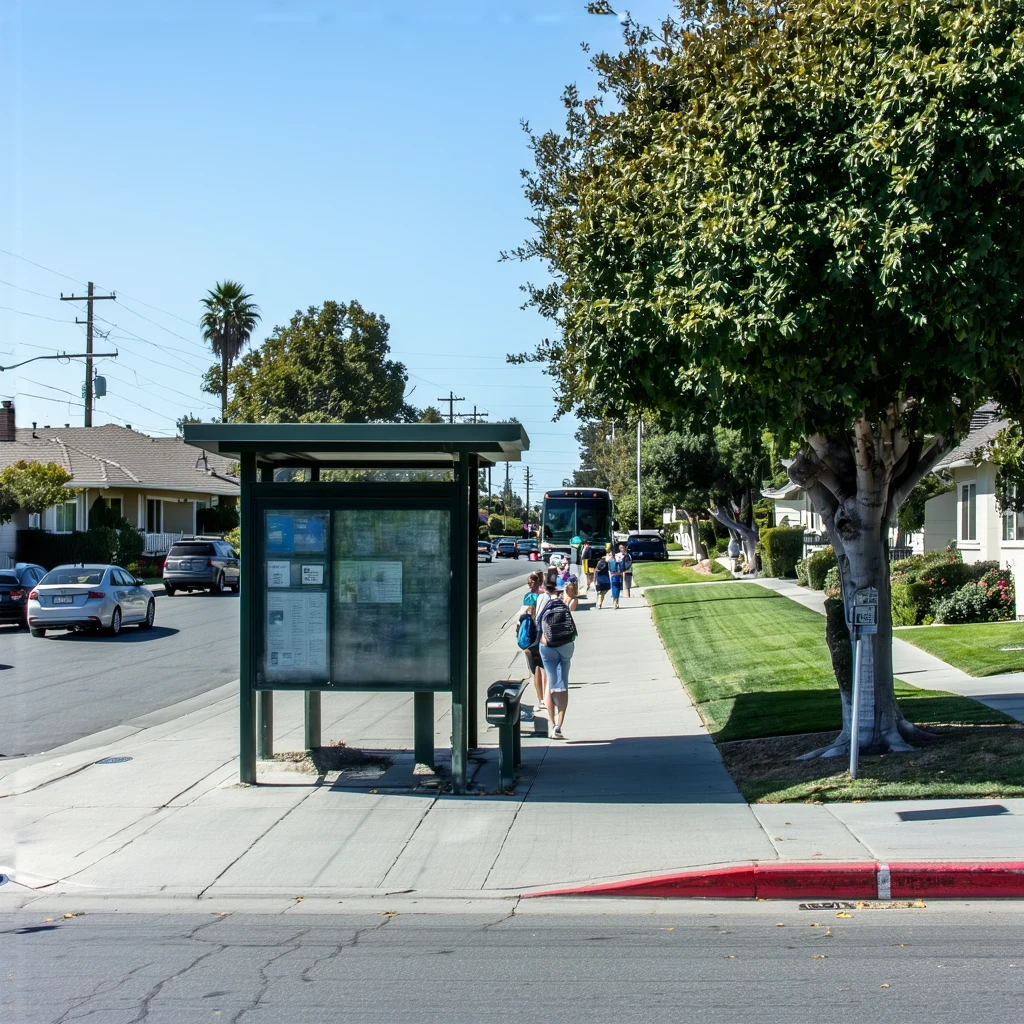
How People Get Around La Mesa
La Mesa sits in the San Diego metro area with a low-rise, suburban layout that shapes how people move. The dominant pattern is car-first: most households depend on driving for errands, school runs, and commutes. But the city isn’t purely car-dependent—rail transit cuts through parts of La Mesa, and the mixed pedestrian infrastructure means some residents can walk to nearby groceries or cafes without getting in the car every time.
What newcomers often misunderstand is that transit access isn’t evenly distributed. If you’re near a trolley station, you have a real alternative to driving for certain trips. If you’re not, you’re functionally in a car-dependent suburb. The city’s structure—mostly single-family homes, commercial corridors rather than dense centers—means convenience clusters around specific nodes, not everywhere at once.
Public Transit Availability in La Mesa
Public transit in La Mesa often centers around systems such as the San Diego Trolley, which provides rail service through parts of the city. The trolley connects La Mesa to downtown San Diego, Mission Valley, and other regional job centers, making it a practical option for commuters whose destinations align with the line.
Transit works best for people living within walking distance of a station and commuting to places the rail serves directly. It’s structured, predictable, and eliminates the variability of freeway traffic. But coverage is corridor-based, not comprehensive. If you live outside the walkable radius of a station, or if your job, errands, or kids’ activities don’t align with the route, transit quickly becomes impractical.
Bus service likely supplements the rail line, offering additional coverage, but the suburban layout means frequencies and connections can’t match what you’d find in denser urban cores. Late-night service, weekend flexibility, and multi-stop errands all tilt back toward needing a car.
Driving & Car Dependence Reality
For most La Mesa households, driving isn’t optional—it’s the default. The city’s low-rise, spread-out form means that even with decent grocery access and some walkable pockets, you’re still driving for most non-work trips: picking up kids, getting to appointments, running multiple errands in one loop.
Parking pressure is generally low compared to denser cities. You’ll find space at home and at most destinations without the hunt that defines urban living. That ease reinforces car dependence, because there’s little friction to driving and plenty of friction to not driving.
Commute flexibility matters here. If your job is along the trolley line, rail is viable. If it’s in a suburban office park, an industrial area, or anywhere outside the transit map, you’re driving. The infrastructure assumes cars, and most of daily life follows that assumption.
Commuting Patterns & Daily Mobility
Commuting in La Mesa tends to split into two patterns: structured rail commuters and flexible car commuters. Rail users benefit from predictable travel times and no parking costs, but they’ve tailored their housing and job choices around the line. Car commuters absorb more variability—traffic, gas prices at $5.34 per gallon, parking searches—but they gain access to a much wider range of jobs and the ability to chain errands on the way home.
Multi-stop commutes—dropping kids at school, stopping for groceries, picking up dry cleaning—favor driving almost universally. The trolley works for point-to-point trips, not complex daily loops. Households with two working adults often find themselves needing two cars, because transit can’t serve both schedules and destinations simultaneously.
People working from home or hybrid schedules reduce commute frequency but don’t eliminate the need for a car. Even if you’re not commuting daily, getting around La Mesa for everything else still assumes vehicle access.
Who Transit Works For — and Who It Doesn’t
Transit fits best for singles or couples living near a trolley station and commuting to downtown San Diego, Mission Valley, or another stop on the line. If your daily routine is predictable, your job is transit-accessible, and you’re comfortable walking or biking for nearby errands, you can realistically limit car use.
Families with children face harder tradeoffs. School locations, activity schedules, and the need to move multiple people on different timelines make car dependence nearly unavoidable. Even families near a station usually keep at least one vehicle for everything transit doesn’t cover.
Renters closer to transit corridors have more flexibility to test car-light living, but homeowners farther from stations are embedded in car-dependent geography. The trolley doesn’t extend your radius if you’re not near it to begin with.
Transportation Tradeoffs in La Mesa
Choosing between transit and driving in La Mesa isn’t about cost savings—it’s about control, predictability, and access. Rail commuters trade flexibility for consistency: fixed routes, fixed schedules, no traffic variability. Car commuters trade fuel expense and parking friction for geographic freedom and time control.
Transit limits where you can live and work without adding complexity. Driving limits your exposure to gas price swings and parking costs but opens up the entire metro area. Neither option is universally better; the fit depends on your job location, household structure, and how much routine you can build into your week.
For most La Mesa households, the question isn’t “car or transit” but “how much can I reduce driving?” The answer usually lands somewhere between “a little” and “not much.”
FAQs About Transportation in La Mesa (2026)
Is public transit usable for daily commuting in La Mesa?
Yes, if you live near a trolley station and your job is along the rail line. The San Diego Trolley provides reliable service to downtown and other regional centers. But if you’re outside the station walkshed or commuting somewhere the trolley doesn’t serve, transit becomes impractical for daily use.
Do most people in La Mesa rely on a car?
Yes. The city’s suburban layout, low-rise development, and spread-out services mean that most households depend on driving for daily errands, school runs, and commutes. Even people who use transit for work often keep a car for everything else.
Which areas of La Mesa are easiest to live in without a car?
Neighborhoods within walking distance of a trolley station offer the most realistic car-light or car-free living. You’ll still face limitations for errands, appointments, and social trips, but commuting and some daily needs become manageable on foot and by rail.
How does commuting in La Mesa compare to nearby cities?
La Mesa offers better transit access than many San Diego suburbs thanks to the trolley, but it’s still more car-dependent than denser urban cores. Compared to purely suburban areas without rail, La Mesa provides more commute flexibility. Compared to downtown San Diego, it requires more driving for daily life.
Can you get by with one car per household in La Mesa?
It depends on your household structure and work locations. Single-car households work best when one person uses transit or works from home, or when both adults’ schedules and destinations align enough to share. Families with kids or two working adults in different directions usually find two cars necessary.
How Transportation Fits Into the Cost of Living in La Mesa
Transportation in La Mesa isn’t just a line item—it’s a structural factor that shapes where you can live, how you spend your time, and what tradeoffs you navigate daily. Living near the trolley might mean higher rent but lower transportation friction and more predictable commutes. Living farther out might mean cheaper housing but mandatory car ownership and fuel exposure at over $5 per gallon.
The choice between transit access and car dependence affects monthly expenses in ways that go beyond the direct cost of gas or a transit pass. It influences how much time you spend commuting, how flexibly you can respond to schedule changes, and how tightly you need to budget around transportation volatility.
If you’re planning a move to La Mesa, start by mapping your job location against the trolley line and identifying which neighborhoods give you real transportation options. The difference between living near a station and living two miles away isn’t just convenience—it’s whether you’ll need one car or two, and whether your commute is predictable or variable.
La Mesa rewards households who can align their housing and work geography with the transit map, but it doesn’t punish car commuters the way denser cities do. You’ll find parking, roads are manageable, and driving works. The question is whether you want to build your routine around it or around the trolley. Both paths are viable here; neither is automatic.
How this article was built: In addition to public economic data, this article incorporates location-based experiential signals derived from anonymized geographic patterns—such as access density, walkability, and land-use mix—to reflect how day-to-day living actually feels in La Mesa, CA.