
| Expense Category | Apartment | House |
|---|---|---|
| Base Housing Cost | $1,618 (median rent) | ~$2,400–$3,000 (principal + interest, illustrative for median home) |
| Cooling (Summer) | Lower usage; shared walls reduce heat gain | Higher usage; standalone structure, larger square footage |
| Water & Landscaping | Typically included or minimal | Tenant responsibility; drought-tolerant landscaping still requires upkeep |
| Maintenance & Repairs | Landlord responsibility | Owner responsibility; HVAC, roof, and exterior exposed to heat stress |
| Parking | May require separate fee or limited availability | Garage or driveway typically included |
Table methodology: Differences shown reflect Jurupa Valley’s inland heat, low-rise housing stock, water cost sensitivity, and car-dependent layout. Categories like HOA fees, trash service, and insurance are excluded because their variation depends on individual property terms rather than structural apartment-vs-house distinctions in this market.
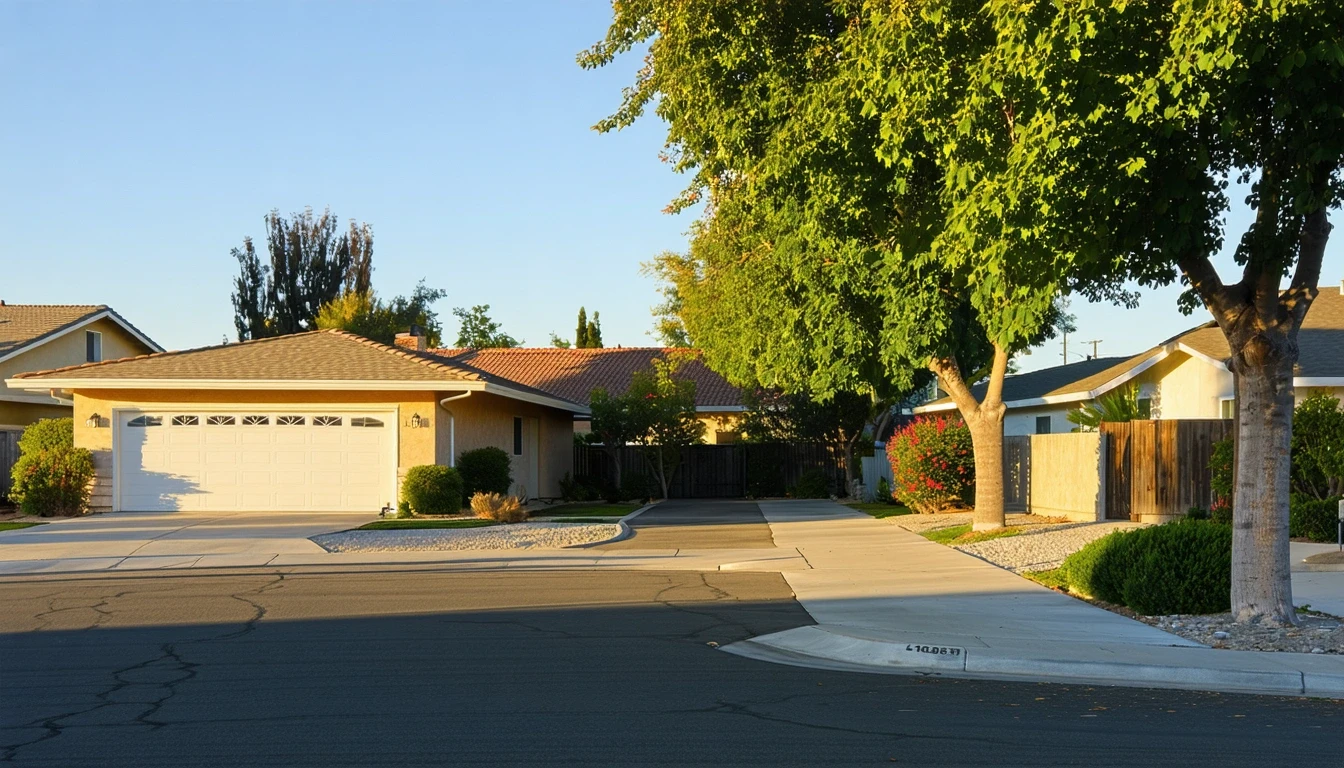
The Housing Market in Jurupa Valley Today
Jurupa Valley sits in the western Inland Empire, where housing affordability once drew families and first-time buyers priced out of coastal markets. That dynamic still holds, but the gap has narrowed. The median home value here is $481,500, accessible compared to Orange County or central Los Angeles, but no longer inexpensive in absolute terms. For a household earning the local median income of $91,562 per year, ownership is feasible with planning, dual income, and tolerance for ongoing cost exposure tied to climate and commute.
What shapes this market most is its role as a commuter suburb with rail access—a feature that contradicts the pure car-dependent stereotype. The presence of rail transit (confirmed with high confidence in infrastructure analysis) creates pockets of walkability and mixed-use corridors, but those pockets are unevenly distributed. Most daily errands still cluster along commercial corridors rather than within walking distance of all neighborhoods. This means housing decisions here aren’t just about the structure itself; they’re about proximity to the services and transit nodes that reduce the friction of suburban life.
Newcomers often underestimate two things: the intensity of summer heat and the cost of distance. Jurupa Valley’s inland location brings extended cooling seasons and triple-digit summer days, which translate directly into utility exposure. And while rail transit exists, many jobs and services still require a car. The housing market reflects this—homes with garages, newer HVAC systems, and proximity to transit or commercial corridors command premiums that don’t always show up in list prices.
Renting in Jurupa Valley
Median gross rent in Jurupa Valley is $1,618 per month, a figure that includes rent plus tenant-paid utilities. That’s moderate within the Inland Empire but still represents a significant share of median household income. For renters, the pressure isn’t just the monthly check—it’s the combination of rent, transportation costs (given car dependency for most errands), and utility bills that spike in summer.
Rental availability tends to concentrate in apartment complexes near commercial corridors, where food and grocery density reaches moderate levels. These locations offer some reduction in driving for daily errands, but they don’t eliminate it. Renters in single-family homes—common in Jurupa Valley’s low-rise housing stock—often face higher utility costs due to standalone structures and larger square footage, even if base rent appears competitive.
Renewal pressure varies with broader regional trends. When coastal markets tighten, Inland Empire rents tend to follow as displaced renters move inland. The risk for renters here isn’t dramatic year-over-year spikes in every cycle, but rather the loss of predictability during regional housing crunches. Lease terms and timing matter more in this market than in cities with rent stabilization or deeper vacancy rates.
Owning a Home in Jurupa Valley
At $481,500, the median home value in Jurupa Valley positions ownership within reach for dual-income households near or above the local median. But the entry price is only the beginning of the cost structure. Ownership here means taking on exposure to property taxes (governed by California’s Prop 13, which caps assessment increases for continuous owners but resets at sale), homeowners insurance (rising across California due to wildfire and climate risk), and utility costs driven by cooling demand.
The housing stock is predominantly low-rise and single-family, which means most owners are responsible for yard maintenance, exterior upkeep, and water costs in a region where drought conditions periodically drive conservation mandates and tiered pricing. Even drought-tolerant landscaping requires establishment care and periodic replacement. HVAC systems work harder and age faster under extended summer heat, and replacement costs are fully owner-borne.
Some neighborhoods include HOA fees, particularly in planned developments, but prevalence and cost vary widely. When present, HOAs may cover common-area landscaping or exterior maintenance, but they also introduce governance constraints and fee escalation risk. Buyers should verify what’s included and whether the HOA has adequate reserves, as special assessments can appear suddenly.
The ownership experience in Jurupa Valley differs from renting primarily in control and exposure. Owners lock in a principal payment (assuming a fixed-rate mortgage) but accept volatility in taxes, insurance, and utilities. They gain stability against rent increases but lose flexibility to relocate without transaction costs. For households planning to stay five years or more, ownership shifts risk from landlord discretion to market forces and climate.
Utilities & Upkeep Differences
Utility costs in Jurupa Valley are shaped by two forces: high electricity rates and high cooling demand. The local electricity rate is 30.29¢/kWh, among the highest in the nation, and summer temperatures regularly reach triple digits. For a typical house using roughly 1,000 kWh per month during peak cooling season, that translates to illustrative costs above $300 before fees—a noticeable expense that renters in apartments with shared walls and smaller footprints may partially avoid.
Natural gas, priced at $23.78/MCF, plays a smaller role here than in colder climates. Heating demand is limited to occasional cold snaps, so gas costs remain minor outside of water heating. The dominant utility exposure is electric cooling, and it persists from late spring through early fall.
For houses, maintenance costs are amplified by climate stress. Roofs, exterior paint, and seals degrade faster under intense sun and heat cycling. Landscaping requires either drought-tolerant design (with upfront installation costs) or ongoing water expense (with tiered pricing that penalizes higher usage). Air conditioning systems require regular servicing and eventual replacement, and failure during a heat wave isn’t just uncomfortable—it’s a health risk.
Apartments typically shift these responsibilities to landlords, though tenants still pay for usage. The structural advantage of shared walls and professional management reduces both the volatility and the hands-on burden, which matters for households without time, tools, or capital reserves to handle sudden repairs.
Rent vs Buy: Long-Term Exposure in Jurupa Valley
The rent-versus-buy decision in Jurupa Valley isn’t about which option costs less in year one—it’s about which cost structure aligns with your time horizon, risk tolerance, and need for control.
Renters face renewal risk. In stable years, rent increases may track inflation. In tight markets, they can jump sharply, especially for tenants in older buildings or month-to-month leases. Renters avoid property tax resets, insurance volatility, and repair costs, but they also build no equity and retain no control over rent timing or housing stability. For households expecting to relocate within a few years—whether for work, family, or preference—renting preserves flexibility without transaction costs.
Owners lock in a principal and interest payment (assuming a fixed-rate mortgage), which provides a stable anchor as rents around them rise. But they accept exposure to property tax increases (on sale or through voter-approved rate changes), insurance premium growth (a rising concern across California), and utility costs that fluctuate with climate and rate changes. Maintenance and repair costs are unpredictable and non-negotiable. Over time, ownership becomes more cost-effective if home values appreciate and if the owner stays long enough to amortize transaction costs and build equity. But the path isn’t smooth, and the first few years often feel more expensive than renting.
In Jurupa Valley specifically, ownership also means managing heat-related wear and water costs that don’t appear in mortgage calculators. The extended cooling season and drought-sensitive landscaping create ongoing costs that vary with weather, conservation mandates, and utility rate structures. These aren’t one-time expenses—they’re permanent features of the cost profile.
The decision comes down to whether you value predictability (ownership of the principal payment) or flexibility (renting), and whether you’re prepared to manage the volatility that comes with everything outside the mortgage.
FAQs About Housing Costs in Jurupa Valley
Is $1,618 per month typical for rent in Jurupa Valley?
$1,618 is the median gross rent, meaning half of renters pay more and half pay less. Actual rent depends on unit size, location relative to transit and commercial corridors, and whether utilities are included. Apartments near rail stations or shopping centers may command higher rents due to reduced driving needs.
Can a household earning $91,562 afford to buy a home in Jurupa Valley?
At the median income and median home value, ownership is feasible but requires careful planning. A household would need a sufficient down payment, manageable debt, and enough margin to cover property taxes, insurance, utilities, and maintenance—all of which add significantly to the mortgage payment. Dual income helps, as does tolerance for ongoing cost exposure.
How much do utilities add to housing costs in Jurupa Valley?
Electricity is the dominant utility cost due to high rates (30.29¢/kWh) and extended cooling demand. For illustrative context, a house using 1,000 kWh per month in summer might see electric bills above $300 before fees. Apartments with shared walls and smaller square footage typically use less. Natural gas costs remain minor due to limited heating demand.
Does Jurupa Valley have HOA fees?
Some neighborhoods and planned developments include HOA fees, but prevalence and amounts vary widely. When present, HOAs may cover landscaping, exterior maintenance, or shared amenities, but they also introduce governance rules and the risk of fee increases or special assessments. Buyers should verify HOA terms and financial health before purchasing.
Is it better to rent or buy in Jurupa Valley for someone planning to stay three years?
For a three-year horizon, renting usually makes more sense. Ownership involves transaction costs (closing costs, agent fees on sale) that take several years to recover through equity building and rent avoidance. Renters also avoid exposure to property tax resets, insurance increases, and major repairs during a short stay. Buying makes more sense for households planning to stay five years or longer.
Making Housing Choices in Jurupa Valley
Housing costs in Jurupa Valley are shaped by its position as an Inland Empire commuter suburb with rail access, low-rise housing stock, and significant climate exposure. The median home value of $481,500 and median rent of $1,618 per month are moderate within the region, but they don’t tell the full story. The real cost structure includes transportation (car dependency remains high despite rail presence), utilities (driven by triple-digit heat and high electricity rates), and maintenance (amplified by sun, heat, and drought).
Renters gain flexibility and avoid repair risk but face renewal uncertainty and build no equity. Owners lock in a principal payment and gain control but accept volatility in taxes, insurance, and climate-driven costs. Neither path is universally cheaper—the right choice depends on how long you plan to stay, how much volatility you can manage, and whether you value predictability or flexibility.
For more detail on how these housing costs fit into your monthly budget in Jurupa Valley, including transportation and utilities, see our breakdown of where household income typically goes. And for a broader view of the real cost pressures in Jurupa Valley—including how housing, transit, and daily expenses interact—our cost overview explains what drives financial stress in this market.
If you’re planning a move and need to compare logistics and costs, see our 2025 moving company picks for guidance on selecting a provider that fits your timeline and budget.
How this article was built: In addition to public economic data, this article incorporates location-based experiential signals derived from anonymized geographic patterns—such as access density, walkability, and land-use mix—to reflect how day-to-day living actually feels in Jurupa Valley, CA.