
Gloucester Township is considered moderately priced in 2026, with a median home value of $165,900 and median rent of $1,400 per month. The value proposition depends on housing entry cost versus transportation exposure—rail access is present, but day-to-day errands require planning, and car ownership remains the dominant mode for most households.
When Maya and her partner moved to Gloucester Township from North Jersey, they expected lower rent and quieter streets. What they didn’t anticipate was how much their daily routines would shift. The grocery store wasn’t around the corner anymore. Their commute required a car for the first leg, then a train for the second. And while their apartment cost less than their old place, they quickly realized that transportation and planning time had become new line items in their household ledger—not just financial, but logistical.
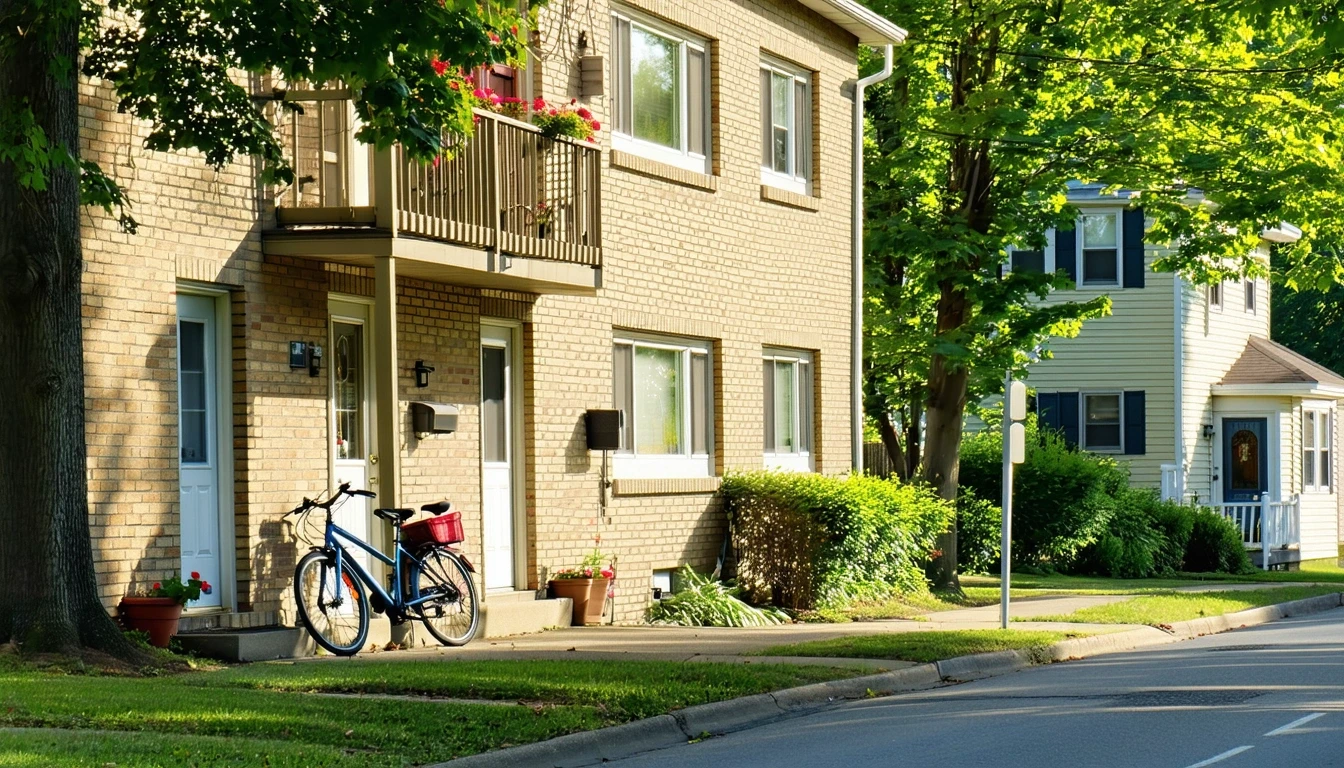
Overall Cost of Living Snapshot
Gloucester Township sits in the Philadelphia metro area with a regional price parity index of 104, meaning the overall cost structure runs slightly above the national baseline. The dominant cost pressure is housing entry—whether buying or renting—but the township’s structure introduces a secondary exposure: transportation dependence. Most households here operate at least one vehicle, and many operate two, because while rail service exists, the built environment is designed around driving for daily errands.
The township offers a lower barrier to entry than many Philadelphia suburbs, but that savings gets redistributed into vehicle ownership, fuel, insurance, and maintenance. Utility costs follow predictable Mid-Atlantic seasonality: moderate heating exposure in winter, moderate cooling exposure in summer, with electricity rates at 22.98¢/kWh and natural gas priced at $14.40 per thousand cubic feet. Groceries track close to the regional baseline, and the unemployment rate of 5.0% reflects a stable but not booming labor market.
Driver verdict: Housing affordability dominates the value proposition, but transportation infrastructure determines whether that affordability translates into net savings or simply shifts costs from rent to vehicles and commuting time.
Housing Costs (Primary Driver)
Housing is the primary cost anchor in Gloucester Township, and it presents a clear tradeoff. The median home value of $165,900 is accessible compared to many Philadelphia-area suburbs, and the median gross rent of $1,400 per month offers a middle-tier entry point for renters. But these figures reflect a township built primarily for ownership, not transient rental markets. The housing stock skews toward single-family homes and low-rise residential structures, with a mixed building height profile that supports both ownership stability and moderate density.
Renters face a corridor-clustered market: rental inventory exists, but it’s not evenly distributed, and competition for well-located units near transit or commercial corridors can be sharp. Owners, by contrast, benefit from stable entry costs and predictable property tax structures, though maintenance, insurance, and utility responsibility shift entirely to the household. The township is not a transitional rental market—it’s a place where people buy to stay, or rent while deciding whether to buy.
The housing decision here is less about monthly payment and more about long-term cost structure: renting offers flexibility but limited walkable convenience; owning offers stability but full exposure to vehicle dependence, maintenance cycles, and property tax adjustments over time.
| Housing Type | Cost Anchor | What That Buys You |
|---|---|---|
| Median Home Value | $165,900 | Single-family ownership in a low-rise, car-oriented suburb with rail access nearby |
| Median Gross Rent | $1,400/month | Apartment or townhome, likely near commercial corridors, with moderate transit proximity |
Conclusion: Gloucester Township is a buying market with selective rental options. The value proposition depends on whether you’re prepared to own a vehicle and absorb the logistics of suburban errands.
Utilities & Energy Risk
Utility exposure in Gloucester Township follows Mid-Atlantic norms: moderate year-round, with seasonal spikes driven by heating and cooling demand. Electricity rates of 22.98¢/kWh sit slightly above the national median, and natural gas priced at $14.40 per thousand cubic feet reflects regional pipeline pricing. The township experiences warm, humid summers and cold winters, so households face dual seasonal pressure—air conditioning dominates summer bills, while heating (whether gas or electric) drives winter exposure.
The current temperature of 58°F (feels like 56°F) reflects the township’s transitional climate: mild stretches punctuated by seasonal extremes. Utility bills here are not a crisis, but they’re not negligible either. Households in older housing stock or poorly insulated units will feel sharper swings, while newer construction with efficient HVAC systems can smooth the curve. The risk is not catastrophic volatility—it’s predictable, recurring exposure that adds up over the year.
Risk classification: Moderate. Utilities are a steady secondary cost, not a wildcard, but they require planning and seasonal adjustment.
Groceries & Daily Costs
Grocery costs in Gloucester Township track close to the regional baseline, with the township’s price structure reflecting the broader Philadelphia metro market. Based on regional price parity adjustments, staple items like bread ($1.92/lb), chicken ($2.12/lb), eggs ($2.68/dozen), and milk ($4.26/half-gallon) fall within expected ranges for the area. Ground beef ($7.02/lb) and cheese ($5.04/lb) represent the higher end of the basket, but these figures are derived estimates adjusted for regional cost patterns, not observed local prices.
The practical impact is less about individual item costs and more about access friction. Grocery density in the township is corridor-clustered, meaning stores exist but require intentional trips—usually by car. There’s no corner-store culture here, and walkable grocery access is limited to specific pockets near commercial corridors. For households without vehicles or with limited mobility, this structure introduces planning burden and time cost, even if the prices themselves are unremarkable.
Daily costs beyond groceries—household goods, pharmacy runs, takeout—follow similar logic: prices are moderate, but access requires transportation and forethought.
How this article was built: In addition to public economic data, this article incorporates location-based experiential signals derived from anonymized geographic patterns—such as access density, walkability, and land-use mix—to reflect how day-to-day living actually feels in Gloucester Township, NJ.
Transportation Reality
Transportation in Gloucester Township is a recurring cost exposure, not a one-time decision. The township has rail service, which provides a direct connection to Philadelphia and reduces car dependency for commuters willing to drive or bike to the station. But rail access doesn’t eliminate the need for a vehicle—it supplements it. Day-to-day errands, grocery runs, school drop-offs, and evening activities all assume car ownership, because the pedestrian infrastructure, while present in pockets, doesn’t support car-free living for most households.
Gas prices of $3.34/gallon reflect regional norms, and the cost of fueling a vehicle adds up quickly for households making multiple trips per day. Insurance, maintenance, registration, and depreciation layer on top of that, creating a transportation cost structure that rivals or exceeds housing for some households. The township’s layout—residential blocks separated from commercial corridors—means that even short trips require ignition.
For households with two working adults, two vehicles is the norm, not the exception. For single-vehicle households, logistics become a daily negotiation: who gets the car, who takes the train, who waits. The transportation reality here is not about whether you need a car—it’s about how many you need and how much of your day gets spent behind the wheel or coordinating around it.
Cost Exposure Profiles
Cost exposure in Gloucester Township depends on household structure, vehicle count, and housing tenure. The township rewards stability and punishes transience. Owners with paid-off vehicles, established routines, and low commuting burdens experience the township as affordable and predictable. Renters with one vehicle, long commutes, and young children experience it as logistically demanding, with costs that creep upward through transportation, childcare coordination, and time spent managing errands.
Low-exposure households typically own their home, work locally or remotely, operate one well-maintained vehicle, and have established grocery and service routines. Their costs are front-loaded (mortgage, vehicle purchase) but stable over time. High-exposure households rent, commute to Philadelphia or beyond, operate two vehicles (or struggle with one), and face recurring friction around errands, childcare, and transportation coordination. Their costs are distributed and recurring, with less opportunity to stabilize through ownership or routine.
The township’s strong family infrastructure—schools and playgrounds meet density thresholds across the area—makes it appealing for households with children, but that appeal depends entirely on vehicle access and schedule flexibility. Without both, the logistical burden can outweigh the cost savings. The presence of hospital facilities and pharmacies reduces healthcare access risk, but again, getting there assumes a car.
The core tradeoff is this: Gloucester Township offers lower housing entry costs than many peer suburbs, but it extracts that savings through transportation dependence and planning overhead. Whether that tradeoff works depends on how much control you have over your schedule, your commute, and your vehicle situation.
Frequently Asked Questions
Is Gloucester Township more affordable than Cherry Hill in 2026? Gloucester Township generally offers lower median home values and rents compared to Cherry Hill, but the cost structure is similar—both require vehicle ownership, and both sit in the same regional price environment. The difference is more about housing stock and neighborhood character than dramatic cost savings.
What does a typical cost profile look like in Gloucester Township? A typical household here spends the largest share on housing (either mortgage or rent), followed closely by transportation (vehicle ownership, fuel, insurance). Utilities and groceries are moderate and predictable, with seasonal swings in heating and cooling. The cost profile rewards ownership and stable routines.
Do utilities cost more in Gloucester Township than nearby areas? Utility rates in Gloucester Township are consistent with the broader South Jersey region. Electricity at 22.98¢/kWh and natural gas at $14.40 per thousand cubic feet are slightly above national averages but typical for the Philadelphia metro area. Costs vary more by housing quality and insulation than by location.
What costs tend to surprise newcomers in Gloucester Township? Transportation costs surprise many newcomers, especially those moving from urban areas with walkable infrastructure or robust transit. The need for a vehicle—and often two—adds recurring costs that aren’t immediately obvious when comparing rent or mortgage payments. Errands that used to be walkable now require planning and driving.
Are property taxes higher in Gloucester Township than in nearby towns? Property tax rates vary across South Jersey municipalities, and Gloucester Township’s rates are competitive with similar suburban townships in Camden County. The effective tax burden depends on assessed home value, so lower home prices can partially offset higher rates. It’s worth comparing total annual tax bills, not just rates, when evaluating affordability.
Is Gloucester Township a good place for renters or owners? Gloucester Township is structured for ownership. The rental market exists but is smaller and more corridor-focused, with less inventory and fewer walkable amenities. Renters can find value here, but the township’s layout and infrastructure favor households planning to buy and stay long-term.
How does rail access affect transportation costs in Gloucester Township? Rail access to Philadelphia reduces commuting costs for households near the station and willing to drive or bike to the platform. But rail doesn’t eliminate the need for a vehicle—it supplements it. Most households still need a car for errands, school runs, and evening activities, so the cost savings are partial, not total.
What’s the biggest cost tradeoff in Gloucester Township? The biggest tradeoff is housing affordability versus transportation dependence. You pay less to enter the housing market here, but you absorb that savings through vehicle ownership, fuel, and the time cost of managing errands and commutes. Whether that tradeoff works depends on your household structure and [how you approach moving companies, costs, and logistics](https://indexyard.com/best-moving-companies-guide/) when relocating.