
Can you live in Frisco without a car? For most households, the answer is no — but the reality is more textured than that suggests. Frisco is a car-first city, shaped by suburban growth and sprawling development patterns typical of North Texas. Yet within that framework, certain pockets of the city support a different kind of mobility: mixed-use zones where errands, dining, and daily needs cluster tightly enough that walking or biking becomes practical. Understanding transportation options in Frisco means recognizing both the dominant pattern and the exceptions — and knowing which one applies to your daily life.
Newcomers often expect either total car dependence or robust transit coverage. Frisco offers neither extreme. Bus service exists, but it plays a supplemental role. Walkable infrastructure appears in concentrated areas, but it doesn’t extend uniformly across the city. The result is a transportation landscape where your mobility depends heavily on where you live, where you work, and how complex your household logistics are.
How People Get Around Frisco
Frisco’s transportation reality reflects its development history: rapid suburban expansion built around highways, employment centers, and residential subdivisions. Most residents drive most of the time. The city’s layout prioritizes road networks, parking availability, and car access. For work commutes, school runs, and multi-stop errands, driving remains the default and often the only practical option.
But Frisco’s urban form isn’t uniform. Certain corridors and mixed-use districts have evolved with higher density, taller buildings, and integrated commercial space. In these areas, pedestrian infrastructure is more developed, and the ratio of sidewalks to roads is notably higher than in surrounding subdivisions. Residents in these pockets can walk to grocery stores, restaurants, and services without needing a car for every trip. This doesn’t eliminate car ownership — it reduces the frequency of short, errand-based driving.
The distinction matters because it shapes daily friction. Living in a walkable pocket means fewer cold starts, less parking hassle, and more flexibility in how you structure errands. Living outside those zones means every trip requires a car, and transit becomes largely irrelevant to your routine.
Public Transit Availability in Frisco
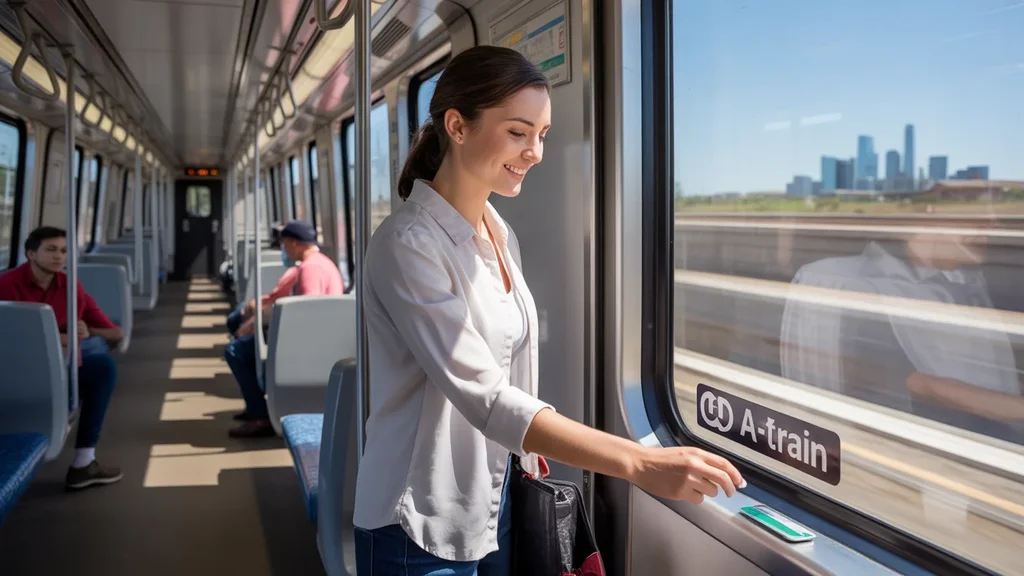
Public transit in Frisco often centers around systems such as DART (Dallas Area Rapid Transit), which provides bus service to parts of the city. Rail transit does not currently serve Frisco directly, so bus routes represent the primary public transportation option. Coverage exists, but it is not comprehensive. Bus service tends to work best along major corridors and near commercial nodes, where ridership density justifies more frequent stops.
For residents living near these corridors, transit can support specific trips — commuting to regional employment centers, accessing healthcare facilities, or reaching retail clusters. But the network is not designed for comprehensive daily mobility. Service frequency, route coverage, and evening availability are all constrained compared to denser urban cores. Late-night trips, off-peak errands, and routes that don’t align with major corridors often fall outside practical transit use.
Transit works best for individuals with predictable schedules, flexible timing, and destinations that align with existing routes. It works poorly for households managing multiple stops, tight time windows, or trips to areas without direct service. The system exists, but it does not replace car ownership for most residents.
Driving & Car Dependence Reality
Driving in Frisco is not just common — it is structurally necessary for most households. The city’s geography, employment distribution, and residential density all reinforce car dependence. Jobs are dispersed across the Dallas-Fort Worth metro area, and commuting to regional employment centers typically requires highway access. School locations, extracurricular activities, and family logistics add layers of complexity that transit cannot accommodate.
Parking is abundant and typically free, which removes one of the friction points that discourages driving in denser cities. Roads are designed for car throughput, and traffic flow is generally predictable outside of peak commute windows. For households with multiple drivers, Frisco’s infrastructure supports that pattern without significant cost or logistical burden.
The tradeoff is exposure to driving costs and time. Fuel, maintenance, insurance, and vehicle depreciation are unavoidable for car-dependent households. Commute time becomes a fixed daily cost, and flexibility is constrained by distance. Residents who live farther from work or services absorb more of this friction, while those in central or mixed-use areas reduce it incrementally.
Commuting Patterns & Daily Mobility
Commuting in Frisco typically involves driving to employment centers within the broader Dallas-Fort Worth region. Many residents work outside city limits, which makes regional highway access a critical factor in daily mobility. Commutes are structured around single-occupancy vehicles, and carpool or vanpool options are less common than in transit-rich cities.
For households with school-age children, commuting is compounded by school drop-offs, pickups, and activity shuttling. The low density of schools relative to playgrounds suggests that school access may require longer trips, even within Frisco. This adds time and coordination complexity, particularly for dual-income households.
Remote work reduces commute frequency for some residents, but it does not eliminate the need for a car. Errands, healthcare visits, and social trips still require mobility, and transit coverage does not support these needs comprehensively. The result is that even households with flexible work arrangements maintain car ownership and use it regularly.
Who Transit Works For — and Who It Doesn’t
Transit in Frisco works best for individuals living near bus corridors, with flexible schedules, and destinations that align with existing routes. Retirees, part-time workers, and residents without complex household logistics are more likely to find transit viable. The city’s designation as a retirement destination suggests that some households have lower mobility demands, which can make bus service sufficient for occasional trips.
Transit does not work well for families managing school runs, multi-stop errands, or time-sensitive schedules. It also falls short for residents in lower-density subdivisions, where bus stops are sparse or nonexistent. Households with multiple drivers, young children, or jobs outside Frisco’s core areas will find transit impractical for daily use.
Renters in mixed-use districts near walkable corridors have the best chance of reducing car dependence, but even they typically need a car for work commutes or trips outside their immediate area. Homeowners in suburban subdivisions face near-total car dependence, with transit serving only as a backup or special-purpose option.
Transportation Tradeoffs in Frisco
Choosing between transit and driving in Frisco is less about preference and more about structural fit. Driving offers control, flexibility, and comprehensive coverage. It allows you to manage complex schedules, reach any destination, and avoid time penalties associated with transfers or limited service windows. The cost is financial — fuel, insurance, maintenance — and temporal, in the form of commute time and parking logistics.
Transit offers lower direct costs and reduces exposure to fuel price volatility, but it sacrifices flexibility and coverage. It works for specific trips and specific households, but it does not replace the utility of car ownership for most residents. The tradeoff is not balanced; for the majority of Frisco households, driving is the only practical option.
Walkable pockets offer a middle ground. Residents in these areas can reduce car trips for errands and dining without eliminating car ownership. This lowers fuel consumption, reduces wear on vehicles, and adds convenience for short trips. But it does not solve commute challenges or eliminate the need for a car. It simply reduces the frequency of use.
How this article was built: In addition to public economic data, this article incorporates location-based experiential signals derived from anonymized geographic patterns—such as access density, walkability, and land-use mix—to reflect how day-to-day living actually feels in Frisco, TX.
FAQs About Transportation in Frisco (2026)
Is public transit usable for daily commuting in Frisco?
Public transit exists in Frisco, primarily through bus service, but it is not designed for comprehensive daily commuting. Coverage is limited to major corridors, and service frequency does not support tight schedules or multi-stop trips. Transit works best for residents living near bus routes with flexible timing and destinations along existing lines. For most households, especially those commuting to regional employment centers or managing family logistics, driving remains necessary.
Do most people in Frisco rely on a car?
Yes. Frisco’s layout, employment distribution, and residential density all reinforce car dependence. Most households own and use cars daily for work commutes, errands, school runs, and social trips. Walkable pockets reduce the need for short car trips in specific areas, but they do not eliminate car ownership. Even residents in mixed-use districts typically maintain a vehicle for trips outside their immediate neighborhood.
Which areas of Frisco are easiest to live in without a car?
Mixed-use districts with higher density, taller buildings, and integrated commercial space offer the best conditions for reducing car dependence. These areas have higher pedestrian infrastructure density, clustered grocery stores and restaurants, and proximity to bus routes. Residents in these zones can walk or bike for errands and dining, though they still typically need a car for work commutes or trips outside the neighborhood. Suburban subdivisions offer little to no car-free viability.
How does commuting in Frisco compare to nearby cities?
Frisco’s commute structure is similar to other suburban cities in the Dallas-Fort Worth metro area: car-dependent, highway-oriented, and regionally dispersed. Unlike denser urban cores with extensive rail networks, Frisco relies on bus service and road infrastructure. Commute times and fuel exposure depend heavily on where you live relative to your workplace. Residents commuting within Frisco or to nearby suburbs face shorter trips, while those traveling to Dallas or Fort Worth absorb longer commutes and higher fuel costs.
Can you bike regularly in Frisco?
Biking infrastructure exists in pockets, particularly in areas with higher pedestrian-to-road ratios and mixed-use development. These zones support recreational biking and short errand trips, but biking as a primary commuting mode is limited by distance, road design, and regional sprawl. Frisco’s climate — with extended heat exposure during summer months — also affects biking viability. Biking works best as a supplement to driving, not a replacement.
How Transportation Fits Into the Cost of Living in Frisco
Transportation in Frisco is not just a line item — it is a structural factor that shapes where money goes, how time is spent, and which housing locations become viable. Car dependence means that fuel, insurance, and maintenance are unavoidable for most households. These costs are predictable but not trivial, and they scale with commute distance and household size.
Living in a walkable pocket reduces short-trip driving, which lowers fuel consumption and vehicle wear. It does not eliminate transportation costs, but it reduces their frequency and intensity. For households weighing housing location, proximity to mixed-use corridors offers tangible convenience and modest cost relief, even if it does not replace car ownership.
Transit availability matters most for households with lower incomes, flexible schedules, or limited driving needs. For everyone else, transportation costs are tied to driving, and the primary lever for control is proximity — to work, to services, and to the corridors where errands cluster. Frisco’s transportation landscape rewards strategic location choices, but it does not offer a low-cost, car-free alternative for most residents.