
How Grocery Costs Feel in Frisco
Grocery prices in Frisco track slightly above the national baseline, reflecting the city’s position in a metro area where household incomes run high and retail infrastructure tilts toward quality and convenience. With a regional price parity index of 103—meaning goods and services here cost roughly 3% more than the U.S. average—food shopping in Frisco isn’t a bargain market, but it’s not an outlier either. The pressure households feel at checkout depends less on whether Frisco is “expensive” in absolute terms and more on how grocery spending fits within each household’s income and priorities. For families earning near or above the city’s median household income of $144,567 per year, weekly grocery runs register as routine rather than stressful. For those earning below the median—or managing larger households on fixed budgets—the same basket can feel noticeably tighter, especially when shopping at mid-tier or premium stores without strategic planning.
Singles and couples without children often experience grocery costs as manageable background noise, even when choosing organic or specialty items occasionally. Families with multiple children, however, face a different calculus: volume amplifies every price difference, and the gap between discount-tier staples and premium-brand equivalents compounds quickly across a cart. In Frisco, where food and grocery establishments are broadly accessible and exceed density thresholds across the city, households aren’t constrained by geographic access—they’re making active choices about where to shop and what tradeoffs to accept. That accessibility means the primary lever for managing grocery pressure isn’t proximity; it’s store tier selection and shopping behavior.
The city’s structure supports this flexibility. Mixed residential and commercial land use, combined with walkable pockets in parts of Frisco, means some households can handle smaller, frequent trips on foot or with minimal driving, reducing the friction of price-checking across multiple stores. For others, particularly those in car-oriented sections, grocery shopping consolidates into weekly trips, making store choice and list discipline the dominant cost management tools. Either way, Frisco’s grocery landscape rewards intentionality: households that treat store tier as a strategic decision rather than a default habit tend to experience less month-to-month budget strain.
Grocery Price Signals (Illustrative)
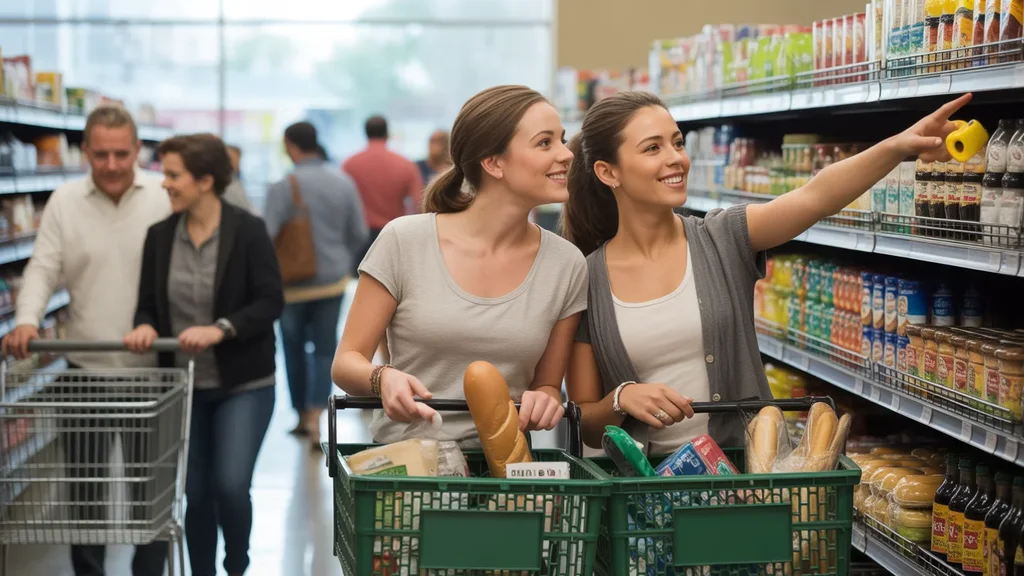
The table below shows illustrative prices for common staple items in Frisco, derived from national baselines adjusted for the city’s regional price parity. These figures are not observed retail prices from specific stores or weeks—they’re directional anchors that reflect how staple costs tend to position locally compared to the rest of the country. Use them to understand relative price pressure, not to simulate a shopping list or predict a checkout total.
| Item | Illustrative Price |
|---|---|
| Bread (per pound) | $1.90 |
| Cheese (per pound) | $4.99 |
| Chicken (per pound) | $2.10 |
| Eggs (per dozen) | $2.65 |
| Ground Beef (per pound) | $6.95 |
| Milk (per half-gallon) | $4.22 |
| Rice (per pound) | $1.09 |
Derived estimate based on national baseline adjusted by regional price parity; not an observed local price.
These prices illustrate how staple items tend to compare locally—not a full shopping list. Ground beef and cheese sit at the higher end of the spectrum, while rice and chicken remain relatively accessible. Eggs and milk fall somewhere in between, sensitive to seasonal and supply-chain shifts that affect all markets but feel more pronounced when household budgets are already stretched. For families buying in volume, even small per-unit differences accumulate: a 20-cent gap on bread or a 50-cent difference on milk becomes meaningful when multiplied across weeks and household size. Singles and couples, by contrast, often absorb these variations without adjusting behavior, particularly when income provides cushion.
Store Choice & Price Sensitivity
Grocery price pressure in Frisco varies significantly by store tier, and understanding that variation is more useful than fixating on a single “average” cost. Discount-tier stores—those emphasizing private-label products, no-frills environments, and high volume—offer the lowest per-item prices and become essential for households managing tight budgets or large families. Mid-tier stores balance national brands, occasional sales, and moderate convenience, serving households that prioritize familiarity and variety without premium pricing. Premium-tier stores focus on organic selections, specialty items, prepared foods, and curated experiences, appealing to higher-income households or those willing to pay for convenience and quality.
In Frisco, where food density exceeds high thresholds and grocery options are broadly accessible, most households can reach all three tiers without extended travel. This accessibility shifts the decision from “what’s nearby” to “what fits my budget and priorities.” A family of four shopping exclusively at premium tier might spend 30–40% more per week than the same family using discount tier for staples and mid-tier for occasional variety. That gap isn’t trivial—it’s the difference between grocery costs feeling like a fixed expense and feeling like a flexible budget line that responds to intentional choices.
Store tier also interacts with income in predictable ways. Households earning well above the median often default to premium or mid-tier stores because the time saved and quality gained outweigh the cost difference. Households earning near or below the median face sharper tradeoffs: discount-tier shopping requires more planning, fewer ready-made options, and occasional compromises on brand preference, but it’s the most reliable way to keep weekly grocery spending from crowding out other budget priorities. The key insight for Frisco residents is that store tier isn’t about being “cheap” or “wasteful”—it’s about aligning grocery strategy with household financial structure and recognizing that the same city offers meaningfully different price environments depending on where you shop.
What Drives Grocery Pressure Here
Income is the primary filter through which grocery costs are experienced in Frisco. With a median household income of $144,567, many families operate with enough margin that grocery price fluctuations—even noticeable ones—don’t force immediate behavioral changes. But that median conceals a distribution: households earning significantly less face a different reality, where the 3% regional price premium and the gap between store tiers become active budget constraints rather than background details. For these households, grocery costs don’t just “add up”—they compete directly with housing, utilities, and transportation for limited dollars, and small inefficiencies (impulse buys, brand loyalty without price comparison, shopping at the nearest store rather than the cheapest) compound into meaningful monthly pressure.
Household size amplifies every price signal. A single adult buying chicken at $2.10 per pound might purchase two pounds per week; a family of five might need ten. That five-fold volume multiplier applies to nearly every item, turning modest per-unit premiums into substantial weekly differences. Families also face less flexibility: they can’t easily skip meals, reduce portion sizes, or substitute expensive proteins with cheaper alternatives without affecting nutrition and satisfaction. This volume sensitivity makes store tier selection and list discipline far more consequential for families than for singles or couples, who can absorb variability through occasional substitutions or dining out without destabilizing their budgets.
Regional distribution patterns also matter, though less visibly. Frisco’s broadly accessible grocery infrastructure—supported by high food and grocery density—means most households aren’t paying a “convenience tax” for limited options. In cities where grocery access is sparse or unevenly distributed, households often pay more simply because competition is weak or travel costs are high. Frisco avoids that trap: the density and mix of stores create competitive pressure that keeps pricing more responsive to tier and strategy than to geographic captivity. Seasonal variability, while present, tends to affect specific categories (produce, eggs, dairy) rather than the entire basket, and households that build flexibility into their meal planning can navigate those shifts without significant budget disruption.
Practical Ways People Manage Grocery Costs
Households in Frisco manage grocery costs most effectively by treating store tier as a strategic choice rather than a passive default. Shopping discount-tier stores for pantry staples—rice, beans, canned goods, frozen vegetables—and reserving mid-tier or premium stores for fresh produce, proteins, or specialty items allows families to capture savings on high-volume purchases while maintaining quality where it matters most to them. This hybrid approach requires slightly more planning and potentially an extra stop, but it reduces weekly spending without forcing across-the-board compromises on variety or nutrition.
List discipline is another high-impact lever. Households that shop with a written list, organized by meal plan rather than by aisle impulse, consistently spend less than those who browse and decide in-store. The difference isn’t dramatic on any single trip, but over months it compounds, particularly for families where volume makes every unplanned addition meaningful. Buying in bulk for non-perishables—when unit prices drop significantly at higher quantities—also helps, though it requires upfront cash and storage space, which not all households can accommodate. For those who can, bulk buying shifts grocery costs from weekly variability to more predictable monthly or quarterly rhythms.
Seasonal and sale-based shopping introduces another layer of control. Households that adjust protein choices based on what’s on sale—chicken one week, ground beef the next—reduce average per-pound costs without eliminating variety. Similarly, buying produce in season rather than demanding year-round availability lowers costs and often improves quality. These strategies don’t require extreme couponing or deprivation; they’re about aligning purchasing behavior with price cycles and store incentives rather than shopping on autopilot. In Frisco, where grocery access is broad and competition exists across tiers, households that engage actively with store choice and timing tend to experience grocery costs as manageable, while those who don’t often wonder why their bills feel higher than expected despite similar income levels.
Groceries vs Eating Out (Directional)
The tradeoff between cooking at home and eating out is less about absolute cost and more about time, convenience, and household structure. Cooking at home consistently costs less per meal than restaurant or takeout dining, but it requires planning, shopping, preparation, and cleanup—time and effort that not all households can or want to allocate equally every week. In Frisco, where household incomes often support discretionary spending, many families treat dining out as a regular convenience rather than a rare indulgence, using it to compress weeknight logistics or reward themselves after busy stretches.
For budget-conscious households, the calculus is sharper: every restaurant meal represents multiple home-cooked meals’ worth of grocery spending, and frequent dining out can destabilize an otherwise controlled food budget. A family that eats out twice a week might spend as much on those meals as they do on an entire week’s worth of groceries, depending on restaurant tier and household size. That doesn’t make dining out “wrong,” but it does mean households managing tight budgets need to treat it as a conscious tradeoff rather than a default convenience. Singles and couples, particularly those earning above the median, often find the cost difference less consequential, especially when factoring in the time saved and the lack of food waste from cooking small portions.
The key insight is that groceries and dining out aren’t substitutes in a strict economic sense—they’re different bundles of cost, time, and convenience. Households that cook most meals at home and treat dining out as occasional gain the most budget flexibility. Those who rely heavily on takeout or restaurants for convenience pay a premium that shows up not in grocery bills but in total monthly food spending, which can quietly crowd out other priorities if not tracked intentionally. In Frisco, where both grocery access and restaurant density are high, the choice is available to most households; the question is whether the tradeoff aligns with their financial structure and time constraints.
FAQs About Grocery Costs in Frisco (2026)
Is it cheaper to shop in bulk in Frisco? Bulk purchasing reduces per-unit costs for non-perishables and household staples, particularly at discount-tier or warehouse-style stores. The savings are real but require upfront cash and storage space, which makes bulk buying more practical for families than for singles or couples in smaller living spaces.
Which stores in Frisco are best for low prices? Discount-tier stores focusing on private-label products and high-volume sales offer the lowest per-item prices. Mid-tier stores provide more brand variety and convenience at moderate premiums, while premium-tier stores emphasize organic, specialty, and prepared options at higher price points. Most households can access all three tiers without extended travel, making store choice a strategic decision rather than a geographic constraint.
How much more do organic items cost in Frisco? Organic products typically carry premiums over conventional equivalents, with the gap varying by category—produce and dairy often show larger differences than packaged goods. Households prioritizing organic selections should expect meaningfully higher weekly totals, particularly for families buying in volume, though shopping sales and seasonal availability can narrow the gap.
How do grocery costs for two adults in Frisco tend to compare to nearby cities? Frisco’s regional price parity of 103 suggests grocery costs run slightly above the national baseline, consistent with other higher-income suburbs in the Dallas metro area. Nearby cities with lower price parities or more aggressive discount-tier competition may offer modestly lower costs, but the differences are usually smaller than the variation between store tiers within Frisco itself.
How do households in Frisco think about grocery spending when cooking at home? Many households treat grocery spending as a flexible budget line that responds to store choice, list discipline, and meal planning rather than a fixed cost. Families often prioritize discount or mid-tier stores for staples and reserve premium stores for specific items, while higher-income households may prioritize convenience and quality over per-unit cost. The broad accessibility of grocery options means most households can adjust their approach based on financial priorities rather than geographic limits.
Does shopping at different stores for different items actually save money? Yes, though the savings depend on household size and how much price variation exists between tiers for high-volume items. Families that buy pantry staples at discount stores and fresh items at mid-tier stores can reduce weekly spending without sacrificing variety, but the strategy requires extra time and planning that not all households can sustain consistently.
Are grocery costs in Frisco rising faster than income? Grocery price trends fluctuate with national supply-chain conditions, seasonal cycles, and regional distribution costs, but predicting future changes or comparing growth rates to income requires data beyond current price signals. Households concerned about long-term affordability should focus on building flexible shopping habits—store tier awareness, list discipline, seasonal buying—that reduce exposure to price volatility regardless of direction.
How Groceries Fit Into the Cost of Living in Frisco
Grocery costs in Frisco occupy a middle position in the household budget hierarchy: less dominant than housing, less volatile than utilities in extreme weather months, but more controllable than either through active decision-making. For most households, groceries represent a recurring expense that responds predictably to strategy—store tier choice, list discipline, bulk buying, seasonal awareness—making it one of the few major cost categories where behavior directly and immediately affects monthly totals. That responsiveness is valuable, particularly for households managing budget pressure from housing or transportation costs that offer less flexibility.
The city’s high median income and broadly accessible grocery infrastructure mean that for many residents, grocery costs feel manageable even without aggressive optimization. But for households earning below the median, or families buying in volume, the gap between passive shopping and strategic shopping can represent hundreds of dollars per month—enough to affect savings rates, discretionary spending, or the ability to absorb unexpected expenses without stress. Groceries don’t determine whether Frisco is affordable in the way housing does, but they do determine how tight or loose a household’s month-to-month budget feels once the fixed costs are paid.
Understanding grocery costs in isolation is useful, but it’s incomplete without seeing how they interact with the rest of the household budget. Housing, utilities, transportation, and groceries together define the financial texture of life in Frisco, and each category’s weight and variability shape which households thrive and which feel constant pressure. For a full picture of where money goes each month and how grocery spending fits within total household costs, see Your Monthly Budget in Frisco: Where It Breaks. That broader view helps clarify whether grocery costs are the primary budget challenge or simply one piece of a larger financial structure that requires different tradeoffs and priorities.
How this article was built: In addition to public economic data, this article incorporates location-based experiential signals derived from anonymized geographic patterns—such as access density, walkability, and land-use mix—to reflect how day-to-day living actually feels in Frisco, TX.