
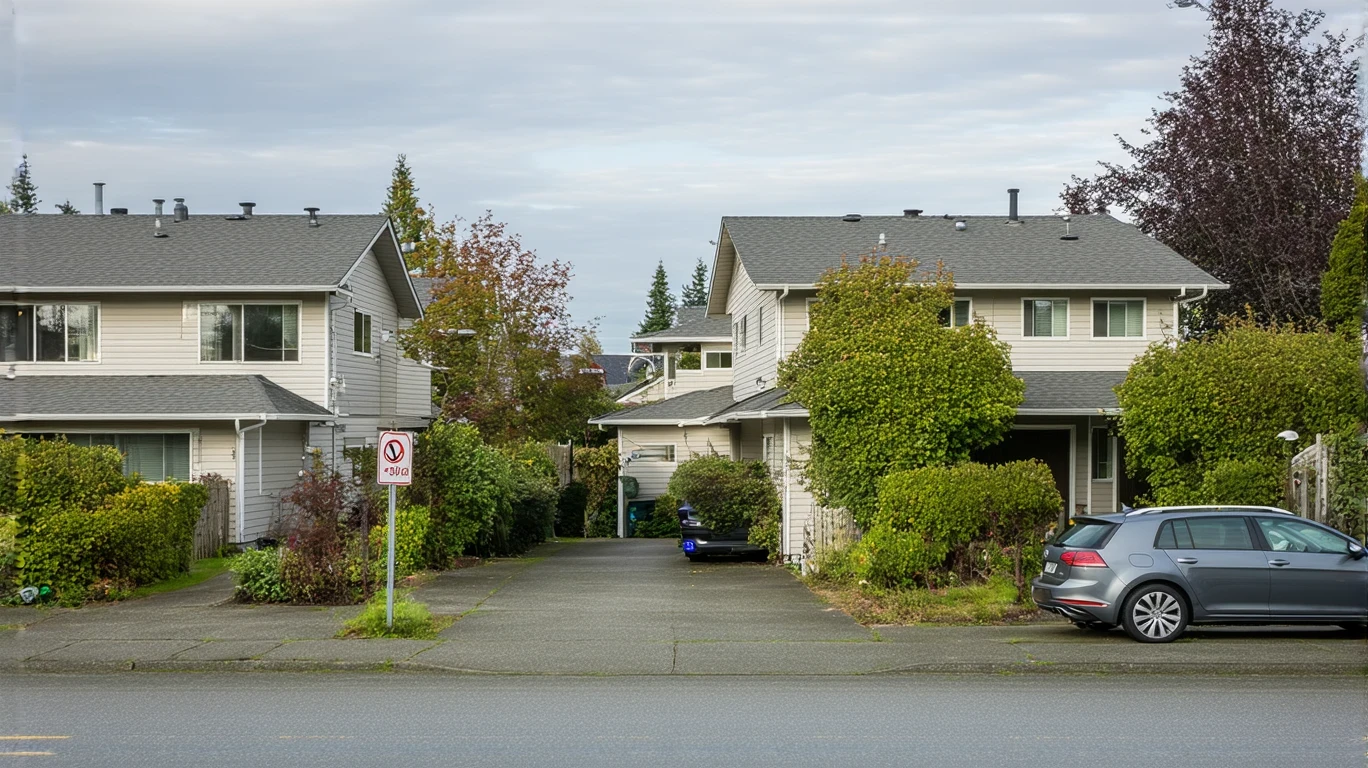
The Martinez family has been renting in Seattle for six years, and they’re ready to buy. With two kids in elementary school and a third on the way, they need more space—but they’re torn between Federal Way and Bellevue. Both cities sit in the Seattle metro area, both offer rail transit access, and both have strong schools and parks. But the cost structure couldn’t be more different. Federal Way offers a realistic entry point for a household earning $80,000 to $95,000 a year, while Bellevue’s housing market assumes six-figure incomes and substantial down payments. The question isn’t which city is cheaper overall—it’s which cost pressures each household can absorb, and which tradeoffs make sense for their specific situation in 2026.
This comparison isn’t about declaring a winner. It’s about understanding where money goes, where flexibility exists, and where households get squeezed. Federal Way and Bellevue share the same regional price environment, the same unemployment rate, and nearly identical infrastructure for getting around without a car. But housing entry costs, utility rate structures, and income expectations create entirely different financial experiences. For some households, Federal Way’s lower housing costs and shorter commute times make it the obvious fit. For others, Bellevue’s income ceiling and hospital access justify the higher entry barrier. The decision depends on which costs dominate your household’s budget—and which pressures you’re equipped to handle.
What follows is a detailed breakdown of how costs behave differently in Federal Way and Bellevue across housing, utilities, groceries, transportation, taxes, and lifestyle. We’ll explain where each city’s cost pressure concentrates, which households feel those differences most acutely, and how the same income can feel stable in one place and stretched in another. By the end, you’ll have a clear framework for deciding which city fits your household’s financial reality.
Housing Costs: Entry Barrier vs. Income Ceiling
Housing is where Federal Way and Bellevue diverge most sharply. Federal Way’s median home value sits at $454,300, while Bellevue’s reaches $1,139,500—a difference that fundamentally changes who can enter the market and what ongoing obligations look like. For renters, the gap is similarly stark: Federal Way’s median gross rent is $1,660 per month, compared to Bellevue’s $2,422. These aren’t just numbers—they represent entirely different household financial profiles and entirely different assumptions about what “affordable” means.
In Federal Way, a household earning the local median income of $80,360 per year faces housing costs that are high but not insurmountable. Renters pay roughly a quarter of gross monthly income for a median apartment, leaving room for utilities, transportation, and groceries. Buyers need a substantial down payment and solid credit, but the entry barrier doesn’t require dual six-figure incomes or generational wealth. The housing stock skews toward single-family homes and townhomes, which means more space per dollar but also more responsibility for maintenance and utilities. Families prioritizing square footage, yards, and proximity to schools find Federal Way’s housing market structured around those needs.
Bellevue, by contrast, assumes a median household income of $149,551—nearly double Federal Way’s figure. Even at that income level, a $2,422 monthly rent or a mortgage on a $1,139,500 home represents significant ongoing obligation. The housing market here is built for high earners, dual-income professional households, and retirees with established equity. The building stock tilts more vertical, with a mix of condos, townhomes, and single-family homes that reflect urban density rather than suburban sprawl. Buyers in Bellevue aren’t just paying for space—they’re paying for proximity to employment centers, hospital access, and a market that holds value even during downturns. But that stability comes with a price: households without substantial income or savings simply can’t enter.
| Housing Type | Federal Way | Bellevue |
|---|---|---|
| Median Home Value | $454,300 | $1,139,500 |
| Median Gross Rent | $1,660/month | $2,422/month |
| Median Household Income | $80,360/year | $149,551/year |
For first-time buyers, Federal Way offers a path to ownership that doesn’t require waiting years to save a down payment or stretching to afford a mortgage that consumes half of gross income. For renters, the lower monthly obligation leaves room to absorb unexpected expenses—car repairs, medical bills, childcare—without immediately falling behind. But Federal Way’s income ceiling matters: households here earn less on average, which means less flexibility for discretionary spending and less cushion when costs rise.
Bellevue’s housing costs are prohibitive for many households, but they’re paired with an income environment that makes them manageable for the target demographic. High earners in tech, healthcare, and finance can absorb a $2,422 rent or a seven-figure mortgage without sacrificing other priorities. Retirees with paid-off homes elsewhere can sell, buy in Bellevue, and still have equity left over. The housing market here isn’t designed for accessibility—it’s designed for stability, appreciation, and proximity to economic opportunity.
Housing takeaway: Federal Way fits households prioritizing entry cost and space over income ceiling. Bellevue fits households where income supports the entry barrier and ongoing obligations. Renters sensitive to monthly cash flow will feel the difference immediately. Buyers need to weigh front-loaded affordability (Federal Way) against long-term market stability and income potential (Bellevue). Families with kids may find Federal Way’s housing stock better suited to their space needs, while dual-income professionals and retirees may prefer Bellevue’s proximity to employment and healthcare infrastructure.
Utilities and Energy Costs: Rate Structure and Seasonal Exposure
Utility costs in Federal Way and Bellevue are shaped by similar climate conditions—mild, wet winters and dry summers—but different rate structures create different exposure profiles. Federal Way’s electricity rate is 13.33¢ per kWh, while Bellevue’s is slightly higher at 14.06¢. The difference is modest for baseline usage, but it compounds for larger homes or households running heating, cooling, and appliances year-round. Natural gas tells a sharper story: Federal Way’s rate is $15.51 per MCF, while Bellevue’s jumps to $24.71—a difference that matters significantly during heating season.
In both cities, heating dominates winter utility costs. The Pacific Northwest’s mild climate means cooling costs stay low even in summer, but damp, cool winters push households toward consistent furnace use from October through April. Federal Way’s lower natural gas rate reduces exposure for households heating single-family homes, especially older construction with less insulation. A family running a gas furnace through a typical winter will feel the difference between $15.51 and $24.71 per MCF every month. Bellevue’s higher rate doesn’t make heating unaffordable, but it does mean less flexibility when usage spikes during cold snaps or when household size increases.
Apartment dwellers in both cities experience more predictable utility costs. Smaller square footage, shared walls, and newer construction reduce heating and cooling loads. Electric baseboard heating—common in newer apartments—avoids natural gas exposure entirely, though it shifts costs to the electric bill. For renters in Federal Way, the lower electricity rate and smaller average unit size keep baseline utility costs manageable. In Bellevue, higher rent often comes with newer construction and better insulation, which can offset the higher electricity rate. But larger units or older buildings can still see significant seasonal swings.
Single-family homeowners face more volatility. Older homes in Federal Way—common in neighborhoods built in the 1970s and 1980s—tend to have less insulation, older windows, and less efficient HVAC systems. That means higher heating loads and more sensitivity to rate changes. Bellevue’s housing stock skews newer on average, which helps with efficiency, but the higher natural gas rate still creates exposure for families heating larger homes. Households planning to stay long-term in either city should factor in the cost of efficiency upgrades—new windows, insulation, smart thermostats—as a way to reduce seasonal volatility.
Utility billing structures in both cities follow typical Pacific Northwest patterns: electricity and natural gas are billed separately, and households pay for what they use. There are no flat-rate bundles or all-inclusive rent arrangements common in some other regions. That means households have direct control over usage, but they also bear the full cost of inefficiency. Time-of-use rates and off-peak pricing exist in some areas, but they’re not universal. Households willing to shift usage—running dishwashers and laundry at night, adjusting thermostats during peak hours—can reduce exposure, but the savings depend on individual billing structures.
Utility takeaway: Federal Way offers lower natural gas rates, which reduces heating season exposure for single-family homeowners. Bellevue’s higher natural gas rate creates more volatility for households heating larger homes, though newer construction can offset some of that pressure. Apartment renters in both cities experience more predictable costs due to smaller square footage and shared walls. Households sensitive to seasonal swings should prioritize newer construction or plan for efficiency upgrades. The primary cost driver in both cities is heating, not cooling, and natural gas rate differences matter most for families in older, larger homes.
Groceries and Daily Expenses: Price Sensitivity and Access Patterns
Grocery costs in Federal Way and Bellevue reflect the same regional price environment—both cities sit in the Seattle metro with identical regional price parity—but access patterns and household spending habits create different experiences. Both cities show high food and grocery establishment density, which means households have options ranging from big-box stores to neighborhood markets. But the mix of discount chains, specialty stores, and convenience options varies, and that affects how much flexibility households have when managing weekly grocery budgets.
In Federal Way, grocery shopping tends to center on big-box stores and regional discount chains. Households prioritizing value can stock up on staples—rice, bread, chicken, eggs—at predictable prices. A pound of chicken runs around $2.32, a dozen eggs costs $2.82, and ground beef sits at $7.62 per pound. These are derived estimates based on regional price parity, not observed local prices, but they reflect the cost structure households face when filling a cart. Families managing larger grocery volumes—couples with kids, multigenerational households—benefit from the ability to buy in bulk and plan meals around sales. The tradeoff is time: big-box shopping often means driving to a central location, navigating crowds, and spending an hour or more per trip.
Bellevue offers similar baseline grocery prices—the regional price environment is identical—but the mix of stores skews more toward specialty markets, organic options, and prepared food sections. Households here have access to the same discount chains as Federal Way, but they also have more options for convenience spending: pre-cut vegetables, meal kits, grab-and-go lunches. For dual-income professionals working long hours, that convenience is worth the premium. For retirees or single adults, smaller neighborhood markets reduce the friction of weekly shopping. But convenience spending adds up quickly, and households without discipline can see grocery costs creep well above baseline.
Dining out and takeout follow similar patterns. Both cities have high food establishment density, which means plenty of options for casual dining, coffee shops, and quick meals. But Bellevue’s restaurant scene skews more upscale on average, with more options for sit-down dining and fewer budget-friendly chains. Federal Way offers more fast-casual and family-friendly options, which keeps dining costs lower for households eating out once or twice a week. For families with kids, the difference between a $40 dinner and a $70 dinner adds up over a month. For single adults or couples, the flexibility to grab coffee or lunch without planning every meal matters more than raw price.
Household size drives grocery pressure more than location. A single adult in either city can keep weekly grocery costs low by cooking at home, shopping sales, and avoiding convenience spending. A family of four or five faces higher baseline costs simply due to volume, and the ability to buy in bulk becomes essential. Federal Way’s access to big-box stores and discount chains makes that easier. Bellevue’s mix of specialty stores and prepared food options offers more flexibility for households willing to pay for convenience, but it also creates more temptation to overspend.
Grocery takeaway: Federal Way fits households prioritizing value and bulk shopping, especially families managing larger grocery volumes. Bellevue fits households willing to pay for convenience and variety, especially dual-income professionals and retirees who value time over price. Both cities offer access to discount chains and specialty stores, but the mix and emphasis differ. Households sensitive to grocery costs should focus on planning, bulk buying, and avoiding convenience spending creep. The primary difference isn’t price—it’s access patterns and the temptation to trade time for convenience.
Taxes and Fees: Predictability and Structural Differences

Washington State has no income tax, which means Federal Way and Bellevue households avoid one of the largest tax burdens common in other states. But property taxes, sales taxes, and local fees still shape the cost experience, and the structure of those costs differs depending on housing type, ownership status, and length of residence. Both cities rely heavily on property taxes to fund schools, infrastructure, and services, and those taxes are tied to assessed home values—which means Bellevue homeowners face significantly higher annual property tax bills than their Federal Way counterparts.
In Federal Way, property taxes are calculated based on a median home value of $454,300. The exact rate depends on local levies, school district funding measures, and voter-approved bonds, but homeowners should expect property taxes to represent a significant annual expense. For a household buying at the median price, that tax bill is substantial but manageable within the context of a mortgage payment. Renters don’t pay property taxes directly, but landlords pass those costs through in rent, which means property tax pressure is baked into the $1,660 median rent figure.
Bellevue’s property taxes are tied to a median home value of $1,139,500, which means annual tax bills are proportionally higher. Even with the same effective tax rate, a home worth $1.1 million generates far more tax revenue than a home worth $450,000. For high-income homeowners, that’s an expected cost of owning property in a desirable market. For retirees on fixed incomes, it can create pressure—especially if home values appreciate faster than income. Renters in Bellevue face the same pass-through effect, with property taxes embedded in the $2,422 median rent.
Sales tax in Washington State is among the highest in the nation, and both Federal Way and Bellevue residents pay the same combined state and local rate. That means every purchase—groceries, gas, clothing, household goods—carries a tax burden that compounds over time. For households spending $500 a month on taxable goods, the annual sales tax bill is significant. The burden falls more heavily on lower-income households, who spend a larger share of income on consumption, but high-income households in Bellevue pay more in absolute terms simply because they spend more.
Local fees vary by housing type and neighborhood. Homeowners in both cities pay for trash, water, sewer, and stormwater management, though billing structures differ by provider. Some neighborhoods in both cities have HOA fees that bundle landscaping, snow removal, and shared amenities, while others leave those costs to individual homeowners. Bellevue’s newer developments and condo buildings are more likely to have HOA fees, which can range from modest monthly charges to substantial assessments for major repairs. Federal Way’s single-family neighborhoods are less likely to have HOAs, which means fewer monthly fees but more responsibility for individual upkeep.
Parking fees, tolls, and vehicle registration costs are identical across both cities, since they’re set at the state level. But Bellevue’s urban density and proximity to Seattle mean more households encounter paid parking in daily life—whether for work, shopping, or entertainment. Federal Way’s more suburban layout reduces that friction, though households commuting to Seattle or Bellevue for work may still encounter tolls and parking costs.
Tax and fee takeaway: Bellevue homeowners face higher property tax bills due to higher home values, though the burden is proportional to the asset. Federal Way homeowners pay less in absolute terms but still face significant annual property tax obligations. Renters in both cities absorb property taxes indirectly through rent. Sales tax burden is identical across both cities and affects all households, though lower-income households feel it more acutely as a share of income. HOA fees are more common in Bellevue’s newer developments, while Federal Way’s single-family neighborhoods tend to avoid them. The primary difference is magnitude and predictability: Bellevue’s costs are higher but more stable, while Federal Way’s costs are lower but still significant relative to income.
Transportation and Commute Reality
Transportation costs in Federal Way and Bellevue are shaped by commute patterns, car dependence, and access to transit—but the data available for each city tells different parts of the story. Federal Way’s average commute time is 33 minutes, with 53.6% of workers experiencing long commutes and 17.2% working from home. Bellevue lacks comparable commute data, but its role as a regional employment hub and proximity to Seattle suggest different commute dynamics. What’s clear is that both cities offer rail transit access and notable cycling infrastructure, but car ownership remains the dominant mode of transportation for most households.
In Federal Way, the 33-minute average commute reflects a mix of local workers and households commuting north to Seattle or Bellevue for employment. More than half of workers experience long commutes, which suggests significant time cost even before accounting for fuel or vehicle wear. Gas prices in Federal Way sit at $4.72 per gallon, which compounds the cost of daily driving. A household commuting 25 miles round trip in a vehicle averaging 25 miles per gallon burns a gallon of gas per day—nearly $24 per week, or roughly $95 per month, before accounting for tolls, parking, or maintenance. That’s a meaningful ongoing expense for a household earning $80,360 per year.
Bellevue’s gas price is lower at $3.85 per gallon, which reduces per-mile fuel costs for households driving regularly. But Bellevue’s role as an employment center means many residents work locally or have shorter commutes on average. The city’s walkable pockets, rail transit access, and notable bike infrastructure create more opportunities to reduce car dependence for daily errands, even if commuting still requires a vehicle. Households living near transit stations or within walkable neighborhoods can reduce fuel exposure by using transit for work trips and reserving the car for weekend errands or longer trips.
Both cities show substantial pedestrian infrastructure in parts of the city, rail service, and bike-to-road ratios that exceed high thresholds. That means households willing to structure their lives around transit, walking, and cycling can reduce transportation costs significantly. But the infrastructure exists in pockets, not uniformly across both cities. Families living in car-oriented neighborhoods—common in both Federal Way and Bellevue’s suburban edges—will still need at least one vehicle, and likely two for dual-income households with kids. The question isn’t whether you can avoid owning a car entirely—it’s how often you need to use it and how far you’re driving when you do.
Federal Way’s longer average commute and higher gas price create more transportation cost pressure for households commuting to Seattle or Bellevue for work. The time cost is significant: 33 minutes each way adds up to more than five hours per week, or roughly 250 hours per year. That’s time not spent with family, not available for side work, and not recoverable. For households where one partner works locally and the other commutes, the transportation burden is uneven. For dual-income households where both partners commute long distances, the time and fuel costs compound.
Bellevue’s lower gas price and likely shorter average commute (based on its role as an employment hub) reduce transportation pressure for many households, though the higher housing costs mean some residents still commute from surrounding areas. The city’s transit and bike infrastructure offer more flexibility for reducing car trips, especially for errands, dining, and recreation. But families with kids, households managing multiple jobs, or residents living in less walkable neighborhoods will still rely on cars for most trips.
Transportation takeaway: Federal Way’s longer average commute and higher gas price create more time and fuel cost pressure, especially for households commuting to Seattle or Bellevue. Bellevue’s lower gas price and likely shorter commutes reduce per-mile fuel costs, though car ownership remains essential for most households. Both cities offer rail transit and bike infrastructure in pockets, which creates opportunities to reduce car dependence for daily errands. Households sensitive to commute time should weigh Federal Way’s lower housing costs against the time cost of longer commutes. Households prioritizing walkability and transit access may find Bellevue’s infrastructure more supportive, though housing costs are significantly higher.
Where Cost Pressure Concentrates
Federal Way and Bellevue don’t differ in total cost of living—they differ in where cost pressure shows up and which households feel it most. Housing dominates the cost experience in both cities, but the nature of that pressure is fundamentally different. In Federal Way, housing costs are high relative to local income, but they’re manageable for households earning near the median. The challenge is ongoing: lower income means less cushion for unexpected expenses, less flexibility for discretionary spending, and more sensitivity to cost increases in utilities, groceries, or transportation. In Bellevue, housing costs are extreme in absolute terms, but they’re paired with an income environment that makes them sustainable for the target demographic. The challenge is entry: households without substantial income or savings simply can’t access the market, but those who can enter face more predictable ongoing costs relative to their earnings.
Utilities introduce more volatility in Federal Way for households heating older, larger homes, though the lower natural gas rate provides some relief. Bellevue’s higher natural gas rate creates more exposure during heating season, but newer construction and better insulation reduce usage for many households. The difference matters most for families in single-family homes, especially those planning to stay long-term. Apartment renters in both cities experience more predictable utility costs due to smaller square footage and shared walls.
Transportation patterns matter more in Federal Way, where longer commutes and higher gas prices create both time and fuel cost pressure. Households commuting to Seattle or Bellevue for work absorb that burden daily, and the time cost compounds over months and years. Bellevue’s lower gas price and likely shorter average commute reduce per-mile costs, though car ownership remains essential for most households. Both cities offer transit and bike infrastructure in pockets, but the infrastructure supports errands and recreation more than it replaces car commuting for most families.
Groceries and daily expenses follow similar patterns in both cities, with the primary difference being access to convenience versus value. Federal Way’s big-box stores and discount chains support bulk buying and meal planning, which keeps costs lower for families managing larger grocery volumes. Bellevue’s mix of specialty stores and prepared food options offers more flexibility for households willing to pay for convenience, but it also creates more temptation to overspend. The difference isn’t price—it’s spending discipline and household priorities.
Taxes and fees are higher in Bellevue due to higher home values, but they’re proportional to the asset and predictable over time. Federal Way’s lower property taxes reduce annual obligations, but they’re still significant relative to income. Sales tax burden is identical across both cities and affects all households, though it represents a larger share of income for lower earners. HOA fees are more common in Bellevue’s newer developments, which adds ongoing monthly costs but also reduces individual maintenance responsibility.
The decision between Federal Way and Bellevue isn’t about which city is cheaper—it’s about which cost structure fits your household’s income, priorities, and tolerance for different types of financial pressure. Households sensitive to housing entry costs and ongoing obligations may prefer Federal Way’s lower prices, even if it means absorbing longer commutes and tighter income constraints. Households with higher income and established savings may prefer Bellevue’s market stability, hospital access, and proximity to employment, even if it means paying significantly more for housing. For families prioritizing space and schools, Federal Way offers more square footage per dollar. For retirees and dual-income professionals, Bellevue offers more amenities and healthcare infrastructure. The better choice depends on which costs dominate your household—and which pressures you’re equipped to handle.
How the Same Income Feels in Federal Way vs. Bellevue
Single Adult
For a single adult, Federal Way’s lower rent leaves more room for discretionary spending, building savings, or managing irregular expenses like car repairs or medical bills. The longer commute eats into free time, but the financial flexibility is real. In Bellevue, higher rent consumes more of gross income, which means less cushion for unexpected costs and more pressure to maintain steady employment. The shorter commute and walkable errands reduce time friction, but the ongoing housing obligation is less forgiving. Flexibility exists in Federal Way through lower fixed costs; in Bellevue, it exists through proximity and infrastructure, but only if income supports the rent.
Dual-Income Couple
For a dual-income couple, Federal Way offers a realistic path to homeownership without requiring both partners to earn six figures. The lower home price and manageable mortgage create stability, though the longer commutes for one or both partners add time cost that compounds over years. In Bellevue, the higher home price requires substantial combined income and savings, but the proximity to employment centers reduces commute friction for at least one partner. The tradeoff is front-loaded: Federal Way demands less upfront but extracts time cost daily, while Bellevue demands more upfront but offers more predictable ongoing logistics. Couples prioritizing time together may prefer Bellevue’s shorter commutes despite higher costs; couples prioritizing financial flexibility may prefer Federal Way’s lower entry barrier.
Family with Kids
For a family with kids, Federal Way’s housing stock offers more space per dollar, which matters when managing bedrooms, play areas, and storage. The strong school and playground infrastructure reduces childcare friction, though the longer commute for working parents cuts into family time. Grocery costs stay manageable with access to big-box stores and bulk buying. In Bellevue, higher housing costs squeeze budgets even at higher income levels, but the hospital access reduces healthcare friction for families managing chronic conditions or emergencies. The walkable pockets and transit access make errands easier without loading kids into the car, though the higher cost of housing leaves less room for discretionary spending. Families prioritizing space and entry cost fit better in Federal Way; families prioritizing healthcare access and urban amenities fit better in Bellevue, assuming income supports the difference.
Decision Matrix: Which City Fits Which Household?
| Decision Factor | If You’re Sensitive to This… | Federal Way Tends to Fit When… | Bellevue Tends to Fit When… |
|---|---|---|---|
| Housing entry + space needs | Down payment size, monthly mortgage or rent obligation, square footage per dollar | You need lower entry cost and more space, even if income ceiling is lower | You have substantial income or savings and prioritize market stability over entry cost |
| Transportation dependence + commute friction | Daily commute time, fuel costs, time away from home | You can absorb longer commute time in exchange for lower housing costs |