

Elmhurst and Bolingbrook sit roughly 20 miles apart in the Chicago metro, yet the cost experience in each city feels fundamentally different—not because one is universally cheaper, but because cost pressure concentrates in different categories depending on how you live. Elmhurst offers rail transit access, walkable pockets, and strong family infrastructure, but housing entry is steep. Bolingbrook delivers lower home prices and rents, but longer commutes, bus-only transit, and limited family amenities shift costs into transportation, time, and logistics. For households deciding between the two in 2026, the question isn’t which city costs less overall—it’s which cost structure aligns with your household’s non-negotiables.
Both cities share the same metro-area utility rates, similar green space access, and corridor-clustered grocery options. The meaningful differences emerge in housing entry barriers, transit viability, commute friction, and family infrastructure density. A dual-income couple relying on Chicago rail commutes will experience Elmhurst and Bolingbrook very differently than a single adult working remotely or a family prioritizing school and playground density. This comparison explains where costs show up, how predictability and volatility differ, and which households feel those differences most acutely.
Meet the Patel family: Priya and Anil, both working downtown, with a six-year-old daughter. They’re debating whether Elmhurst’s rail access and school density justify the housing premium, or whether Bolingbrook’s lower entry cost makes sense even with longer bus commutes and fewer nearby playgrounds. Their decision hinges not on total monthly expenses, but on which tradeoffs—time, predictability, or upfront cost—matter most to their daily reality.
Housing Costs
Housing is where the structural difference between Elmhurst and Bolingbrook becomes most visible. Elmhurst’s median home value sits at $516,900, while Bolingbrook’s is $276,400—a gap that reflects not just price, but the type of housing stock, lot sizes, and proximity to rail transit. Elmhurst’s housing market tilts toward established single-family homes in walkable pockets near the train station, where demand from Chicago commuters keeps prices elevated. Bolingbrook’s housing stock includes more newer construction, townhomes, and single-family homes on larger lots farther from rail lines, which lowers entry costs but increases car dependency.
For renters, the gap narrows but remains meaningful. Elmhurst’s median gross rent is $1,843 per month, compared to Bolingbrook’s $1,658 per month. That difference matters most for single adults or couples sensitive to monthly cash flow, but it’s not just about the dollar figure—it’s about what that rent buys. In Elmhurst, renters often gain proximity to rail transit, walkable errands, and denser family infrastructure (schools and playgrounds meet density thresholds). In Bolingbrook, renters typically get more square footage and parking, but sacrifice transit flexibility and may face longer drives for errands, schools, or healthcare.
Homeownership amplifies the difference. Elmhurst’s higher home values create a steeper entry barrier—larger down payments, higher monthly mortgage obligations, and greater exposure to property tax assessments. Bolingbrook’s lower home prices ease the upfront burden, making ownership accessible to first-time buyers or families prioritizing space over transit access. However, Bolingbrook’s longer average commute (30 minutes vs. Elmhurst’s 27 minutes) and higher percentage of long commutes (48.7% vs. 43.1%) mean that transportation costs and time costs can offset some of the housing savings. Households planning to stay several years must weigh whether Elmhurst’s front-loaded housing cost buys ongoing convenience, or whether Bolingbrook’s lower entry cost justifies managing commute friction and car dependence.
| Housing Type | Elmhurst | Bolingbrook |
|---|---|---|
| Median Home Value | $516,900 | $276,400 |
| Median Gross Rent | $1,843/month | $1,658/month |
| Typical Entry Barrier | High (rail proximity premium) | Moderate (newer stock, larger lots) |
| Ongoing Predictability | Stable (established neighborhoods) | Stable (newer construction, lower tax base volatility) |
Housing Takeaway: Elmhurst’s housing costs are front-loaded and steep, but they buy rail access, walkable infrastructure, and family amenities that reduce ongoing transportation and logistics costs. Bolingbrook’s lower entry cost appeals to first-time buyers and families prioritizing space, but the tradeoff is higher car dependency, longer commutes, and less dense family infrastructure. Renters sensitive to monthly cash flow may prefer Bolingbrook; buyers prioritizing transit flexibility and school density will find Elmhurst’s premium harder to avoid. The decision depends on whether your household values lower upfront cost or lower ongoing friction.
Utilities and Energy Costs
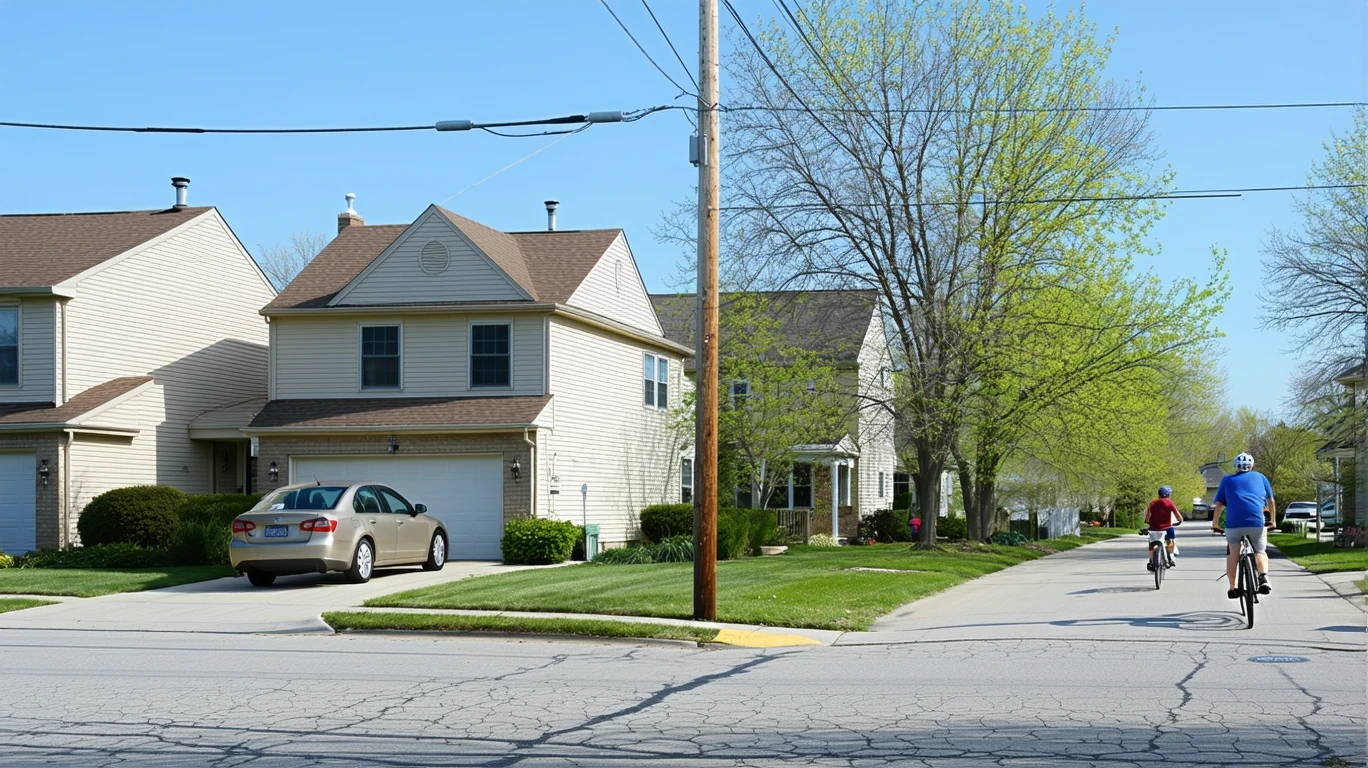
Utility cost exposure in Elmhurst and Bolingbrook is remarkably similar in structure, but subtle differences in housing stock and household behavior create divergent experiences. Both cities share the same electricity rate (16.36¢/kWh) and nearly identical natural gas pricing ($9.65/MCF in Elmhurst vs. $9.48/MCF in Bolingbrook). The Chicago metro’s climate drives utility costs through long heating seasons and periodic summer cooling demand, but the real difference between the two cities emerges in how housing type, home age, and square footage interact with those baseline rates.
Elmhurst’s housing stock skews older, with many homes built in established neighborhoods where insulation, window efficiency, and HVAC systems may vary widely. Older single-family homes in Elmhurst can experience higher heating exposure during winter months, especially if they haven’t been retrofitted with modern insulation or high-efficiency furnaces. However, Elmhurst’s mixed building height profile and denser urban form mean that some residents live in newer apartments or townhomes with shared walls, which naturally reduce heating and cooling loads. Bolingbrook’s housing stock includes more recent construction, where building codes have improved baseline efficiency, but larger single-family homes on bigger lots mean more square footage to heat and cool. Families in Bolingbrook may find that their lower mortgage payment is partially offset by higher baseline utility usage simply due to home size.
Seasonality affects both cities identically—winter heating dominates utility bills, with natural gas usage spiking during extended cold periods, while summer cooling introduces moderate electricity exposure during heat waves. The key difference is predictability: households in newer Bolingbrook homes may experience more stable month-to-month bills due to better insulation and modern HVAC systems, while Elmhurst households in older homes face greater volatility depending on home condition and maintenance history. Renters in both cities generally experience lower utility exposure than homeowners, especially in multi-unit buildings where shared walls and smaller square footage reduce heating and cooling needs. Single adults and couples in apartments will find utility costs more predictable and lower in absolute terms, while families in larger single-family homes—regardless of city—will face higher baseline usage and greater seasonal swings.
Utility Takeaway: Utility cost structure is nearly identical between Elmhurst and Bolingbrook, but housing stock differences create divergent experiences. Elmhurst’s older homes may introduce more volatility and higher heating exposure, while Bolingbrook’s newer, larger homes offer more predictability but higher baseline usage due to square footage. Households in apartments or townhomes will experience lower and more stable utility costs in both cities. The primary driver isn’t the city itself—it’s home age, size, and efficiency, which households can assess during the housing search rather than assuming one city is inherently cheaper to heat or cool.
Groceries and Daily Expenses
Grocery and everyday spending pressure in Elmhurst and Bolingbrook is shaped less by price differences and more by access patterns, store density, and how households manage convenience spending. Both cities fall within the Chicago metro’s regional price parity zone, and both show corridor-clustered food and grocery density—meaning that grocery options concentrate along main commercial corridors rather than being evenly distributed throughout residential neighborhoods. The practical difference for households is how much planning, driving, and time goes into routine errands, and whether convenience spending (coffee, takeout, prepared foods) becomes a regular budget pressure or an occasional indulgence.
Elmhurst’s walkable pockets and mixed land use mean that some residents can reach grocery stores, cafes, and small markets on foot or via short drives, which reduces the friction of running out of milk or grabbing a quick meal. However, Elmhurst’s higher regional price parity index (112 vs. Bolingbrook’s 103) suggests that everyday purchases—whether groceries, dining out, or household goods—reflect a modestly higher cost baseline. This doesn’t mean every item costs more, but it does mean that households accustomed to discount chains or bulk shopping may find fewer low-cost options concentrated in Elmhurst’s commercial corridors. Families managing larger grocery volumes may need to drive to big-box stores outside the immediate area, which reintroduces car dependency even in a city with better pedestrian infrastructure.
Bolingbrook’s lower regional price parity and suburban layout favor big-box access and chain grocery stores, where bulk purchasing and discount options are more prevalent. Families with kids or households prioritizing price flexibility will find Bolingbrook’s grocery landscape easier to navigate for volume shopping. However, the tradeoff is that nearly all errands require a car—Bolingbrook’s bus-only transit and car-oriented texture mean that spontaneous trips or quick stops are less practical without driving. Single adults or couples who value walkable coffee shops, prepared food options, or the ability to run errands without a car will feel that friction more acutely in Bolingbrook than in Elmhurst.
Convenience spending creep—frequent takeout, coffee runs, or last-minute purchases at higher-priced convenience stores—can quietly inflate grocery budgets in both cities, but the mechanism differs. In Elmhurst, proximity to cafes and prepared food options makes convenience spending easier to fall into, especially for dual-income households with limited time. In Bolingbrook, the lack of walkable options reduces spontaneous spending but increases reliance on meal planning and bulk shopping, which requires more time and organizational discipline. Households that struggle with meal planning may find themselves ordering delivery more often, which can offset Bolingbrook’s lower baseline grocery costs.
Groceries Takeaway: Grocery cost pressure in Elmhurst and Bolingbrook is driven more by access patterns and household habits than by dramatic price differences. Elmhurst offers more walkable access and convenience, but a modestly higher price baseline and fewer discount options. Bolingbrook favors bulk shopping and big-box access, but requires a car for nearly all errands. Families managing large grocery volumes may prefer Bolingbrook’s structure; single adults or couples valuing walkable convenience will find Elmhurst’s layout less friction-heavy. The real cost difference isn’t the price per pound—it’s how much time, planning, and car dependency each city demands to keep grocery spending under control.
Taxes and Fees
Taxes and recurring fees represent one of the least visible but most persistent cost differences between Elmhurst and Bolingbrook, and the impact varies sharply depending on whether you rent or own. Both cities rely heavily on property taxes to fund schools, infrastructure, and municipal services—a common structure across Illinois suburbs—but the assessed home values, tax rates, and fee structures differ in ways that affect long-term cost predictability and exposure.
Elmhurst’s higher median home value ($516,900) means that property tax bills are calculated on a larger assessed base, even if the effective tax rate is comparable to other Chicago suburbs. Homeowners in Elmhurst face higher absolute property tax obligations, which are typically paid monthly as part of mortgage escrow or billed directly if the home is owned outright. This creates a significant ongoing cost that doesn’t fluctuate much year-to-year but compounds over time, especially for households planning to stay a decade or more. Renters in Elmhurst don’t pay property taxes directly, but landlords pass through a portion of that tax burden in the form of higher rents, which helps explain why Elmhurst’s median gross rent ($1,843/month) sits above Bolingbrook’s despite similar apartment availability.
Bolingbrook’s lower median home value ($276,400) results in lower absolute property tax bills for homeowners, which eases the ongoing monthly obligation and makes ownership more accessible to first-time buyers or families on tighter budgets. However, Bolingbrook’s reliance on property taxes to fund services means that any future reassessments or tax rate adjustments will affect homeowners directly, and newer construction in some neighborhoods may come with special assessments or HOA fees that add predictable but non-negotiable monthly costs. Renters in Bolingbrook benefit from lower baseline rents ($1,658/month), but they also face the same pass-through tax exposure as renters in Elmhurst—just at a lower absolute level.
Beyond property taxes, both cities impose routine fees for services like water, trash collection, and stormwater management, though the structure and bundling of these fees can vary by neighborhood and housing type. In some Elmhurst neighborhoods, older infrastructure may result in higher water or sewer fees, while Bolingbrook’s newer developments may bundle some services into HOA fees or special district assessments. Homeowners should verify whether fees are billed separately or included in HOA dues, as this affects both predictability and total monthly obligations. Renters typically see these fees rolled into rent or billed separately by landlords, but the transparency and predictability vary by lease structure.
Taxes and Fees Takeaway: Elmhurst’s higher home values translate into higher absolute property tax bills for homeowners, which creates a larger ongoing obligation but funds strong family infrastructure and established services. Bolingbrook’s lower home values reduce property tax exposure, making ownership more accessible upfront, but newer developments may introduce HOA fees or special assessments that add predictable monthly costs. Renters in both cities experience tax exposure indirectly through rent, but Bolingbrook’s lower baseline rent reflects its lower property tax base. The primary difference is magnitude and predictability—Elmhurst homeowners pay more in absolute terms but gain access to denser services, while Bolingbrook homeowners pay less but may face more variability in fees depending on neighborhood and housing type.
Getting Around Elmhurst and Bolingbrook
Transportation costs and commute friction represent one of the most consequential differences between Elmhurst and Bolingbrook, and the gap isn’t just about gas prices or commute times—it’s about whether your household can function without a car, and how much time and money you spend managing daily logistics. Elmhurst offers rail transit access, which fundamentally changes the cost and time equation for households commuting to Chicago or other rail-accessible destinations. Bolingbrook relies on bus-only transit, which limits flexibility and makes car ownership nearly non-negotiable for most households.
Elmhurst’s rail service provides a direct, predictable commute option for workers heading downtown or to other Chicago-area rail hubs. This matters most for dual-income couples where both partners commute to the city—rail access eliminates the need for two cars in some cases, reduces parking costs, and shields households from gas price volatility and traffic unpredictability. Elmhurst’s average commute time is 27 minutes, and while 43.1% of workers face long commutes, those commutes are often rail-based, which allows for productive time (reading, working) rather than driving stress. The tradeoff is that Elmhurst’s housing premium partially reflects this transit access, so households must weigh whether the rail convenience justifies the higher upfront cost.
Bolingbrook’s bus-only transit and car-oriented layout mean that most households need at least one car, and dual-income families or those with kids often need two. The average commute time is 30 minutes, but 48.7% of workers face long commutes—a higher share than Elmhurst—and those commutes are almost always car-dependent. Gas prices in Bolingbrook sit at $4.23/gallon, slightly below Elmhurst’s $4.29/gallon, but the real cost difference comes from total miles driven and the frequency of trips. Bolingbrook’s corridor-clustered grocery and errands layout means that running errands, getting kids to school, or accessing healthcare all require driving, which compounds both time costs and fuel expenses over the course of a month.
Work-from-home patterns offer some relief: 12.3% of Bolingbrook workers work from home, compared to 9.5% in Elmhurst, which suggests that some Bolingbrook households have opted out of the commute friction entirely. For those households, Bolingbrook’s lower housing cost and larger homes make sense, since the lack of rail transit becomes irrelevant if you’re not commuting regularly. However, for households where both partners work outside the home, or where one partner commutes to Chicago while the other works locally, Bolingbrook’s car dependency and longer commute exposure can quietly erode the housing savings through higher fuel costs, vehicle maintenance, insurance, and time lost to driving.
Transportation Takeaway: Elmhurst’s rail access provides a structural cost and time advantage for households commuting to Chicago, reducing car dependency and offering predictable, productive commute time. Bolingbrook’s bus-only transit and longer average commutes make car ownership nearly mandatory, which increases fuel, maintenance, and insurance costs while adding time friction to daily logistics. Households where both partners commute to the city will feel Bolingbrook’s transit gap most acutely; remote workers or those with local jobs may find Bolingbrook’s lower housing cost outweighs the transportation tradeoff. The decision hinges on whether your household can function without a car, and whether time spent driving feels like a cost or just a fact of life.
Cost Structure Comparison
The cost experience in Elmhurst and Bolingbrook diverges not because one city is universally cheaper, but because cost pressure concentrates in different categories depending on how your household moves, works, and manages daily logistics. Elmhurst front-loads cost into housing—median home values and rents sit significantly higher—but that premium buys rail transit access, walkable pockets, and strong family infrastructure (schools and playgrounds meet density thresholds). Bolingbrook eases the housing entry barrier with lower home prices and rents, but shifts cost pressure into transportation, time, and logistics through longer commutes, bus-only transit, and car dependency.
For housing, Elmhurst’s higher entry cost creates a steeper barrier for first-time buyers and renters on tight budgets, but it also delivers ongoing convenience that reduces friction in other categories. Households in Elmhurst can rely on rail transit for Chicago commutes, access walkable errands in some neighborhoods, and benefit from denser family amenities without needing to drive across town. Bolingbrook’s lower housing cost makes ownership more accessible upfront, but the tradeoff is that nearly every errand, commute, and school drop-off requires a car, which compounds both time and fuel costs over the course of a month. Families prioritizing space and lower monthly mortgage payments will find Bolingbrook’s housing structure appealing; dual-income couples commuting to Chicago will find Elmhurst’s rail access harder to replicate elsewhere.
Utilities introduce similar exposure in both cities—electricity rates and natural gas pricing are nearly identical—but housing stock differences create divergent experiences. Elmhurst’s older homes may face higher heating volatility, while Bolingbrook’s newer, larger homes offer more predictability but higher baseline usage due to square footage. Households in apartments or townhomes will experience lower and more stable utility costs in both cities, regardless of location. The primary driver isn’t the city itself—it’s home age, size, and efficiency, which households can assess during the housing search.
Daily living and groceries follow a similar pattern: both cities show corridor-clustered food and grocery density, but access friction differs. Elmhurst’s walkable pockets and mixed land use reduce the need to drive for every errand, though the higher regional price parity index means that everyday purchases reflect a modestly higher baseline. Bolingbrook’s big-box access and lower price parity favor bulk shopping and discount options, but require a car for nearly all errands. Families managing large grocery volumes may prefer Bolingbrook’s structure; single adults or couples valuing walkable convenience will find Elmhurst’s layout less friction-heavy.
Transportation and commute reality represent the most consequential difference. Elmhurst’s rail access provides a structural advantage for households commuting to Chicago, reducing car dependency and offering predictable, productive commute time. Bolingbrook’s bus-only transit and longer average commutes make car ownership nearly mandatory, which increases fuel, maintenance, and insurance costs while adding time friction to daily logistics. Households where both partners commute to the city will feel Bolingbrook’s transit gap most acutely; remote workers or those with local jobs may find Bolingbrook’s lower housing cost outweighs the transportation tradeoff.
The better choice depends on which costs dominate your household. Households sensitive to upfront housing costs and prioritizing space may prefer Bolingbrook’s lower entry barrier, even if it means managing longer commutes and car dependency. Households sensitive to time costs, transit flexibility, and family infrastructure density may find Elmhurst’s housing premium worth paying for the ongoing convenience it delivers. The decision is less about which city is cheaper overall and more about whether your household values lower upfront cost or lower ongoing friction.
How the Same Income Feels in Elmhurst vs Bolingbrook
Single Adult
For a single adult, housing becomes the first non-negotiable cost, and the difference between Elmhurst and Bolingbrook is immediate. Elmhurst’s rent takes a larger share of income upfront, but rail access and walkable pockets mean that transportation costs and time spent managing errands stay lower. Bolingbrook’s lower rent eases monthly cash flow, but car ownership becomes mandatory, and the time cost of driving to work, groceries, and social activities compounds quickly. Flexibility exists in Elmhurst through transit options and walkable convenience; in Bolingbrook, flexibility depends on how much driving and planning you’re willing to absorb to keep other costs down.
Dual-Income Couple
For a dual-income couple, the cost structure shifts depending on where both partners work. If both commute to Chicago, Elmhurst’s rail access becomes a major advantage—one car may suffice, parking costs drop, and commute time becomes predictable and productive. Bolingbrook’s lower housing cost feels appealing at first, but the need for two cars, longer commutes, and higher fuel exposure can quietly erode the savings. Flexibility in Elmhurst comes from transit optionality and reduced car dependency; in Bolingbrook, flexibility depends on whether both partners can tolerate longer drives and whether remote work reduces commute frequency enough to justify the housing savings.
Family with Kids
For a family with kids, non-negotiable costs expand to include school access, playground density, and healthcare availability. Elmhurst’s strong family infrastructure—both schools and playgrounds meet density thresholds—means that daily logistics (drop-offs, pickups, after-school activities) require less driving and planning. Bolingbrook’s lower housing cost offers more space and lower monthly obligations, but limited family infrastructure and the absence of local hospital or clinic access mean that routine errands, school runs, and healthcare visits all require longer drives. Flexibility in Elmhurst comes from proximity and density; in Bolingbrook, flexibility depends on how much time and car dependency the household can manage without feeling stretched.
Decision Matrix: Which City Fits Which Household?
| Decision factor | If you’re sensitive to this… | Elmhurst tends to fit when… | Bolingbrook tends to fit when… |
|---|---|---|---|
| Housing entry + space needs | You need to minimize upfront cost or maximize square footage | You value rail proximity and walkable infrastructure over space | You prioritize lower monthly obligations and larger homes over transit access |
| Transportation dependence + commute friction | You want to avoid long car commutes or reduce vehicle dependency | You commute to Chicago or value predictable rail transit | You work locally or remotely and can tolerate car-dependent logistics |
| Utility variability + home size exposure | You want stable, predictable utility bills | You choose newer apartments or well-maintained older homes | You choose newer single-family homes with modern efficiency |
| Grocery strategy + convenience spending creep | You want to control grocery costs through bulk shopping or walkable access | You value walkable errands and can manage modestly higher prices | You prefer big-box access and can manage car-dependent shopping trips |
| Fees + friction costs (HOA, services, upkeep) | You want to minimize ongoing fees or avoid unpredictable assessments | You accept higher property taxes for established services and infrastructure | You accept potential HOA fees or assessments in exchange for lower baseline taxes |
| Time budget (schedule flexibility, errands, logistics) | You want to minimize time spent driving and managing household logistics | You value rail commutes, walkable errands, and dense family infrastructure | You can absorb longer drives and car-dependent errands in exchange for lower housing cost |
Lifestyle Fit
Beyond cost structure, Elmhurst and Bolingbrook offer distinct lifestyle experiences shaped by transit access, urban form, and family infrastructure density. Elmhurst’s rail service, walkable pockets, and mixed land use create a rhythm where daily life doesn’t always require a car—some residents walk to coffee shops, take the train to work, and access parks and playgrounds within a short distance of home. The city’s strong family infrastructure (both schools and playgrounds meet density thresholds) means that families with kids can manage school drop-offs, after-school activities, and weekend outings without extensive driving. Elmhurst’s integrated green space access and water features provide outdoor recreation options that feel woven into the neighborhood fabric rather than requiring a dedicated trip.
Bolingbrook’s lifestyle centers on space, newer construction, and car-dependent convenience. Larger homes, bigger lots, and lower housing costs appeal to families prioritizing square footage and privacy, but the tradeoff is that nearly every activity—work, errands, school, healthcare—requires driving. Bolingbrook’s bus-only transit and limited family infrastructure mean that households with kids will spend more time coordinating logistics, and the absence of local hospital or clinic access (though clinics and pharmacies are present) adds friction to routine healthcare needs. However, Bolingbrook’s integrated green space access and water features provide ample outdoor recreation, and the city’s newer housing stock often includes modern amenities and energy-efficient construction that reduce maintenance headaches.
Commute times and work-from-home patterns also shape lifestyle fit. Elmhurst’s 27-minute average commute and rail access make it easier for dual-income couples to manage Chicago commutes without sacrificing evening or weekend time. Bolingbrook’s 30-minute average commute and higher