
Eagan sits in the southern Twin Cities metro, where suburban housing patterns meet strong household incomes and a well-developed park system. The housing pressure here reflects both the appeal of family-oriented infrastructure and the realities of a market shaped by commuter access, school quality, and the long Minnesota heating season. Understanding how housing costs behave in Eagan means recognizing what drives ownership exposure, how rental availability clusters, and why location within the city changes the convenience equation.
The Housing Market in Eagan Today
Eagan’s housing market is defined by its role as a suburban anchor with median home values of $362,200 and median household income of $104,101 per year. This income-to-value ratio positions Eagan as accessible to dual-income families and established professionals, but the entry point remains substantial for first-time buyers without significant savings. The market reflects demand for space, school access, and park proximity—Eagan’s park density exceeds high thresholds, and water features are present throughout the city, shaping both appeal and long-term property value stability.
What newcomers often misunderstand is how location within Eagan affects daily convenience. Food and grocery establishments cluster along commercial corridors rather than distributing evenly, meaning some neighborhoods require intentional planning for errands while others offer walkable access to daily needs. This corridor-clustered pattern, combined with bus-only transit and notable bike infrastructure, creates variability in how car-dependent a household feels depending on where they settle.
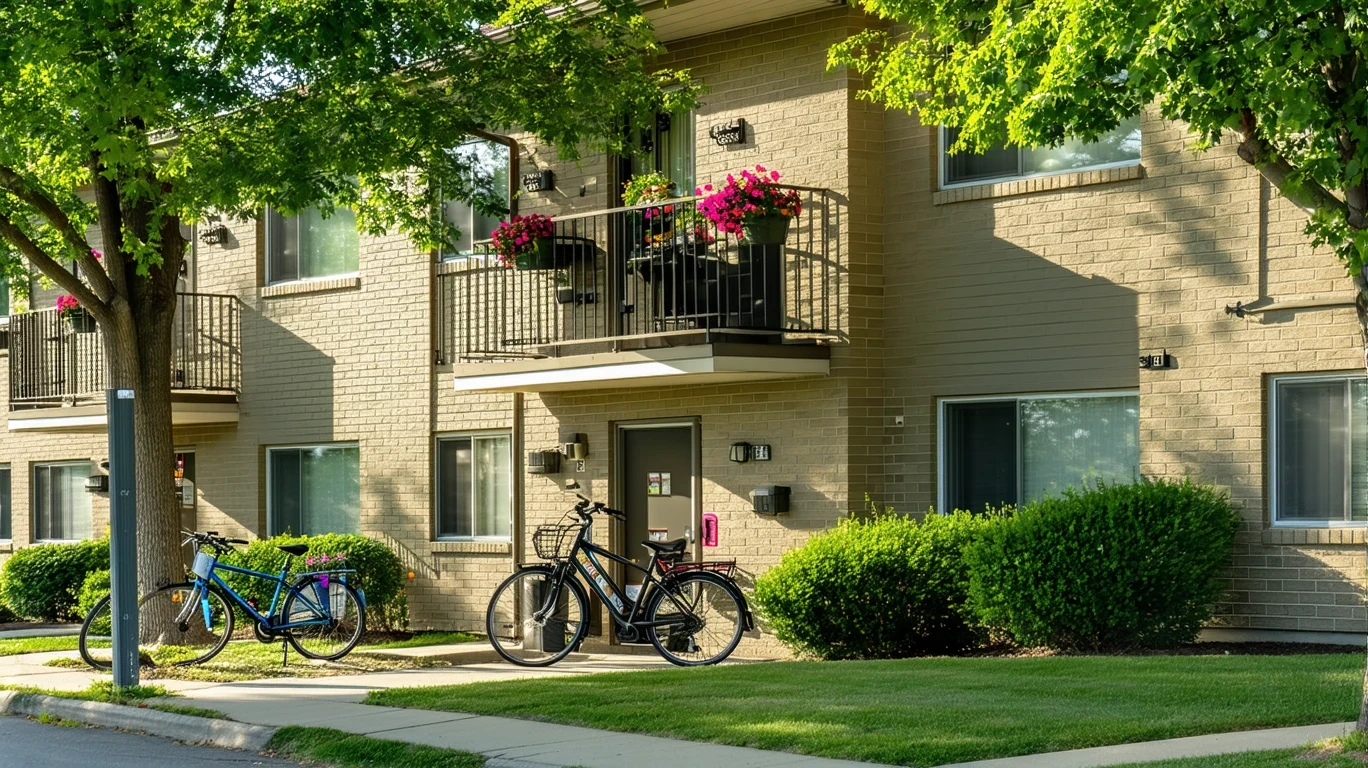
The city’s mixed building character—average building levels fall in the medium band—means housing stock ranges from low-rise apartments near commercial nodes to single-family homes on larger lots near parks and schools. Both residential and commercial land use types are present, but the pedestrian-to-road ratio, while high in pockets, does not extend uniformly across the city. Buyers and renters alike must weigh proximity to parks and schools against access to errands and transit.
Renting in Eagan
Median gross rent in Eagan stands at $1,490 per month, reflecting the broader Twin Cities rental market’s pressure on suburban inventory. Rental availability tends to concentrate near commercial corridors where food and grocery density reaches medium levels, offering moderate errands accessibility without requiring a car for every trip. However, renters in neighborhoods farther from these corridors face greater reliance on driving, as bus service is present but does not provide the frequency or coverage that reduces car dependency meaningfully.
Renters benefit from predictable monthly costs and freedom from maintenance exposure, but they also absorb volatility in lease renewals without the tax or equity offsets that ownership provides. In Eagan, where heating seasons are long and natural gas prices sit at $9.43 per MCF, renters in older or less-efficient buildings may see higher utility costs during winter months, particularly if heating is not included in rent. Electricity rates of 14.96¢/kWh add summer cooling exposure, though Minnesota’s climate makes heating the dominant seasonal cost driver.
For renters prioritizing walkability or transit access, Eagan’s structure requires careful neighborhood selection. Walkable pockets exist where pedestrian infrastructure is denser, but these areas do not eliminate the need for a car given the city’s errands clustering and transit limitations. Renters without vehicles face meaningful friction in daily logistics, particularly for grocery runs or accessing healthcare—clinics are present, but no hospital operates within city limits.
Owning a Home in Eagan
Ownership in Eagan centers on controlling space, outdoor access, and long-term cost predictability in a market where park density and school availability drive family appeal. At a median home value of $362,200, buyers face significant upfront costs, but the income base supports financing for households earning near or above the city’s median. Ownership shifts cost exposure from rent volatility to property taxes, maintenance, and the long-term behavior of Minnesota’s housing market.
Property taxes in Minnesota are structured at the county and municipal level, and while specific rates for Eagan are not provided here, buyers should expect annual tax bills that reflect both the assessed home value and local levies for schools, parks, and infrastructure. These taxes rise over time as assessments adjust, creating a predictable but growing obligation that renters avoid entirely. Homeowners also face maintenance exposure that varies with housing age, lot size, and climate stress—long heating seasons, freeze-thaw cycles, and occasional severe weather all contribute to upkeep demands that apartments externalize to property managers.
Ownership in Eagan also means navigating governance structures that vary by neighborhood. Some developments include homeowners associations with monthly or annual fees covering shared amenities, landscaping, or exterior maintenance, while others leave all upkeep to individual owners. The presence of mixed land use and medium building heights suggests a range of ownership types, from townhomes with shared walls to detached single-family homes on larger lots near Eagan’s integrated park system.
For families, ownership in Eagan offers proximity to schools—school density falls in the medium band—and access to playgrounds and parks that exceed density thresholds. However, playground density itself is low, meaning families may rely more on the city’s extensive park network than on neighborhood-specific play infrastructure. Ownership locks in the ability to stay near these amenities without lease-renewal risk, a meaningful advantage in a market where rental turnover can force relocation.
Apartment vs House in Eagan — Cost Behavior Comparison
| Expense Category | Apartment | House |
|---|---|---|
| Base Housing Cost | $1,490/month median rent | Mortgage on $362,200 median value |
| Heating Exposure | Lower square footage reduces gas use; may lack control over efficiency | Higher square footage and longer ductwork increase gas use during long Minnesota winters |
| Outdoor Maintenance | None; managed by property | Lawn care, snow removal, and seasonal upkeep required; park proximity increases appeal but not cost |
| Errands Accessibility | More likely near commercial corridors with medium food/grocery density | More likely near parks and schools; may require driving for groceries |
| Transit Viability | Bus stops more accessible near corridor clusters | Bus service present but less frequent in residential areas; car dependency higher |
Why these categories differ in Eagan: The city’s corridor-clustered errands pattern and bus-only transit mean apartment renters near commercial nodes gain moderate walkability and transit access, while single-family homeowners trade convenience for space, park proximity, and school access. Minnesota’s long heating season makes square footage and building efficiency the primary drivers of utility exposure, and Eagan’s integrated park system increases the appeal of houses with yards without adding direct costs. Categories like property taxes and insurance are excluded here because they apply uniformly to ownership regardless of housing type, and their magnitude depends on factors not provided in the data.
Utilities & Upkeep Differences
Utility exposure in Eagan is shaped by Minnesota’s climate extremes, where heating dominates winter bills and cooling adds moderate summer costs. Natural gas, priced at $9.43 per MCF, fuels most residential heating, and a typical household using around 1 MCF per month during heating season faces noticeable but manageable costs. Houses with larger square footage, older furnaces, or poor insulation see this exposure amplify, particularly during extended cold stretches. Apartments, with smaller footprints and shared walls, reduce heating demand but offer tenants less control over efficiency upgrades or thermostat management.
Electricity, at 14.96¢/kWh, drives cooling costs during summer months and year-round lighting, appliances, and electronics. For a household using around 1,000 kWh per month, this translates to illustrative bills near $150 before fees, though actual usage varies with home size, occupancy, and behavior. Houses with central air conditioning and larger spaces face higher summer bills than apartments, but the differential is less pronounced than winter heating gaps.
Maintenance exposure diverges sharply between apartments and houses. Apartment renters avoid direct responsibility for HVAC servicing, roof repairs, or exterior upkeep, though these costs are embedded in rent. Homeowners face episodic but significant expenses: furnace replacements, water heater failures, and roof wear all accelerate in Minnesota’s freeze-thaw climate. Eagan’s housing stock, with its mix of building ages and types, means maintenance unpredictability varies by property, but the long heating season and occasional severe weather ensure that deferred upkeep compounds quickly.
Outdoor maintenance also differs meaningfully. Houses require lawn care, snow removal, and seasonal landscaping, all of which demand time, equipment, or contractor costs. Eagan’s park density and water features make outdoor space appealing, but they do not reduce the labor or expense of maintaining private yards. Apartments externalize this entirely, though tenants lose control over outdoor aesthetics and access.
Rent vs Buy: Long-Term Exposure in Eagan
The decision between renting and buying in Eagan hinges on how households value predictability, control, and exposure to long-term cost behavior. Renting offers short-term flexibility and insulation from maintenance shocks, but it leaves tenants vulnerable to lease-renewal volatility and eliminates the equity-building and tax advantages that ownership provides. Buying locks in a mortgage payment and shifts risk to property taxes, maintenance, and market fluctuations, but it also stabilizes the largest component of housing costs and builds wealth over time in a market supported by strong incomes and family-oriented infrastructure.
In Eagan, where median home values sit at $362,200 and median rent reaches $1,490 per month, the upfront capital required for ownership is substantial, but the income base—$104,101 per year at the median—supports financing for many households. Renters avoid the down payment and closing costs, but they also forgo the ability to stabilize housing costs against inflation and market pressure. Over time, property taxes and maintenance rise, but mortgage principal payments remain fixed (for fixed-rate loans), while rent adjusts with market conditions and landlord discretion.
Ownership in Eagan also means absorbing the full cost of Minnesota’s climate exposure. Long heating seasons, freeze-thaw cycles, and occasional severe weather create maintenance demands that renters avoid but owners cannot defer without compounding risk. However, ownership grants control over efficiency upgrades, insulation improvements, and system replacements that reduce long-term utility exposure—an option renters lack unless landlords invest voluntarily.
For families prioritizing school access and park proximity, ownership in Eagan offers stability in neighborhoods where these amenities drive demand. Renters face the risk of displacement through lease non-renewal or rent increases that push them out of preferred areas, while owners lock in location and benefit from the equity gains that family-friendly suburbs often generate. However, buyers also accept the risk that market conditions, tax policy changes, or infrastructure shifts could alter the cost-benefit calculus in ways renters can exit more easily.
The long-term tradeoff is not purely financial. Ownership in Eagan means committing to a car-dependent lifestyle unless a household secures a location near one of the city’s walkable pockets or commercial corridors. Renters retain the flexibility to test neighborhoods, adjust to changing commute patterns, or relocate without transaction costs. Buyers gain permanence and control but lose the ability to adapt quickly to shifts in employment, family size, or lifestyle priorities.
FAQs About Housing Costs in Eagan
What is the median home price in Eagan, MN?
The median home value in Eagan is $362,200, reflecting the city’s position as a suburban Twin Cities market with strong household incomes, school access, and park density. This price point is accessible to dual-income families and established professionals but represents a significant entry barrier for first-time buyers without substantial savings.
How much does it cost to rent an apartment in Eagan?
Median gross rent in Eagan is $1,490 per month. Rental costs vary by location within the city, with apartments near commercial corridors offering better errands accessibility and moderate walkability, while units farther from these clusters require greater car dependency. Heating and cooling costs, driven by Minnesota’s climate, add seasonal variability to total monthly expenses.
Is Eagan affordable for families?
Eagan’s housing costs align well with its median household income of $104,101 per year, making it accessible for families earning near or above the city median. The city’s school density, park access, and low unemployment rate (2.7%) support family stability, but the upfront costs of homeownership and the need for reliable transportation add financial pressure for households below the median income.
How do heating costs affect housing expenses in Eagan?
Minnesota’s long heating season makes natural gas the dominant utility cost driver in Eagan. At $9.43 per MCF, households using around 1 MCF per month during winter face noticeable heating bills, with exposure amplified in larger homes or older buildings with poor insulation. Apartments reduce heating costs through smaller square footage and shared walls, but tenants have less control over efficiency improvements.
Does Eagan require a car, and how does that affect housing decisions?
Yes, Eagan is car-dependent for most households. While walkable pockets exist and bike infrastructure is notable, food and grocery establishments cluster along corridors rather than distributing evenly, and transit is limited to bus service. Homebuyers and renters near commercial corridors gain moderate errands accessibility, but most neighborhoods require a car for daily logistics, adding transportation costs to overall housing affordability.
Making Housing Choices in Eagan
Housing costs in Eagan reflect the tradeoffs of suburban Twin Cities living: strong incomes, family-oriented infrastructure, and extensive park access come with car dependency, corridor-clustered errands, and the long-term cost exposure of Minnesota’s climate. Renters gain flexibility and avoid maintenance risk but face lease-renewal volatility and lose the equity-building advantages of ownership. Buyers lock in stability, control, and access to schools and parks but absorb property taxes, upkeep demands, and the upfront capital required to enter a market where median home values exceed $360,000.
The city’s structure rewards households that prioritize space, outdoor access, and permanence, particularly families with school-age children or those seeking proximity to Eagan’s integrated park system. However, the corridor-clustered errands pattern and bus-only transit mean location within the city matters significantly—some neighborhoods offer walkable access to daily needs, while others require driving for nearly every errand. Understanding how these factors interact with household priorities is essential to making housing decisions that align with both financial capacity and lifestyle expectations.
For readers weighing rent versus ownership or comparing Eagan to other Twin Cities suburbs, the key is recognizing that housing costs here are not just about monthly payments or home prices. They reflect the cost of accessing parks, schools, and errands; the exposure to heating and cooling driven by Minnesota’s climate; and the long-term behavior of taxes, maintenance, and market appreciation in a suburban market supported by strong employment and household incomes. Eagan’s housing market rewards those who can navigate these tradeoffs with clarity and capital, but it demands careful attention to location, cost structure, and the realities of car-dependent suburban life.
How this article was built: In addition to public economic data, this article incorporates location-based experiential signals derived from anonymized geographic patterns—such as access density, walkability, and land-use mix—to reflect how day-to-day living actually feels in Eagan, MN.