
When evaluating homeownership in Davenport, the purchase price is only the beginning. Beyond the mortgage, ownership here involves a layered set of recurring and seasonal expenses shaped by Florida’s climate, the city’s car-oriented layout, and the realities of maintaining a low-rise, largely residential community. Understanding these hidden costs—property taxes, insurance, cooling-season utility exposure, transportation burden, and maintenance—is essential for distinguishing between what you can afford to buy and what you can afford to own.
Davenport sits in Central Florida’s Orlando metro area, where the housing market reflects a blend of suburban expansion and proximity to regional employment centers. The median home value is $274,900, while median gross rent is $1,968 per month. Median household income is $64,428 per year. These figures frame a market where entry is accessible for some buyers, but where the ongoing cost structure—particularly for households relying on cars for every errand and facing long, intense cooling seasons—can surprise newcomers who focus only on the purchase price.
The Housing Market in Davenport Today
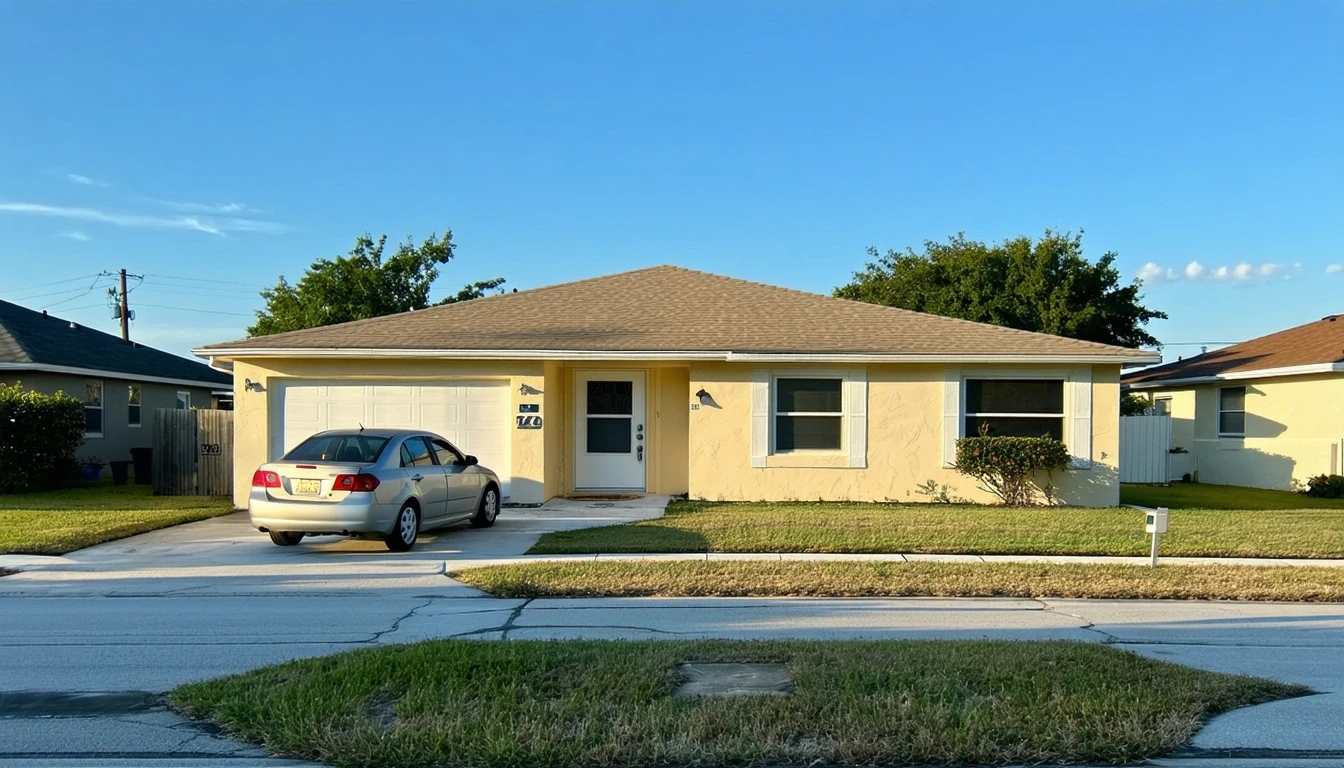
Davenport’s housing market is shaped by its role as a bedroom community within the Orlando metro area. The city has grown rapidly over the past two decades, driven by families and retirees seeking lower entry prices than closer-in suburbs. The housing stock is predominantly low-rise, single-family homes, with limited apartment density. This creates a market where ownership is the norm and rental inventory is relatively constrained.
What newcomers often misunderstand is that Davenport’s affordability is structural, not incidental. The city’s car-oriented layout, sparse commercial density, and limited transit options mean that housing costs are lower in part because daily life requires more driving, more planning, and more time. The trade-off is not just financial—it’s logistical. Households that assume suburban living will be “easy” because the mortgage is manageable often underestimate the cumulative burden of transportation, cooling costs, and the friction of running errands in a place where food and grocery density is below typical thresholds.
Compared to denser parts of the Orlando metro, Davenport offers more space and lower entry prices, but less walkability, fewer nearby services, and longer drives to healthcare, schools, and shopping. This is not a defect—it’s the city’s design. But it means that what shapes the cost of living in Davenport is not just the price of housing, but the cost of moving through it.
Renting in Davenport
Median gross rent in Davenport is $1,968 per month, which represents a significant share of the median household income. For renters, this creates immediate pressure: housing alone consumes a large portion of monthly earnings before transportation, utilities, or groceries are considered. Rental inventory is limited, and much of it is single-family homes or small complexes rather than large apartment communities. This means renters face landlord-managed properties with variable lease terms, maintenance responsiveness, and renewal behavior.
Because Davenport’s layout is car-oriented and errands accessibility is sparse, renters cannot offset housing costs by reducing transportation expenses. There is no trade-off between rent and walkability here—you pay for both. Bus service is present but limited, and most renters will need a car to reach work, groceries, and healthcare. This dual burden—high rent and mandatory car ownership—makes Davenport’s rental market less forgiving than the headline rent figure suggests.
Renters also face exposure to Florida’s insurance and storm-related cost volatility indirectly, as landlords pass through rising property insurance premiums via rent increases. Lease renewals in Florida’s growth markets have been unpredictable in recent years, and Davenport is no exception. Renters should expect variability, not stability, and plan accordingly.
Owning a Home in Davenport
The median home value of $274,900 positions Davenport as an accessible entry point for buyers, particularly those priced out of closer-in Orlando suburbs. However, ownership in Davenport involves exposure to several cost categories that renters avoid or experience indirectly.
Property taxes in Florida are governed by county assessors and subject to Save Our Homes caps for primary residences, but new buyers do not benefit from prior owners’ capped assessments. This means the first year of ownership often involves a reset to current market value, and taxes can rise meaningfully after purchase. Buyers should verify the assessed value and projected tax liability before closing, as the previous owner’s tax bill may not reflect what the new owner will pay.
Homeowners insurance in Florida has become a dominant cost category. Coastal storm exposure, rising reinsurance costs, and insurer exits from the state have driven premiums higher across the region. Davenport is inland, which reduces hurricane wind risk compared to coastal cities, but it does not eliminate exposure. Flood insurance may be required depending on the property’s FEMA zone, and even properties outside high-risk zones can face flooding during severe storms. Buyers should obtain insurance quotes before making an offer, as premiums can vary widely based on age of the home, roof condition, and coverage limits.
Homeowners associations (HOAs) are common in Davenport’s newer developments. These fees fund common area maintenance, landscaping, and sometimes community amenities like pools or playgrounds. HOA fees are mandatory and can rise over time, particularly if the community faces deferred maintenance or special assessments. Buyers should review the HOA’s financial statements and meeting minutes to understand its stability and governance culture.
Maintenance and repair costs are the owner’s responsibility, and in Florida’s climate, they are not optional. Heat, humidity, and intense sun exposure accelerate wear on roofs, HVAC systems, and exterior surfaces. Air conditioning is not a luxury—it is life-safety infrastructure, and systems run nearly year-round. A failed AC unit in summer is an emergency, and replacement costs can reach several thousand dollars. Buyers should budget for HVAC maintenance, roof inspections, and pest control as recurring expenses, not surprises.
Apartment vs House in Davenport — Cost Behavior Comparison
| Expense Category | Apartment | House |
|---|---|---|
| Cooling Costs | Lower total usage due to smaller square footage and shared walls; landlord may cover water heating | Higher total usage due to larger square footage and standalone structure; owner pays all HVAC costs and bears replacement risk |
| Maintenance Responsibility | Landlord handles HVAC, roof, exterior, and pest control; tenant reports issues but does not pay directly | Owner handles all maintenance, including emergency HVAC replacement, roof repair, and pest control; costs are unpredictable and can be large |
| Transportation Overlay | Apartment location may be near bus stops, but car still required for groceries and healthcare due to sparse density | Single-family neighborhoods are car-dependent by design; no transit alternative and longer distances to services increase fuel and time costs |
| Insurance | Renter’s insurance required by most landlords; covers contents only, not structure | Homeowners insurance required by lender; covers structure and contents; premiums in Florida are high and rising due to storm exposure and insurer market conditions |
Why these categories? The table reflects cost behaviors that differ meaningfully in Davenport due to climate (long cooling season), infrastructure (car-oriented layout with sparse errands density), and housing stock (low-rise, single-family dominance). Categories like property taxes or HOA fees were excluded because they apply only to ownership and do not vary by housing type within ownership. The focus here is on operational cost differences that affect decision-making between renting an apartment and owning a house in this specific city.
Utilities & Upkeep Differences
Utility exposure in Davenport is driven primarily by cooling demand. The electricity rate is 15.78¢/kWh, and air conditioning runs nearly year-round. Summers are long, hot, and humid, with extended periods of heat that push HVAC systems to run continuously. Houses, with larger square footage and standalone construction, face higher cooling costs than apartments. Owners also bear the risk of system failure, which in Florida’s climate can escalate from inconvenience to emergency within hours.
Natural gas is available in some areas at $25.39/MCF, but heating demand is minimal. Rare cold snaps may require brief heating, but the dominant utility cost is always cooling. Owners should expect electricity to be the largest and least compressible utility expense, and should budget for it as a fixed cost rather than a variable one.
Maintenance exposure is also climate-driven. Florida’s heat and humidity accelerate wear on roofs, paint, and seals. Pest control is a recurring need, not an occasional one. Landscaping and irrigation require attention, particularly during dry periods. These are not dramatic costs individually, but they accumulate, and they are mandatory. Deferred maintenance in Florida’s climate does not stay deferred—it becomes structural damage.
Rent vs Buy: Long-Term Exposure in Davenport
The decision between renting and buying in Davenport is not primarily about monthly payment comparison—it is about control, predictability, and exposure over time.
Renters face lease renewal risk. Florida’s rental market has seen significant volatility in recent years, and Davenport is part of a high-growth metro where landlords have pricing power. Renters cannot lock in costs, cannot control maintenance quality, and cannot modify their living space. They are insulated from property tax shifts, insurance spikes, and major repairs, but they pay for that insulation through rent increases and lack of control.
Owners face a different set of exposures. Property taxes can rise, though Florida’s Save Our Homes cap limits increases for primary residences after the first year. Insurance premiums are volatile and have risen sharply across the state. Maintenance costs are unpredictable in timing but certain in occurrence. However, owners control their housing cost structure. They can invest in efficiency upgrades, choose their insurance coverage, and benefit from any appreciation in home value. They also gain stability: a fixed-rate mortgage does not change, even as rents around them rise.
The long-term trade-off in Davenport is between renting’s flexibility and buying’s control. Renters preserve mobility and avoid large one-time costs, but they remain exposed to market-driven rent increases and landlord decisions. Owners take on complexity and responsibility, but they gain the ability to stabilize their largest expense and build equity over time. Neither path is universally better—the fit depends on how long you plan to stay, how much volatility you can absorb, and whether you value control over simplicity.
How Daily Life in Davenport Shapes Housing Costs
Davenport’s infrastructure is car-oriented by design. Pedestrian infrastructure is minimal, and the ratio of walkable paths to roads is low. Food and grocery establishment density falls below typical thresholds, meaning that even routine errands require driving. There is no rail transit, and bus service, while present, does not provide a practical alternative for most households. This is not a city where you can reduce transportation costs by choosing a walkable neighborhood—walkable neighborhoods do not exist here in meaningful density.
For homeowners, this means that housing cost decisions cannot be separated from transportation cost decisions. Buying a less expensive home farther from work or services does not save money if it adds miles to every trip. Families face compounded logistics: school density is below thresholds, healthcare facilities are limited, and playgrounds are sparse. Running a household in Davenport requires a car, time, and planning. The cost is not just fuel—it is the cumulative friction of distance, the need to batch errands, and the impossibility of quick trips on foot.
This structure also affects how housing costs behave over time. In denser cities, rising housing costs can sometimes be offset by reducing car dependency. In Davenport, there is no such offset. If housing costs rise, transportation costs remain constant and high. If gas prices rise, housing costs do not fall to compensate. The two expenses are locked together, and both are mandatory.
Households considering Davenport should evaluate not just whether they can afford the mortgage or rent, but whether they can afford the total system: housing, transportation, cooling, and time. The city’s layout is not a temporary inconvenience—it is the cost structure.
How this article was built: In addition to public economic data, this article incorporates location-based experiential signals derived from anonymized geographic patterns—such as access density, walkability, and land-use mix—to reflect how day-to-day living actually feels in Davenport, FL.
FAQs About Housing Costs in Davenport
Is Davenport, FL affordable for first-time homebuyers?
The median home value of $274,900 is accessible compared to closer-in Orlando suburbs, but affordability depends on total ownership costs, not just the purchase price. Buyers must account for property taxes, insurance (which is high and rising in Florida), cooling costs, and mandatory car ownership. First-time buyers should obtain insurance quotes and verify projected tax liability before making an offer, as these costs can be larger than expected.
Why is rent so high in Davenport relative to income?
Median gross rent of $1,968 per month represents a significant share of the median household income of $64,428 per year. Rental inventory is limited, and much of it consists of single-family homes rather than large apartment complexes. Davenport’s growth and proximity to Orlando have driven demand, while supply has not kept pace. Renters also cannot reduce transportation costs by choosing a walkable neighborhood, which adds to the total cost burden.
What are the biggest hidden costs of owning a home in Davenport?
Homeowners insurance, HVAC maintenance and replacement, and transportation costs are the largest hidden expenses. Insurance premiums in Florida have risen sharply due to storm exposure and insurer market conditions. Air conditioning runs nearly year-round, and system failure is an emergency, not an inconvenience. Because Davenport is car-oriented with sparse errands density, owners must drive for all daily needs, adding fuel and time costs that are easy to underestimate.
Does Davenport have HOA fees, and are they common?
HOAs are common in Davenport’s newer developments. Fees vary by community and fund common area maintenance, landscaping, and amenities. Buyers should review the HOA’s financial health and governance history before purchasing, as fees can rise and special assessments can be levied for deferred maintenance or capital improvements.
How does Davenport’s climate affect homeownership costs?
Florida’s long, hot, humid summers drive high cooling costs and accelerate wear on roofs, HVAC systems, and exterior surfaces. Air conditioning is essential and runs nearly year-round, making electricity the largest utility expense. Maintenance is not optional—deferred repairs in Florida’s climate become structural damage. Buyers should budget for HVAC service, roof inspections, and pest control as recurring costs.
Making Housing Choices in Davenport
Housing costs in Davenport are shaped by the city’s role as a car-oriented, low-rise suburb within the Orlando metro. The median home value of $274,900 and median rent of $1,968 per month frame a market where entry is accessible for some, but where the total cost structure—transportation, cooling, insurance, and maintenance—requires careful evaluation.
Renters face high rent relative to income and limited inventory, with no ability to reduce transportation costs through location choice. Owners gain control and stability but take on exposure to Florida’s volatile insurance market, long cooling season, and car-dependent infrastructure. Neither path is inherently better—the fit depends on how long you plan to stay, how much complexity you can manage, and whether you value control over flexibility.
Households that thrive in Davenport are those who understand that the city’s affordability is structural, not incidental. The lower entry price reflects the trade-offs: more driving, more planning, and more responsibility. For those who accept that trade-off, Davenport offers space, proximity to Orlando, and a residential character that fits families and retirees. For those who assume suburban living will be simple because the mortgage is manageable, the hidden costs—time, fuel, and logistics—can be a surprise.
For a fuller picture of how these housing costs fit into what a budget has to handle in Davenport, including transportation, groceries, and utilities, see the companion budget guide. And for households planning a move, understanding moving company costs and options can help manage the transition into Davenport’s housing market.