
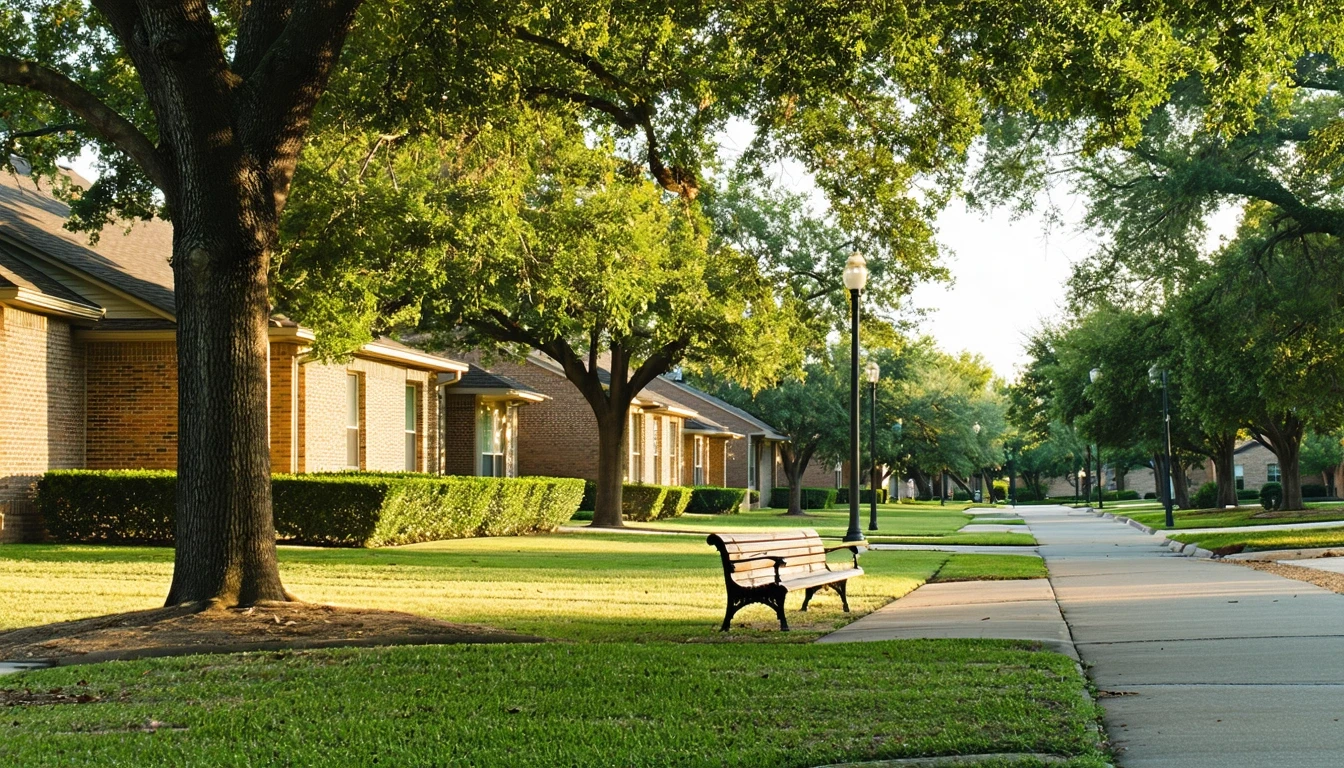
Apartment vs House in Dallas — Monthly Cost Comparison
| Expense Category | Apartment | House |
|---|---|---|
| Base Housing Payment | $1,305/month median rent | Principal + interest on $270,700 median home |
| Property Tax Exposure | Included in rent; landlord absorbs volatility | Direct annual bill; subject to reassessment and rate changes |
| Cooling Season Utility Load | Smaller conditioned space; shared wall insulation reduces exposure | Larger square footage; standalone structure increases summer electricity draw during triple-digit heat |
| Maintenance Responsibility | Landlord handles HVAC, roof, exterior; tenant cost is zero or minimal | Owner absorbs all repair and replacement cycles; HVAC longevity matters in extended cooling season |
| Mobility & Errands Friction | Often located in walkable pockets or near rail; reduces car dependency for daily errands | More common in auto-oriented zones; grocery and transit access varies by subdivision |
Why these categories? Dallas’s extended cooling season, property tax structure, and urban form create meaningful cost behavior differences between apartments and houses. Categories like insurance or HOA fees are excluded here because they vary too widely by subdivision and coverage level to generalize. The table reflects structural exposure, not monthly totals.
The Housing Market in Dallas Today
Dallas’s housing market operates at the intersection of rapid metro growth, sprawling development patterns, and a regional economy that continues to attract corporate relocations and young professionals. The median home value of $270,700 positions Dallas below many coastal metros but above much of the interior South and Midwest. What newcomers often misunderstand is that this figure masks significant variation: older inner-ring suburbs, fast-growing northern corridors, and urban infill neighborhoods can feel like entirely different markets.
The city’s development history favors low-rise, auto-oriented subdivisions, but pockets of vertical, mixed-use construction have emerged in response to demand for walkable, transit-accessible living. Rail service is present, and experiential signals show that pedestrian infrastructure density is high relative to road networks in certain areas—meaning some neighborhoods support car-light living while others require daily driving for every errand. This duality shapes cost structure in ways that aren’t captured by price alone.
Dallas’s regional price parity index of 103 indicates costs slightly above the national baseline, but housing affordability here is less about sticker price and more about exposure management: property taxes, cooling-season electricity bills, and maintenance cycles in a climate that stresses roofs, HVAC systems, and exterior finishes. The market rewards buyers who understand these ongoing costs and penalizes those who budget only for the mortgage.
Renting in Dallas
The median gross rent in Dallas is $1,305 per month, a figure that includes both urban apartments and suburban rentals. Rent at this level reflects a market with steady demand but also significant supply, particularly in multifamily developments near employment corridors and transit nodes. Renters benefit from predictable monthly costs: the landlord absorbs property tax increases, maintenance surprises, and insurance volatility.
Location determines rental experience more than price alone. Apartments in walkable pockets near rail stations or high-density errands corridors reduce transportation costs and time friction. Renters in these areas can complete grocery runs, access healthcare, and reach parks without a car, thanks to broadly accessible food and grocery density and integrated green space. Conversely, rentals in auto-oriented subdivisions require a vehicle for nearly every task, adding fuel, insurance, and time costs that don’t appear in the lease.
Rental pressure in Dallas is shaped by the metro’s growth trajectory and employment concentration. Lease renewals can reflect market shifts quickly, but the absence of rent control means landlords adjust to demand without regulatory caps. Renters should expect variation based on proximity to job centers, transit access, and neighborhood amenities—not just unit size or age.
Owning a Home in Dallas
Ownership in Dallas locks in a principal payment but exposes buyers to ongoing costs that fluctuate with climate, local governance, and housing age. The median home value of $270,700 is the starting point, not the total picture. Property taxes in Texas are a primary ownership cost, funded by local districts and subject to reassessment cycles. Buyers must budget for annual tax bills that can rise independently of income or home equity.
Maintenance exposure in Dallas is driven by climate intensity. Triple-digit summer heat stresses HVAC systems, roofing materials, and exterior paint. Cooling season electricity bills at 16.04¢/kWh can dominate summer budgets, and owners of standalone houses face higher consumption than apartment dwellers due to larger conditioned space and less shared-wall insulation. Older homes in particular require more frequent HVAC replacement and ductwork upgrades, costs that renters never see.
Ownership also means navigating local governance structures. Some subdivisions operate under homeowners associations that bundle services or enforce aesthetic standards, adding monthly or annual fees. Others leave all maintenance and exterior decisions to the owner. Buyers should verify governance type and fee structure before closing, as these costs persist regardless of home value appreciation.
The ownership experience in Dallas differs from renting in control and exposure. Owners can modify, upgrade, and stabilize housing costs over time, but they also absorb every repair, tax increase, and insurance adjustment. Renters trade control for predictability and liquidity.
Utilities & Upkeep Differences
Utility and maintenance exposure in Dallas varies sharply between apartments and houses, driven by climate, building design, and infrastructure age. The extended cooling season—often running from May through September—means air conditioning dominates household energy use. Houses, with larger square footage and standalone construction, face higher electricity consumption than apartments, where shared walls and smaller footprints reduce cooling load. At 16.04¢/kWh, summer bills for a house can become a noticeable cost driver, while apartment dwellers experience more moderate seasonal swings.
Natural gas, priced at $30.71/MCF, plays a smaller role in Dallas than in northern climates, but homes with gas heating, water heaters, or ranges still see winter usage. Apartments often bundle gas costs into rent or use electric-only systems, shifting exposure entirely to the electricity rate.
Maintenance differences are structural. Apartment tenants call the landlord when the HVAC fails or the roof leaks; homeowners pay for diagnosis, parts, and labor. In a climate that accelerates wear on cooling systems and exterior materials, this distinction matters. HVAC replacement cycles, roof repairs after storm seasons, and fence or siding maintenance are owner-only costs. Apartments also benefit from centralized or shared systems that spread replacement costs across units, while single-family homeowners absorb the full expense of a failed compressor or aged ductwork.
Upkeep intensity in Dallas is noticeable but not extreme. The heat and occasional severe weather create predictable stress points, but the absence of heavy freeze-thaw cycles or coastal salt exposure reduces some maintenance burdens common in other regions.
Rent vs Buy: Long-Term Exposure in Dallas
The rent-versus-buy decision in Dallas is not a savings calculation; it’s a tradeoff between predictability and control. Renters face lease renewal risk—rent can adjust annually based on market conditions—but they avoid property tax increases, maintenance surprises, and insurance volatility. Owners lock in a principal payment (if financed at a fixed rate) but accept exposure to every other cost component: taxes, repairs, utilities, and insurance all fluctuate independently of the mortgage.
Over time, ownership in Dallas rewards those who can absorb and manage volatility. Property taxes may rise with reassessments or rate changes. HVAC systems will eventually fail, and roofs will need replacement. These costs are not optional, and they do not correlate with home value or income. Buyers who budget only for the mortgage and underestimate ongoing exposure often face financial strain within the first few years.
Renters, by contrast, convert these risks into a single monthly payment. They lose the ability to build equity or control housing modifications, but they gain liquidity and the ability to relocate without transaction costs. In a city where neighborhood access to transit, errands, and parks varies widely, renting allows households to test locations before committing to ownership in a specific subdivision or corridor.
The long-term cost profile of ownership in Dallas is shaped by climate, governance, and infrastructure age. Buyers in newer subdivisions may face lower near-term maintenance but higher property taxes as districts mature. Buyers in older neighborhoods inherit aging systems but may benefit from established infrastructure and walkable access to errands and transit. Neither path is universally cheaper; both require alignment between household priorities and cost exposure.
How Dallas’s Structure Shapes Daily Housing Decisions
Living in Dallas means navigating a city where urban form and infrastructure create distinct cost and convenience tradeoffs depending on where you settle. Experiential signals derived from anonymized geographic patterns reveal that Dallas contains walkable pockets with substantial pedestrian infrastructure, rail transit service, and broadly accessible food and grocery options. For households in these areas, daily errands—picking up groceries, reaching a clinic, or accessing parks—require minimal driving. This reduces transportation costs, time friction, and the logistical complexity of managing a household.
In contrast, much of Dallas remains auto-oriented, where the pedestrian-to-road ratio is lower and errands require a car. Families in these zones face higher fuel costs, more time spent in transit, and greater dependence on vehicle reliability. The difference isn’t just convenience; it’s a structural cost that persists regardless of housing type. A renter in a walkable corridor near rail can complete a week’s errands on foot or by train, while a homeowner in a subdivision five miles from the nearest grocery store cannot.
Dallas’s urban form also affects housing maintenance and utility exposure. The city’s more vertical building character in certain districts supports mixed-use living, where residential and commercial land use coexist. This density reduces the need for long commutes and supports the integrated green space access that makes outdoor activity feasible without driving to a park. For families, this structure matters: playground density is moderate, and school density is below thresholds in many areas, meaning parents must plan around access rather than assume proximity.
These patterns don’t appear on a price tag, but they shape day-to-day costs and household logistics in ways that persist long after signing a lease or closing on a home. Choosing housing in Dallas means choosing a cost structure, not just a monthly payment.
FAQs About Housing Costs in Dallas
What is the median rent in Dallas, TX?
The median gross rent in Dallas is $1,305 per month. This figure includes a range of apartment types and locations, from urban cores to suburban complexes. Rent varies significantly based on proximity to transit, walkable errands access, and neighborhood amenities.
How much does a typical home cost in Dallas?
The median home value in Dallas is $270,700. This reflects a mix of housing stock, from older single-family homes in inner-ring suburbs to newer construction in expanding northern corridors. Buyers should budget for ongoing property taxes, maintenance, and cooling-season utility costs in addition to the purchase price.
Are property taxes high in Dallas?
Texas funds local services primarily through property taxes, making them a significant ownership cost. Rates and assessments vary by district and are subject to periodic reassessment. Buyers should verify the effective tax rate for any property before closing, as this cost persists regardless of mortgage terms or home value changes.
Is it cheaper to rent or buy in Dallas?
The answer depends on household priorities and cost exposure tolerance. Renting offers predictability and liquidity but no equity accumulation. Buying locks in a principal payment but exposes owners to property tax increases, maintenance cycles, and utility volatility. Neither path is universally cheaper; the decision hinges on how long you plan to stay and your ability to absorb ongoing ownership costs.
How does Dallas’s climate affect housing costs?
Dallas’s extended cooling season and triple-digit summer heat increase electricity consumption, particularly for homeowners with larger square footage. HVAC systems work harder and age faster in this climate, raising both utility bills and maintenance frequency. Apartment dwellers face lower exposure due to smaller conditioned space and shared-wall insulation.
Making Housing Choices in Dallas
Housing costs in Dallas are shaped by ownership structure, climate exposure, and urban form. The median rent of $1,305 per month and median home value of $270,700 provide starting points, but the total cost experience depends on location, building type, and household logistics. Renters gain predictability and avoid maintenance risk; owners gain control but accept volatility in taxes, repairs, and utilities.
Dallas rewards households who align housing decisions with their mobility needs and cost tolerance. Walkable pockets near rail and high-density errands corridors reduce transportation costs and time friction, while auto-oriented subdivisions require vehicle dependency for every task. Families must plan around moderate playground density and low school density in many areas, while remote workers benefit from transit access and mixed-use neighborhoods that reduce commute dependence.
The city’s extended cooling season and property tax structure mean ownership exposure persists long after closing. Buyers who budget only for the mortgage underestimate the cost of living here. Renters who prioritize liquidity and predictability may find Dallas’s rental market more forgiving than ownership, particularly in neighborhoods with strong experiential infrastructure.
For a broader view of how housing fits into overall household expenses, see the tradeoffs behind the total. If you’re planning a move, explore our 2025 moving company picks to understand logistics and costs.
How this article was built: In addition to public economic data, this article incorporates location-based experiential signals derived from anonymized geographic patterns—such as access density, walkability, and land-use mix—to reflect how day-to-day living actually feels in Dallas, TX.