
Margaret had spent forty years in a three-story colonial outside Boston, raising kids, hosting holidays, climbing stairs she no longer noticed. When her husband passed and the house felt too large, she started looking south—not for a resort, but for a place where she could live simply, stay active, and stretch her savings without sacrificing access to what mattered. A friend mentioned Clermont, and within six months, Margaret had sold the colonial, bought a single-level home near the water, and started her next chapter in Florida’s rolling hill country.
Her story isn’t unique. Clermont draws retirees looking for moderate housing costs, no state income tax, and a low-rise, suburban character that feels manageable and unhurried. But retirement appeal depends on more than tax savings and sunshine—it hinges on healthcare access, daily convenience, social infrastructure, and whether the place supports aging in place or demands constant adaptation. For retirees evaluating Clermont, the question isn’t whether it’s affordable in theory, but whether it delivers the specific mix of access, community, and cost structure that matches your retirement priorities.
Why Retirees Choose Clermont
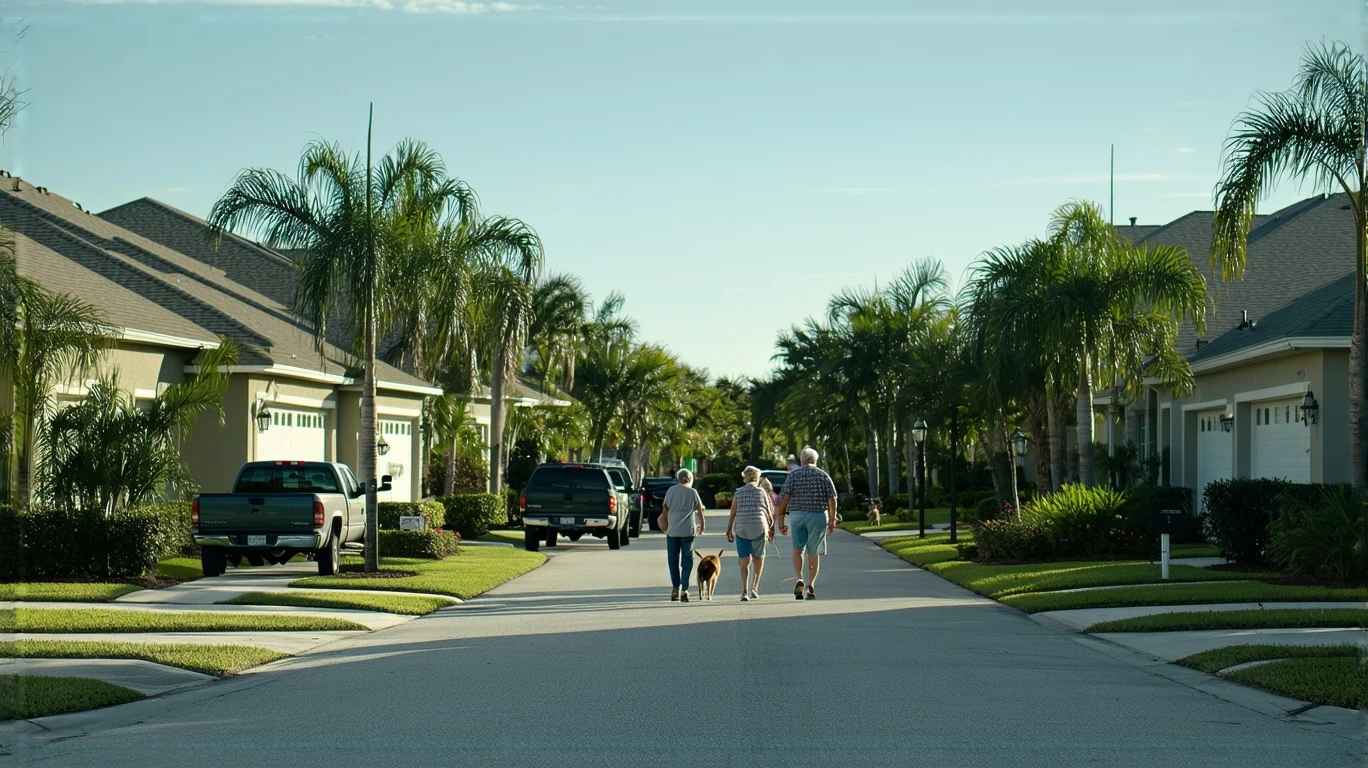
Clermont sits in Florida’s Lake County, roughly 25 miles west of Orlando, known for its gently rolling terrain, chain of lakes, and slower pace compared to the metro core. The city appeals to retirees seeking suburban tranquility without complete isolation, moderate housing costs relative to coastal Florida markets, and the tax advantages that come with Florida residency—no state income tax, no tax on Social Security, pensions, or retirement account withdrawals. For retirees on fixed incomes, that tax structure creates meaningful breathing room compared to higher-tax states.
The area’s low-rise character and mixed land use create a residential feel with pockets of commercial activity, and green space is present throughout the city, with water features adding to the outdoor appeal. The climate is cooling-dominant, with long, hot summers and mild winters punctuated by rare cold snaps—an advantage for retirees seeking to escape northern winters, though the extended heat requires planning around air conditioning costs and outdoor activity timing. Cycling infrastructure is notably present, and bus service operates in the area, though car dependency remains the norm for most errands and appointments.
Based on the available data and structural factors, Clermont earns a retirement suitability score of 68 out of 100. The score reflects strong tax and housing affordability, appealing outdoor access, and a manageable suburban layout, but it’s tempered by limited healthcare infrastructure, sparse daily errands accessibility, and the friction that comes with car-dependent logistics as mobility needs change with age. Clermont works well for active retirees who drive, plan ahead, and prioritize cost control and outdoor lifestyle—but it requires more adaptation for those who need walkable convenience or frequent medical access close to home.
Healthcare Access for Seniors
Healthcare infrastructure is the most significant constraint for retirees considering Clermont. The area shows limited healthcare access, with no hospital or clinics detected locally, though pharmacies are present for prescription fulfillment. This means that routine medical appointments, specialist visits, and urgent care typically require travel to nearby communities or into the Orlando metro area. For retirees managing chronic conditions, coordinating multiple specialists, or facing mobility limitations, that travel burden compounds over time.
The closest hospital systems are located in surrounding Lake County communities and greater Orlando, generally requiring 15- to 30-minute drives depending on location within Clermont. Many retirees establish care relationships with providers in Leesburg, Ocoee, or Orlando proper, where larger health systems offer comprehensive services, specialist networks, and Medicare-accepting practices. Medicare acceptance is widespread in the region, and Medicare Advantage plans often include transportation benefits that can help offset drive times, but the structural reality remains: Clermont does not offer the dense, walkable healthcare access that some retirees prioritize.
For retirees in good health who need only annual checkups and occasional care, the healthcare gap is manageable with planning and a reliable vehicle. For those with frequent medical needs, complex conditions, or declining driving ability, the lack of local hospital and clinic infrastructure creates a meaningful quality-of-life tradeoff. Prescription access through local pharmacies helps with day-to-day medication management, and telehealth options have expanded routine care access, but in-person specialist care, imaging, labs, and urgent treatment require leaving town.
Senior-Friendly Amenities and Services
Clermont offers a mix of senior-oriented amenities, though the infrastructure is less concentrated than in purpose-built retirement communities. Senior centers and recreational programs operate in the area, providing social activities, fitness classes, and organized outings, though availability and programming vary by season and funding. The city’s parks and green spaces, combined with water features and trails, support active lifestyles for retirees who enjoy walking, cycling, or spending time outdoors, and the area’s notable cycling infrastructure appeals to seniors who bike for recreation or errands.
Transportation options reflect the area’s car-dependent structure. Bus service is present, offering some connectivity within Clermont and to neighboring areas, but routes and frequency are limited compared to urban transit systems. For retirees who no longer drive or prefer not to, ride services, volunteer driver programs, and senior shuttle options provide alternatives, though they require advance planning and may not cover all destinations. The reality is that most retirees in Clermont rely on personal vehicles for groceries, appointments, and social activities, and losing the ability to drive creates logistical challenges that demand creative solutions or caregiver support.
Daily errands accessibility is sparse, with food establishment density below typical thresholds and grocery density in the moderate range. This means that while grocery stores are available, they’re not always close by, and running quick errands on foot or by bike is difficult for many residents. Grocery delivery services have become more common and help bridge the gap for seniors with mobility limitations, and some retirees batch errands into planned trips to minimize driving frequency. Meal programs, senior nutrition services, and faith-based meal deliveries also operate in the area, providing support for those who need it.
Libraries, community colleges, and lifelong learning opportunities exist in the broader Lake County area, offering retirees access to classes, lectures, and social programming. Proximity to Orlando expands cultural and educational options significantly, though it requires a willingness to drive 30–45 minutes depending on traffic and destination.
Cost of Living for Retirees
Clermont’s cost structure is shaped by moderate housing prices, Florida’s retiree-friendly tax policy, and cooling-dominant utility exposure. The city’s median home value is $335,100, positioning it as more affordable than coastal Florida markets and many metro-adjacent suburbs, though still requiring significant capital or financing for outright purchase. For retirees downsizing from higher-cost markets, Clermont often represents a step down in housing expense, freeing up equity for other retirement needs. For those coming from lower-cost regions, the price point may feel elevated, particularly when combined with insurance and maintenance costs in Florida’s climate.
Median gross rent is $1,723 per month, reflecting the cost of renting a typical apartment or single-family home in the area. For retirees who prefer renting over ownership—whether to preserve liquidity, avoid maintenance responsibility, or test the area before committing—this figure represents the baseline monthly housing pressure. Rental availability in 55+ communities or senior-designated properties varies, and some retirees find that renting a condo or townhome in a managed community offers a middle path between full ownership and apartment living.
Property taxes in Florida are moderate compared to high-tax states, and the state offers homestead exemptions that reduce assessed value for primary residences, along with additional exemptions for seniors 65 and older in some counties. These exemptions lower annual tax bills meaningfully, though exact savings depend on local millage rates and individual property assessments. Retirees should verify current Lake County exemption rules and application deadlines, as these benefits are not automatic and require documentation.
Utility costs are driven primarily by cooling demand. Electricity rates in the area are 15.78¢ per kWh, and a typical household using around 1,000 kWh per month would see an illustrative electric bill near $158 per month before fees and taxes, though actual usage varies widely based on home size, insulation, thermostat settings, and occupancy patterns. During Florida’s long, hot summers, cooling costs dominate the utility budget, and retirees in older or poorly insulated homes may see significantly higher bills. Natural gas service is available at $32.82 per MCF, though many Florida homes rely on electric heating for the brief periods when it’s needed, and gas is more commonly used for water heating or cooking where available.
Some utilities and municipalities offer senior rate programs, budget billing, and efficiency rebates, which can help stabilize monthly costs and reduce peak-season bill shock. Retirees benefit from researching these programs early and enrolling where eligible, as the savings compound over time.
Florida’s lack of state income tax is a major cost advantage for retirees. Social Security benefits, pension income, IRA and 401(k) withdrawals, and investment income are all exempt from state taxation, which can save retirees thousands of dollars annually compared to states with broad income taxes. That said, Florida relies more heavily on sales tax and property tax to fund services, so retirees should account for a 6% state sales tax (plus local surtaxes) on most purchases, and property tax obligations that persist regardless of income level.
Medicare supplement (Medigap) costs and Medicare Advantage premiums vary by plan, provider, and individual health status, and Florida’s competitive insurance market offers a wide range of options. Retirees should budget for premiums, copays, and out-of-pocket maximums, and factor in the cost of any supplemental dental, vision, or hearing coverage not included in original Medicare.
Monthly Retirement Budget in Clermont
Here’s what a typical monthly retirement budget might look like in Clermont, comparing a modest lifestyle with a comfortable one:
| Expense Category | Modest Retirement | Comfortable Retirement |
|---|---|---|
| Housing (mortgage/rent or owned home costs) | $1,200 | $1,800 |
| Healthcare (insurance, copays, prescriptions) | $400 | $600 |
| Food (groceries and occasional dining) | $450 | $700 |
| Transportation (car, gas, insurance, maintenance) | $350 | $500 |
| Utilities (electric, water, internet, phone) | $250 | $320 |
| Entertainment (hobbies, travel, social activities) | $200 | $500 |
| Miscellaneous (clothing, personal care, home maintenance) | $250 | $400 |
| Total Monthly | $3,100 | $4,820 |
Estimates based on average senior spending patterns and local costs; actual expenses vary by housing choice, health needs, and lifestyle preferences.
These figures illustrate the range of monthly costs retirees might encounter depending on housing decisions, healthcare needs, and discretionary spending. A modest retirement assumes owned housing with minimal remaining mortgage or a lower-cost rental, basic healthcare coverage, home-cooked meals, and limited travel or entertainment. A comfortable retirement assumes higher housing costs (larger home, HOA fees, or premium rental), more comprehensive healthcare coverage, frequent dining out, regular travel, and active social participation. Both scenarios assume car ownership, as Clermont’s sparse errands accessibility and limited transit make vehicle dependency the norm.
Community and Social Opportunities
Social infrastructure in Clermont is built around informal networks, faith communities, recreational programs, and volunteer opportunities rather than dense institutional senior centers or large-scale retirement community programming. Retirees who thrive in Clermont tend to be self-starters—people who join clubs, attend church or temple, volunteer with local nonprofits, or organize their own social circles rather than relying on built-in programming.
Faith communities are active throughout Lake County and provide not only worship opportunities but also social connection, volunteer coordination, and support networks for seniors. Many retirees find that church or synagogue involvement becomes a central part of their social life, offering regular interaction, purpose, and community beyond family ties.
Recreational programs, walking groups, and hobby clubs operate through the city’s parks and recreation department, local nonprofits, and informal resident organization. The area’s green spaces, trails, and water access support outdoor activity groups, and the notable cycling infrastructure attracts retirees who bike for fitness or leisure. Seasonal events, farmers markets, and community festivals provide additional opportunities for social engagement, though the intensity and frequency of programming may feel lighter than in larger metro areas or dedicated retirement destinations.
Volunteer opportunities exist through schools, libraries, food banks, environmental organizations, and healthcare-adjacent nonprofits, and many retirees find that volunteering provides structure, purpose, and social connection during retirement. Intergenerational programs—such as reading to schoolchildren, mentoring, or participating in community gardens—help retirees stay engaged with the broader community and build relationships across age groups.
Proximity to family is a key consideration for many retirees choosing Clermont. The city’s location within the Orlando metro area makes it accessible for adult children and grandchildren living in Central Florida, and the area’s airport connectivity supports visits from family members living farther away. For retirees relocating to be near family, Clermont offers a quieter, more affordable alternative to living directly in Orlando while remaining within reasonable driving distance for regular visits and shared activities.
Aging in Place Considerations
Aging in place—remaining in your home as mobility, health, and care needs evolve—requires both physical infrastructure and service availability. Clermont’s low-rise, suburban character means most housing is single-family homes, which can be easier to modify than multi-story buildings but also require yard maintenance, exterior upkeep, and navigation of stairs, thresholds, and narrow doorways as mobility declines.
Home modification services—contractors who install grab bars, ramps, walk-in showers, and wider doorways—are available in the area, though retirees should plan for these costs in advance and verify contractor credentials and experience with accessibility projects. Some retirees choose to make modifications proactively, while others wait until a health event or mobility change forces the issue. Proactive modification tends to be less stressful and allows for better planning and cost control.
In-home care availability varies by provider and demand. Home health aides, personal care assistants, and skilled nursing services operate in Lake County, though availability, cost, and quality vary. Retirees who anticipate needing in-home support should research providers early, understand insurance coverage (Medicare covers some skilled care but not custodial care), and budget for out-of-pocket costs that can range from part-time assistance to round-the-clock care depending on need.
Assisted living and memory care facilities exist in the broader Lake County and Orlando area, though specific availability in Clermont itself is limited. Retirees planning for potential future transitions should tour facilities, understand cost structures (which can range from $3,000 to $6,000+ per month depending on level of care), and discuss options with family members before a crisis forces a rushed decision.
The area’s sparse daily errands accessibility becomes a more significant challenge as driving ability declines. Retirees who can no longer drive safely face limited transit options, requiring reliance on family, friends, ride services, or volunteer drivers for groceries, appointments, and social activities. This logistical friction is manageable with planning and support networks, but it’s a reality that distinguishes Clermont from more walkable or transit-rich retirement destinations.
Climate considerations also affect aging in place. Florida’s heat and humidity can be challenging for seniors with cardiovascular conditions, respiratory issues, or heat sensitivity, and outdoor activity requires careful timing and hydration during summer months. The mild winters are an advantage for those with arthritis or cold-related pain, but the extended cooling season means that air conditioning is non-negotiable, and utility costs remain a constant budget factor. Hurricane preparedness is another consideration—while Clermont is inland and less vulnerable to storm surge than coastal areas, hurricanes still bring wind, rain, power outages, and evacuation advisories, and retirees need plans for sheltering in place or relocating temporarily if needed.
FAQs About Retirement in Clermont
What’s the average cost of retirement in Clermont?
Monthly costs typically range from $3,100 for a modest lifestyle to $4,800+ for a comfortable retirement, depending on housing choice, healthcare needs, and discretionary spending. Florida’s lack of state income tax reduces the tax burden on retirement income, but property taxes, sales taxes, and utility costs (especially cooling) remain significant budget factors.
How good is healthcare access for seniors?
Healthcare access is limited within Clermont itself, with no hospital or clinics detected locally, though pharmacies are present. Most retirees travel to nearby Lake County communities or into the Orlando metro area for routine care, specialists, and urgent treatment. For retirees with frequent medical needs or declining mobility, this travel burden is a meaningful quality-of-life consideration.
Are there active senior communities?
Clermont has some senior-oriented programming and social opportunities, but the infrastructure is less concentrated than in purpose-built retirement communities. Retirees who thrive here tend to be self-directed, joining clubs, volunteering, participating in faith communities, and building their own social networks rather than relying on built-in programming.
What are the tax implications of retiring in Florida?
Florida has no state income tax, meaning Social Security, pensions, IRA withdrawals, and investment income are not taxed at the state level. The state relies on sales tax (6% plus local surtaxes) and property taxes, and retirees benefit from homestead exemptions and senior-specific property tax breaks that reduce annual tax bills. Overall, Florida’s tax structure is highly favorable for retirees compared to higher-tax states.
Making the Move: Is Clermont Right for Your Retirement?
Clermont offers a compelling combination of moderate housing costs, retiree-friendly tax policy, appealing outdoor access, and a low-rise suburban character that feels manageable and unhurried. For active retirees who drive, enjoy outdoor recreation, and prioritize cost control over dense urban amenities, Clermont delivers meaningful value. The absence of state income tax creates real savings for retirees with pension or investment income, and the area’s green spaces, trails, and water features support an active, engaged lifestyle.
The tradeoffs are significant and should not be minimized. Limited healthcare infrastructure means that medical care requires travel, which becomes more burdensome as health needs increase or driving ability declines. Sparse daily errands accessibility and car-dependent logistics create friction for retirees who can no longer drive or prefer walkable convenience. Social infrastructure is less concentrated than in dedicated retirement communities, requiring self-direction and initiative to build a fulfilling social life.
For retirees evaluating Clermont, the decision hinges on priorities: if tax savings, outdoor lifestyle, and moderate housing costs outweigh the need for dense healthcare access and walkable convenience, Clermont is worth serious consideration. If proximity to hospitals, walkable errands, and built-in senior programming are non-negotiable, other Florida markets or retirement communities may be better fits. Visit multiple times, talk to current residents, tour healthcare facilities in neighboring areas, and test the drive times to services you’ll use regularly. Retirement is too important to choose based on tax savings alone—it has to work for how you actually live.
How this article was built: In addition to public economic data, this article incorporates location-based experiential signals derived from anonymized geographic patterns—such as access density, walkability, and land-use mix—to reflect how day-to-day living actually feels in Clermont, FL.