
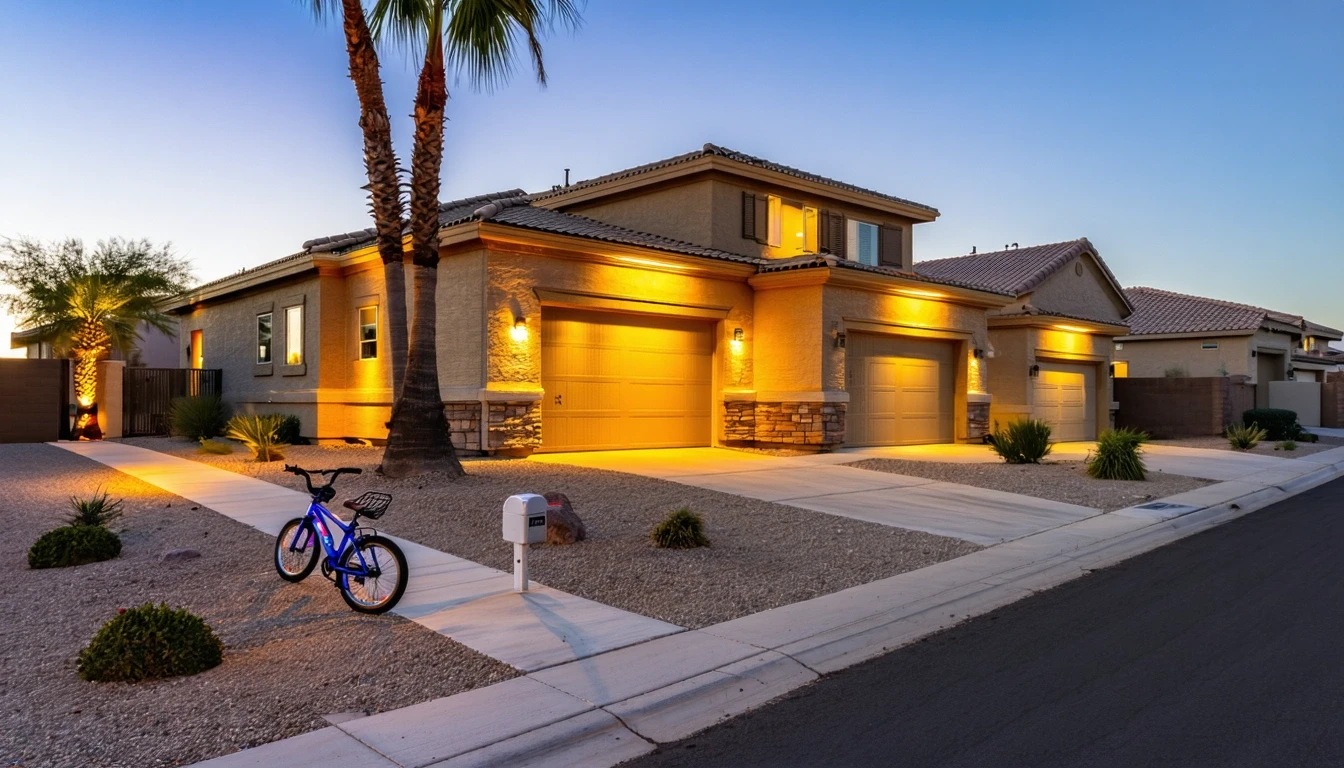
Apartment vs House in Chandler — Monthly Cost Behavior Comparison
| Expense Category | Apartment | House |
|---|---|---|
| Base Housing Cost | $1,675 per month (median gross rent) | Mortgage varies by down payment and rate; median home value $423,900 |
| Cooling-Season Utility Exposure | Lower square footage and shared walls reduce AC load during triple-digit summer heat | Larger conditioned space and standalone structure increase electricity usage at 15.66¢/kWh |
| Outdoor Maintenance | Landscaping and irrigation typically managed by property | Desert landscaping, pool upkeep (if present), and irrigation systems require direct management and seasonal water costs |
| Property Tax Exposure | Included in rent; landlord absorbs assessment changes | Direct annual obligation; exposure to reassessment and rate adjustments over time |
| Parking and Storage | Assigned or covered parking common; limited private storage | Garage standard in single-family homes; additional storage for bikes, outdoor gear, and vehicles |
Why these categories matter in Chandler: The comparison reflects Chandler’s desert climate (cooling dominates utility exposure), low-rise suburban form (houses are the norm, apartments less common), and integrated outdoor amenities (storage and yard access support active family lifestyles). Categories like heating costs and snow removal are omitted because they don’t meaningfully differ here. Walkable pockets and notable bike infrastructure mean proximity to parks and groceries can reduce car dependency for daily errands, but housing type itself drives the largest cost differences.
The Housing Market in Chandler Today
Chandler sits in the southeast Phoenix metro, where steady population growth, strong employment (unemployment at 3.1%), and family-oriented infrastructure have kept housing demand elevated. The median home value of $423,900 reflects both the metro’s broader price pressure and Chandler’s specific appeal: integrated parks, broadly accessible groceries, a hospital, and school and playground density that exceeds thresholds in multiple neighborhoods. The regional price parity index of 106 confirms costs run modestly above the national baseline, but the gap is narrower than in many other Sun Belt metros.
What newcomers often misunderstand is that Chandler’s housing stock is overwhelmingly low-rise and single-family, even in areas with walkable pockets and notable bike infrastructure. The city’s urban form mixes residential and commercial land use, but vertical density remains limited. This means rental inventory is smaller and more scattered than in denser suburbs, and competition for well-located apartments can be intense. Buyers, meanwhile, face a market where lot sizes, HOA governance, and proximity to employment centers in Tempe or Phoenix create wide variation in effective cost of ownership.
Renting in Chandler
The median gross rent of $1,675 per month captures a market where apartment supply has not kept pace with demand from young professionals, relocating families, and retirees drawn by Chandler’s amenities and accessibility. Because the city’s form favors single-family homes, multifamily buildings cluster near commercial corridors and major intersections, and availability can tighten quickly during peak moving seasons.
Renters benefit from predictable monthly costs and insulation from property tax changes, but they also absorb the landlord’s cost of desert-climate maintenance—roof coatings that resist UV degradation, HVAC systems sized for prolonged cooling seasons, and irrigation for landscaping in low-humidity conditions. These expenses don’t appear as line items, but they influence rent levels and renewal increases over time.
Location within Chandler significantly affects the rental experience. Proximity to broadly accessible food and grocery establishments reduces car trips for daily errands, and neighborhoods with high pedestrian-to-road ratios and integrated parks offer walkability that feels unusual for a suburban setting. Renters who prioritize transit access, however, will find only bus service available; rail connections require travel into central Phoenix.
Owning a Home in Chandler
At a median home value of $423,900, ownership in Chandler requires navigating several exposure layers that renters avoid. Property taxes, while not specified in available data, represent a recurring obligation that adjusts over time as assessed values and municipal rates change. Homeowners also face direct responsibility for insurance (which must account for intense summer heat, monsoon season, and occasional hail), HOA fees where applicable (common in newer subdivisions), and the full cost of maintaining desert-appropriate systems—tile roofs, evaporative or refrigerated cooling, pool equipment, and xeriscape irrigation.
Ownership does, however, grant control over housing cost predictability. A fixed-rate mortgage locks in the largest component of monthly expense, and homeowners can choose when and how to invest in efficiency upgrades, solar installations, or landscaping changes that reduce long-term utility and water costs. The city’s low-rise, mixed-use form also means that many single-family neighborhoods offer access to parks, schools, and groceries within biking or walking distance—a feature that reduces transportation pressure even as car ownership remains the norm for metro-wide commuting.
For families, Chandler’s strong infrastructure (school and playground density both in the medium band, hospital present, integrated green space) makes ownership particularly appealing. The ability to secure a stable home in a neighborhood with established amenities reduces the logistical complexity that defines family life in less-developed suburbs.
Utilities & Upkeep Differences
Chandler’s desert climate creates a cost structure where cooling dominates utility exposure. Triple-digit summer heat drives air conditioning usage for four to five months each year, and electricity at 15.66¢ per kWh becomes the primary variable expense for homeowners. Houses, with larger square footage and standalone construction, experience higher cooling loads than apartments, where shared walls and smaller floor plans reduce conditioned space. Natural gas, priced at $19.89 per MCF, sees limited use outside of water heating and occasional winter heating during rare cold snaps.
Maintenance exposure also differs by housing type in ways specific to the region. Single-family homes require direct management of outdoor systems: desert landscaping (which may include drip irrigation, rock beds, and native plants), pool maintenance (pumps, chemicals, and surface care), and exterior surfaces that endure intense UV exposure and low humidity. Apartment residents avoid these responsibilities entirely, though they indirectly pay for them through rent.
The distinction matters more in Chandler than in temperate or humid climates because the intensity and duration of heat stress accelerate wear on roofing, sealants, and HVAC components. Homeowners who defer maintenance face steeper replacement costs and higher utility bills as system efficiency degrades.
Rent vs Buy: Long-Term Exposure in Chandler
Renting and owning represent different risk profiles in Chandler’s housing market, shaped by the city’s growth trajectory, climate, and infrastructure density.
Renters maintain flexibility and avoid direct exposure to property tax adjustments, insurance volatility, and major system failures (HVAC replacement, roof repair). However, they remain subject to lease renewals that reflect broader market pressure, and they cannot control housing cost predictability beyond the current lease term. In a city where demand for family-friendly neighborhoods with integrated parks and accessible errands continues to grow, rental cost direction tends upward, though the pace varies by location and building age.
Owners accept higher upfront costs and ongoing maintenance exposure in exchange for long-term cost stability and control. A fixed-rate mortgage eliminates the largest source of volatility, and homeowners can reduce utility and upkeep costs through strategic investment—programmable thermostats, cool-roof coatings, drought-tolerant landscaping, and solar panels (where HOA rules permit). Property taxes and insurance will still adjust over time, but these changes occur more gradually than rent increases in a supply-constrained market.
The tradeoff becomes clearer over a multi-year horizon. Renters who move frequently or prioritize liquidity benefit from avoiding ownership’s transaction costs and maintenance risk. Families and retirees who plan to stay in Chandler and value access to its strong infrastructure, however, often find that ownership reduces long-term financial uncertainty and aligns with the city’s low-rise, neighborhood-centered form.
How this article was built: In addition to public economic data, this article incorporates location-based experiential signals derived from anonymized geographic patterns—such as access density, walkability, and land-use mix—to reflect how day-to-day living actually feels in Chandler, AZ.
FAQs About Housing Costs in Chandler
Is $1,675 per month typical for rent in Chandler?
$1,675 per month is the median gross rent, meaning half of renters pay more and half pay less. Actual rent depends on unit size, location relative to employment centers and amenities, building age, and whether utilities are included. Apartments near walkable corridors with high food and grocery density may command premiums, while older complexes farther from central Chandler often rent for less.
How does Chandler’s median home value compare regionally?
At $423,900, Chandler’s median home value reflects its position as a desirable Phoenix suburb with strong family infrastructure and low unemployment. It sits above the national median but below some neighboring cities with denser employment centers or more established luxury submarkets. Buyers should evaluate value based on access to schools, parks, healthcare, and commute viability rather than price alone.
What drives utility costs higher in Chandler homes?
Cooling exposure during triple-digit summer heat is the dominant driver. Larger homes with standalone construction, older HVAC systems, or poor insulation face the highest electricity costs at 15.66¢ per kWh. Pool operation, outdoor lighting, and irrigation (if not on a separate water meter) also contribute. Apartments, with smaller conditioned space and shared walls, typically see lower summer bills.
Are HOA fees common in Chandler?
Many newer subdivisions and planned communities in Chandler include HOA governance, which can cover landscaping, community amenities (pools, parks, trails), and exterior maintenance standards. Fees vary widely and represent a recurring cost that owners must budget for separately from mortgage and taxes. Older neighborhoods and custom-built homes may have no HOA at all.
Does Chandler’s walkability reduce the need to own a car?
Chandler exhibits walkable pockets with high pedestrian-to-road ratios and notable bike infrastructure, and broadly accessible groceries and parks mean daily errands can often be managed without driving. However, the city’s low-rise, suburban form and reliance on bus-only transit make car ownership practical for commuting to employment centers in Tempe, Phoenix, or Scottsdale. Households can reduce transportation costs by choosing neighborhoods where routine needs are within biking or walking distance, but metro-wide mobility still favors vehicle access.
Making Housing Choices in Chandler
Housing costs in Chandler reflect a market shaped by steady growth, family-oriented infrastructure, and desert-climate realities. The median home value of $423,900 and median rent of $1,675 per month sit modestly above national baselines, but the city’s integrated parks, strong school and playground density, hospital access, and broadly accessible groceries create a living environment that justifies the premium for many households.
Renters gain flexibility and avoid direct exposure to property tax and maintenance volatility, but they remain subject to market-driven lease renewals in a city where apartment supply lags demand. Owners accept higher upfront costs and ongoing responsibilities in exchange for long-term predictability and the ability to control utility and upkeep expenses through strategic investment.
The choice between renting and owning depends on how long you plan to stay, whether you value cost stability over flexibility, and how well your household aligns with Chandler’s suburban form and infrastructure. Families benefit most from ownership in neighborhoods with walkable access to schools and parks. Young professionals and retirees may find renting more practical if they prioritize liquidity or plan to explore other metro areas. Either way, understanding how cooling exposure, maintenance intensity, and location within Chandler’s mixed-use corridors affect long-term costs will reduce uncertainty and improve decision quality.
For a broader view of how housing fits into overall expenses, see the full cost structure guide and transportation analysis available elsewhere on IndexYard.