
Owning a home in Carrollton, TX means managing more than the purchase price. Beyond the mortgage, homeowners face recurring property taxes, utility exposure shaped by extended cooling seasons, maintenance tied to low-rise housing stock, and the governance realities of a Texas suburb. The median home value sits at $327,300, but the full cost structure includes annual tax bills, summer cooling loads that dominate energy spending, and upkeep responsibilities that renters avoid. For households earning Carrollton’s median income of $95,380 per year, the entry threshold is substantial but manageable—if you account for the ongoing expenses that follow.
This article breaks down the hidden costs of homeownership in Carrollton, explains how renting compares in this market, and clarifies which housing expenses are predictable versus volatile. Whether you’re deciding between renting and buying or evaluating what ownership actually costs here, the goal is to understand where money goes and why.
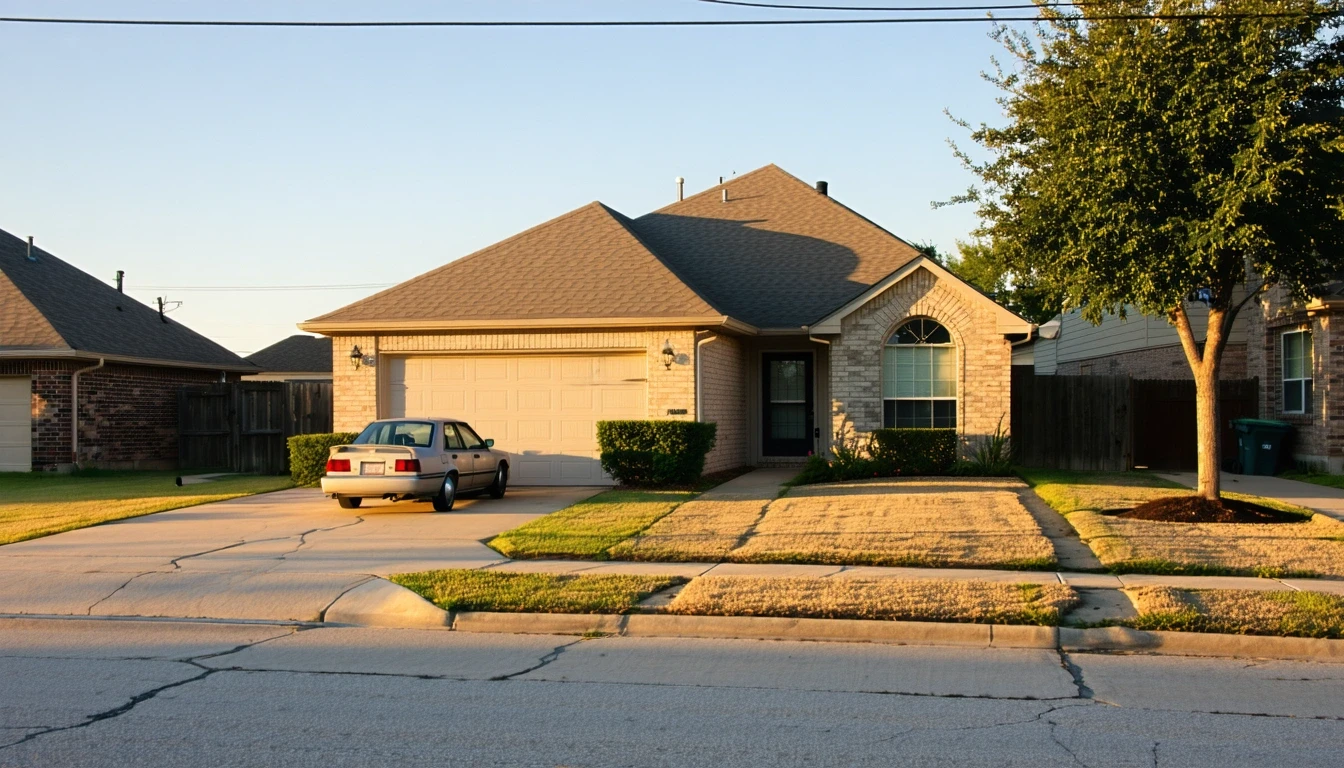
The Housing Market in Carrollton Today
Carrollton’s housing market reflects its role as a commuter suburb within the Dallas metro, supported by rail transit access and a mixed-use urban form that distinguishes it from purely car-dependent outer suburbs. The median home value of $327,300 positions Carrollton as accessible relative to closer-in Dallas neighborhoods, but still requires significant capital and income stability. What shapes this market is the combination of low-rise housing stock, integrated parks and water features that increase desirability, and the presence of rail service that reduces two-car household pressure for some buyers.
Unlike denser urban cores where condos and high-rise ownership dominate, Carrollton’s ownership market centers on detached single-family homes and low-density townhomes. This means buyers inherit yard maintenance, exterior upkeep, and full responsibility for heating and cooling systems. The city’s walkable pockets and broadly accessible grocery and food options reduce the friction of daily errands, but ownership here still assumes a suburban maintenance profile. Newcomers often underestimate the cumulative weight of property taxes, cooling costs during triple-digit summer heat, and the lack of landlord-covered repairs.
Renting in Carrollton
Renting in Carrollton costs a median of $1,555 per month, a figure that represents a noticeable but not extreme share of the city’s median household income. Rental pressure here is shaped by proximity to Dallas employment centers, rail access that supports car-light commuting for some households, and a housing stock that offers both apartment complexes and single-family rentals. Renters benefit from landlord-covered maintenance, predictable monthly costs, and the ability to avoid property tax exposure and cooling system failures.
The rental experience varies significantly by location within Carrollton. Areas near rail stations and high-density errands corridors offer walkable access to groceries and daily needs, reducing transportation costs and time friction. Renters in these pockets can often manage with one vehicle or rely on transit for work commutes. In contrast, rentals farther from transit nodes require car dependency for nearly all trips, increasing fuel and vehicle costs. Rental availability and lease renewal behavior are influenced by Carrollton’s position as a commuter suburb—turnover tends to follow job changes and relocation patterns within the metro.
Renters avoid the long-term cost volatility of ownership, but they face lease renewal increases that reflect metro-wide demand and landlord cost pass-throughs. Unlike owners, renters cannot control property improvements, lock in housing costs through fixed-rate financing, or build equity. For households prioritizing flexibility, lower upfront costs, or uncertainty about long-term plans, renting in Carrollton offers a stable and relatively affordable entry point.
Owning a Home in Carrollton
Owning a home in Carrollton means taking on the full cost structure of a low-rise suburban property in a state with no income tax but high property taxes. The median home value of $327,300 is the starting point, but ownership costs extend well beyond the mortgage. Texas funds local services and schools primarily through property taxes, which recur annually and adjust with assessed home values and local budget needs. Homeowners in Carrollton should expect property taxes to represent a significant share of total housing costs, often rivaling or exceeding monthly principal and interest payments.
Maintenance exposure in Carrollton is shaped by extended cooling seasons and the responsibility for exterior upkeep, HVAC systems, and yard care. Triple-digit summer heat stresses air conditioning systems, and cooling costs dominate utility bills from late spring through early fall. Homeowners must budget for HVAC repairs, filter replacements, and eventual system replacement—expenses renters never see. Low-rise housing stock means most owners also manage roofs, siding, driveways, and landscaping. Integrated parks and water features increase neighborhood appeal, but they also set expectations for property appearance and upkeep.
Ownership in Carrollton offers control, stability, and the ability to benefit from home value appreciation over time. Fixed-rate mortgages lock in principal and interest, insulating owners from the rent increases that affect tenants. However, property taxes, insurance, and maintenance costs remain variable and tend to rise. Homeowners gain equity and the freedom to modify their property, but they also absorb all risk from market downturns, storm damage, and deferred maintenance.
Apartment vs House in Carrollton — Cost Behavior Comparison
| Expense Category | Apartment | House |
|---|---|---|
| Cooling Costs | Lower square footage and shared walls reduce cooling load; landlord often covers HVAC repairs | Larger square footage and detached structure increase cooling exposure during extended summer heat; owner pays all repairs and system replacement |
| Property Taxes | Embedded in rent; tenant does not pay directly or see annual adjustments | Paid directly by owner; recurs annually and adjusts with assessed value and local budget needs |
| Exterior Maintenance | Landlord or property management handles all exterior upkeep, landscaping, and structural repairs | Owner responsible for roof, siding, driveway, yard care, and compliance with neighborhood appearance expectations |
| Transit and Parking | Apartments near rail stations reduce car dependency; parking often included or bundled | Houses typically farther from rail; two-car household more common; driveway and garage maintenance owner’s responsibility |
| Errands Accessibility | High-density apartment areas align with broadly accessible grocery and food options; walkable errands reduce car use | Houses in lower-density areas may require car trips for most errands despite Carrollton’s overall accessibility |
Methodology note: This table includes only categories where cost behavior differs meaningfully in Carrollton due to climate (cooling intensity), governance (property tax structure), housing stock (low-rise detached vs multifamily), and infrastructure (rail access and errands density). Generic differences that apply equally across all cities were excluded. Differences reflect structural exposure, not household-specific usage.
Utilities & Upkeep Differences
Utility and maintenance exposure in Carrollton diverges sharply between apartments and houses due to climate, building type, and ownership responsibility. The extended cooling season and triple-digit summer heat make air conditioning the dominant utility cost for all housing types, but houses face significantly higher exposure. Larger square footage, detached construction, and full sun exposure increase cooling loads. Homeowners also pay directly for HVAC system failures, refrigerant leaks, and compressor replacements—costs that apartment renters never encounter because landlords cover equipment repairs.
Electricity rates in Carrollton stand at 16.11¢/kWh, and cooling-season bills reflect both the rate and the intensity of use. Houses with older HVAC systems, poor insulation, or west-facing windows experience higher consumption. Apartment renters benefit from shared walls, smaller floor plans, and landlord-funded efficiency upgrades. Natural gas, priced at $30.71/MCF, plays a minor role in Carrollton’s climate; heating exposure during rare freezing nights is negligible compared to summer cooling.
Upkeep differences extend beyond utilities. Homeowners in Carrollton’s low-rise housing stock manage roofs that endure intense sun and occasional hail, gutters that handle seasonal storms, and yards that require irrigation during dry summer months. Exterior paint, fence repairs, and driveway maintenance recur on multi-year cycles. Apartment renters avoid all of these costs and the time burden they impose. For homeowners, upkeep is not optional—deferred maintenance reduces home value and violates neighborhood expectations in areas with integrated parks and well-kept streetscapes.
Rent vs Buy: Long-Term Exposure in Carrollton
The long-term cost difference between renting and owning in Carrollton is not a simple math problem—it’s a tradeoff between predictability and control. Renters face lease renewal increases that reflect metro-wide demand, landlord cost pass-throughs, and localized rental pressure near transit and employment hubs. These increases are unpredictable and outside tenant control, but renters avoid property tax adjustments, major maintenance expenses, and the risk of home value declines. Renting offers flexibility and lower upfront costs, making it the better fit for households with uncertain job tenure, plans to relocate, or limited savings for down payments and closing costs.
Ownership in Carrollton shifts cost exposure from rent increases to property taxes, insurance, and maintenance volatility. Fixed-rate mortgages lock in principal and interest, providing stability that renters cannot access. However, property taxes recur annually and adjust with assessed home values and local budget decisions. Insurance costs respond to storm risk, claims history, and replacement cost estimates. HVAC systems, roofs, and water heaters fail on irregular schedules, creating lumpy expenses that require cash reserves. Homeowners also absorb the risk of market downturns, which can trap them in properties they cannot sell without losses.
Over time, ownership in Carrollton rewards households that stay long enough to build equity, benefit from home value appreciation, and pay down mortgage principal. The extended cooling season and maintenance responsibilities do not disappear, but they become manageable within a stable housing cost structure. Renters maintain flexibility and avoid long-term risk, but they do not build equity or control their housing environment. The choice depends on financial stability, career certainty, and whether the household values control and equity accumulation over mobility and simplicity.
FAQs About Housing Costs in Carrollton
What is the median home value in Carrollton, TX?
The median home value in Carrollton is $327,300. This figure reflects the city’s position as a commuter suburb with rail access, low-rise housing stock, and integrated parks. Ownership at this price point requires stable income and cash reserves for property taxes, maintenance, and cooling costs.
How much does it cost to rent in Carrollton?
The median gross rent in Carrollton is $1,555 per month. Rental costs vary by proximity to rail stations, errands accessibility, and housing type. Renters near transit and high-density grocery corridors often manage with lower transportation costs, while those in car-dependent areas face higher vehicle expenses.
Are property taxes high in Carrollton?
Texas funds local services and schools primarily through property taxes, which means homeowners in Carrollton face significant annual tax bills. These taxes recur regardless of mortgage status and adjust with assessed home values and local budget needs. Property taxes often rival or exceed monthly mortgage principal and interest payments.
How does Carrollton’s climate affect housing costs?
Carrollton’s extended cooling season and triple-digit summer heat make air conditioning the dominant utility cost. Homeowners face higher exposure due to larger square footage, detached construction, and responsibility for HVAC repairs and replacements. Renters benefit from landlord-covered equipment failures and smaller cooling loads in apartments.
Is it better to rent or buy in Carrollton?
The answer depends on financial stability, career certainty, and how long you plan to stay. Renting offers flexibility, lower upfront costs, and freedom from maintenance and property tax exposure. Buying provides control, equity accumulation, and protection from rent increases, but requires cash reserves for taxes, repairs, and cooling costs. Households with stable income and long-term plans benefit more from ownership; those prioritizing mobility or facing income uncertainty fit better as renters.
Making Housing Choices in Carrollton
Housing costs in Carrollton extend well beyond the purchase price or monthly rent. Ownership here means managing property taxes that recur annually, cooling costs that dominate summer utility bills, and maintenance responsibilities tied to low-rise housing stock and extended heat exposure. Renters avoid these burdens but face lease renewal increases and lack control over their housing environment. The median home value of $327,300 and median rent of $1,555 per month provide starting points, but the full cost structure depends on housing type, location within the city, and household behavior.
Carrollton’s rail access, walkable pockets, and broadly accessible errands infrastructure reduce some of the friction common in car-dependent suburbs, but ownership still assumes suburban maintenance patterns and cooling intensity. Families with stable income and long-term plans benefit from ownership’s equity accumulation and cost predictability. Renters prioritizing flexibility, lower upfront costs, or uncertain job tenure fit better in Carrollton’s rental market. Understanding your monthly budget and how housing interacts with transportation, utilities, and maintenance exposure is essential for making informed decisions.
For more detail on how housing fits into overall living costs, see the cost overview for Carrollton. If you’re planning a move, the moving companies guide offers practical logistics support.
How this article was built: In addition to public economic data, this article incorporates location-based experiential signals derived from anonymized geographic patterns—such as access density, walkability, and land-use mix—to reflect how day-to-day living actually feels in Carrollton, TX.