
74 out of 100 residents say they’re happy in Apopka, FL — but happiness here isn’t about nightlife or walkable urban buzz. It’s about space, schools, and a slower pace within reach of Orlando’s opportunities. The question isn’t whether Apopka feels good in general; it’s whether it feels good for you.
Apopka sits at the northwest edge of the Orlando metro, a city caught between its agricultural roots and suburban expansion. It’s a place where families find room to breathe, commuters trade drive time for affordability, and retirees enjoy quiet without isolation. But it’s also a place where young professionals often feel restless, where dining and entertainment options thin out quickly, and where growth brings both promise and growing pains.
This article translates the emotional tone of living in Apopka — not through data or rankings, but through the recurring themes that shape how people experience daily life here.
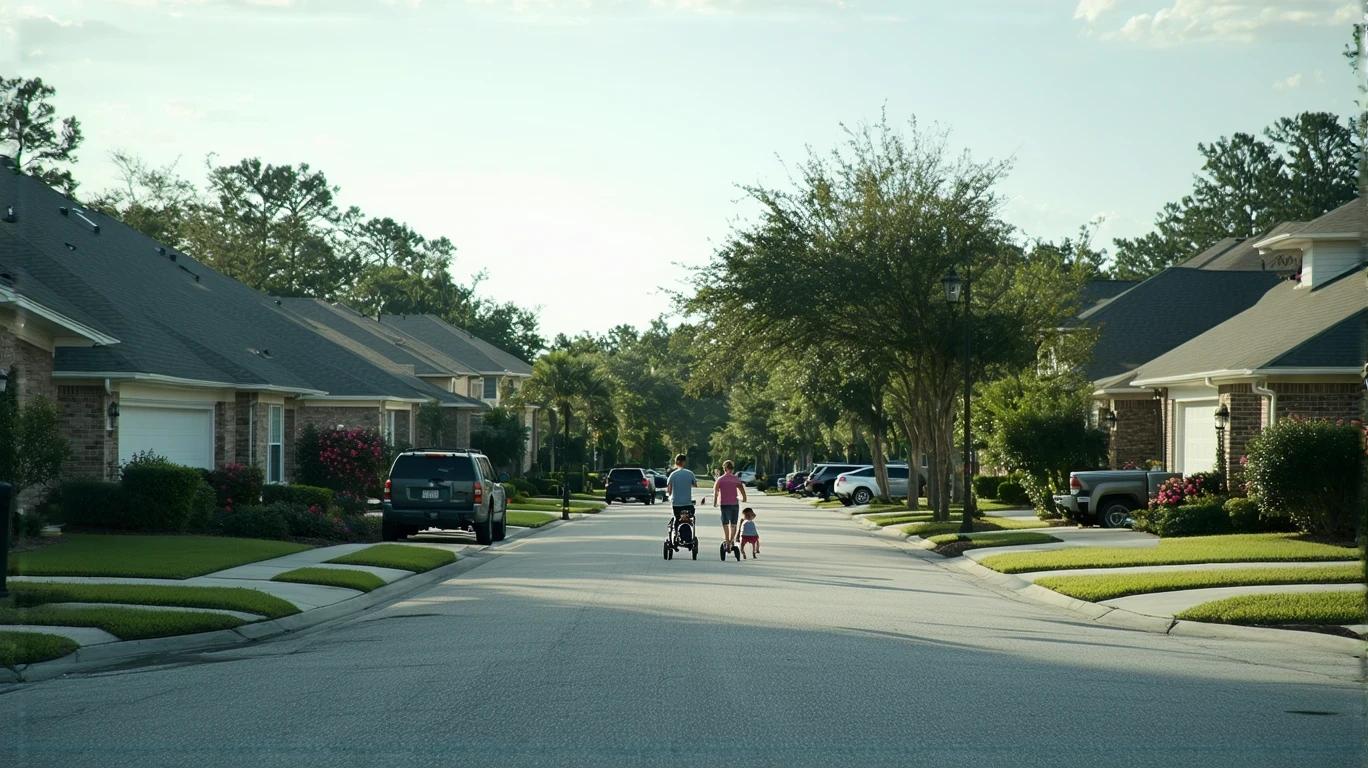
What Living in Apopka Actually Feels Like
Apopka’s vibe is defined by tradeoffs. It offers suburban comfort — larger homes, quieter streets, family-friendly parks — but it lacks the spontaneous energy and walkable texture that some movers expect from Central Florida. The city is growing, which brings new amenities and investment, but also traffic, construction, and a sense that the small-town identity is shifting faster than some residents prefer.
People who thrive here tend to prioritize home over neighborhood, value yard space over street life, and accept that errands and socializing often require a car and a plan. Those who struggle tend to want more options within walking distance, crave a denser social scene, or feel frustrated by the commute into Orlando for work or play.
The emotional center of Apopka is this: it rewards those who want a base, not a stage. If your life happens mostly at home, in your yard, or in planned outings, Apopka tends to feel like a smart choice. If you want your city to surprise you daily, it may feel limiting.
Social Media Buzz in Apopka
In cities like Apopka, locals often describe the vibe as a mix of pride and pragmatism. On platforms like Facebook and Reddit, recurring themes include appreciation for affordability relative to closer-in Orlando suburbs, concern about traffic on major corridors, and debate over how much growth is too much.
Common sentiments include:
“It’s quiet, the schools are decent, and we got way more house for our money than we would’ve closer to downtown. But yeah, if you want to do anything fun, you’re driving.”
“I love the community feel here — people actually wave. But I wish we had more local restaurants that weren’t chains.”
“Apopka’s changing fast. New developments everywhere. It’s good for property values, I guess, but it doesn’t feel like the same town I moved to.”
The tone is rarely extreme. Residents tend to express measured satisfaction with what Apopka offers, paired with clear-eyed awareness of what it doesn’t. There’s protectiveness over the city’s identity, but also realism about its role as an outer-ring suburb.
Local News Tone
Local coverage of Apopka tends to frame the city through the lens of growth, infrastructure, and community identity. Headlines often reflect tension between development and preservation, investment and traffic, opportunity and change.
Typical topic buckets include:
- “New Housing Developments Bring Families and Questions”
- “Community Debates What Growth Should Look Like”
- “Residents Weigh Convenience vs Quiet”
- “City Invests in Parks and Recreation Amid Expansion”
- “Traffic Concerns Rise as Population Grows”
The tone is rarely celebratory or alarmist. Instead, it reflects a city in transition, where progress and friction coexist. Coverage tends to emphasize civic engagement, school performance, and local events, reinforcing Apopka’s identity as a family-oriented community navigating change.
Review-Based Public Perception
On platforms like Google, Yelp, and Nextdoor, Apopka’s public perception centers on expectation matching. People who wanted suburban space, good schools, and proximity to Orlando without Orlando prices tend to leave positive reviews. Those who wanted walkability, nightlife, or a vibrant downtown tend to express disappointment.
Praise often focuses on:
- Affordability compared to Winter Park, Maitland, or downtown Orlando
- Family-friendly parks like Kelly Park and Wekiwa Springs nearby
- Newer planned communities with amenities like pools and playgrounds
- A sense of safety and community in neighborhoods like Errol Estate and Rock Springs Ridge
Criticism often highlights:
- Limited dining and entertainment options beyond chain restaurants
- Lack of a walkable downtown or central gathering space
- Commute times into Orlando for work or social activities
- Traffic congestion on major routes like US-441 and SR-429
The pattern is clear: Apopka delivers well on suburban fundamentals but underdelivers on urban texture. Newer planned areas tend to feel polished and family-focused, while older pockets offer more character but fewer modern amenities.
Comparison to Nearby Cities
| Aspect | Apopka | Winter Garden | Ocoee |
|---|---|---|---|
| Overall Vibe | Suburban, family-focused, growing | Charming downtown, more polished | Quiet, affordable, less distinctive |
| Walkability | Limited, car-dependent | Downtown area walkable, rest car-dependent | Very car-dependent |
| Dining & Entertainment | Mostly chains, limited local options | Vibrant downtown with local spots | Limited, similar to Apopka |
| Community Feel | Friendly, slower-paced | Active, event-driven | Quiet, low-key |
| Growth Pressure | High, rapid development | High, but more managed | Moderate |
Winter Garden offers more polish and a walkable downtown core, which appeals to those who want suburban space with occasional urban texture. Apopka feels more utilitarian — less curated, more focused on home and yard than street life. Ocoee sits somewhere in between, quieter than both but also less distinctive.
If you want a charming downtown and don’t mind paying a bit more, Winter Garden may feel like a better fit. If you prioritize affordability and space over walkability and nightlife, Apopka delivers. If you want the quietest, most low-key option, Ocoee may appeal.
What Locals Are Saying
“We moved here from downtown Orlando for the schools and the yard. Our kids have space to play, and we’re not on top of our neighbors. It’s not exciting, but it’s exactly what we needed.”
“I work remotely, so the commute doesn’t bother me. Apopka gives me a bigger house for less money, and I’m still close enough to Orlando when I want to go out. It’s a good balance.”
“I’m retired, and Apopka feels safe and manageable. I can get to doctors, groceries, and parks without dealing with city traffic. It’s peaceful without being isolated.”
“As a single professional, I feel a bit stuck here. There’s not much to do locally, and I end up driving to Winter Park or downtown Orlando most weekends. I wish there were more local spots to meet people.”
“I’ve lived here for 20 years, and it’s changed a lot. More people, more traffic, more development. I get that growth brings good things, but it’s also losing some of that small-town feel.”
“The parks are great — Kelly Park is beautiful. But I wish we had a real downtown. Somewhere you could walk around, grab coffee, browse shops. Right now, it’s all strip malls and chains.”
“Apopka’s affordable, and that matters. We couldn’t have bought a house this size anywhere closer to Orlando. The tradeoff is the commute, but we knew that going in.”
Does Apopka Feel Like a Good Fit?
Apopka’s emotional profile is clear: it rewards those who want suburban fundamentals — space, schools, affordability, quiet — and who accept that social life, dining, and entertainment require planning and driving. It tends to frustrate those who want walkability, spontaneous options, or a vibrant local scene.
This tends to work for:
- Families seeking larger homes and good schools without downtown Orlando prices
- Commuters willing to trade drive time for affordability and space
- Retirees wanting quiet, safety, and access to healthcare and amenities
- Remote workers who prioritize home environment over neighborhood texture
This tends to frustrate:
- Young professionals seeking nightlife, walkability, and spontaneous social options
- Singles wanting a denser, more active social scene
- Urbanists who prefer transit, density, and street life over car dependency
Apopka doesn’t try to be everything. It’s a place where home matters more than street, where yard space beats walkability, and where growth brings both opportunity and tension. If that tradeoff aligns with your priorities, Apopka tends to feel like a smart, grounded choice. If it doesn’t, you’ll likely feel the friction quickly.
For a deeper look at how costs break down day-to-day, explore Your Monthly Budget in Apopka: Where It Breaks. To understand what quality of life actually requires here, see Living Comfortably in Apopka: What ‘Enough’ Actually Means. And to weigh the financial tradeoffs of settling here, check out Renting vs Buying in Apopka: The Real Tradeoffs.
The perspectives shown reflect commonly expressed local sentiment and recurring themes in public discussion, rather than individual accounts.
How this article was built: This article synthesizes recurring themes from public discussion, social media, reviews, and local commentary to translate the emotional tone and community sentiment of living in Apopka, FL. It does not rely on survey data, sentiment scores, or individual accounts, but rather on pattern recognition across publicly available expressions of local experience.