
In many Florida suburbs, nearly 35–40% of household income disappears into housing alone before utilities, transportation, or groceries enter the picture. That ratio—how much of your earnings vanish into keeping a roof overhead—tells you more about financial pressure in Apopka than any single dollar figure ever could.
This article isn’t here to hand you a number and call it comfortable. It’s here to help you understand where income pressure shows up in Apopka, how the same paycheck feels completely different depending on your household shape, and what separates households who feel steady from those who feel stretched—even when their earnings look similar on paper.
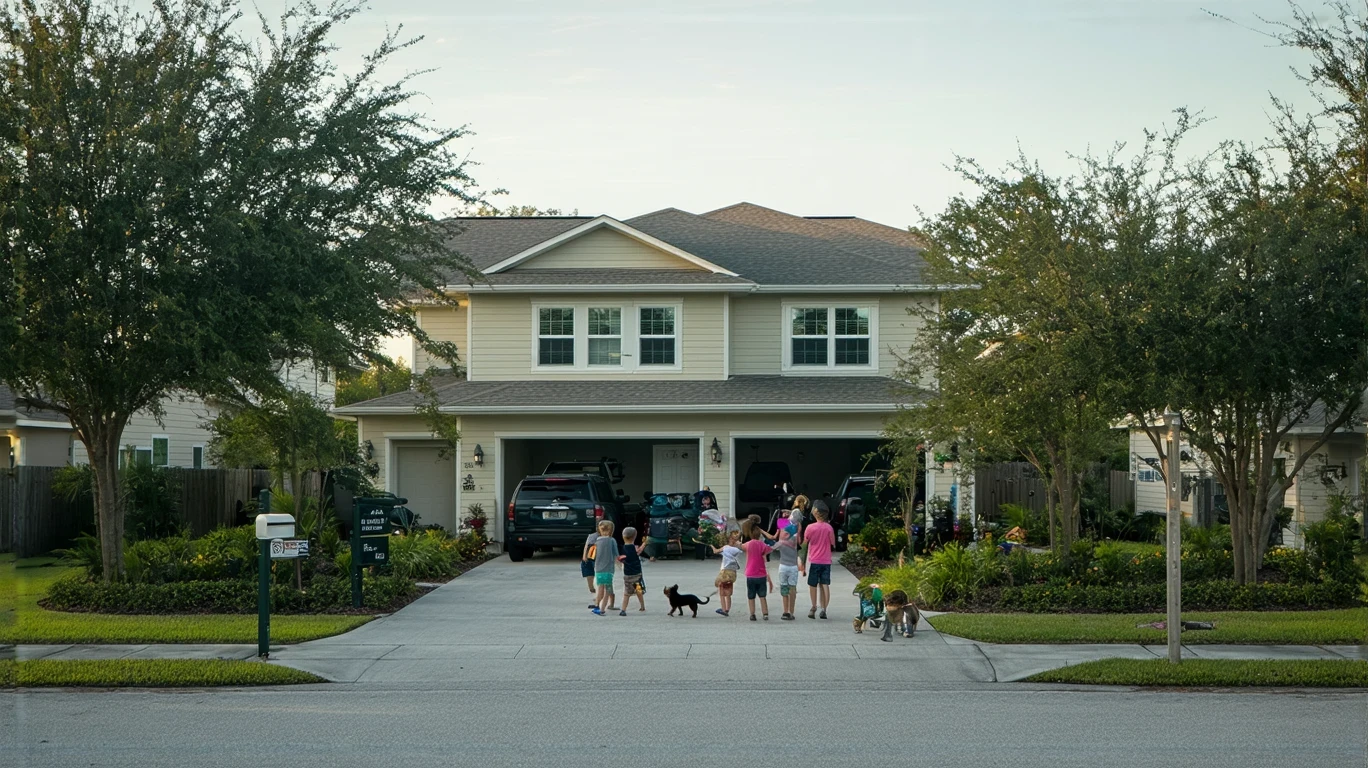
What “Living Comfortably” Means in Apopka
Comfort in Apopka isn’t about luxury. It’s about predictability. It means your air conditioning runs all summer without triggering budget panic. It means choosing where to live based on what fits your life, not just what’s left after the math. It means an unexpected car repair is annoying, not destabilizing.
For many residents, comfort also means space—a yard for kids, a second bedroom that isn’t also the office, enough distance from neighbors that life doesn’t feel stacked. Apopka’s suburban layout delivers that more readily than denser metro cores, but it comes with tradeoffs: longer drives, higher cooling costs in standalone homes, and the assumption that every adult has a working vehicle.
Comfort here is also seasonal. Florida’s extended cooling season means households face sustained utility pressure from late spring through early fall. Homes without sufficient insulation or aging HVAC systems can see sharp swings in monthly bills, and that volatility affects how secure people feel even when income stays constant.
What comfort doesn’t mean: eating out whenever you want, upgrading cars on a whim, or building savings effortlessly. Apopka works well for households who value space and a slower pace, but it’s not a place where modest income buys an easy financial ride.
Where Income Pressure Shows Up First
Income pressure in Apopka doesn’t arrive all at once. It builds in specific places, and understanding where helps you anticipate what your earnings will actually need to absorb.
Housing tradeoffs dominate early decisions. Apopka offers more space per dollar than downtown Orlando, but that space often comes with distance. Choosing a larger home farther out means lower rent or mortgage payments but higher transportation costs and longer commutes. Choosing proximity to work or schools means accepting smaller layouts or older housing stock. Neither choice is wrong, but each one shifts where your income gets tested.
For renters, lease renewals can introduce sudden jumps that feel disconnected from the local job market. For owners, property taxes and insurance costs behave less predictably than mortgage payments, especially as Florida’s insurance market continues to tighten.
Utility volatility is the second pressure point. Apopka’s heat isn’t occasional—it’s structural. Cooling costs don’t spike for a few weeks and disappear; they persist for months. Homes with poor insulation, older windows, or undersized HVAC systems can see summer utility bills that rival or exceed winter heating costs in colder climates. That sustained expense affects how much income is left for everything else.
Transportation costs are unavoidable. Apopka’s layout assumes car ownership. Public transit exists but doesn’t serve most daily errands or commutes effectively. Households need reliable vehicles, and that means fuel, insurance, maintenance, and the occasional repair. For families with multiple working adults, that expense doubles.
Family-specific costs add another layer. Households with school-age children face costs that single adults and couples don’t: childcare during summer and school breaks, activity fees, and the logistics of managing multiple schedules across a car-dependent area. Even small expenses—sports registrations, school supplies, gas for weekend travel—accumulate quickly when there’s no walkable alternative for errands.
How the Same Income Feels Different by Household
A single adult earning a given amount in Apopka experiences financial pressure very differently than a couple or a family at that same income level. The difference isn’t just about splitting costs—it’s about how many directions money gets pulled and how much flexibility remains when something changes.
Single adults face the full weight of fixed costs alone. Rent, utilities, car insurance, and internet don’t get shared. There’s no second income to smooth over a bad month or cover an unexpected expense. On the other hand, single adults have fewer variables: no childcare, no second commute to coordinate, no pressure to prioritize space over location. For someone working in Apopka or nearby, a smaller apartment close to work can keep transportation costs manageable, and utility bills stay lower in a compact space. Comfort, for a single adult, often hinges on whether income leaves enough room to absorb one or two surprise costs a year without derailing everything else.
Couples gain flexibility but also face higher expectations. Two incomes can split monthly expenses and create a buffer against volatility. But couples in Apopka often choose larger homes than single adults would, and they’re more likely to take on a mortgage than rent long-term. That shifts the cost structure: lower per-square-foot housing costs but higher absolute payments, plus the addition of maintenance, property taxes, and insurance. If both partners work, transportation costs double. If one stays home or works part-time, the household operates closer to single-income pressure while still carrying dual-lifestyle expenses. Comfort, for couples, depends heavily on whether both incomes are stable and whether they’re willing to accept tradeoffs in space or location.
Families operate under the most complex pressure. Households with children face every cost category that single adults and couples do, plus several more: childcare or after-school care, activity fees, larger homes to accommodate everyone, and the logistical costs of managing multiple schedules across a car-dependent area. Families also face less flexibility in housing—they can’t easily downsize to reduce costs, and proximity to good schools often overrides other priorities, even when it raises expenses. Utility costs hit harder in larger homes, and transportation becomes non-negotiable when kids need to get to school, activities, and appointments. Comfort, for families, requires enough income to cover baseline costs and enough margin to handle the constant small expenses that don’t fit neatly into budgets: field trips, school supplies, birthday parties, summer camps. Families at similar income levels to single adults or couples often feel the most stretched, even when the numbers look comparable on paper.
The Comfort Threshold (Qualitative)
There’s a point where income stops dictating every decision. It’s not a specific number—it’s a shift in how your household operates. Below that line, bills shape behavior. Above it, you start shaping your own choices.
Households below the comfort threshold make decisions in reaction to costs. They choose housing based on what’s left after the math, not what fits their life. They adjust thermostats based on last month’s utility bill. They defer car maintenance and hope nothing breaks. They don’t plan weekend trips—they wait to see if there’s money left over. Every decision is a tradeoff, and there’s no room to absorb mistakes.
Households above the threshold make decisions in response to preferences. They still care about costs, but they’re not controlled by them. They can pay a bit more for a shorter commute if time matters more than money. They can absorb a high utility month without cutting back elsewhere. They can fix the car when it needs fixing, not when the budget allows it. They start saving, even if it’s modest. The margin isn’t huge, but it’s enough to stop feeling reactive.
The transition happens when three things align: housing costs stay proportional to income and don’t crowd out everything else; seasonal or unexpected expenses become absorbable without triggering cuts to essentials; and there’s enough left over after fixed costs to make intentional choices about discretionary spending. For some households in Apopka, that threshold arrives sooner because they’ve minimized transportation costs, avoided utility volatility, or don’t carry family-related expenses. For others, it takes significantly more income to reach the same level of stability.
Comfort isn’t about abundance. It’s about predictability, margin, and the ability to make decisions based on what matters to you rather than what’s left after everything else is paid.
Why Online Cost Calculators Get Apopka Wrong
Most cost-of-living calculators treat Apopka like a data point. They’ll give you a number—sometimes startlingly precise—and tell you that’s what you need to live here. The problem isn’t that the numbers are wrong. It’s that they answer the wrong question.
Calculators add up averages: typical rent, typical utilities, typical transportation. But “typical” doesn’t account for the decisions you’ll actually face. They don’t know whether you’ll choose a larger home farther out or a smaller place closer in. They don’t know whether you run the air conditioning all summer or live with discomfort to keep bills lower. They don’t know if you’re a single adult splitting nothing, a couple splitting everything, or a family managing childcare, school schedules, and activity fees on top of baseline costs.
They also don’t capture volatility. A calculator might estimate your annual utility cost, but it won’t tell you that summer bills can swing significantly higher than winter ones, or that a single roof repair or insurance spike can destabilize months of careful planning. Averages smooth out the peaks and valleys, but real households live in the peaks and valleys.
Most importantly, calculators don’t reflect lifestyle assumptions. Apopka’s car-dependent layout, extended cooling season, and suburban form create cost patterns that don’t translate neatly into national averages. A household accustomed to walkable errands, mild summers, or reliable transit will find their money behaves differently here than a calculator predicted—not because the calculator lied, but because it didn’t account for how place shape affects daily costs.
People feel surprised after moving because they optimized for a total instead of understanding the structure. The number mattered less than knowing where pressure would show up and whether their income could handle it.
How to Judge Whether Your Income Fits Apopka
Instead of asking “Is my income enough?”, ask yourself these questions. Your answers will tell you more than any dollar figure could.
How sensitive are you to housing tradeoffs? Apopka offers space, but often at the cost of distance. If you need to be close to work or schools, you’ll pay more per square foot or accept older housing. If you prioritize a larger home or yard, you’ll drive more and spend more time in the car. Neither is wrong, but if you’re not willing to make that tradeoff, your income will feel tighter here than in a place where proximity and space aren’t in such direct conflict.
Can you absorb seasonal utility swings? Florida heat isn’t optional, and cooling costs persist for months. If a summer utility bill that’s significantly higher than your winter bill would force you to cut back elsewhere, that’s a sign your income might not have enough margin for Apopka’s climate reality. Comfort here requires enough cushion to let the air conditioning run without triggering financial stress.
Is time or money your limiting factor? Apopka’s layout saves money on housing but costs time in transportation. If your schedule is already stretched, a longer commute will compound that pressure even if rent is lower. If your income is tight but your time is flexible, the tradeoff works better. Know which resource you have less of, and plan accordingly.
How much schedule complexity can you manage? For families, Apopka’s car-dependent form means every errand, school run, and activity requires planning and driving. If you’re managing multiple kids, multiple jobs, or irregular schedules, the logistics can become as taxing as the costs. Single adults and couples face less of this, but families should consider whether their time and energy can handle the coordination this place requires.
How much flexibility do you expect month to month? If your income barely covers fixed costs, Apopka will feel precarious. Unexpected expenses—car repairs, medical bills, insurance increases—happen, and this isn’t a place where you can easily substitute walking for driving or skip cooling to save money. Households who feel comfortable here have enough margin to absorb one or two surprises a year without restructuring their entire budget.
Your income fits Apopka if your answers align with what this place actually requires. If they don’t, no salary adjustment will make the tradeoffs feel easier.
FAQs About Living Comfortably in Apopka
Is Apopka cheaper than Orlando?
Apopka typically offers lower housing costs per square foot than downtown or closer-in Orlando neighborhoods, especially for single-family homes with yards. But “cheaper” doesn’t mean easy. What you save on rent or mortgage often gets redirected into transportation, because Apopka’s layout assumes car ownership and longer commutes. You’re trading density and walkability for space and distance. Whether that tradeoff saves you money depends on how much you drive, how much space you need, and how you value time.
Can a single income support a family in Apopka?
It’s possible, but it requires deliberate tradeoffs and very little margin for error. Single-income families face the same costs as dual-income households—housing, utilities, transportation, childcare or activity fees—but with half the earning power. That means less flexibility in where you live, fewer options for absorbing unexpected costs, and almost no room for lifestyle expenses beyond essentials. Families who make it work tend to prioritize stability over comfort, accept smaller or older homes, and build routines that minimize variable costs. It’s not common, and it’s not easy.
Do utility costs really matter that much?
Yes, especially in Florida. Apopka’s extended cooling season means air conditioning isn’t a summer luxury—it’s a baseline expense that lasts from late spring into fall. Homes with poor insulation, older HVAC systems, or large square footage can see utility bills that rival or exceed housing costs in winter-dominant climates. The difference is that this expense doesn’t go away after a few peak weeks. It persists, month after month, and it affects how much income you have left for everything else. Households who underestimate utility volatility often feel surprised by how much of their budget disappears into climate control.
What income level feels “comfortable” in Apopka?
There’s no universal number, because comfort depends on household size, expectations, and tradeoffs. A single adult in a small apartment with a short commute can feel comfortable on far less than a family of four in a larger home with two working parents and school-age kids. Comfort isn’t about hitting a salary threshold—it’s about whether your income leaves enough margin after fixed costs to absorb volatility, make intentional choices, and stop reacting to every bill. Some households reach that point sooner because they’ve minimized transportation or housing costs. Others need significantly more because their cost structure is more complex.
Is Apopka a good place for someone just starting out?
It depends on what “starting out” means for you. If you’re a single adult or couple with stable income, low debt, and a car, Apopka can work well. You’ll get more space than you would closer to Orlando, and living costs are more manageable if you’re willing to drive. But if you’re early in your career with variable income, no vehicle, or significant student loans, Apopka’s car-dependent layout and lack of walkable infrastructure will add friction. This isn’t a place where you can easily substitute time or creativity for money. It rewards stability and planning, not hustle and flexibility.
How this article was built: This article reflects qualitative analysis of income pressure, household cost structures, and lifestyle tradeoffs typical of suburban Florida communities like Apopka. It incorporates contextual reasoning about climate, transportation patterns, and family infrastructure to explain how financial comfort is experienced across different household types.
Apopka can work well for some households—but only if expectations match reality. Comfort here isn’t about earning a specific amount. It’s about understanding where your income will be tested, knowing which tradeoffs you’re willing to make, and having enough margin to absorb the volatility that comes with Florida heat, car dependency, and suburban distance. If your income and priorities align with what this place actually requires, Apopka offers space, relative affordability, and a slower pace. If they don’t, no salary will make the tradeoffs feel easier.