
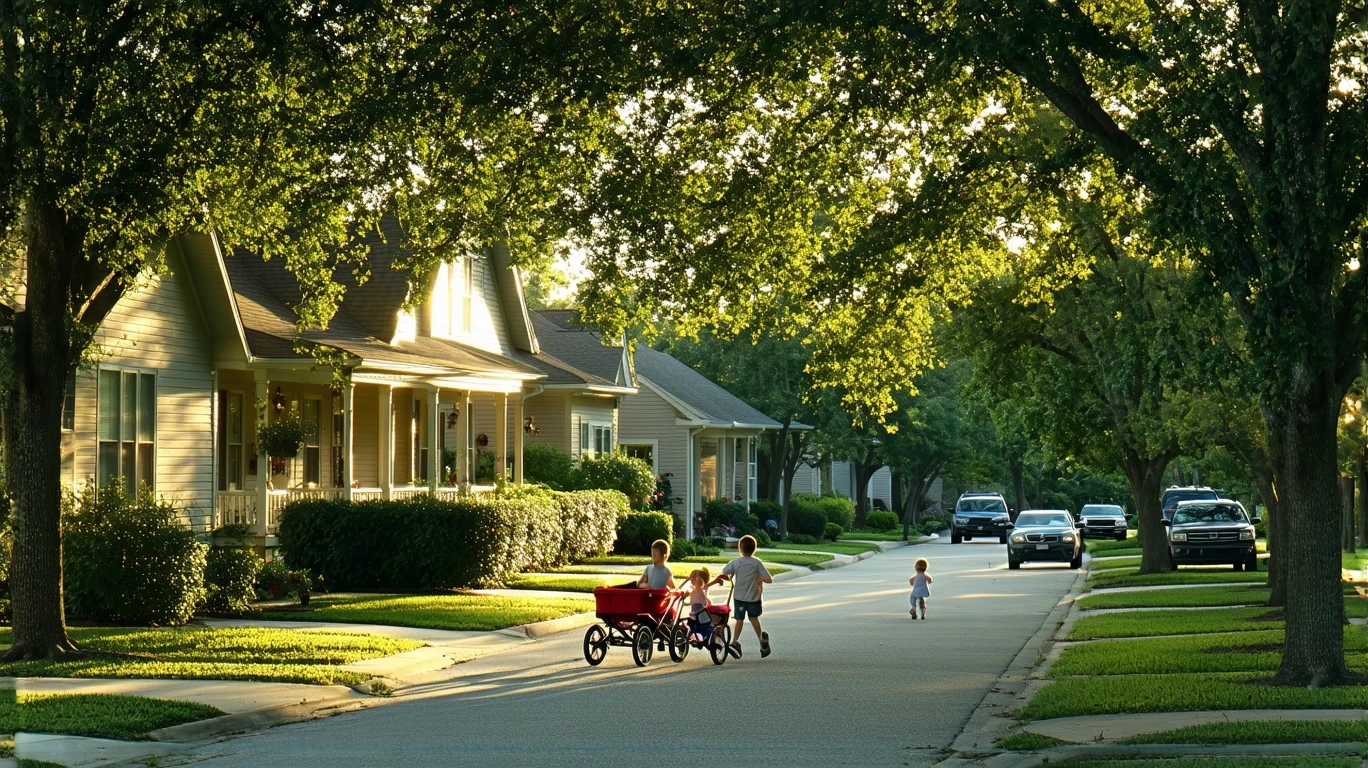
Apopka and Clermont sit roughly 20 miles apart in the Orlando metro, both offering suburban living outside the urban core. Yet the decision between them isn’t about which is “cheaper”—it’s about where cost pressure shows up and which household priorities each city serves better. Apopka leans toward families and professionals managing longer commutes with better access to healthcare and daily errands. Clermont appeals to households valuing outdoor recreation, cycling infrastructure, and a quieter commercial landscape, even if that means planning trips more carefully. In 2026, the choice hinges less on total expense and more on which costs dominate your day-to-day life.
Both cities share the same regional price environment, the same utility rates, and similar housing entry costs. The meaningful differences emerge in how you move through each place, where you access services, and what friction costs—time, distance, convenience—you’re willing to absorb. For some households, Apopka’s denser errands corridor and hospital presence justify the commute burden. For others, Clermont’s bike-friendly layout and lower rent offset the need to drive farther for groceries or medical care. Understanding these trade-offs requires looking past sticker prices and into the structure of daily life.
This comparison explains where housing, transportation, healthcare access, and daily logistics create different cost experiences in Apopka versus Clermont—and which households feel those differences most acutely.
Housing Costs
Apopka’s median home value sits at $330,900, while Clermont’s is $335,100—a difference of roughly $4,200 that translates to minimal variation in mortgage payments or down payment requirements. For renters, Apopka’s median gross rent is $1,828 per month compared to Clermont’s $1,723 per month, a gap of about $105 monthly. These figures suggest that housing entry costs are nearly identical between the two cities, and the decision is less about affordability and more about what you get for that price and where you’re willing to live relative to work, services, and daily destinations.
Both cities feature predominantly low-rise, single-family housing stock with mixed residential and commercial land use. The housing pressure in each place is driven more by availability and location relative to commute patterns than by price differences. Apopka’s housing market serves households who prioritize proximity to denser commercial corridors and healthcare facilities, even if that means absorbing longer average commute times. Clermont’s housing appeals to those willing to trade some convenience for quieter surroundings, better cycling access, and slightly lower monthly rent—though the savings are modest and may be offset by transportation or errand-planning costs.
For first-time buyers, the down payment and closing cost burden is effectively the same in both cities. For renters, the $105 monthly difference favors Clermont on paper, but the practical impact depends on how often you need to drive for groceries, medical appointments, or other errands. Families with school-age children will find similar school density in Clermont (medium band) compared to Apopka (low band for schools, medium for playgrounds), meaning family infrastructure is present but not abundant in either location. The housing decision ultimately hinges on whether you value access density or outdoor recreation infrastructure more highly.
| Housing Type | Apopka | Clermont |
|---|---|---|
| Median Home Value | $330,900 | $335,100 |
| Median Gross Rent | $1,828/month | $1,723/month |
| Building Character | Low-rise, single-family dominant | Low-rise, single-family dominant |
Housing takeaway: Renters seeking modest monthly savings may prefer Clermont, but the $105 difference is small enough that location relative to work, healthcare, and errands often matters more. Buyers face nearly identical entry barriers in both cities. Households sensitive to commute friction or daily errands accessibility will find Apopka’s housing market better aligned with denser service access, while those prioritizing outdoor activity and cycling infrastructure may find Clermont’s layout more supportive—even if it means driving farther for routine needs.
Utilities and Energy Costs
Apopka and Clermont share identical utility rate structures: electricity costs 15.70¢ per kWh, natural gas runs $32.82 per MCF, and both cities experience the same Florida climate exposure—long cooling seasons, minimal heating needs, and high humidity that keeps air conditioning running from late spring through early fall. The cost difference between the two cities isn’t in the rates; it’s in how housing stock age, home size, and daily occupancy patterns interact with those rates. Older single-family homes with less efficient insulation or older HVAC systems will drive higher summer bills regardless of location, while newer construction or well-maintained apartments offer more predictable monthly costs.
For households spending significant time at home—remote workers, retirees, or families with young children—cooling costs dominate the utility budget in both cities. The difference in exposure comes down to home square footage and construction quality rather than geographic location. Apopka’s housing stock includes a mix of older and newer builds, meaning some households face higher baseline usage while others benefit from modern efficiency standards. Clermont’s housing similarly varies, and without specific data on average home age or insulation quality, the practical difference is minimal. Both cities require households to budget for sustained air conditioning use, and both benefit from the same state-level efficiency programs and solar incentive frameworks.
Single adults in smaller apartments will see lower absolute bills but similar seasonal volatility—summer months spike, winter months drop. Families in larger single-family homes face higher baseline costs year-round, with summer peaks that can strain budgets if not planned for. Dual-income couples in mid-sized homes experience moderate exposure, though the impact depends heavily on daytime occupancy and thermostat discipline. In both cities, utility cost control comes from housing choice (size, age, efficiency) rather than location, and households moving between Apopka and Clermont should expect similar seasonal patterns and similar opportunities to manage usage through behavioral adjustments or efficiency upgrades.
Utility takeaway: Apopka and Clermont offer identical utility rate environments, meaning cost differences are driven entirely by housing characteristics and household behavior. Households in older, larger homes will experience higher cooling costs and more seasonal volatility in both cities. Those in newer, smaller, or well-insulated units will see more predictable bills. The decision between the two cities should not hinge on utility costs—focus instead on housing stock quality, home size, and your tolerance for seasonal bill swings.
Groceries and Daily Expenses
Apopka and Clermont share the same regional price parity index (101), meaning grocery staples, household goods, and everyday purchases cost effectively the same in both cities when comparing identical items at similar store types. The difference in daily expense pressure comes not from price levels but from access density and convenience. Apopka’s food and grocery establishment density falls in the medium band, with options concentrated along commercial corridors—making it easier to run quick errands without extensive planning. Clermont’s daily errands accessibility is sparser, with food density below the low threshold and grocery density in the medium band, meaning households often need to plan trips more deliberately or drive farther to access preferred stores.
For single adults or couples who shop infrequently and prefer bulk purchasing at big-box retailers, the access difference may not matter much—both cities offer regional chain access within reasonable driving distance. For families managing frequent grocery runs, school lunches, and last-minute ingredient needs, Apopka’s corridor-clustered layout reduces friction and saves time. Clermont’s sparser commercial density means fewer options within walking or quick-drive distance, which can push households toward less frequent, larger shopping trips or increase reliance on convenience stores with higher per-unit pricing.
Dining out and convenience spending follow similar patterns. Apopka’s denser commercial corridors support more restaurant variety and takeout options, making it easier to substitute prepared food for home cooking when time is tight. Clermont’s quieter commercial landscape offers fewer impulse dining options, which can reduce convenience spending creep but also limits flexibility when schedules get hectic. Households sensitive to time costs—those juggling work, school, and activities—may find Apopka’s layout more forgiving, even if the per-item grocery prices are identical. Households willing to plan meals and shopping trips in advance may prefer Clermont’s quieter rhythm and lower exposure to convenience spending temptation.
Groceries takeaway: Price levels are identical between Apopka and Clermont, but access density differs meaningfully. Families and busy households will feel less friction in Apopka, where corridor-clustered grocery and food options support quick, frequent trips. Clermont’s sparser layout works better for households who plan shopping in advance and prefer fewer commercial distractions. The cost difference isn’t in the cart—it’s in the time and planning burden required to fill it.
Taxes and Fees
Both Apopka and Clermont sit within the same county and state tax framework, meaning property tax rates, sales tax rates, and most local fees follow similar structures. The practical difference in tax burden comes from housing value and household income rather than location. Apopka’s median household income of $87,394 per year is notably higher than Clermont’s $75,951 per year, suggesting that Apopka households may face higher absolute property tax bills if they own homes of similar or higher value—but also have more income to absorb those costs. Clermont’s slightly higher median home value ($335,100 vs $330,900) creates a marginal property tax difference, but the gap is small enough that it’s unlikely to drive decision-making on its own.
Recurring fees—trash collection, water and sewer, stormwater management—vary by provider and housing type rather than city. Single-family homeowners in both cities typically pay these fees directly, while apartment renters may see them bundled into rent or charged separately. HOA fees are common in newer subdivisions in both Apopka and Clermont, and the amounts depend on the specific community rather than the city itself. Households considering HOA-governed properties should budget for monthly fees that can range from modest (covering landscaping and common area maintenance) to substantial (including amenities like pools, fitness centers, or gated security), but these costs are property-specific, not city-specific.
For long-term homeowners, property tax exposure grows with home value appreciation and local millage rates, both of which are influenced more by county-level budget decisions than by city boundaries. Renters are insulated from direct property tax bills but may see indirect impacts through rent adjustments over time. Households planning to stay several years should focus on the predictability of their housing costs—whether rent or mortgage—rather than trying to optimize for marginal tax differences between two cities in the same county.
Taxes and fees takeaway: Apopka and Clermont share similar tax and fee structures, with differences driven more by housing value and income level than by location. Homeowners in both cities face comparable property tax exposure, and renters see similar fee structures. Households should focus on housing affordability and income stability rather than expecting meaningful tax savings by choosing one city over the other.
Transportation & Commute Reality
Apopka’s average commute time is 32 minutes, with 57.4% of workers facing long commutes and only 9.7% working from home. This suggests a workforce heavily reliant on car travel to reach jobs elsewhere in the Orlando metro, likely concentrated in downtown Orlando, nearby office parks, or industrial corridors. The commute burden in Apopka is not just about distance—it’s about time cost, fuel consumption, and the daily friction of navigating regional traffic. Clermont lacks specific commute data in the feed, but its position farther west in the metro and sparser commercial density suggest similar or potentially longer commute times for households working in central Orlando.
Both cities share the same gasoline price ($2.89 per gallon) and rely on car-oriented infrastructure. Apopka offers bus service and a pedestrian-to-road ratio in the medium band, meaning some neighborhoods support walking for local errands, but transit options are limited and unlikely to replace car dependency for most households. Clermont also has bus service, but its sparser daily errands accessibility and lower food establishment density mean even local trips often require driving. Clermont does stand out for its cycling infrastructure—bike-to-road ratio exceeds the high threshold—making it more appealing for recreational cycling or short bike commutes, though this doesn’t eliminate the need for a car for most work trips or errands.
For single adults or couples with flexible schedules, the commute burden in either city is manageable but unavoidable. For families juggling school drop-offs, after-school activities, and grocery runs, the time cost of commuting in Apopka—or the likelihood of even longer commutes from Clermont—becomes a significant daily friction point. Households working remotely or with jobs close to home will find both cities more livable, as the commute burden disappears and the focus shifts to local access and lifestyle fit. Households with long commutes should budget not just for fuel but for the opportunity cost of time spent in the car, which can affect work-life balance, childcare logistics, and overall stress levels.
Cost Structure Comparison
Housing dominates the cost experience in both Apopka and Clermont, but the differences are minimal—median rent varies by about $105 per month, and median home values differ by roughly $4,200. These gaps are too small to drive the decision on their own. Instead, the choice hinges on what surrounds the housing: access to services, commute friction, and the daily logistics of getting things done. Apopka’s corridor-clustered grocery and food options reduce errand-planning burden, while Clermont’s sparser layout requires more intentional trip planning and often longer drives for routine needs.
Utilities introduce identical rate exposure in both cities, meaning the difference comes down to housing stock age and household occupancy patterns rather than location. Families in older, larger homes will face higher cooling costs and more seasonal volatility regardless of whether they live in Apopka or Clermont. Renters in newer apartments or smaller units will see more predictable bills in both places. The utility cost structure is effectively the same, so households should focus on housing quality and size rather than expecting savings by choosing one city over the other.
Transportation patterns matter more in Apopka, where the average commute is 32 minutes and over half of workers face long commutes. Clermont lacks specific commute data, but its position farther from Orlando’s job centers suggests similar or greater commute friction for households working in the urban core. Clermont’s standout cycling infrastructure offers lifestyle value for recreational riders or short local trips, but it doesn’t eliminate car dependency for work or errands. Apopka’s slightly denser pedestrian infrastructure and bus service provide marginal flexibility, but both cities remain car-reliant for most households.
Healthcare access creates a clear divergence. Apopka has a hospital and pharmacy presence, making routine and urgent medical care more accessible. Clermont shows limited healthcare access—no hospital or clinics detected in the feed—meaning households needing regular medical appointments, specialist visits, or emergency care will face longer drives and more planning friction. For families with young children, elderly relatives, or chronic health needs, this difference can shift from inconvenience to genuine cost burden, as time and distance add up over months and years.
The better choice depends on which costs dominate your household. Households sensitive to commute time and daily errands friction may prefer Apopka, even if it means slightly higher rent and longer average commutes, because the denser service access reduces planning burden. Households prioritizing outdoor recreation, cycling infrastructure, and quieter surroundings may prefer Clermont, accepting the trade-off of sparser commercial density and limited healthcare access. For households with significant medical needs or those who value convenience over quiet, the difference is less about price and more about predictability and access.
How the Same Income Feels in Apopka vs Clermont
Single Adult
Housing becomes the first non-negotiable cost, and the $105 rent difference between cities is small enough that location relative to work matters more. Flexibility exists in dining out and convenience spending, but Apopka’s denser commercial corridors make it easier to spend impulsively, while Clermont’s sparser layout naturally limits those opportunities. Commute friction dominates if the job is in central Orlando—time spent driving is time not available for errands, exercise, or downtime, and that trade-off feels heavier in smaller living spaces where home time is more valuable.
Dual-Income Couple
Transportation costs become non-negotiable first, as both partners likely need cars to reach separate workplaces or manage staggered schedules. Flexibility exists in grocery strategy and meal planning, but Apopka’s corridor-clustered options reduce the need for advance planning, while Clermont requires more deliberate shopping trips. The role of commute friction multiplies—two long commutes mean two sets of fuel costs, two schedules to coordinate, and less flexibility for mid-day errands or appointments. Clermont’s cycling infrastructure offers recreational value but doesn’t replace car dependency for work trips.
Family with Kids
Childcare logistics and school proximity become non-negotiable first, followed closely by healthcare access—Apopka’s hospital presence reduces friction for pediatric visits, urgent care, and specialist appointments, while Clermont’s limited healthcare access means longer drives and more schedule disruption. Flexibility disappears quickly in grocery planning and after-school activities, as multiple trips per week become unavoidable. The role of commute friction shifts from time cost to cash cost—longer commutes mean higher fuel bills, more vehicle wear, and less time for homework help or family meals. Housing form matters less than housing location relative to schools, medical facilities, and daily errands, and Apopka’s denser service access often outweighs Clermont’s modest rent savings.
Decision Matrix: Which City Fits Which Household?
| Decision Factor | If You’re Sensitive to This… | Apopka Tends to Fit When… | Clermont Tends to Fit When… |
|---|---|---|---|
| Housing entry + space needs | Down payment size, monthly rent predictability, proximity to services | You prioritize access to healthcare and errands over modest rent savings | You value $105/month rent savings and accept sparser service density |
| Transportation dependence + commute friction | Daily drive time, fuel costs, schedule flexibility | You already face long commutes and want denser local errands to offset time loss | You work remotely or prioritize cycling infrastructure for recreation over commute reduction |
| Utility variability + home size exposure | Seasonal bill swings, cooling costs, home age and insulation quality | You choose newer or smaller housing to control cooling costs in identical rate environment | You choose newer or smaller housing to control cooling costs in identical rate environment |
| Grocery strategy + convenience spending creep | Trip frequency, impulse dining, meal planning discipline | You prefer quick, frequent trips and value corridor-clustered grocery access | You plan shopping in advance and prefer fewer commercial distractions |
| Fees + friction costs (HOA, services, upkeep) | Predictability of recurring charges, bundled vs itemized billing | You accept similar HOA and fee structures in exchange for denser service access | You accept similar HOA and fee structures in exchange for quieter surroundings |
| Time budget (schedule flexibility, errands, logistics) | Coordination of work, school, medical appointments, household tasks | You need hospital access and corridor-clustered errands to reduce daily planning burden | You have schedule flexibility and can absorb longer drives for medical care and shopping |
Lifestyle Fit
Apopka and Clermont both offer suburban living with access to parks, water features, and outdoor recreation, but the texture of daily life differs in meaningful ways. Apopka’s average commute of 32 minutes and high percentage of long commuters (57.4%) reflect a workforce traveling to jobs elsewhere in the metro, often downtown Orlando or nearby office parks. The city’s corridor-clustered commercial layout and hospital presence make it easier to manage errands, medical appointments, and last-minute needs without extensive planning. For families juggling school schedules, after-school activities, and healthcare visits, this access density reduces daily friction even if the commute itself is unavoidable.
Clermont stands out for its cycling infrastructure, with bike-to-road ratios exceeding the high threshold—making it a strong fit for households who prioritize recreational cycling, trail access, and outdoor activity. The city’s park density falls in the moderate range, and water features are present, supporting a lifestyle oriented toward weekend recreation and outdoor hobbies. However, the sparser daily errands accessibility and limited healthcare access mean that routine tasks—grocery shopping, medical appointments, pharmacy visits—require more planning and often longer drives. For households with flexible schedules or those who work remotely, this trade-off may feel minor. For families with young children or households managing chronic health needs, the added distance to services can become a persistent source of friction.
Both cities feature low-rise, single-family housing stock and mixed land use, meaning the built environment feels similar in terms of building height and neighborhood character. Neither city offers rail transit, and both rely on bus service that serves limited routes. Walkability exists in pockets—Apopka’s pedestrian-to-road ratio falls in the medium band, as does Clermont’s—but neither city supports car-free living for most households. The lifestyle decision hinges less on housing form or transit options and more on how you prioritize access to services versus outdoor recreation infrastructure. Apopka fits households who value convenience and healthcare proximity; Clermont fits those who prioritize cycling, quieter surroundings, and are willing to plan errands around sparser commercial density.
Apopka median household income: $87,394 per year
Clermont median household income: $75,951 per year
Frequently Asked Questions
Is Apopka or Clermont cheaper for renters in 2026?
Clermont’s median gross rent is $1,723 per month compared to Apopka’s $1,828 per month, a difference of about $105 monthly. This modest savings favors Clermont on paper, but the practical impact depends on how the sparser daily errands accessibility and limited healthcare access in Clermont affect your transportation costs and time budget. Renters who work remotely or have flexible schedules may find the savings worthwhile, while those juggling commutes and frequent errands may prefer Apopka’s denser service access despite the slightly higher rent.
How do commute costs compare between Apopka and Clermont in 2026?
Apopka’s average commute is 32 minutes, with 57.4% of workers facing long commutes, suggesting significant time and fuel costs for households working in central Orlando or nearby job centers. Clermont lacks specific commute data, but its position farther west in the metro likely means similar or longer commute times for those working in the urban core. Both cities share the same gasoline price ($2.89 per gallon) and rely on car-oriented infrastructure, so the commute cost difference comes down to distance to your workplace rather than location-specific factors. Households working remotely or with jobs close to home will find both cities more manageable.
Which city has better access to healthcare, Apopka or Clermont?
Apopka has a hospital and pharmacy presence, making routine and urgent medical care more accessible within the city. Clermont shows limited healthcare access in the available data, with no hospital or clinics detected, meaning households needing regular medical appointments, specialist visits, or emergency care will face longer drives—likely to nearby cities or regional medical centers. For families with young children, elderly relatives, or chronic health needs, Apopka’s healthcare infrastructure reduces daily friction and planning burden, while Clermont requires more advance coordination and travel time for medical services.
Do Apopka and Clermont have different grocery costs in 2026?
Both cities share the same regional price parity index (101), meaning grocery staples and household goods cost effectively the same when comparing identical items at similar store types. The difference is in access density, not price levels. Apopka’s corridor-clustered grocery and food options make it easier to run quick, frequent trips, while Clermont’s sparser commercial layout requires more deliberate planning and often longer drives to preferred stores. Families managing frequent grocery runs will feel less friction in Apopka, while households who plan shopping in advance may prefer Clermont’s quieter commercial landscape.
Is it easier to live without a car in Apopka or Clermont?
Neither city supports car-free living for most households. Both rely on bus service with limited routes and lack rail transit. Apopka’s pedestrian-to-road ratio falls in the medium band, and its corridor-clustered commercial density supports walking for some local errands, but the 32-minute average commute and high percentage of long commuters indicate car dependency for work trips. Clermont offers notably higher cycling infrastructure, making it more appealing for recreational cycling or short bike trips, but its sparser daily errands accessibility and limited healthcare access mean a car remains essential for most routine needs. Households working remotely or with jobs very close to home may reduce car reliance slightly in Apopka due to denser service access, but both cities are fundamentally car-oriented.
Conclusion
Apopka and Clermont offer similar housing entry costs, identical utility rates, and comparable suburban living environments, but the cost experience diverges in meaningful ways based on access density, commute friction, and healthcare availability. Apopka fits households who prioritize corridor-clustered errands, hospital presence, and denser service access—even if that means absorbing a 32-minute average commute and slightly higher rent. Clermont appeals to those who value cycling infrastructure, quieter commercial surroundings, and modest rent savings, accepting the trade-off of sparser grocery options and limited local healthcare access. The decision isn’t about which city is cheaper overall; it’s about which cost structure aligns with your household’s daily rhythms and non-negotiable needs.
For families managing school schedules, medical appointments, and frequent errands, Apopka’s denser layout reduces planning burden and time costs, making it easier to juggle competing demands. For remote workers, outdoor enthusiasts, or households with flexible schedules, Clermont’s recreational infrastructure and quieter pace may outweigh the need to drive farther for services. Both cities require car ownership for most households, both face similar utility cost exposure, and both sit within the same regional tax and price environment. The meaningful differences lie in how you move through each place, where you access essential services, and what friction costs—time, distance, convenience—you’re willing to manage in exchange for the lifestyle and access priorities that matter most to your household in 2026.
How this article was built: In addition to public economic data, this article incorporates location-based experiential signals derived from anonymized geographic patterns—such as access density, walkability, and land-use mix—to reflect how day-to-day living actually feels in Apopka and Clermont.