
El Mirage sits within the northwest Phoenix metro, where housing costs reflect a commuter suburb balancing accessibility to the broader region with a distinctly car-oriented infrastructure. The median home value of $246,800 positions El Mirage below many neighboring cities, drawing buyers seeking entry points into metro Phoenix ownership. Median gross rent stands at $1,606 per month, a figure shaped by demand from households commuting into Phoenix and Glendale for work. With median household income at $72,134 per year, the city attracts working families and first-time buyers, but the housing cost experience here is defined less by sticker price and more by how the city’s structure—sparse daily services, strong park access, limited walkable amenities—shapes ongoing expenses and household logistics.
What newcomers often misunderstand is that El Mirage’s lower home values come with tradeoffs in convenience. Food establishment density falls below typical thresholds, and grocery options, while present, cluster rather than distribute evenly. This means that even routine errands require intentional planning and vehicle use. The pedestrian-to-road ratio sits in a middle band—some sidewalks exist, but the city is not structured for walking as a primary mode. Bus service is available, but transit does not replace car dependency here. For renters and owners alike, the housing cost structure must be understood alongside the reality that nearly every household task—shopping, healthcare, school runs—will involve driving.
El Mirage’s housing market also reflects its role as a developing suburb. Building heights remain in a mixed range, and both residential and commercial land use are present, but the city has not yet developed the density or service clustering that reduces friction in daily life. Park density, however, is notably high, with water features and green space integrated throughout. Families drawn to outdoor access will find that dimension well-supported, but school density remains below typical thresholds, and no hospital or clinics were detected within the city’s core. These gaps don’t make El Mirage unlivable—they simply mean that housing decisions here must account for what you’ll need to leave the neighborhood to access.
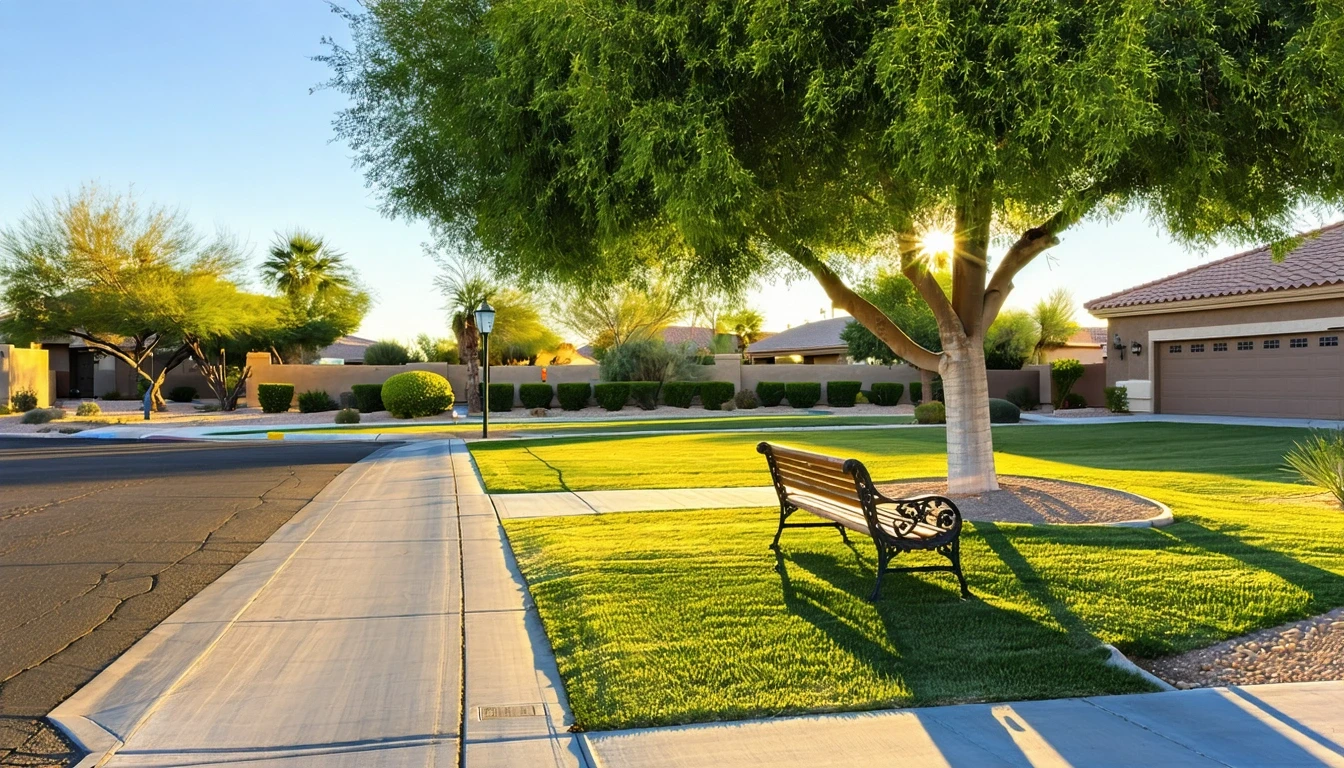
Renting in El Mirage
At $1,606 per month, median gross rent in El Mirage reflects the city’s position as a commuter suburb with access to the broader Phoenix metro. Renters here are often drawn by proximity to employment corridors in Phoenix and Glendale, but the rental experience is shaped by the city’s sparse daily services and car-dependent layout. Unlike denser metro areas where renters can walk to groceries or transit, El Mirage renters must budget not only for rent but for the vehicle use and fuel costs that come with reaching food, healthcare, and other routine destinations.
Rental stock in El Mirage skews toward single-family homes and smaller apartment complexes, rather than large multifamily buildings. This influences both availability and the type of lease terms renters encounter. Landlords in suburban markets like this one often pass through costs for landscaping, water, and trash service, so renters should clarify what is included in the base rent figure. The city’s long cooling season—driven by desert heat—also means that electricity bills become a significant secondary cost. With electricity priced at 15.46¢/kWh, renters in homes without efficient cooling systems or adequate insulation may see utility bills rival or exceed other variable expenses during summer months.
Renters who work remotely or have flexible schedules may find El Mirage’s rental costs manageable, but those commuting daily should factor in both time and fuel. The average commute is 29 minutes, and 50.5% of workers face long commutes. For renters weighing El Mirage against other metro options, the question is whether the lower rent justifies the added transportation and time costs, particularly when errands and services require additional driving.
Owning a Home in El Mirage
The median home value of $246,800 makes El Mirage one of the more accessible ownership markets in the northwest Phoenix metro. For first-time buyers or households priced out of Scottsdale, Tempe, or central Phoenix, El Mirage offers a lower entry threshold. But ownership here is not simply about the purchase price—it’s about understanding the ongoing cost exposures that come with suburban homeownership in a desert climate.
Property taxes in Arizona vary by jurisdiction, and while specific rates for El Mirage were not provided in available data, buyers should expect annual tax bills to fluctuate based on assessed value and local levies. Ownership also introduces maintenance responsibilities that renters avoid. In El Mirage’s climate, cooling systems work harder and longer than in temperate regions, meaning HVAC maintenance and eventual replacement become predictable expenses. Landscaping in desert environments often requires either drought-tolerant design or ongoing irrigation costs, both of which owners must manage. Exterior surfaces—roofs, stucco, paint—degrade faster under intense sun and heat, compressing maintenance cycles.
Some neighborhoods in El Mirage are governed by homeowners associations, which may bundle services like landscaping or water but also impose monthly fees and rule structures. Buyers should clarify whether an HOA is present and what it controls, as this affects both cost predictability and autonomy. Ownership in El Mirage also means accepting the city’s infrastructure as it exists: limited local healthcare, sparse daily services, and a layout that requires driving for most tasks. These factors don’t change with a mortgage—they define the ownership experience.
Apartment vs House in El Mirage — Cost Behavior Comparison
| Expense Category | Apartment | House |
|---|---|---|
| Cooling Exposure | Shared walls reduce heat gain; central systems may be landlord-maintained | Full envelope exposed to desert heat; owner responsible for HVAC efficiency and replacement |
| Outdoor Maintenance | Typically managed by property or included in rent | Owner handles desert landscaping, irrigation, and hardscape degradation from sun exposure |
| Errands Friction | Same car dependency as houses; no walkability advantage in El Mirage’s layout | Same car dependency; garage access may reduce trip planning burden slightly |
| Property Tax | Not directly paid by renter | Annual obligation; varies with assessed value and local levies |
Why these categories? El Mirage’s desert climate and car-oriented layout create cost differences that are climate- and infrastructure-specific. Cooling dominates summer expenses for both housing types, but houses face greater exposure due to building envelope and system responsibility. Outdoor maintenance in desert environments involves distinct challenges—heat stress on materials, water costs, and plant survival—that apartments typically offload to management. Errands friction is included because El Mirage’s sparse daily services affect all residents equally; neither apartments nor houses offer a walkability advantage here. Property tax is listed because it represents a structural ownership cost that renters avoid, even if the rate itself varies.
What’s omitted? Generic categories like “space” or “privacy” are excluded because they don’t vary meaningfully by El Mirage’s conditions—they’re universal housing tradeoffs. Insurance costs are omitted because no local risk data (flood zones, wildfire exposure) was provided. Utility base costs are omitted because both housing types face similar rate structures; the cooling exposure row captures the meaningful difference.
Utilities & Upkeep Differences
El Mirage’s long cooling season drives a dominant share of household utility costs. Electricity at 15.46¢/kWh becomes the primary variable expense from late spring through early fall, as air conditioning runs nearly continuously during triple-digit heat. Houses face greater cooling exposure than apartments due to full building envelope exposure—roofs, walls, and windows all absorb and transfer heat. Older homes or those with single-pane windows and minimal insulation will see noticeably higher bills than newer construction with modern efficiency standards.
Natural gas, priced at $19.89/MCF, plays a smaller role in El Mirage’s cost structure. Heating demand is minimal—desert winters bring occasional cool nights but rarely sustained cold. Gas is more commonly used for water heating and cooking, making it a minor but steady expense rather than a seasonal spike.
Upkeep in El Mirage is shaped by heat and sun exposure. HVAC systems work harder here than in temperate climates, meaning filters need more frequent replacement and compressor lifespan is shorter. Exterior paint, roofing materials, and sealants degrade faster under intense UV exposure. Landscaping requires either drought-tolerant plants or consistent irrigation, both of which carry costs. Homeowners should expect maintenance cycles to compress compared to national averages—what might last 15 years elsewhere may need attention in 10 here.
Apartments shift much of this burden to property management, but renters are not insulated from cooling costs. Lease terms should clarify whether utilities are included or separately metered, as summer electricity bills can rival rent in poorly insulated units.
Rent vs Buy: Long-Term Exposure in El Mirage
The decision between renting and buying in El Mirage is less about monthly payment comparison and more about which cost exposures you’re willing to manage over time. Renters face lease renewal risk—rent can rise annually based on metro demand and landlord discretion. In a commuter suburb like El Mirage, where housing pressure comes from workers priced out of closer-in neighborhoods, rent volatility is tied to broader metro trends rather than local factors alone.
Owners, by contrast, lock in their principal and interest payment (if financing at a fixed rate), but take on exposure to property taxes, insurance, maintenance, and system replacement. In El Mirage’s climate, these are not minor or occasional expenses—they are recurring and driven by environmental stress. HVAC replacement, roof repair, and exterior upkeep happen on compressed timelines here. Owners also absorb the cost of adapting to the city’s infrastructure: driving for errands, managing healthcare access outside the city, and navigating school options if family needs change.
Renters retain flexibility to relocate if commute patterns shift, employment changes, or household needs outgrow what El Mirage offers. Owners gain control and stability but must accept that the city’s current service gaps and car dependency are structural, not temporary. Neither path is inherently better—each fits different risk tolerances and timelines.
FAQs About Housing Costs in El Mirage
What is the median home price in El Mirage, AZ?
The median home value in El Mirage is $246,800, positioning it as one of the more affordable ownership markets in the northwest Phoenix metro. This figure reflects the city’s role as a commuter suburb with developing infrastructure and limited walkable services.
How much does it cost to rent in El Mirage?
Median gross rent in El Mirage is $1,606 per month. Renters should clarify what utilities and services are included, as summer cooling costs and the need for vehicle use to access daily services add to the total monthly outlay.
Does El Mirage have high property taxes?
Specific property tax rates for El Mirage were not available, but Arizona property taxes vary by jurisdiction and are based on assessed home value. Buyers should request tax estimates during the purchase process and understand that rates can change as the city develops and service needs grow.
Are utilities expensive in El Mirage?
Electricity is the dominant utility cost in El Mirage due to the long cooling season. At 15.46¢/kWh, summer bills can be substantial, particularly in older homes or units with poor insulation. Natural gas, at $19.89/MCF, is a minor expense since heating demand is low.
Is El Mirage a good place for first-time homebuyers?
El Mirage offers accessible home values relative to the broader Phoenix metro, making it a viable entry point for first-time buyers. However, buyers should account for ongoing costs tied to climate (cooling, maintenance) and infrastructure (car dependency, limited local services). The fit depends on whether the tradeoff between lower purchase price and higher logistical friction aligns with your household’s priorities.
Making Housing Choices in El Mirage
Housing costs in El Mirage are shaped by its position as a commuter suburb within the Phoenix metro, where lower home values and rent come with infrastructure tradeoffs. The city’s car-dependent layout, sparse daily services, and limited healthcare and school density mean that monthly expenses extend beyond housing payments to include fuel, time, and the logistical burden of reaching routine destinations. At the same time, strong park access and integrated green space offer quality-of-life benefits that denser, more expensive neighborhoods may lack.
For renters, El Mirage provides metro access at a lower rent threshold, but flexibility comes with the need to manage cooling costs and vehicle dependency. For buyers, ownership here offers control and equity building, but requires accepting compressed maintenance cycles and the reality that many services will remain outside the city for the foreseeable future. Neither renting nor owning eliminates the city’s structural characteristics—they simply shift which exposures you manage directly.
El Mirage fits households willing to prioritize affordability and outdoor space over walkable convenience and dense services. It works best for those with reliable transportation, stable commutes, and the capacity to plan around the city’s infrastructure gaps. For a broader view of what costs people most in El Mirage, understanding how housing interacts with transportation, utilities, and daily logistics is essential. If you’re planning a move, reviewing moving company options early can help manage the transition into a market where housing is only one part of the total cost equation.
How this article was built: In addition to public economic data, this article incorporates location-based experiential signals derived from anonymized geographic patterns—such as access density, walkability, and land-use mix—to reflect how day-to-day living actually feels in El Mirage, AZ.