
Altamonte Springs sits in the Orlando metro’s northern suburbs, where housing costs reflect a blend of commuter demand, transitional development, and Florida’s climate-driven ownership exposure. The median home value of $247,200 and median gross rent of $1,474 per month position the city near regional cost parity—neither a bargain nor a premium market—but the experience of paying for housing here depends heavily on how you move through the city, where you shop, and how long you plan to stay.
With a regional price parity index of 101 (essentially matching the national baseline), Altamonte Springs doesn’t offer the cost relief some expect from Florida’s smaller metros. What distinguishes this market is not headline affordability but the structure of ongoing costs: cooling dominates utility bills, car dependency shapes household logistics, and ownership exposes buyers to maintenance and insurance volatility that renters avoid. For households weighing rent against purchase, the decision hinges less on monthly payment math and more on how much control and predictability matter against Florida’s long-term cost drift.
This article explains how housing costs behave in Altamonte Springs—what drives rent pressure, what ownership actually costs beyond the mortgage, and which households fit each path. It is not a mortgage calculator or affordability test. It is a guide to understanding cost exposure over time in a city where suburban form, climate, and infrastructure determine how much housing really costs to maintain.
The Housing Market in Altamonte Springs Today
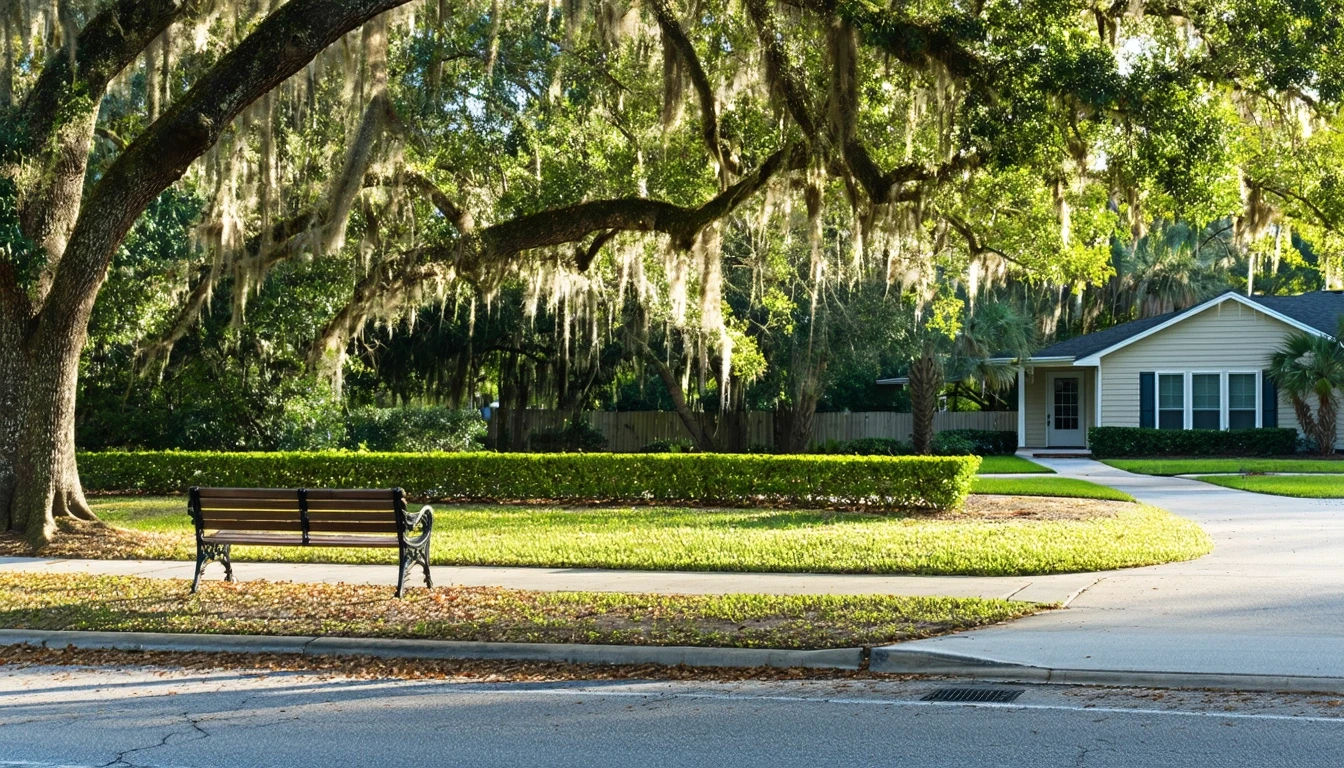
Altamonte Springs functions as a bedroom community and commercial corridor within the Orlando metro, drawing both commuters and families seeking proximity to employment centers without downtown density. The housing stock reflects this role: a mix of single-family subdivisions, mid-rise apartment complexes, and scattered townhome developments, with mixed building heights and both residential and commercial land use present throughout the city. This is not a uniform suburb—it’s a transitional market where older low-rise neighborhoods sit alongside newer mixed-use corridors.
The median home value of $247,200 aligns closely with the income profile of the city, where the median household earns $61,714 per year. For buyers, this suggests that entry-level ownership is within reach for dual-income households or those with stable employment, but it also means that competition for starter homes is steady, not soft. Sellers are not desperate, and inventory moves when priced correctly. For renters, the $1,474 per month median gross rent represents a significant share of income for single earners, and the rental market skews toward apartment complexes rather than single-family homes, limiting options for households seeking yard space or privacy without ownership.
What newcomers often misunderstand is that Altamonte Springs is not a low-cost alternative to Orlando—it is a car-dependent suburb with moderate density, where housing affordability is shaped as much by transportation and utility exposure as by rent or mortgage payments. The city has walkable pockets with higher pedestrian infrastructure density, but overall, the built environment favors driving. Bus service is present, but it does not reduce car dependency for most households. Food and grocery options are corridor-clustered, meaning errands require planning and driving rather than spontaneous walking. For families and working adults, this means housing costs must be evaluated alongside the cost of maintaining at least one vehicle, and often two.
The unemployment rate of 3.1% signals a stable local economy, but it also reflects the city’s role as a commuter hub rather than a major employment center. Many residents work elsewhere in the metro, and housing demand is driven by proximity to highways and job corridors, not by walkable access to employers. This dynamic keeps housing prices stable but also limits the upside for speculative buyers. Altamonte Springs is not a market where rapid appreciation is expected—it is a market where housing costs track income growth, and long-term value depends on maintaining the property and managing ongoing expenses.
Renting in Altamonte Springs
Renting in Altamonte Springs means navigating a market dominated by apartment complexes, where $1,474 per month is the median gross rent but actual costs vary significantly by location, age of construction, and proximity to commercial corridors. Newer complexes near Altamonte Mall or along SR 436 command higher rents and often include amenities like pools, fitness centers, and covered parking, while older properties farther from main roads offer lower base rents but may lack updated appliances, efficient HVAC systems, or responsive management.
For renters, the primary cost advantage is predictability within the lease term. Rent is fixed for 12 months, and landlords cover major repairs, roof maintenance, and exterior upkeep. But this predictability comes with trade-offs. Renewal increases are common, and in a market where demand remains steady due to Orlando metro growth, landlords have leverage to raise rents when leases expire. Renters who stay in place for multiple years should expect gradual upward pressure, not dramatic spikes, but also not the cost stability that ownership can provide once a mortgage is locked.
The rental experience in Altamonte Springs is also shaped by the city’s car-oriented infrastructure. Most apartment complexes are not within walking distance of grocery stores, pharmacies, or dining options. Food and grocery establishments are corridor-clustered, meaning renters must drive to run errands, even if they live in a complex with sidewalks and landscaped paths. Bus stops are present, but transit does not function as a primary mobility option for most renters. This means that renting here does not eliminate transportation costs—it simply shifts them from ownership-related expenses (maintenance, insurance, registration) to fuel, insurance, and vehicle depreciation.
For single earners or younger professionals, the $1,474 median rent represents a substantial share of gross income, and finding a unit below that figure often requires compromises on location, age, or amenities. Roommates or dual-income households fare better, but even then, the combination of rent and car dependency creates a cost structure that leaves limited room for savings. Renters who prioritize flexibility—those who may relocate for work, are uncertain about long-term plans, or want to avoid maintenance risk—will find Altamonte Springs a functional choice, but not a low-cost one.
Owning a Home in Altamonte Springs
Owning a home in Altamonte Springs shifts the cost structure from predictable monthly rent to a mix of fixed mortgage payments and variable ongoing expenses. The $247,200 median home value makes ownership accessible for households with stable income and down payment savings, but the true cost of ownership extends well beyond the purchase price. In Florida, homeowners face property taxes, homeowners insurance, and HOA fees (where applicable), along with maintenance, utilities, and the long-term risk of climate-related repairs.
Property taxes in Florida are influenced by assessed value, millage rates, and exemptions, but without specific rate data for Altamonte Springs, buyers should expect taxes to behave as a semi-variable cost—stable in the short term but subject to reassessment and millage adjustments over time. Homeowners insurance is a more volatile expense, particularly in Florida, where storm exposure and claims history drive premiums. Even in inland suburbs like Altamonte Springs, insurance costs can rise sharply in response to statewide market conditions, and buyers should not assume that quoted premiums at closing will remain stable over a 10- or 15-year ownership period.
Many neighborhoods in Altamonte Springs are governed by homeowners associations, which bundle services like landscaping, common area maintenance, and sometimes trash or water. HOA fees add a recurring monthly cost that does not build equity and can increase over time as the association’s budget demands grow. For buyers comparing ownership to renting, HOA fees represent a rent-like expense that persists regardless of how much equity you’ve built.
Maintenance and repair exposure is where ownership in Altamonte Springs diverges most sharply from renting. Florida’s extended cooling season and high humidity place continuous stress on HVAC systems, roofs, and exterior finishes. Air conditioning is not optional—it runs for most of the year—and when a system fails, replacement costs run into thousands of dollars. Roofs degrade faster in subtropical climates due to UV exposure and afternoon thunderstorms, and exterior paint, siding, and trim require more frequent attention than in drier or cooler regions. Owners also bear responsibility for plumbing, appliances, and structural issues that renters can escalate to landlords.
For households who value control, stability, and the ability to modify their living space, ownership in Altamonte Springs offers clear advantages. Mortgage payments remain fixed (for fixed-rate loans), and once the loan is paid off, housing costs drop significantly. Owners can renovate, landscape, and personalize their property without seeking permission. But ownership also means absorbing volatility—insurance spikes, unexpected repairs, and the risk that deferred maintenance compounds into larger problems. Buyers who are prepared to manage these exposures, and who plan to stay long enough to offset transaction costs, will find ownership a viable path. Those who prioritize flexibility or lack reserves for unexpected repairs should weigh the trade-offs carefully.
Apartment vs House in Altamonte Springs — Cost Behavior Comparison
| Expense Category | Apartment | House |
|---|---|---|
| Cooling Costs | Lower total usage due to smaller square footage and shared walls; landlord may cover water heating | Higher usage due to larger conditioned space and standalone structure; owner pays all utility exposure |
| Maintenance Responsibility | Landlord covers HVAC, roof, exterior, and major appliances; renter handles only interior damage | Owner absorbs all repair costs, including HVAC replacement, roof maintenance, and storm-related damage |
| Outdoor Space Upkeep | None; landscaping and common areas managed by property | Lawn care, irrigation, and pest control required year-round in Florida climate |
| Insurance | Renters insurance covers personal property only; low annual cost | Homeowners insurance includes structure and liability; subject to Florida market volatility |
| Mobility and Access | Often located near commercial corridors with moderate access to errands; still car-dependent | Typically in residential subdivisions farther from grocery and services; requires driving for all errands |
Why these categories differ in Altamonte Springs: The city’s extended cooling season and subtropical humidity make HVAC and exterior maintenance more intensive than in temperate climates. Corridor-clustered food and grocery access means that even apartment renters near commercial zones still rely on cars, but houses in residential subdivisions face longer drives for daily errands. Florida’s insurance market volatility creates a sharper cost gap between renters and owners than in states with more stable premiums. Categories like heating, snow removal, and walkable errands were omitted because they do not meaningfully vary in this climate and built environment.
Utilities & Upkeep Differences
Utility and maintenance costs in Altamonte Springs are shaped primarily by Florida’s extended cooling season and the city’s car-dependent suburban form. For both renters and owners, electricity is the dominant utility expense, driven by air conditioning that runs from late spring through early fall and intermittently during mild winter months. The local electricity rate of 15.70¢/kWh is moderate but not low, and because cooling demand is persistent, monthly bills remain elevated for much of the year.
Apartment renters benefit from smaller conditioned spaces and shared walls, which reduce total cooling load. Many complexes also include water, sewer, and trash in the rent, meaning renters pay only for electricity and possibly internet. This bundling simplifies budgeting and shields renters from usage spikes. However, older apartment buildings with less efficient HVAC systems or poor insulation can still generate high electric bills, and renters have no control over upgrading equipment or improving efficiency.
Homeowners face higher and more variable utility costs. Standalone houses have greater exterior surface area exposed to heat, and larger square footage requires more energy to cool. Owners also pay separately for water, sewer, trash, and sometimes irrigation, particularly in neighborhoods with HOA-mandated landscaping standards. Natural gas is available in some areas, priced at $32.82/MCF, but its use is limited—most homes rely on electric water heaters and HVAC systems, so gas exposure is minimal.
Maintenance exposure diverges sharply between apartments and houses. Apartment renters are insulated from HVAC replacement, roof repairs, and exterior upkeep, all of which are the landlord’s responsibility. Homeowners in Altamonte Springs must manage these costs directly, and Florida’s climate accelerates wear. HVAC systems work harder and fail sooner in subtropical heat and humidity. Roofs degrade faster due to UV exposure and afternoon thunderstorms. Exterior paint, trim, and siding require more frequent maintenance than in drier climates. Lawn care is a year-round obligation, and irrigation systems—common in Florida subdivisions—add both water costs and maintenance complexity.
For homeowners, the cost of upkeep is not evenly distributed. Some years bring only routine expenses—filter changes, gutter cleaning, pest control—while others require major outlays for HVAC replacement, roof repair, or storm damage remediation. This volatility is a defining feature of ownership in Florida, and buyers who lack reserves for unexpected repairs face financial stress when systems fail. Renters avoid this exposure entirely, but they also forgo the equity-building and long-term cost stability that ownership can provide once the mortgage is paid down.
Rent vs Buy: Long-Term Exposure in Altamonte Springs
The choice between renting and buying in Altamonte Springs is not a simple comparison of monthly costs—it is a decision about which risks and trade-offs you are willing to manage. Renters gain short-term predictability and avoid maintenance risk, but they face renewal increases and no equity accumulation. Owners lock in mortgage payments and build equity, but they absorb insurance volatility, repair unpredictability, and climate-driven maintenance exposure.
Over time, renters in Altamonte Springs should expect gradual upward pressure on rent, driven by Orlando metro growth and steady demand for housing near employment corridors. Lease renewals typically bring increases, and while these are rarely dramatic year-to-year, they compound over a decade. Renters who stay in place for five or ten years will pay more in total than they did initially, with no offsetting asset to show for it. However, renters also retain mobility and flexibility—they can relocate for work, downsize without selling, or leave the market entirely without transaction costs.
Homeowners in Altamonte Springs face a different exposure profile. For those with fixed-rate mortgages, the principal and interest portion of the housing cost remains stable, providing a hedge against rent inflation. But ownership introduces variable costs that renters avoid: property taxes, homeowners insurance, HOA fees, and maintenance. In Florida, insurance premiums can rise sharply in response to statewide claims activity, even for homeowners who have never filed a claim. Maintenance costs are episodic but inevitable—HVAC systems fail, roofs need replacement, and storm damage requires repair. These expenses do not follow a predictable schedule, and owners who defer maintenance often face compounding problems that cost more to fix later.
The long-term advantage of ownership in Altamonte Springs depends on how long you stay and how well you manage ongoing costs. Buyers who remain in their homes for ten years or more benefit from fixed mortgage payments, equity accumulation, and the eventual elimination of the mortgage payment itself. Those who sell within three to five years often find that transaction costs—realtor commissions, closing fees, and the opportunity cost of down payment capital—offset any appreciation or equity gain. For households with stable employment, long-term plans, and reserves for unexpected repairs, ownership offers control and eventual cost relief. For those who value flexibility, lack maintenance reserves, or are uncertain about their timeline, renting avoids the downside risk of ownership without sacrificing access to housing.
How this article was built: In addition to public economic data, this article incorporates location-based experiential signals derived from anonymized geographic patterns—such as access density, walkability, and land-use mix—to reflect how day-to-day living actually feels in Altamonte Springs, FL.
FAQs About Housing Costs in Altamonte Springs
Is renting or buying cheaper in Altamonte Springs?
Neither path is universally cheaper—it depends on your timeline and risk tolerance. Renting offers short-term predictability and avoids maintenance exposure, but renewal increases compound over time. Buying locks in mortgage payments and builds equity, but ownership introduces insurance volatility, repair costs, and climate-driven maintenance. For households staying five years or less, renting often costs less when transaction costs are included. For those staying ten years or more, ownership typically provides better long-term value, assuming reserves are available for unexpected repairs.
How much do utilities cost for homeowners in Altamonte Springs?
Utility costs vary by home size, efficiency, and usage patterns, but electricity is the dominant expense due to Florida’s extended cooling season. The local rate of 15.70¢/kWh applies to all usage, and air conditioning runs for much of the year. Homeowners also pay separately for water, sewer, trash, and sometimes irrigation. Older homes with less efficient HVAC systems or poor insulation will see higher bills, while newer construction with modern equipment and better sealing reduces usage. Natural gas is available but rarely used for heating, so most utility exposure is electric.
Are HOA fees common in Altamonte Springs?
Many neighborhoods in Altamonte Springs are governed by homeowners associations, particularly newer subdivisions and townhome communities. HOA fees vary widely depending on what services are included—landscaping, common area maintenance, trash, or amenities like pools and clubhouses. These fees are a recurring monthly cost that does not build equity and can increase over time as the association’s budget needs grow. Buyers should request HOA financials and review fee history before purchasing, as high or rapidly increasing fees can offset the affordability advantage of a lower purchase price.
How does car dependency affect housing costs in Altamonte Springs?
Altamonte Springs is a car-dependent suburb where most households need at least one vehicle, and many need two. Food and grocery options are corridor-clustered, meaning errands require driving even for residents in apartment complexes near commercial zones. Bus service is present, but it does not reduce car dependency for most households. This means that housing costs must be evaluated alongside transportation expenses—fuel, insurance, maintenance, and vehicle depreciation. For renters and owners alike, the cost of housing in Altamonte Springs includes the cost of maintaining reliable transportation, and households without cars face significant limitations in access and convenience.
What maintenance costs are highest for homeowners in Altamonte Springs?
HVAC replacement and roof maintenance are the two largest and most frequent major expenses for homeowners in Altamonte Springs. Florida’s extended cooling season and high humidity accelerate wear on air conditioning systems, and replacement costs run into thousands of dollars. Roofs degrade faster due to UV exposure and afternoon thunderstorms, and re-roofing is a significant capital expense. Exterior maintenance—paint, trim, siding—also requires more frequent attention than in drier climates. Lawn care, pest control, and irrigation system upkeep are ongoing costs that add up over time. Homeowners should budget for both routine maintenance and episodic major repairs, and those who defer upkeep often face compounding problems that cost more to fix later.
Making Housing Choices in Altamonte Springs
Housing costs in Altamonte Springs are shaped by the city’s role as a car-dependent suburb within the Orlando metro, where moderate home values and rent levels sit near regional parity but long-term cost exposure is driven by Florida’s climate, insurance volatility, and infrastructure patterns. The $247,200 median home value and $1,474 median gross rent make both ownership and renting accessible for households with stable income, but the true cost of housing here depends on how long you stay, how much control you need, and whether you can absorb the maintenance and utility exposure that comes with Florida’s extended cooling season and suburban form.
Renters gain predictability and avoid repair risk, but they face renewal increases and no equity accumulation. Owners lock in mortgage payments and build long-term value, but they absorb insurance spikes, episodic maintenance costs, and the ongoing expense of managing a property in a climate that accelerates wear. For households who plan to stay five years or less, or who lack reserves for unexpected repairs, renting offers flexibility and lower downside risk. For those with long-term plans, stable employment, and the financial capacity to manage volatility, ownership provides control and eventual cost relief.
The decision is not about which path is cheaper in a single year—it is about which cost structure fits your household’s timeline, risk tolerance, and priorities. Altamonte Springs does not offer dramatic affordability advantages, but it provides access to the Orlando metro’s employment and amenities without downtown density or premium pricing. Understanding where money goes in this market, and how housing costs interact with transportation, utilities, and lifestyle needs, is the foundation for making a choice that fits both your budget and your plans.