
Which city gives you more for your money? Liberty and Kansas City sit in the same metro area, share similar commute times, and offer access to the same regional job market—yet the cost structure of daily life feels distinctly different in each. Liberty attracts families seeking suburban space and predictable expenses, while Kansas City draws those prioritizing walkable access, transit options, and urban amenities. The decision isn’t about which city costs less overall; it’s about understanding where financial pressure shows up and which household type feels it most acutely in 2026.
Both cities serve different roles within the Kansas City metro. Liberty functions as a commuter-oriented suburb with newer housing stock and car-dependent infrastructure, while Kansas City operates as the regional hub with denser neighborhoods, rail transit, and mixed-use corridors. These structural differences create divergent cost experiences: Liberty front-loads costs into housing entry but offers lower ongoing expenses, while Kansas City spreads pressure across rent, utilities, and daily spending but lowers the barrier to entry for ownership. For households weighing these tradeoffs, the right choice depends on which costs dominate their budget and how much control they need over volatility.
This comparison explains how housing, utilities, transportation, and daily expenses behave differently in Liberty versus Kansas City—not to declare a winner, but to help households identify where their financial exposure concentrates and which city aligns with their cost tolerance in 2026.
Housing Costs: Entry Barrier vs Ongoing Obligation
Housing pressure in Liberty and Kansas City diverges sharply at the point of entry. Liberty’s median home value sits at $250,200, reflecting a suburban market dominated by single-family homes with yards and newer construction. Kansas City’s median home value reaches $208,900, offering a lower entry threshold for ownership but reflecting a more varied housing stock that includes older homes, attached units, and urban infill. For buyers, Liberty demands more upfront capital but typically delivers more square footage and lower maintenance exposure in the near term. Kansas City lowers the cash requirement to own but may introduce higher renovation or upkeep costs depending on neighborhood and building age.
Rental markets reverse this pattern. Liberty’s median gross rent stands at $1,004 per month, while Kansas City’s reaches $1,131 per month. Renters in Liberty benefit from lower monthly obligations, often in newer apartment complexes or townhome communities with included amenities. Kansas City renters pay more but gain proximity to transit, walkable errands, and denser neighborhood infrastructure. The rent premium in Kansas City reflects access and convenience, not just housing quality. For renters prioritizing car-free living or shorter errand loops, the higher rent may offset transportation and time costs. For those willing to drive and prioritizing predictable monthly expenses, Liberty’s lower rent reduces ongoing financial pressure.
Housing type availability also shapes cost exposure. Liberty’s housing stock leans heavily toward single-family detached homes, which offer space but lock households into higher utility and maintenance obligations. Kansas City’s mix includes more apartments, duplexes, and rowhouses, which lower per-unit utility exposure and shift maintenance responsibility to landlords or HOAs. Families seeking yards and private outdoor space face fewer options in Kansas City’s denser neighborhoods, while single adults or couples may find Liberty’s apartment inventory limited compared to Kansas City’s urban core.
| Housing Type | Liberty | Kansas City |
|---|---|---|
| Median Home Value | $250,200 | $208,900 |
| Median Gross Rent | $1,004/month | $1,131/month |
| Typical Housing Form | Single-family suburban | Mixed: apartments, rowhouses, single-family |
| Maintenance Exposure | Higher (newer but larger homes) | Variable (older stock, shared structures) |
For first-time buyers, Kansas City lowers the entry barrier but may require budgeting for deferred maintenance or updates. Liberty demands more savings upfront but typically delivers move-in-ready homes with lower immediate repair risk. For renters, Liberty offers lower monthly obligations and newer units, while Kansas City trades higher rent for walkability and transit access. For families, Liberty’s housing stock aligns with space needs, while Kansas City’s denser options may feel constrained unless targeting specific suburban-style neighborhoods within city limits.
Housing takeaway: Liberty concentrates cost pressure at the point of entry, favoring households with higher savings and stable income who prioritize space and predictability. Kansas City distributes pressure across higher rent and variable maintenance but lowers the ownership threshold and rewards households valuing access over square footage.
Utilities and Energy Costs: Predictability vs Seasonal Swings
Utility cost behavior in Liberty and Kansas City reflects differences in housing stock, density, and infrastructure age. Liberty’s electricity rate sits at 12.17¢/kWh, slightly higher than Kansas City’s 11.91¢/kWh. Natural gas pricing reverses narrowly, with Liberty at $14.24/MCF and Kansas City at $14.63/MCF. These rate differences remain modest, but the real divergence emerges in how housing form and building age amplify or dampen seasonal exposure.
Liberty’s suburban housing stock skews toward larger single-family homes with higher square footage, more exterior wall exposure, and greater heating and cooling loads. Summers in the Kansas City metro bring extended heat, driving air conditioning usage for months. Winters require consistent heating through cold snaps. In Liberty, these seasonal swings hit harder because the typical home has more volume to condition and often includes finished basements, vaulted ceilings, or bonus rooms. Newer construction in Liberty may include better insulation and more efficient HVAC systems, which helps control usage, but the sheer size of the home still creates higher baseline consumption compared to smaller urban units.
Kansas City’s denser housing mix—apartments, rowhouses, and older single-family homes—introduces different utility dynamics. Shared-wall construction in apartments and attached homes reduces heating and cooling exposure by limiting exterior surface area. However, older building stock in Kansas City’s urban core may lack modern insulation, efficient windows, or updated HVAC, which increases energy waste and drives up usage even in smaller spaces. Renters in Kansas City often face less control over efficiency upgrades, leaving them exposed to higher bills in poorly maintained buildings. Homeowners in older Kansas City neighborhoods may need to budget for weatherization, window replacement, or HVAC updates to stabilize utility costs over time.
Household size and housing type interact to shape utility exposure. Single adults or couples in Kansas City apartments benefit from lower square footage and shared-wall insulation, keeping utility bills predictable and moderate even in older buildings. Families in Liberty’s larger homes face higher baseline usage year-round, with pronounced seasonal spikes during summer cooling and winter heating. Families in Kansas City single-family homes encounter the worst of both worlds if the home is older: high usage from square footage combined with inefficiency from outdated construction.
Utility takeaway: Liberty’s utility exposure concentrates in larger homes with higher baseline usage but benefits from newer construction and better insulation. Kansas City’s denser housing lowers per-unit exposure for renters and small households but introduces volatility for those in older, inefficient single-family homes. Households prioritizing predictable utility costs should weigh housing form and building age as carefully as rate differences.
Groceries and Daily Expenses: Access vs Price Sensitivity
Grocery and daily spending pressure in Liberty and Kansas City diverges more around access patterns than price levels. Liberty’s regional price parity index of 87 suggests slightly lower baseline costs compared to Kansas City’s 93, meaning the same basket of goods tends to cost less in Liberty when adjusted for regional purchasing power. However, the structure of grocery shopping—where stores are located, how often households shop, and what convenience options exist—shapes real-world spending as much as shelf prices.
Liberty’s errands accessibility registers as corridor-clustered, with food and grocery options concentrated along major commercial strips rather than distributed throughout residential neighborhoods. This pattern favors households with cars and flexible schedules who can batch errands into weekly trips to big-box stores or regional grocery chains. Families managing larger grocery volumes benefit from Liberty’s access to warehouse clubs and discount grocers, where buying in bulk reduces per-unit costs. However, quick top-up trips or last-minute ingredient runs require driving, which adds friction and time cost even if the grocery price itself remains low.
Kansas City’s errands accessibility reaches broadly accessible density, with food and grocery establishments distributed more evenly across neighborhoods. This structure supports more frequent, smaller shopping trips and reduces reliance on car-based errand loops. Households in Kansas City’s walkable or transit-served neighborhoods can access corner stores, specialty markets, and mid-size grocers without driving, which lowers the time and fuel cost of restocking. However, this convenience often comes with higher per-item pricing at smaller-format stores compared to suburban big-box options. Households prioritizing time savings and walkable access may accept slightly higher grocery costs in exchange for reduced transportation friction.
Dining out and convenience spending also follow different patterns. Kansas City’s denser commercial corridors and mixed-use neighborhoods increase exposure to coffee shops, quick-service restaurants, and prepared food options, which can drive up discretionary spending for households with less discipline around convenience purchases. Liberty’s car-oriented layout creates more intentional separation between home and commercial zones, reducing impulse spending but requiring deliberate trips for dining or takeout. Single adults and couples in Kansas City may find themselves spending more on coffee, lunch, and casual dining simply due to proximity and routine. Families in Liberty benefit from lower grocery prices and bulk-buying access but must plan trips more carefully to avoid multiple drives per week.
Groceries and daily expenses takeaway: Liberty offers lower baseline grocery costs and better access to bulk-buying options, favoring households with cars, storage space, and time to plan. Kansas City trades slightly higher prices for walkable access and convenience, reducing transportation friction but increasing exposure to discretionary spending. Households sensitive to time cost and errand complexity may prefer Kansas City’s density, while those prioritizing price control and bulk savings fit better in Liberty.
Taxes and Fees: Ownership Obligations and Hidden Costs
Tax and fee structures in Liberty and Kansas City introduce different layers of ongoing financial obligation, particularly for homeowners. Both cities sit within Missouri, sharing the same state income tax framework and similar sales tax rates, but local property taxes, municipal fees, and homeowners association (HOA) costs create divergent experiences depending on housing type and location.
Property taxes in suburban Liberty typically reflect higher assessed home values, meaning homeowners pay more in absolute dollars even if the millage rate remains comparable to Kansas City. A home valued at $250,200 in Liberty generates a larger annual tax bill than a home valued at $208,900 in Kansas City, assuming similar tax rates. However, Liberty’s newer housing stock and suburban infrastructure often mean fewer special assessments for infrastructure repair or neighborhood improvement, which can offset some of the higher base tax obligation. Kansas City homeowners in older neighborhoods may face lower property taxes due to lower assessed values but encounter more frequent special assessments for street repair, sewer upgrades, or historic district maintenance.
HOA fees appear more commonly in Liberty’s newer subdivisions and planned communities, where monthly or annual dues cover landscaping, common area maintenance, and sometimes trash or snow removal. These fees add predictability—households know the cost upfront—but they also represent non-negotiable ongoing expenses that don’t build equity. Kansas City’s housing stock includes fewer HOA-governed communities outside of newer condo developments, meaning homeowners retain more control over maintenance spending but also shoulder full responsibility for upkeep and repairs.
Municipal fees for water, trash, and stormwater management vary by provider and housing type. Liberty’s suburban infrastructure often bundles some services into HOA fees or provides them through newer, more efficient municipal systems. Kansas City’s older urban infrastructure may require higher per-unit fees for water and sewer, particularly in neighborhoods with aging pipes or combined stormwater systems. Renters in both cities typically see these costs embedded in rent, but homeowners must budget for them as separate line items.
For homeowners in Liberty, tax and fee pressure concentrates in higher property taxes and HOA dues, but with greater predictability and fewer surprise assessments. For homeowners in Kansas City, lower property taxes on lower-valued homes may be offset by special assessments and higher municipal service fees, particularly in older neighborhoods. For renters, these costs remain largely invisible, embedded in monthly rent, though landlords in Kansas City’s older buildings may pass through higher maintenance and fee costs via rent increases over time.
Taxes and fees takeaway: Liberty’s tax and fee structure favors predictability, with higher baseline property taxes but fewer surprise costs. Kansas City offers lower property tax exposure for lower-valued homes but introduces more variability through special assessments and aging infrastructure fees. Long-term homeowners should weigh total annual obligations, not just mortgage and rent, when comparing cities.
Transportation and Commute Reality
Transportation costs in Liberty and Kansas City reflect differences in fuel prices, transit infrastructure, and car dependency rather than commute duration. Both cities report an average commute time of 22 minutes, suggesting similar regional job access, but the structure of that commute—whether by car, bus, or rail—creates divergent cost and time pressures.
Liberty’s gas price sits at $3.83/gal, noticeably higher than Kansas City’s $3.31/gal. For households driving daily, this difference compounds over time, particularly for longer commutes or multi-car households. Liberty’s car-oriented infrastructure means most errands, work trips, and social activities require driving. The city’s walkable pockets exist but remain limited, and public transit options are minimal. Households in Liberty should budget for higher fuel costs, more frequent vehicle maintenance, and the time cost of driving for nearly every out-of-home activity.
Kansas City’s lower gas prices reduce per-mile fuel costs, but the city’s real transportation advantage lies in its rail transit presence and broadly accessible errands density. Rail service in Kansas City provides a viable alternative to driving for commuters working downtown or along transit corridors, eliminating fuel costs and parking fees for those able to use it. The city’s walkable pockets and higher pedestrian-to-road ratio mean more households can complete daily errands—grocery runs, pharmacy stops, coffee—without starting the car. This reduces not just fuel costs but also the hidden time cost of parking, navigating traffic, and managing multiple car-dependent trips per day.
Car dependency in Liberty introduces friction beyond fuel prices. Households must plan errands around driving loops, manage vehicle upkeep for higher annual mileage, and budget for parking when traveling into Kansas City’s urban core for work or entertainment. Families with multiple drivers face compounded costs: more vehicles, more insurance, more maintenance. Kansas City’s transit and walkability options allow some households—particularly single adults or couples without school-age children—to reduce car dependency or eliminate a second vehicle entirely, which lowers insurance, registration, and depreciation costs even if transit fares or occasional ride-sharing add modest expenses.
Transportation takeaway: Liberty’s higher gas prices and car-dependent layout increase ongoing transportation costs for all households, with the sharpest impact on multi-car families and long-distance commuters. Kansas City’s lower fuel costs, rail transit, and walkable errands density reduce car dependency for some households, offering potential savings on fuel, parking, and vehicle ownership. Households with flexible commute options or those able to live near transit corridors may find Kansas City’s transportation structure more forgiving, while those requiring daily driving face lower per-gallon costs but similar overall car dependency.
Cost Structure Comparison
Housing pressure dominates the cost experience in both Liberty and Kansas City, but the nature of that pressure differs sharply. Liberty front-loads costs into homeownership, requiring higher savings and income to clear the entry barrier, but rewards buyers with lower ongoing rent exposure and access to newer, more efficient housing stock. Kansas City lowers the ownership threshold and offers renters more walkable, transit-accessible options, but extracts higher monthly rent and introduces more variability in utility and maintenance costs depending on building age and neighborhood.
Utilities introduce more volatility in Liberty for families occupying larger single-family homes, where square footage and exterior exposure amplify seasonal heating and cooling costs. Kansas City’s denser housing stock reduces per-unit utility exposure for renters and small households, but older buildings in urban neighborhoods can drive up energy waste and create unpredictable bills. Households prioritizing stable, predictable utility costs should weigh housing form and building age as carefully as rate differences.
Transportation patterns matter more in Liberty, where car dependency is near-universal and higher gas prices compound over time. Kansas City’s rail transit and walkable errands density allow some households to reduce car reliance, lowering fuel, parking, and vehicle ownership costs. For households able to structure their commute and errands around transit or walking, Kansas City’s infrastructure offers meaningful cost relief. For those requiring daily driving, Liberty’s higher fuel prices and car-oriented layout increase ongoing transportation pressure.
Daily living costs—groceries, dining, convenience spending—favor Liberty’s lower regional price parity and access to bulk-buying options, but Kansas City’s walkable errands density reduces the time and fuel cost of restocking. Households sensitive to price per item and willing to plan weekly shopping trips benefit from Liberty’s structure. Households prioritizing convenience, time savings, and walkable access may accept slightly higher per-item costs in Kansas City to avoid car-dependent errand loops.
The better choice depends on which costs dominate the household budget and how much control the household needs over volatility. Families with higher savings, stable income, and space needs may prefer Liberty’s front-loaded ownership model and lower ongoing costs. Renters, single adults, and couples prioritizing walkability, transit access, and lower entry barriers may find Kansas City’s structure more forgiving despite higher rent and ongoing expenses. For households sensitive to transportation friction and time cost, Kansas City’s density offers relief. For those prioritizing predictability and price control, Liberty’s suburban layout and lower baseline costs align better with long-term financial stability.
How the Same Income Feels in Liberty vs Kansas City
Single Adult
For a single adult, housing becomes the first non-negotiable cost, and Liberty’s lower rent offers immediate breathing room compared to Kansas City’s higher monthly obligation. Flexibility exists in Liberty around discretionary spending and savings, but car dependency eliminates the option to reduce transportation costs by walking or using transit. Kansas City’s higher rent tightens the budget upfront, but walkable errands and rail transit create opportunities to lower transportation exposure and eliminate a car payment entirely. The tradeoff centers on whether the household values lower fixed costs and suburban predictability or accepts higher rent in exchange for mobility options and urban access.
Dual-Income Couple
For a dual-income couple, Liberty’s housing entry barrier becomes more manageable with combined income, and the lower ongoing costs—rent, utilities, and groceries—allow for faster savings accumulation or discretionary spending. Flexibility disappears in transportation, where both partners likely need cars unless they work in the same location. Kansas City’s higher rent and utility exposure reduce monthly flexibility, but the ability to share one vehicle or rely on transit for one partner’s commute lowers transportation pressure. The role of commute friction becomes central: couples working in different directions or requiring schedule flexibility may find Liberty’s car-oriented layout less punishing, while those able to align commutes with transit corridors benefit from Kansas City’s infrastructure.
Family with Kids
For families with children, Liberty’s housing stock aligns with space needs, and the lower rent or predictable ownership costs create stability for long-term budgeting. What costs become non-negotiable first are housing, transportation (multiple vehicles), and utilities for larger homes, leaving less flexibility for discretionary spending or emergency savings. Kansas City’s higher rent and denser housing options may feel constrained for families needing yards or multiple bedrooms, and the time cost of managing school drop-offs, extracurriculars, and errands without a car becomes prohibitive. Flexibility exists in Kansas City for families able to access schools and activities within walkable or transit-served neighborhoods, but most families revert to car dependency regardless of location, making Liberty’s lower baseline costs and suburban layout a better structural fit for household logistics.
Decision Matrix: Which City Fits Which Household?
| Decision Factor | If You’re Sensitive to This… | Liberty Tends to Fit When… | Kansas City Tends to Fit When… |
|---|---|---|---|
| Housing entry + space needs | Upfront savings, square footage, yard access | You have higher savings and prioritize ownership with space and predictability | You need lower entry threshold or value walkable density over square footage |
| Transportation dependence + commute friction | Fuel costs, car ownership, transit viability | You accept car dependency and benefit from lower ongoing rent to offset fuel costs | You can structure commute around rail or walking to reduce vehicle ownership burden |
| Utility variability + home size exposure | Seasonal swings, heating/cooling loads, building efficiency | You occupy newer construction with better insulation despite larger square footage | You live in smaller, shared-wall housing that limits exterior exposure and usage |
| Grocery strategy + convenience spending creep | Price per item, bulk access, impulse purchases | You plan weekly trips and prioritize bulk-buying to control per-unit costs | You value walkable access and accept slightly higher prices to avoid car-dependent loops |
| Fees + friction costs (HOA, services, upkeep) | Predictability vs control, special assessments, bundled services | You prefer predictable HOA fees and newer infrastructure with fewer surprise costs | You accept variable assessments and aging infrastructure in exchange for lower property taxes |
| Time budget (schedule flexibility, errands, logistics) | Errand loops, school/activity access, household coordination | You have flexible schedules and can batch errands into planned car trips | You benefit from walkable errands density and transit to reduce daily driving friction |
Lifestyle Fit: Suburban Predictability vs Urban Access
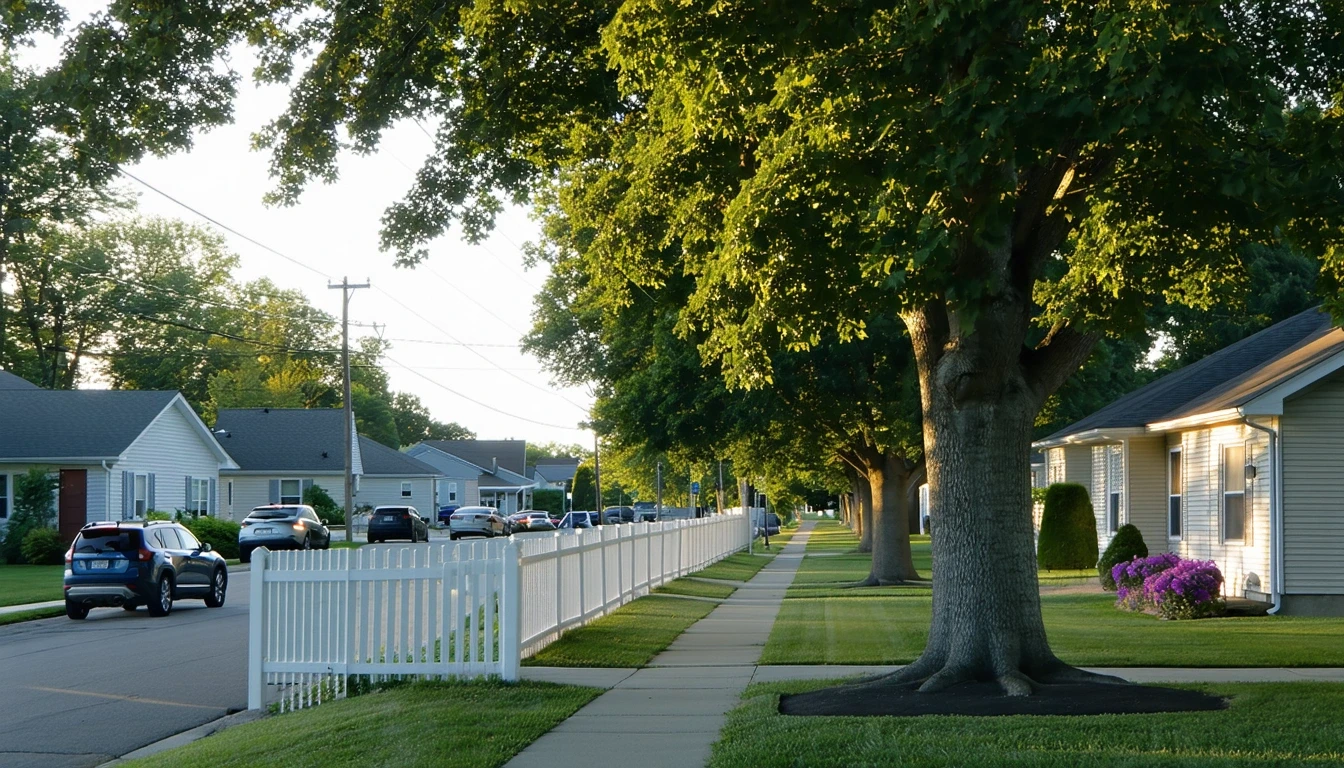
Liberty and Kansas City offer distinct lifestyle textures that extend beyond cost structure into daily rhythm, access to amenities, and household logistics. Liberty’s suburban layout favors families seeking space, quiet, and separation between home and commercial zones. Neighborhoods feature single-family homes with yards, cul-de-sacs, and lower-density development that creates a residential-first environment. Parks and outdoor spaces exist at moderate density, with water features present, but family infrastructure—schools and playgrounds—registers as limited, meaning families may need to drive to access youth sports, extracurriculars, or specialized programs.
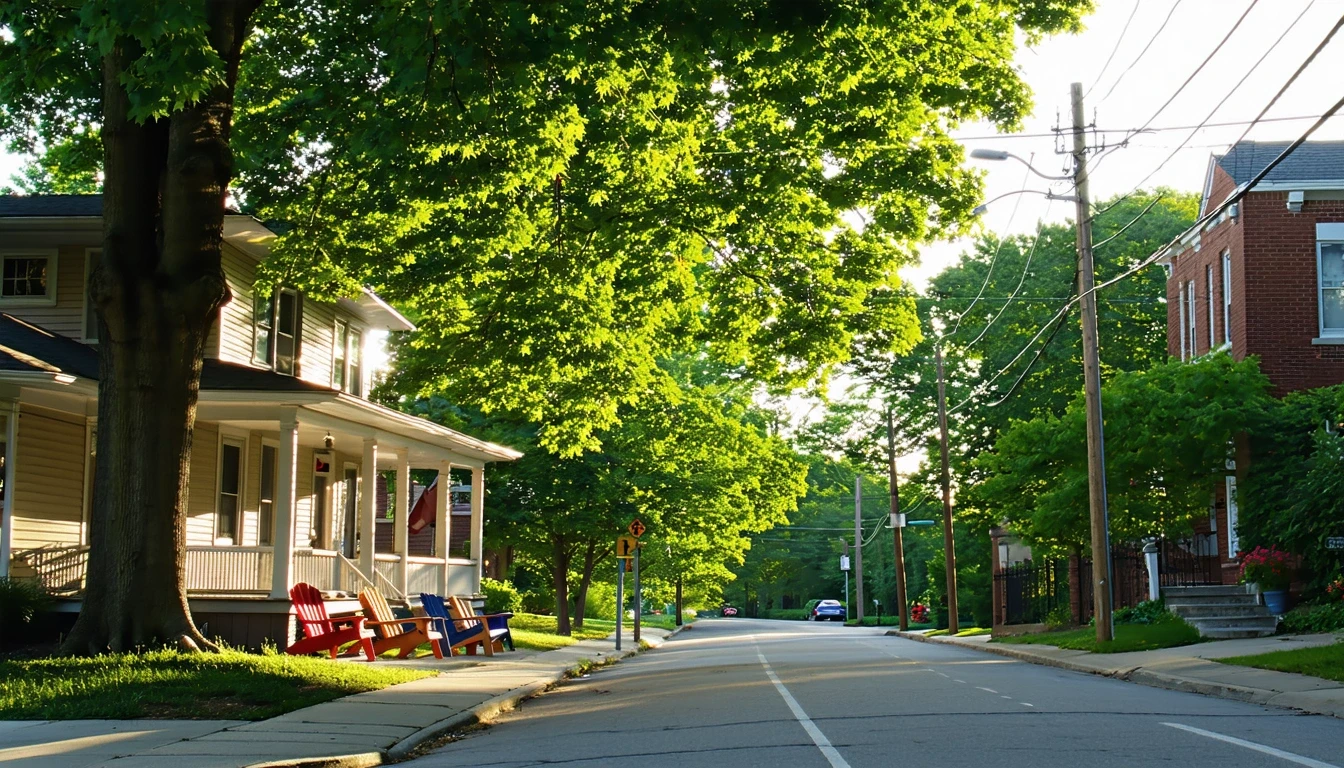
Kansas City’s urban form delivers higher density, more vertical building character, and mixed residential and commercial land use throughout the city. This structure supports walkable errands, spontaneous social activity, and shorter distances between home, work, and entertainment. Green space access reaches integrated density, with parks distributed throughout neighborhoods and water features woven into the urban fabric. Family infrastructure registers as present, with schools meeting moderate density thresholds, though playground access remains below high thresholds. For families, Kansas City’s urban core may feel less tailored to child-rearing compared to Liberty’s suburban layout, but specific neighborhoods within Kansas City offer suburban-style amenities within city limits.
Commute times remain identical at 22 minutes on average, but the texture of that commute differs. Liberty’s car-oriented infrastructure means most commutes occur on highways or arterial roads, with limited flexibility for modal shifts. Kansas City’s rail transit and walkable pockets allow some commuters to avoid driving entirely, reducing stress and parking costs for those working downtown or along transit corridors. However, Kansas City’s work-from-home percentage sits at 3.1%, lower than Liberty’s 4.3%, suggesting fewer remote work opportunities or less flexibility in the city’s job mix.
Quick facts: Liberty’s unemployment rate of 3.2% reflects a tight labor market with strong job access, while Kansas City’s 3.9% suggests slightly softer employment conditions. Liberty’s regional price parity of 87 indicates lower baseline costs compared to Kansas City’s 93, meaning the same income stretches further in Liberty for goods and services beyond housing.
Lifestyle tradeoffs also shape indirect costs. Liberty’s suburban layout increases reliance on driving, which raises fuel, maintenance, and time costs but offers more control over household schedule and privacy. Kansas City’s denser neighborhoods reduce transportation friction and increase spontaneous access to dining, culture, and entertainment, but introduce more exposure to noise, parking challenges, and higher rent for proximity to amenities. Families prioritizing outdoor space, quiet, and predictable routines fit Liberty’s structure. Single adults, couples, and households valuing walkability, transit, and urban energy align better with Kansas City’s density and mixed-use character.
Frequently Asked Questions
Is Liberty or Kansas City cheaper for renters in 2026?
Liberty offers lower median rent at $1,004 per month compared to Kansas City’s $1,131 per month, making it more affordable for renters prioritizing predictable monthly costs. However, Kansas City’s higher rent often includes better access to walkable errands, rail transit, and urban amenities, which can reduce transportation and convenience costs. Renters in Liberty benefit from newer apartment complexes and lower baseline expenses, while Kansas City renters trade higher rent for density and mobility options. The cheaper option depends on whether the household values lower fixed costs or reduced car dependency.
Where does housing cost pressure hit harder: Liberty or Kansas City?
Housing cost pressure concentrates differently in each city. Liberty’s median home value of $250,200 creates a higher entry barrier for buyers, requiring more upfront savings and income to qualify for ownership. Kansas City’s median home value of $208,900 lowers the ownership threshold but may introduce higher maintenance costs in older neighborhoods. For renters, Liberty’s lower rent reduces ongoing pressure, while Kansas City’s higher rent increases monthly obligations. Buyers feel more pressure in Liberty at the point of entry, while renters feel more pressure in Kansas City over time.
How do transportation costs compare between Liberty and Kansas City in 2026?
Transportation costs in Liberty are driven by higher gas prices at $3.83/gal and near-universal car dependency, meaning households pay more per gallon and drive more frequently for errands and commutes. Kansas City’s gas price of $3.31/gal lowers per-mile fuel costs, and the presence of rail transit allows some households to reduce or eliminate car ownership entirely. Households in Liberty face higher ongoing fuel and vehicle maintenance costs, while Kansas City households able to use transit or walk for errands experience lower transportation pressure. The difference matters most for multi-car families and long-distance commuters.
Which city fits families better: Liberty or Kansas City?
Liberty fits families seeking suburban space, lower rent, and predictable costs, with housing stock dominated by single-family homes with yards. Family infrastructure registers as limited, meaning families may need to drive for schools, playgrounds, and extracurriculars. Kansas City offers more walkable density, integrated green space, and moderate school access, but higher rent and denser housing options may feel constrained for families needing multiple bedrooms or outdoor space. Families prioritizing space and lower baseline costs fit Liberty’s structure, while those valuing walkability and urban amenities may find specific Kansas City neighborhoods more aligned with their needs.
Do utilities cost more in Liberty or Kansas City?
Utility rates remain similar, with Liberty’s electricity at 12.17¢/kWh and Kansas City’s at 11.91¢/kWh, but housing form drives real-world exposure. Liberty’s larger single-family homes create higher baseline usage for heating and cooling, amplifying seasonal swings despite newer construction and better insulation. Kansas City’s denser housing stock—apartments