
Do you really need a car to live in Liberty, MO? For most residents, the answer is yes—but the degree of dependence varies more than you might expect. Liberty sits in the Kansas City metro area, close enough to benefit from regional infrastructure but far enough out that daily mobility leans heavily on personal vehicles. Understanding how people actually get around here, and where the exceptions lie, is essential before committing to a lease, a mortgage, or a job offer.
How People Get Around Liberty
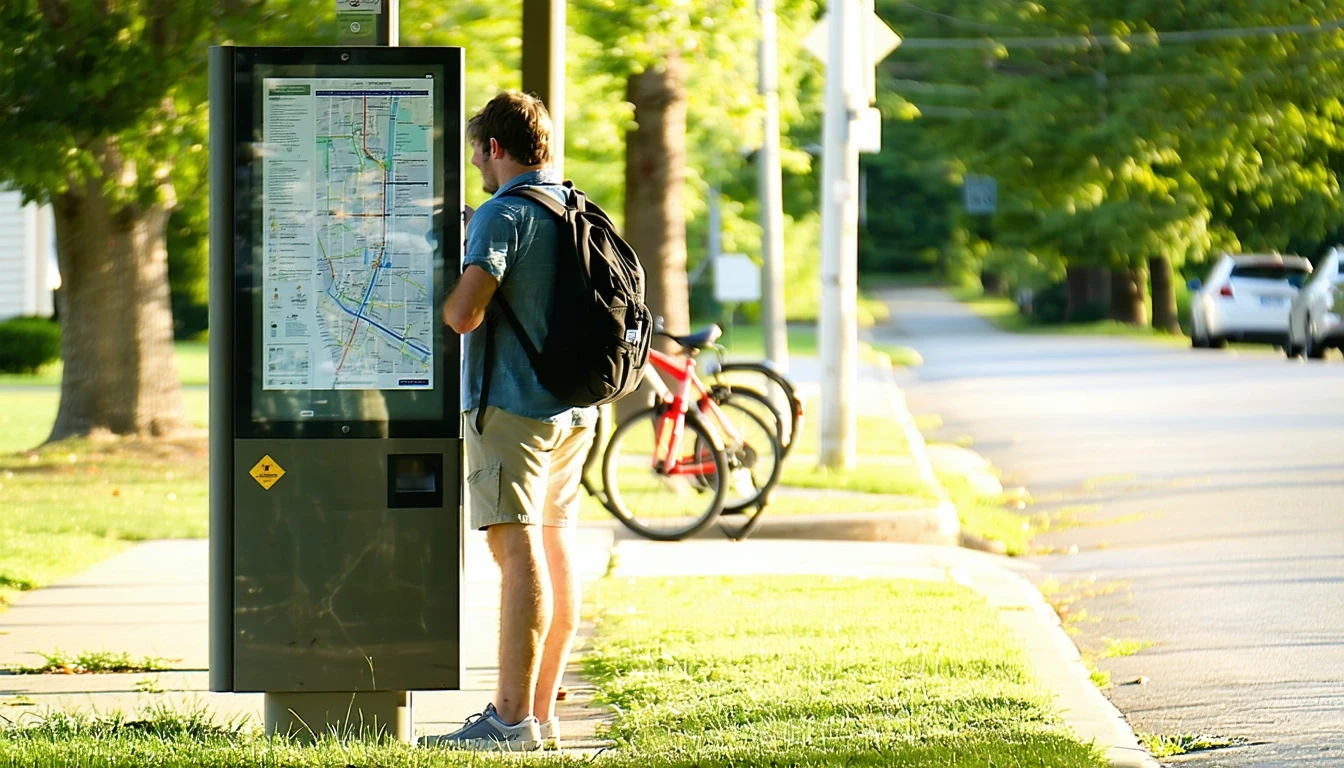
Liberty’s transportation landscape reflects its role as a suburban city with a historic downtown core surrounded by residential neighborhoods and commercial corridors. The dominant mobility pattern is car-first: most households own at least one vehicle, and driving is the default for errands, commuting, and social trips. But Liberty isn’t uniformly car-dependent. Certain areas—particularly near the historic downtown and along established corridors—offer pedestrian infrastructure that supports walking for some daily tasks. The pedestrian-to-road ratio in these pockets exceeds typical suburban thresholds, meaning sidewalks, crosswalks, and pedestrian pathways are present and functional, not decorative.
What newcomers often misunderstand is that Liberty’s walkability is localized, not citywide. You can live in a neighborhood where walking to a coffee shop or grocery store is realistic, but that same neighborhood may still require a car to reach work, school, or healthcare. The city’s layout favors corridors: food and grocery options cluster along main roads rather than distributing evenly across residential zones. This means access depends heavily on where you live, not just whether you live in Liberty.
Public Transit Availability in Liberty
Public transit in Liberty is limited. The city does not operate its own transit system, and regional service from the Kansas City metro area extends only selectively into Clay County. Residents may encounter options such as RideKC or regional bus routes, though coverage is sparse and oriented primarily toward commuters heading into Kansas City rather than those moving within Liberty itself. Transit works best for residents living near major corridors with direct connections to employment centers in the metro core. It falls short for those in peripheral neighborhoods, for trips during off-peak hours, and for errands that require multiple stops or lateral movement across the city.
If you’re evaluating Liberty based on transit access, assume that public transportation will serve as a supplement, not a replacement, for car ownership. The infrastructure exists in principle, but the practical coverage and frequency make it difficult to rely on exclusively unless your commute and daily routine align closely with existing routes.
Driving & Car Dependence Reality
Driving in Liberty is straightforward. Parking is abundant, traffic congestion is rare compared to urban cores, and the road network supports flexible routing. For most households, owning a car isn’t just convenient—it’s necessary. The city’s development pattern spreads residential, commercial, and employment zones across a wide area, and the distance between them makes walking or biking impractical for many trips. Even in neighborhoods with good pedestrian infrastructure, a car is often required to reach workplaces, medical facilities, or schools outside the immediate area.
Car dependence here isn’t a failure of planning; it’s a structural feature of suburban geography. Liberty offers space, lower-density housing, and proximity to both rural and metro amenities, but those benefits come with the expectation that residents will drive. The tradeoff is predictability: you control your schedule, your route, and your flexibility in a way that transit-dependent living rarely allows.
Commuting Patterns & Daily Mobility
Commuting in Liberty varies by destination. The average commute is 22 minutes, which reflects a mix of local workers, reverse commuters, and those heading into Kansas City. About 30.5% of workers face longer commutes, often because they’re traveling to employment centers in the broader metro area rather than staying within Liberty or Clay County. Only 4.3% of workers work from home, meaning the vast majority of residents are moving regularly for work.
Daily mobility in Liberty often involves multi-stop trips: dropping kids at school, commuting to work, stopping for groceries on the way home. The city’s corridor-clustered layout means that errands can be batched efficiently if you’re driving, but they become time-intensive if you’re trying to walk or rely on transit. Proximity to major roads and commercial zones reduces friction for car owners; distance from those corridors increases it for everyone else.
Who Transit Works For — and Who It Doesn’t
Transit in Liberty works best for a narrow group: renters or homeowners living near major corridors with direct access to Kansas City employment centers, who have predictable schedules and limited need for lateral trips within Liberty. If your job is downtown Kansas City, your housing is near a bus route, and your errands are walkable or car-free, transit can function as a primary mode.
Transit doesn’t work well for families with school-age children, households with multiple jobs or irregular schedules, or anyone living in peripheral neighborhoods. It also doesn’t work for residents whose daily routine requires moving across Liberty rather than in and out of it. The difference isn’t income or preference—it’s geography and routine structure. Liberty’s transit infrastructure serves commuters more effectively than it serves residents managing complex household logistics.
Transportation Tradeoffs in Liberty
Choosing between transit and driving in Liberty isn’t about cost alone—it’s about control, predictability, and time. Driving offers flexibility: you can leave when you want, stop where you need to, and adjust your route in real time. You’re insulated from service changes, weather delays, and coverage gaps. But you’re also exposed to fuel price volatility, maintenance costs, insurance, and the ongoing responsibility of vehicle ownership.
Transit, where it exists, offers predictability in a different sense: fixed costs, no parking concerns, and freedom from vehicle upkeep. But it also imposes constraints on timing, routing, and trip complexity. In Liberty, those constraints are significant enough that most households treat transit as a backup or supplement rather than a foundation.
The real tradeoff isn’t transit versus driving—it’s proximity versus space. Living near Liberty’s walkable core or along a well-served corridor reduces car dependence and increases access to errands and transit. Living farther out increases space, privacy, and housing options but makes the car non-negotiable.
FAQs About Transportation in Liberty (2026)
Is public transit usable for daily commuting in Liberty?
Public transit is usable for some commuters, particularly those traveling to Kansas City employment centers from locations near major corridors. For daily trips within Liberty or to peripheral zones, transit coverage is too limited to serve as a primary option.
Do most people in Liberty rely on a car?
Yes. The vast majority of Liberty residents own and use a car for daily mobility. The city’s layout, commute patterns, and limited transit coverage make car ownership the default for most households.
Which areas of Liberty are easiest to live in without a car?
Areas near the historic downtown and along established commercial corridors offer the best combination of pedestrian infrastructure, walkable errands, and proximity to regional transit routes. Even in these areas, however, a car is often necessary for work, healthcare, or trips outside the immediate neighborhood.
How does commuting in Liberty compare to nearby cities?
Liberty’s average commute time is moderate, and traffic congestion is light compared to denser parts of the Kansas City metro. Commuters heading into the metro core face longer trips, while those working locally benefit from shorter, more predictable travel times.
Can you bike for transportation in Liberty?
Biking infrastructure exists in some pockets, with bike-to-road ratios in the medium range. Cycling is viable for short trips in areas with dedicated infrastructure, but it’s not a practical primary mode for most residents due to distance, weather, and limited connectivity across the city.
How Transportation Fits Into the Cost of Living in Liberty
Transportation in Liberty isn’t just a line item—it’s a structural factor that shapes where you can live, how you spend your time, and what tradeoffs you’re willing to accept. Monthly Spending in Liberty: The Real Pressure Points provides numeric context for how transportation costs fit into household budgets, but the decision framework starts here: understanding what mobility options exist, who they serve, and how they interact with housing, work, and daily routines.
If you’re moving to Liberty, assume you’ll need a car unless your housing, job, and daily errands align closely with the limited transit and walkable zones. That assumption isn’t pessimistic—it’s realistic. Liberty offers space, proximity to the Kansas City metro, and a lower-pressure environment than urban cores, but those benefits come with the expectation that you’ll drive. The households that thrive here are the ones who understand that tradeoff before they arrive.
How this article was built: In addition to public economic data, this article incorporates location-based experiential signals derived from anonymized geographic patterns—such as access density, walkability, and land-use mix—to reflect how day-to-day living actually feels in Liberty, MO.