
Is Liberty the Kind of Place You Grow Roots—or Just Pass Through?
Liberty sits in that interesting middle ground: close enough to Kansas City to feel connected, far enough out to offer breathing room and a slower pace. It’s a city that attracts people looking for suburban comfort without complete isolation—but it’s also a place where the tradeoffs show up quickly. The vibe here isn’t about urban energy or small-town charm in the traditional sense. It’s about access and compromise: families who want good schools and quiet streets, commuters who need metro proximity without metro prices, and residents willing to drive for convenience in exchange for space and affordability.
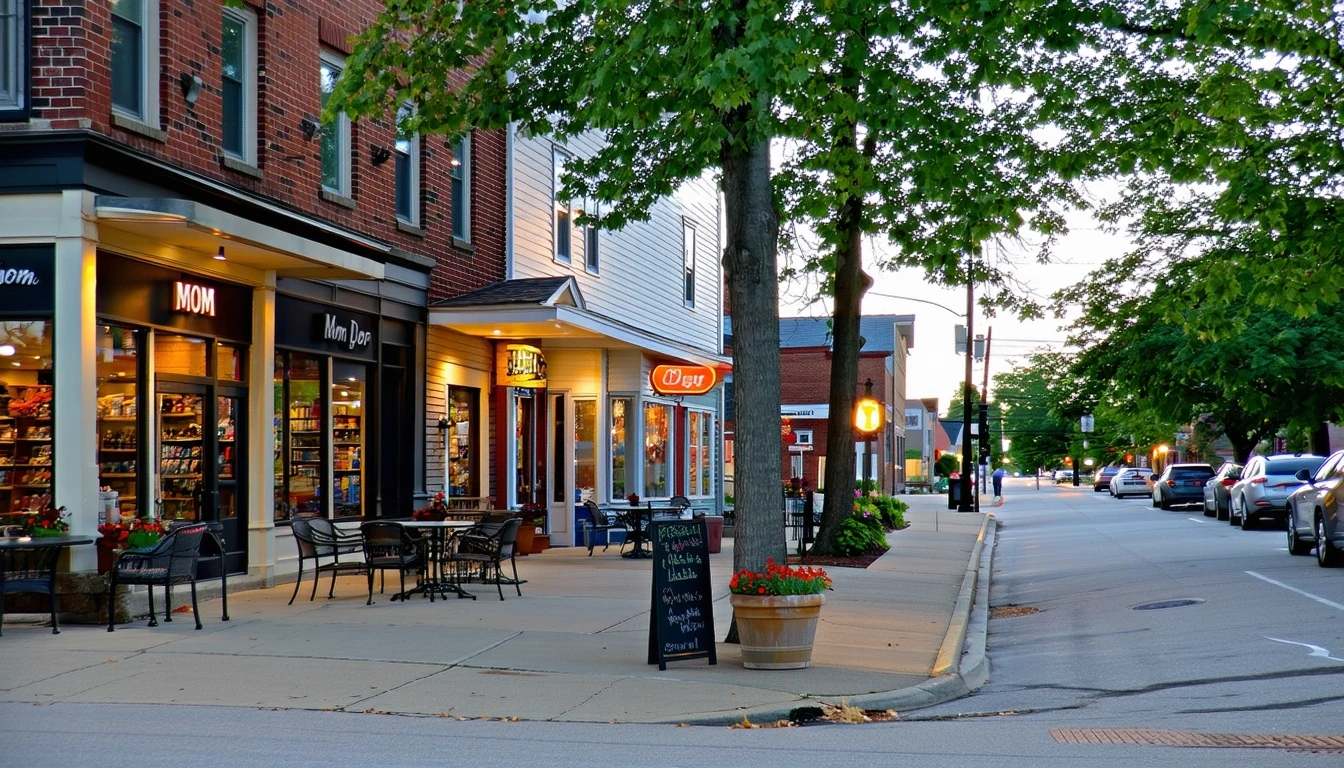
What keeps coming up in local conversation is this tension: Liberty feels like it should have more walkable texture and denser family infrastructure than it does. The bones are there—pedestrian-friendly pockets, mixed land use, water features woven into neighborhoods—but day-to-day errands still cluster along commercial corridors, and getting around without a car remains a challenge. People who thrive here tend to be comfortable with that structure. People who struggle often expected something different.
The Emotional Landscape of Liberty
Liberty’s structure reveals itself in how people move through their days. The city has higher pedestrian-to-road ratios than many suburban peers, and there are genuine walkable pockets where sidewalks, parks, and mixed-use areas create moments of connectivity. But food and grocery access concentrates along specific corridors rather than spreading evenly across neighborhoods, which means most households still rely on the car for weekly routines. Cycling infrastructure exists in moderate doses—enough to notice, not enough to depend on.
For families, the picture is mixed. School and playground density fall below what many expect in a city of this size, and while parks are present with pleasant water features, the overall family infrastructure feels thinner than the suburban label might suggest. Healthcare access is local and routine—clinics and pharmacies are available—but there’s no hospital within city limits, which shapes decisions around medical planning and emergency readiness.
The building character is varied: not uniformly low-rise, not notably vertical, but somewhere in between, with both residential and commercial land use woven together in ways that create visual diversity without dense urban texture. It’s a landscape that rewards people who appreciate suburban scale but want some relief from pure car dependency.
What People Talk About Online
In Liberty-focused Facebook groups and regional subreddit threads, conversation tends to circle around a few recurring themes: growth, convenience, and identity. There’s pride in the city’s proximity to Kansas City and frustration when that proximity doesn’t translate into the amenities people expect. Discussions about traffic, development, and where to find good food come up often—not as crises, but as ongoing negotiations.
“It’s nice here, but you have to know what you’re getting. If you want walkable neighborhoods and corner cafes, this isn’t it. If you want a yard and a short drive to the city, it works.”
“I love that we’re close to everything without being in everything. But I do wish there were more local spots that didn’t require getting in the car.”
“Liberty feels like it’s still figuring out what it wants to be—suburban bedroom community or a place with its own identity. Right now it’s a little bit of both, and that can feel uneven.”
The tone isn’t angry or disillusioned—it’s pragmatic. People recognize the tradeoffs and talk about them openly. There’s less boosterism than you’d find in smaller towns, and less cynicism than you’d hear in denser metros. It’s a vibe of managed expectations.
How Local Coverage Frames the City
Local news and community coverage in Liberty tends to focus on growth, infrastructure, and the balancing act between preserving suburban character and accommodating change. Headlines and story themes reflect ongoing conversation rather than dramatic turning points:
- “New Retail and Dining Options Arrive Along Commercial Corridors”
- “Residents Weigh Convenience Against Quiet in Development Debates”
- “Liberty’s Role in the Metro: Bedroom Community or Standalone Hub?”
- “Families Drawn to Space and Affordability, But Seek More Local Amenities”
- “Balancing Growth and Infrastructure: What Comes Next?”
The framing is rarely celebratory or alarmist. Instead, it reflects a city in transition—one where growth is expected but not always welcomed uniformly, and where residents are actively negotiating what kind of place Liberty should become. The tone suggests a community that’s self-aware about its limitations and protective of what works.
Review-Based Public Perception
On platforms like Google Reviews, Yelp, and Nextdoor-style community boards, Liberty earns a mix of appreciation and mild critique. The praise tends to focus on affordability, safety, and proximity to Kansas City. The complaints center on limited walkability, sparse local dining and entertainment, and the need to drive for most errands.
People who moved here from denser metros often express surprise at how car-dependent daily life feels, even in neighborhoods with sidewalks and parks. People who moved from more rural areas tend to appreciate the balance: enough infrastructure to feel connected, enough space to feel comfortable.
Newer planned neighborhoods get positive marks for upkeep and amenities, but some residents note they can feel isolated or generic. Older pockets closer to the historic downtown area get credit for character and walkability, but availability is limited and the texture doesn’t extend citywide.
Expectation matching is the recurring theme. Liberty delivers well on suburban comfort, affordability, and metro access. It underdelivers on walkable urbanism, dense family infrastructure, and hyperlocal convenience. Residents who aligned their expectations with that reality tend to feel satisfied. Those who didn’t often feel restless.
How Liberty Compares to Nearby Cities
| Dimension | Liberty, MO | Kansas City, MO | Gladstone, MO |
|---|---|---|---|
| Overall Vibe | Suburban comfort with metro proximity; walkable pockets but car-dependent overall | Urban energy, dense amenities, walkable districts, higher cost and complexity | Quiet suburban feel, family-oriented, fewer walkable areas, similar car dependency |
| Errands & Accessibility | Corridor-clustered; requires planning and driving for most weekly needs | Broadly accessible; many neighborhoods support car-free errands | Sparse; heavily car-dependent with limited local retail density |
| Family Infrastructure | Limited school and playground density; parks present but amenities thin | Strong infrastructure across many districts; varied by neighborhood | Moderate; family-friendly reputation but infrastructure less dense than expected |
| Commute & Mobility | Short average commute; walkable pockets exist but transit minimal | Varied commute; transit options available; walkability high in core areas | Similar commute profile; limited transit; car-dependent for most trips |
Liberty occupies a middle position: more accessible and textured than Gladstone, less dense and urban than Kansas City. If you want the metro within reach but prefer suburban scale and lower [housing pressure](/liberty-mo/housing-costs/), Liberty makes sense. If you need walkable urbanism or robust transit, Kansas City offers more. If you want maximum quiet and don’t mind driving for everything, Gladstone leans further in that direction.
The choice isn’t about which city is “better”—it’s about which tradeoffs align with how you actually live. Liberty works for people who value proximity and affordability over density and walkability. It frustrates people who assumed suburban would still mean hyperlocal convenience.
What Locals Are Saying
“We moved here from Kansas City for the space and the schools. It’s been great for our kids, but I do miss being able to walk to dinner or grab coffee without getting in the car. Everything here is a drive.”
“Liberty is perfect if you work in the metro but want to come home to something quieter. The commute is manageable, and the cost of living is way more reasonable. You just have to accept that you’re not in the city anymore.”
“I thought there’d be more parks and playgrounds given how many families live here. There are some, but they’re spread out. It’s not like every neighborhood has one around the corner.”
“The walkable areas are nice when you’re in them, but they’re small. Most of the time you’re still driving to the grocery store, the gym, the pharmacy. It’s suburban life, just with a few pockets that feel different.”
“I like that Liberty has its own identity and isn’t just a bedroom community. There’s a downtown area, local events, a sense of place. But it’s not a walkable city, and I think people sometimes expect that.”
“If you’re retired and want quiet, affordability, and access to Kansas City when you need it, Liberty is solid. Just know that you’ll be driving most places, and healthcare means going to the metro for anything serious.”
“It’s a good place to raise kids if you’re okay with driving them everywhere. The infrastructure just isn’t dense enough to walk to school or the park for most families.”
Does Liberty Feel Like a Good Fit?
Liberty works best for people who want suburban breathing room without total disconnection from metro resources. It fits families and commuters who prioritize affordability, space, and proximity to Kansas City over walkability and hyperlocal amenities. It rewards residents who are comfortable with car-dependent routines and who value the tradeoff of driving for errands in exchange for lower costs and quieter streets.
It tends to frustrate people who expected denser family infrastructure, walkable daily errands, or transit viability. The city has more pedestrian texture than many suburban peers, but that texture exists in pockets rather than spreading evenly across neighborhoods. Errands cluster along corridors, schools and playgrounds are sparse relative to population, and getting around without a car remains difficult.
The emotional profile of Liberty is pragmatic rather than passionate. People appreciate what it offers—affordability, metro access, suburban comfort—but they’re also clear-eyed about what it doesn’t. The vibe isn’t about falling in love with the place; it’s about recognizing whether the structure matches how you actually live.
If you’re trying to decide whether Liberty feels right, start by asking what you’re willing to trade. If you can give up walkable errands and dense amenities for space and proximity, the fit is strong. If those things matter more than affordability or suburban scale, the friction will show up quickly. Understanding [monthly expenses](/liberty-mo/monthly-budget/) and [what drives day-to-day costs](/liberty-mo/lifestyle-requirements/) can help clarify whether the financial and logistical tradeoffs align with your priorities.
How this article was built: In addition to public economic data, this article incorporates location-based experiential signals derived from anonymized geographic patterns—such as access density, walkability, and land-use mix—to reflect how day-to-day living actually feels in Liberty, MO.
The perspectives shown reflect commonly expressed local sentiment and recurring themes in public discussion, rather than individual accounts.