
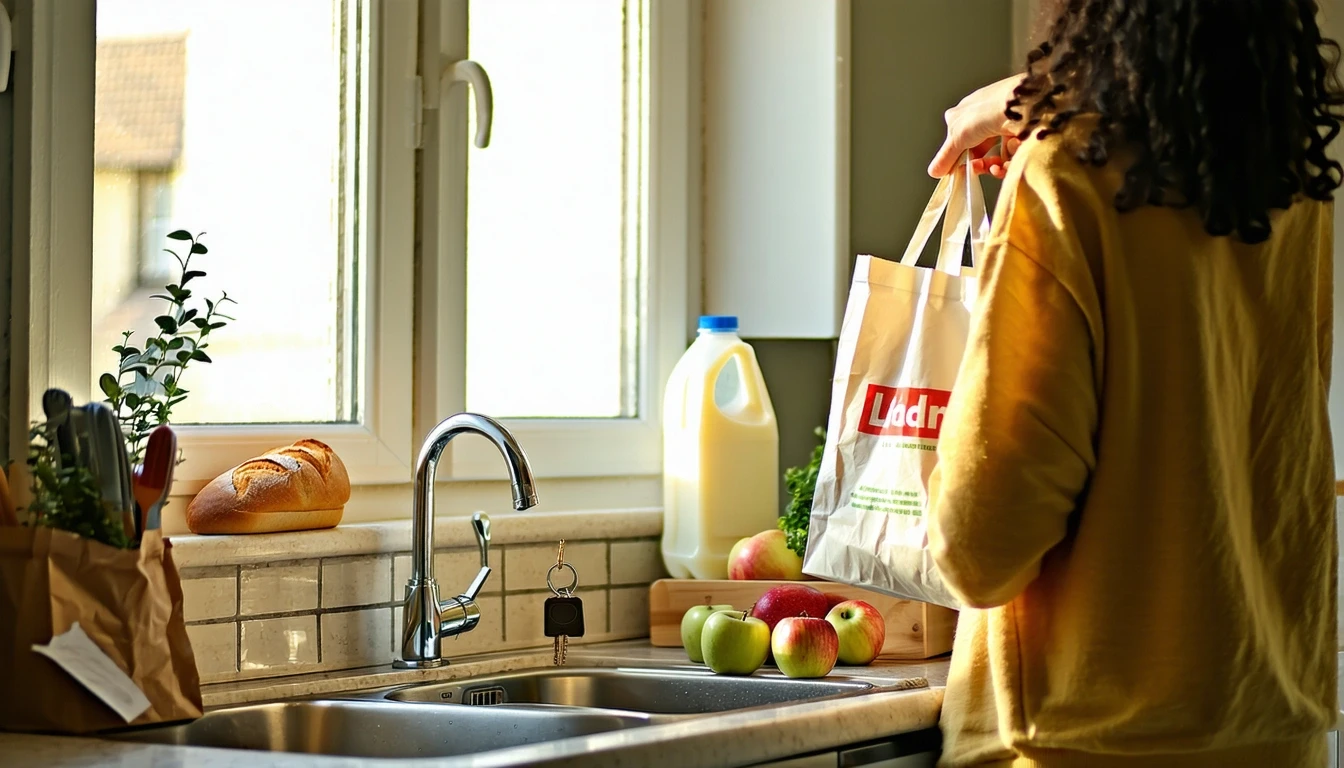
How Grocery Costs Feel in Liberty
Grocery shopping in Liberty, MO feels noticeably lighter on the wallet than in many other metro areas, thanks to a regional price environment that runs about 13% below the national baseline (RPP index: 87). That discount shows up most clearly in staples—bread, milk, eggs, chicken—where families buying in volume see the biggest relief. For a household earning Liberty’s median income of $91,512 per year, grocery costs rarely dominate the budget the way housing or childcare might, but the experience still varies widely depending on household size, store choice, and how often you’re filling a cart for four versus grabbing essentials for one.
Singles and couples often don’t notice the regional price advantage as much because their baseline grocery spend is already low; a few dollars saved per trip doesn’t move the needle. Families with kids, on the other hand, feel the difference every week. When you’re buying multiple gallons of milk, several pounds of chicken, and a dozen eggs at a time, that 13% discount compounds quickly. The pressure isn’t about whether you can afford groceries in Liberty—it’s about whether you’re shopping strategically enough to take advantage of the lower price floor, or whether convenience and habit are quietly inflating your costs.
Liberty’s grocery landscape is car-dependent and corridor-clustered. Most residents drive to a primary store along commercial strips rather than walking to a neighborhood grocer, which means store choice is wide open but requires intentionality. You’re not locked into the closest option, but you also won’t stumble into savings by accident. The flexibility is real, but it rewards planning.
Grocery Price Signals (Illustrative)
These prices illustrate how staple items tend to compare locally—not a full shopping list. They’re derived estimates based on Liberty’s regional price level, useful for understanding relative cost positioning but not precise enough to simulate a checkout total.
| Item | Illustrative Price |
|---|---|
| Bread | $1.57/lb |
| Milk | $3.54/half-gallon |
| Eggs | $2.04/dozen |
| Chicken | $1.77/lb |
| Ground Beef | $5.83/lb |
| Cheese | $4.16/lb |
| Rice | $0.92/lb |
Derived estimate based on national baseline adjusted by regional price parity; not an observed local price.
What stands out here is the consistency of the discount. Protein, dairy, and pantry staples all sit comfortably below national norms, which means families building meals from scratch—chicken and rice, ground beef tacos, scrambled eggs and toast—are working with a structural advantage. The savings aren’t dramatic on any single item, but they’re reliable across categories, and that reliability matters more than occasional deep discounts when you’re feeding a household week after week.
For singles or couples, these prices might feel unremarkable. A dozen eggs at $2.04 versus $2.50 elsewhere doesn’t change your week. But for a family of four buying three dozen eggs, five pounds of chicken, and two gallons of milk in a single trip, the math shifts. The regional discount becomes a meaningful buffer, especially when paired with intentional store-tier choices.
Store Choice & Price Sensitivity
Grocery price pressure in Liberty varies more by store tier than by any single “average” experience. The city’s car-dependent, corridor-clustered layout means you’re not stuck with the nearest option—you can choose discount, mid-tier, or premium stores based on what you’re optimizing for. Discount grocers anchor the low end, offering no-frills staples, limited selection, and store brands that push prices even lower than the regional baseline. Mid-tier chains offer broader selection, name brands, and prepared foods at moderate markups. Premium grocers add organic sections, specialty items, and convenience services, but you’re paying for curation and atmosphere as much as food.
For families, discount stores are where the regional price advantage compounds hardest. Buying bulk staples at already-low baseline prices, then layering on store-brand discounts, creates the widest margin between Liberty and higher-cost metros. Singles and couples, especially those with flexible schedules, often split their shopping: discount stores for pantry staples, mid-tier for fresh produce and proteins, premium for specialty items or quick trips. That hybrid approach works well in Liberty because the car-dependent layout doesn’t penalize multiple stops the way a walkable grid might.
Store tier choice also determines how much you feel seasonal price swings. Discount grocers tend to hold prices steadier on staples, while premium stores pass through more volatility on fresh and specialty items. If your household leans heavily on fresh produce, organic dairy, or prepared meals, you’ll notice price fluctuations more than a family buying rice, beans, chicken, and frozen vegetables in bulk. Liberty’s grocery infrastructure gives you the tools to manage that exposure, but only if you’re willing to drive to the right store for the right category.
What Drives Grocery Pressure Here
Grocery pressure in Liberty is shaped more by household composition and shopping habits than by the city’s baseline price level. The regional discount (RPP 87) creates a structural cushion, but it doesn’t eliminate the gap between a single person buying for one and a family of four stocking a pantry for the week. Volume is the primary driver: families buying multiples of everything—milk, bread, eggs, chicken—feel both the relief of lower prices and the strain of sheer quantity. Singles, meanwhile, often face higher per-unit costs because they can’t justify bulk purchases, and smaller package sizes carry premiums that offset some of the regional advantage.
Income plays a moderating role. Liberty’s median household income of $91,512 provides enough breathing room that grocery costs rarely become a crisis, but they still show up as a recurring pressure point for families with kids, especially those managing childcare, activities, and irregular schedules. Higher-income households can absorb premium-store markups without adjusting behavior, while moderate-income families feel the difference between discount and mid-tier pricing more acutely. The regional discount helps, but it doesn’t flatten the experience across income bands.
Seasonal variability exists but tends to be muted in Liberty compared to higher-cost metros. Fresh produce prices fluctuate with national supply patterns, but staples like dairy, eggs, and meat hold relatively steady. Families relying heavily on fresh, seasonal items will notice swings in summer versus winter, but those buying frozen vegetables, shelf-stable proteins, and pantry staples see less volatility. The car-dependent grocery landscape also means you can chase sales across stores without much friction, which gives you more control over seasonal exposure than you’d have in a city where you’re locked into walking distance from a single grocer.
Practical Ways People Manage Grocery Costs
The most effective strategy in Liberty is matching store tier to category. Discount grocers for pantry staples and frozen basics, mid-tier stores for fresh proteins and produce, premium stores for specialty items or last-minute needs. That approach requires multiple stops, but Liberty’s car-dependent layout makes it practical—most households already drive to a primary store, so adding a second stop for bulk staples or sale items doesn’t add much friction. The key is resisting the convenience trap: defaulting to the closest or most familiar store when a 10-minute detour would cut costs on high-volume purchases.
Buying in bulk works well for families but requires upfront capital and storage space. Households with freezer capacity can stock up on chicken, ground beef, and frozen vegetables when prices dip, smoothing out weekly volatility. Singles and couples often can’t justify bulk purchases on perishables, but they can still benefit from buying larger quantities of shelf-stable items—rice, pasta, canned goods—especially at discount stores where per-unit costs drop sharply at higher volumes. The regional price discount amplifies the value of bulk buying because you’re starting from a lower baseline.
Meal planning reduces waste and prevents expensive fallback purchases. Families that plan a week’s worth of dinners around staple proteins and seasonal produce spend less than those who shop reactively or rely on prepared foods. The discipline isn’t about perfection—it’s about having a rough plan that keeps you out of the premium-store grab-and-go section on a Tuesday night. Liberty’s grocery infrastructure rewards intentionality; the savings are there, but they don’t come automatically.
Groceries vs Eating Out (Directional)
Liberty’s lower grocery prices create a wider gap between cooking at home and eating out than you’d find in higher-cost metros. When staples are cheap and accessible, the cost of assembling a meal at home—chicken, rice, vegetables—stays well below the cost of even casual dining. That gap matters most for families, where feeding four people at a restaurant can easily cost what a week’s worth of home-cooked dinners would. Singles and couples feel the tradeoff differently; the convenience of eating out competes more directly with the effort of cooking for one or two, especially when leftovers don’t scale well.
The decision isn’t purely financial. Eating out saves time and eliminates cleanup, which has real value for dual-income households or parents managing tight schedules. But in Liberty, where grocery costs run below national norms, the financial penalty for frequent dining out is steeper than in cities where cooking at home barely saves money. Families that eat out twice a week instead of four times can redirect meaningful dollars toward other priorities without feeling deprived. The regional price advantage doesn’t make eating out unaffordable—it just makes cooking at home more rewarding.
Households that split the difference—cooking staple dinners at home, eating out for weekend meals or special occasions—tend to feel the least pressure. That hybrid approach captures most of the financial benefit of Liberty’s low grocery costs while preserving flexibility and convenience. The key is recognizing that the tradeoff isn’t binary; even small shifts toward home cooking compound quickly when baseline grocery prices are already low.
FAQs About Grocery Costs in Liberty (2026)
Is it cheaper to shop in bulk in Liberty? Yes, especially for families buying staples like rice, chicken, and frozen vegetables. Liberty’s regional price discount amplifies the per-unit savings you get from bulk purchases, but you need upfront capital and freezer space to make it work consistently.
Which stores in Liberty are best for low prices? Discount-tier grocers offer the lowest baseline prices on staples and store brands, while mid-tier chains provide broader selection at moderate markups. Premium stores charge more for organic, specialty, and prepared items, but the car-dependent layout lets you mix and match stores by category without much friction.
How much more do organic items cost in Liberty? Organic premiums exist but vary by store tier and category. Expect to pay noticeably more for organic dairy, produce, and meat at premium grocers, while mid-tier stores often carry limited organic selections at smaller markups. The regional price discount doesn’t extend as clearly to organic items, so households prioritizing organic will feel more pressure than those buying conventional staples.
How do grocery costs for two adults in Liberty tend to compare to nearby cities? Liberty’s regional price level runs about 13% below the national baseline, which translates to moderate savings on staples compared to higher-cost metros in the Kansas City area. Couples shopping strategically at discount or mid-tier stores will notice the difference over time, though the advantage is less dramatic than for larger households buying in volume.
How do households in Liberty think about grocery spending when cooking at home? Most families view cooking at home as a reliable way to control costs, especially given Liberty’s below-average grocery prices. The regional discount makes staple-based meals—chicken and rice, ground beef tacos, pasta with vegetables—noticeably cheaper than eating out, which shifts the tradeoff in favor of home cooking for households managing tight schedules or multiple kids.
Does Liberty’s car-dependent layout affect grocery costs? Indirectly, yes. The corridor-clustered grocery access means you’re not locked into the nearest store, which gives you flexibility to chase sales or switch tiers by category. But it also means every grocery trip requires a car, and households without reliable transportation face fewer options and less ability to optimize across stores.
Are there seasonal patterns in grocery prices in Liberty? Fresh produce prices fluctuate with national supply patterns, but staples like dairy, eggs, and meat hold relatively steady year-round. Families relying heavily on fresh, seasonal items will notice swings, but those buying frozen vegetables, shelf-stable proteins, and pantry basics see less volatility. Liberty’s regional price discount doesn’t eliminate seasonal variation, but it does soften the peaks.
How Groceries Fit Into the Cost of Living in Liberty
Groceries in Liberty occupy a middle position in the household budget—less dominant than housing, less volatile than utilities, but still a recurring pressure point that responds to intentional management. The regional price discount (RPP 87) creates a structural advantage, but it doesn’t eliminate the need for strategy. Families buying in volume at discount stores can keep grocery costs well below national norms, while singles or couples shopping reactively at premium grocers may barely notice the regional savings. The difference isn’t the city’s baseline prices; it’s how you engage with the grocery infrastructure Liberty provides.
For a fuller picture of how groceries interact with housing, transportation, and utilities—and where your household’s total spending is likely to land—see Monthly Spending in Liberty: The Real Pressure Points. That article breaks down the cost structure across categories and explains which tradeoffs matter most for different household types. Groceries are one lever among many, but in Liberty, it’s a lever that rewards planning more than most.
The confidence you should take away: Liberty’s grocery costs are manageable, predictable, and responsive to effort. The regional discount is real, the store-tier flexibility is wide, and the car-dependent layout gives you control over where and how you shop. The pressure you feel will depend more on your household size and shopping habits than on the city’s price level. If you’re willing to plan, compare, and drive to the right store for the right category, Liberty’s grocery landscape works in your favor.
How this article was built: In addition to public economic data, this article incorporates location-based experiential signals derived from anonymized geographic patterns—such as access density, walkability, and land-use mix—to reflect how day-to-day living actually feels in Liberty, MO.