
Newington sits in the Hartford metro area with a housing market shaped by its proximity to regional employment centers, established residential neighborhoods, and a cost structure that runs about 10% above the national baseline. The median home value of $266,200 and median rent of $1,401 per month define the entry points, but the real decision hinges on how housing costs behave over time—not just what they cost today. For newcomers evaluating whether to rent or buy, the distinction matters less as a monthly payment comparison and more as a question of exposure: which costs you can predict, which you can’t, and how Newington’s infrastructure and layout change the calculus.
What people often misunderstand about Newington is that its housing market doesn’t follow a single pattern. The city exhibits walkable pockets where pedestrian infrastructure density is high, mixed with areas that lean more car-dependent. Land use mixes residential and commercial zones, and building heights vary from low-rise to medium-density structures. This creates neighborhoods with different cost textures—some where proximity to transit and errands reduces ancillary expenses, others where driving and planning become non-negotiable. The result is a housing market where location within Newington determines not just price, but the entire cost experience of living there.
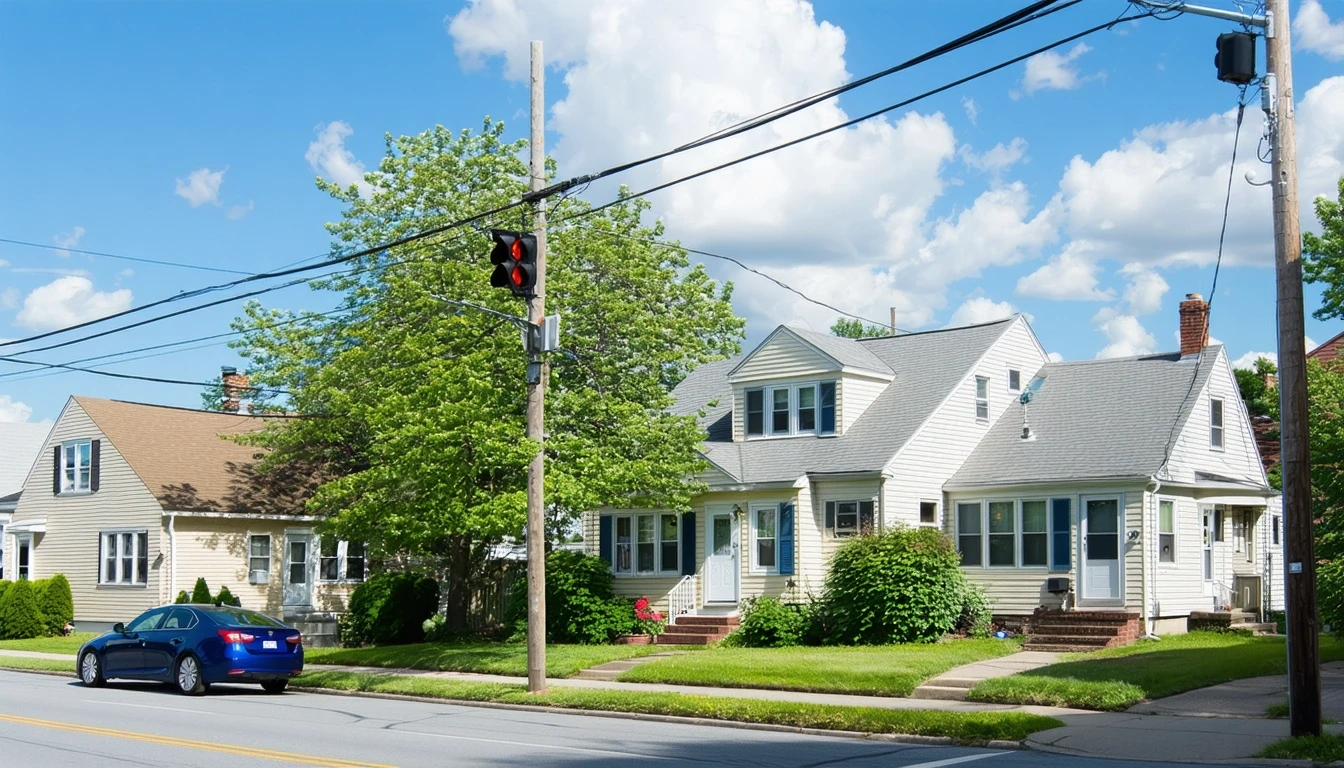
The Housing Market in Newington Today
Newington’s housing market reflects its role as a suburban community within the Hartford metro, where steady employment (unemployment at 3.8%) supports demand without the speculative pressure seen in coastal metros. The median home value of $266,200 positions ownership within reach for households earning near the median income of $100,239 per year, but the regional price parity index of 110 signals that everyday costs—groceries, services, utilities—run persistently higher than the national average. This means housing affordability isn’t just about the purchase price or rent; it’s about whether the surrounding cost structure leaves enough margin for other expenses.
What distinguishes Newington from neighboring towns is its infrastructure variety. Some neighborhoods feature high pedestrian-to-road ratios, meaning sidewalks, crosswalks, and foot-friendly design are present and functional. Grocery access clusters along corridors rather than spreading evenly, so living near those routes reduces friction for daily errands. Park density is high, and water features are present, contributing to outdoor access that doesn’t require driving to enjoy. For renters and buyers alike, these factors shift the value equation—proximity to walkable pockets or transit-accessible corridors can reduce transportation and time costs, even if the rent or mortgage payment looks similar on paper.
Renting in Newington
At $1,401 per month, the median gross rent in Newington represents a significant portion of household budgets, particularly for single earners or younger households. Rental pressure here comes less from scarcity and more from the baseline cost structure—everything in Newington costs a bit more, and rent is no exception. The rental experience varies sharply depending on location within the city. Units near corridor-clustered grocery zones or within walkable pockets offer logistical advantages that reduce the need for frequent car trips, cutting down on fuel, parking, and time costs. Rentals in more car-dependent areas may list at similar prices but impose hidden costs in transportation and planning burden.
Renters should expect landlords to pass through property tax increases and utility volatility, particularly in older buildings where heating and cooling systems may be less efficient. Connecticut’s climate demands both heating through cold winters and cooling during humid summers, and electricity rates at 28.30¢/kWh are notably high. Natural gas, priced at $16.18 per MCF, provides a more stable heating option where available, but not all rental units include gas hookups. The result is that two apartments at the same rent can have very different monthly cost profiles depending on age, insulation, and utility configuration.
Owning a Home in Newington
Ownership in Newington locks in the mortgage payment but opens exposure to property taxes, maintenance, and utility costs that renters often don’t see itemized. The median home value of $266,200 translates to a mortgage that many households earning near the median income can manage, but the ongoing costs—particularly property taxes and insurance—are less predictable. Connecticut is known for relatively high property tax burdens, and while specific rates for Newington aren’t provided here, buyers should assume that annual tax bills will represent a meaningful share of ownership costs, and that those bills can rise with reassessments or municipal budget changes.
Maintenance exposure in Newington is shaped by climate. Cold winters stress heating systems, roofs, and foundations; humid summers accelerate wear on cooling equipment and siding. Homes in Newington’s mixed building stock—ranging from low-rise single-family to medium-density attached units—age differently depending on construction quality and prior upkeep. Buyers inheriting deferred maintenance face compounding costs, particularly in older neighborhoods where infrastructure like sewer lines, electrical panels, and HVAC systems may be nearing end-of-life. Ownership here rewards those who budget for replacement cycles, not just monthly payments.
Governance and regulation also matter. While HOA prevalence isn’t specified in the data, Newington’s land use mix and presence of both single-family and multi-unit housing suggest that some neighborhoods operate under association rules, others don’t. Where HOAs exist, they add predictable monthly fees but also restrict autonomy over exterior changes, landscaping, and sometimes even vehicle parking. Buyers should verify governance structures before committing, as they fundamentally alter the ownership experience.
Apartment vs House in Newington — Cost Behavior Comparison
| Expense Category | Apartment | House |
|---|---|---|
| Heating & Cooling Exposure | Moderate; shared walls reduce surface area exposed to weather, but older buildings with poor insulation face high electricity costs at 28.30¢/kWh | High; standalone structure exposes all sides to Connecticut winters and humid summers, driving sustained heating and cooling demand |
| Utility Predictability | Variable; landlord may bundle some utilities, but tenant-paid electric bills fluctuate with seasonal extremes | Fully exposed; owner pays all utilities and absorbs rate increases, seasonal spikes, and equipment inefficiency |
| Maintenance Responsibility | Landlord handles structural and system repairs; tenant risk limited to appliance failure or lease-specified responsibilities | Owner absorbs all repair and replacement costs, including HVAC, roof, foundation, and aging infrastructure common in Newington’s housing stock |
| Property Tax Exposure | Indirect; landlord passes increases through rent renewals, but tenant can relocate to avoid compounding | Direct and unavoidable; reassessments and municipal budget changes hit immediately, with no option to exit without selling |
| Transportation Costs | Lower if located in walkable pockets or near corridor-clustered grocery zones; higher if in car-dependent areas with limited bus access | Typically higher; single-family homes more common in areas requiring car ownership for errands, school access, and commuting |
Why these categories differ in Newington: The comparison above reflects Newington’s specific climate (cold winters, humid summers), its mixed housing stock (low-rise to medium-density), and its infrastructure pattern (walkable pockets and corridor-clustered errands rather than uniform walkability). Categories like “insurance” or “landscaping” were omitted because they don’t vary meaningfully by housing type in this market—both apartments and houses face similar regional cost pressures. The table isolates where Newington’s conditions create divergent cost behavior, not universal apartment-vs-house distinctions.
Utilities & Upkeep Differences
Utility exposure in Newington is shaped by Connecticut’s climate and the city’s housing age. Electricity at 28.30¢/kWh is high enough that cooling a poorly insulated house through a humid summer or heating an older apartment with baseboard electric heat becomes a dominant monthly cost. Natural gas, where available, offers more stable heating costs at $16.18 per MCF, but not all neighborhoods have gas lines, particularly in older or lower-density areas. Apartments with shared walls and smaller square footage face lower absolute usage, but tenants in older buildings with single-pane windows or inadequate insulation still see noticeable seasonal swings. Houses, especially standalone single-family structures, expose all exterior surfaces to weather, driving sustained heating and cooling demand that owners can’t avoid—only mitigate through insulation upgrades, thermostat discipline, or equipment replacement.
Maintenance differences are less about apartment-versus-house universals and more about Newington’s housing stock age and construction patterns. Older homes—common in established neighborhoods—face compounding systems replacement: furnaces, water heaters, roofs, and foundations all age on overlapping timelines. Apartments shift that risk to landlords, but tenants still experience it as service interruptions, deferred repairs, or rent increases to cover capital expenses. The presence of water features and high park density in Newington suggests some neighborhoods face stormwater management challenges, which can accelerate foundation and drainage issues in houses. Buyers should budget for sump pumps, grading corrections, and gutter maintenance as routine, not exceptional.
Rent vs Buy: Long-Term Exposure in Newington
The rent-versus-buy decision in Newington isn’t a breakeven calculation; it’s a choice between two different risk profiles. Renters face annual lease renewals that can incorporate property tax increases, insurance hikes, and landlord cost-shifting, but they retain the ability to relocate if costs become unsustainable. Owners lock in the mortgage payment but absorb every property tax reassessment, every insurance rate adjustment, and every maintenance surprise without an exit option short of selling. In Newington, where the regional price parity index runs 10% above the national baseline, both paths are expensive—the question is which volatility you can manage.
Renters in Newington benefit from flexibility, particularly in a market where walkable pockets and corridor-clustered errands create meaningful cost differences by neighborhood. A renter can move closer to bus lines or grocery corridors to reduce transportation costs; an owner who bought in a car-dependent area is locked in. But renters also face compounding exposure over time: each lease renewal incorporates the landlord’s rising costs, and there’s no equity accumulation to offset the outflow. Owners, by contrast, build equity and gain control over efficiency upgrades—better insulation, programmable thermostats, heat pump installation—that reduce long-term utility exposure. In a climate with cold winters and humid summers, those upgrades compound in value, but they require upfront capital and time to pay off.
Ownership in Newington rewards those who can absorb short-term volatility for long-term predictability. Property taxes may rise, but the mortgage doesn’t. Maintenance costs spike unpredictably, but they’re investments in asset preservation. Renters avoid those spikes but never escape the baseline cost structure, and in a market where the regional price parity index is 110, that baseline is persistently high. The fit depends on time horizon, capital reserves, and tolerance for hands-on management.
How this article was built: In addition to public economic data, this article incorporates location-based experiential signals derived from anonymized geographic patterns—such as access density, walkability, and land-use mix—to reflect how day-to-day living actually feels in Newington, CT.
FAQs About Housing Costs in Newington
Is renting or buying cheaper in Newington, CT?
Neither is universally cheaper; they impose different cost structures. Renting at $1,401/month avoids property tax and maintenance exposure but offers no equity and leaves you vulnerable to annual lease increases. Buying at a median home value of $266,200 locks the mortgage but exposes you to property taxes, insurance, and maintenance volatility. The better fit depends on time horizon, capital reserves, and whether you value flexibility or control.
How do utilities differ between apartments and houses in Newington?
Apartments with shared walls and smaller square footage use less energy in absolute terms, but older buildings with poor insulation still face high costs at 28.30¢/kWh for electricity. Houses expose all exterior surfaces to Connecticut’s cold winters and humid summers, driving sustained heating and cooling demand. Natural gas at $16.18/MCF offers more stable heating where available, but not all neighborhoods have gas lines. Utility costs in Newington are less about housing type and more about building age, insulation, and equipment efficiency.
What hidden costs should homebuyers expect in Newington?
Property taxes, home insurance, and maintenance are the primary hidden costs. Connecticut’s property tax structure means annual bills can rise with reassessments or municipal budget changes. Maintenance exposure is shaped by Newington’s climate—cold winters stress heating systems and foundations, humid summers accelerate wear on cooling equipment. Older homes in established neighborhoods may face compounding systems replacement: furnaces, roofs, water heaters, and foundations aging on overlapping timelines. Buyers should budget for replacement cycles, not just monthly mortgage payments.
Does living near walkable areas in Newington reduce housing costs?
Indirectly, yes. Newington has walkable pockets with high pedestrian-to-road ratios and corridor-clustered grocery access. Living near these areas reduces transportation costs—less fuel, less vehicle wear, fewer trips—and cuts time costs for daily errands. Two homes or apartments at similar prices can have very different total cost profiles depending on proximity to transit, grocery corridors, and parks. The housing payment may be the same, but the ancillary costs differ meaningfully.
How does Newington’s cost structure compare to other Hartford-area towns?
Newington’s regional price parity index of 110 means costs run about 10% above the national baseline, consistent with the broader Hartford metro. The median home value of $266,200 and median rent of $1,401/month position Newington in the middle tier—not the most expensive option, but not a budget alternative either. What sets Newington apart is its infrastructure variety: walkable pockets, corridor-clustered errands, and mixed land use create cost differences within the city that rival differences between towns. Location within Newington matters as much as choosing Newington over a neighboring community.
Making Housing Choices in Newington
Housing costs in Newington are shaped by the city’s position in the Hartford metro, its 10% cost premium over the national baseline, and its infrastructure variety. The median home value of $266,200 and median rent of $1,401/month define the entry points, but the real cost experience depends on where you live within Newington, how you manage utilities, and whether you rent or own. Renters gain flexibility and avoid maintenance exposure but face compounding lease increases and no equity. Owners lock predictability on the mortgage but absorb property tax volatility, maintenance surprises, and climate-driven utility costs that renters never see itemized.
The households that fit Newington best are those who can leverage its infrastructure advantages—walkable pockets, corridor-clustered grocery access, integrated park density—to reduce ancillary costs. Commuters benefit from the 21-minute average commute and bus service, though car dependency remains moderate. Families should weigh the mixed building stock and land use diversity against the lower school density and moderate playground availability. First-time buyers with capital reserves and time horizons long enough to absorb maintenance cycles will find ownership accessible; renters prioritizing flexibility or lacking upfront capital will find the rental market functional but expensive.
For a broader view of where money goes in Newington beyond housing, or to understand how monthly expenses stack up across categories, those resources provide complementary context. And for those planning a move, evaluating pods vs trucks can clarify logistics and costs before committing to a lease or purchase.