
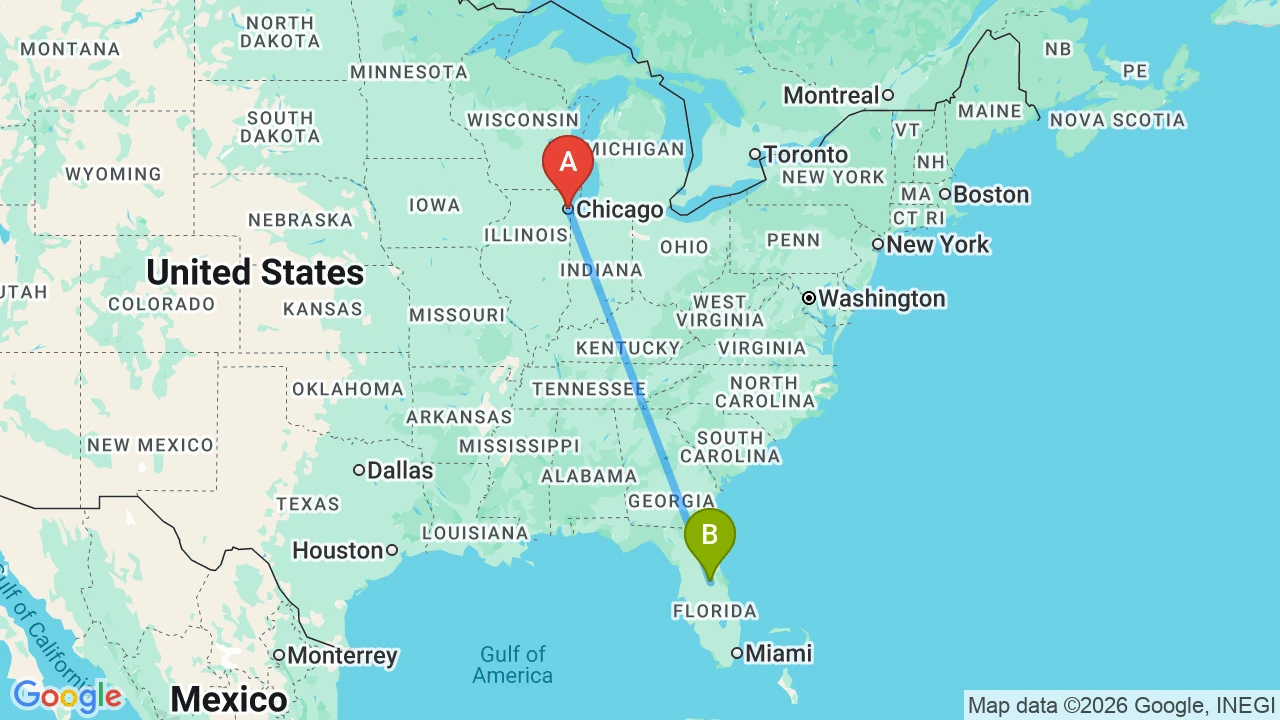
The move from Chicago to Orlando represents one of the most common Midwest-to-Sunbelt relocations in 2026, driven by climate, job opportunities, and the promise of a different cost structure. But “cheaper” and “easier” aren’t the same thing. While some expenses drop, others rise—and the shift in where costs concentrate can catch movers off guard.
This guide explains how cost pressure, daily rhythms, and household logistics change when you trade the Great Lakes for Central Florida. It’s not about declaring a winner or computing savings—it’s about understanding where your budget will feel tight, where it might loosen, and which household types tend to thrive or struggle after the move.
Cost Pressure Shifts: Where Money Moves
Chicago’s median household income sits at $71,673 per year, while Orlando’s is lower at $66,292. That income gap matters, because even when headline costs look similar, the share of income they consume can feel very different.
Housing is the most visible shift. Chicago’s median home value is $304,500, compared to Orlando’s $332,700. For renters, the gap widens further: Chicago’s median gross rent is $1,314 per month, while Orlando’s is $1,509. So while some movers expect Florida to deliver immediate housing relief, the entry barrier—especially for renters—can feel higher, not lower.
Utilities tell a different story. Chicago’s electricity rate is 16.36¢/kWh, slightly higher than Orlando’s 15.92¢/kWh. But Orlando’s extended cooling season means air conditioning runs for far more months than Chicago’s heating season demands furnace use. Natural gas, a major heating expense in Chicago at $9.48/MCF, becomes nearly irrelevant in Orlando, where the price is $23.62/MCF but usage is minimal. The result: utility behavior changes more than the rates suggest.
Transportation costs shift in both directions. Gas is cheaper in Orlando at $3.95/gallon compared to Chicago’s $4.21, but Orlando’s car-dependent layout means most households drive more miles. Chicago’s average commute is 34 minutes, with 59.7% of workers facing long commutes—but 14.6% work from home, and rail transit offers a viable alternative for many. Orlando lacks comparable transit infrastructure, so nearly every household needs at least one reliable vehicle, and two-car households are the norm.
The job market also plays a role. Orlando’s unemployment rate is 3.3%, lower than Chicago’s 5.4%, signaling tighter labor conditions. But wage structures differ: Chicago’s economy supports higher median incomes, while Orlando’s service-heavy economy often means lower base pay, even in tight labor markets.
Housing & Neighborhood Patterns
Chicago’s housing market is shaped by density, transit access, and neighborhood-level walkability. Many renters live in multi-unit buildings with utilities included or shared, and proximity to the ‘L’ reduces car dependence. Ownership often means older housing stock with higher maintenance obligations, but property taxes and HOA fees vary widely by neighborhood.
Orlando’s housing market is newer, more suburban, and more car-dependent. Single-family homes dominate, and even urban-core apartments often require parking. Renters face higher baseline costs, and ownership brings different obligations: newer construction means lower immediate maintenance, but HOA fees are common and can be substantial. Flood insurance, hurricane preparedness, and cooling-system upkeep are recurring expenses that Chicago households rarely budget for.
Neighborhood form affects daily costs in ways that aren’t obvious at first. Chicago’s walkable pockets mean groceries, pharmacies, and schools are often reachable on foot or via short transit trips. Orlando’s corridor-clustered layout means most errands require driving, even for households living near commercial zones. That car dependence compounds over time: more miles, more fuel, more maintenance, more insurance exposure.
Lifestyle & Daily Rhythms
Chicago’s pedestrian-to-road ratio exceeds high thresholds, and rail transit is present throughout much of the metro. Cycling infrastructure is notable, and food and grocery density is broadly accessible. Parks and water features are integrated into the urban fabric, and hospitals and pharmacies are widely distributed. The result: many households can manage daily life with one car, or none, depending on neighborhood choice.
Orlando’s pedestrian infrastructure is present but less extensive, and while rail transit exists (SunRail), its reach is limited compared to Chicago’s CTA. Cycling infrastructure is notable in parts of the city, but car dependence remains the default. Grocery density is high, but food establishments are more corridor-clustered, meaning walkable access is less consistent. Parks are present, and water features are common, but green space feels less integrated into daily routines. Hospitals and pharmacies are available, but the distances between them—and the need to drive to reach them—add friction.
Climate exposure is a major lifestyle shift. Chicago’s cold winters and hot, humid summers create seasonal cost swings, but Orlando’s extended heat and humidity mean air conditioning runs nearly year-round. Triple-digit heat is rare in Orlando, but sustained warmth from April through October drives cooling costs higher than many Midwest transplants expect. Hurricane season introduces a different kind of exposure: preparation costs, potential evacuation logistics, and insurance volatility.
The pace of life feels different, too. Chicago’s density and transit infrastructure support a faster, more spontaneous rhythm. Orlando’s layout requires more planning: errands are batched, trips are coordinated, and “running out for something” often means a 20-minute round trip. For some households, that slower pace feels like relief. For others, it’s a source of friction.
Relocation Logistics & Practical Friction
The move itself is straightforward—Chicago to Orlando is a well-traveled route, and professional movers are experienced with the corridor. But the adjustment period can surprise people.
Chicago households accustomed to walking or taking the train to work often underestimate how much car dependence will shape their Orlando budget. Vehicle acquisition, insurance rate changes, and parking costs (even at home) add up quickly. Households moving from Chicago apartments with heat included may not realize how much cooling costs will dominate their Orlando utility bills.
School access changes, too. Chicago’s school density is in the medium band, and many neighborhoods support walkable or transit-accessible school commutes. Orlando’s school density is similar, but car-based drop-off and pickup routines are the norm, adding time and coordination pressure for families.
Healthcare access is strong in both cities—hospitals and pharmacies are present—but Orlando’s layout means routine appointments often require longer drives. Chicago’s integrated healthcare infrastructure makes it easier to combine errands with medical visits; Orlando’s corridor-based layout makes that harder.
Social infrastructure shifts, too. Chicago’s density supports spontaneous meetups, neighborhood hangouts, and walkable social routines. Orlando’s suburban form means socializing requires more intentionality: plans are made in advance, driving is assumed, and “dropping by” is less common.
Frequently Asked Questions
- Does Orlando feel more or less expensive than Chicago?
- It depends on what you’re measuring. Housing entry costs—especially for renters—are often higher in Orlando, and car dependence adds transportation pressure. But Chicago’s higher income baseline and stronger transit infrastructure mean some households feel less cost pressure there, even when headline expenses look similar. The shift is less about totals and more about where costs concentrate: Orlando trades commuting flexibility and walkable access for lower heating costs and a tighter job market.
- How do housing markets differ between Chicago and Orlando?
- Chicago’s market is older, denser, and more transit-oriented, with a wider range of rental options and neighborhood-level walkability. Orlando’s market is newer, more suburban, and car-dependent, with higher baseline rents and more single-family ownership. Chicago ownership often means older homes with higher maintenance needs; Orlando ownership often means newer construction with HOA fees and hurricane-related costs. Renters in Chicago face less upfront pressure but more variability by neighborhood; renters in Orlando face higher baseline costs but more consistent access to parking and space.
- What feels different about daily life after moving to Orlando?
- The biggest shift is car dependence. Chicago households accustomed to walking, biking, or taking transit find that nearly every Orlando errand requires driving, even in denser neighborhoods. The extended cooling season means air conditioning runs most of the year, and outdoor routines shift to early mornings or evenings to avoid midday heat. Social rhythms slow down—spontaneous plans give way to coordinated logistics—and hurricane season introduces a planning layer that doesn’t exist in the Midwest.
- When does the move from Chicago to Orlando feel easiest?
- Spring and fall offer the most comfortable weather windows for moving and adjusting, avoiding both Chicago’s harsh winter and Orlando’s peak summer heat. Job transitions tend to feel smoothest when timed with Orlando’s tourism and service-sector hiring cycles, which peak in late winter and early spring. Families with school-age children often find summer moves easier for enrollment timing, though Orlando’s year-round warmth means outdoor adjustment can happen in any season.
- What adjustment pressures catch Chicago movers off guard?
- Car dependence is the most common surprise—households that managed with one car or none in Chicago often need two in Orlando. Cooling costs run higher and longer than expected, and the lack of walkable errands adds time and coordination friction. Hurricane preparedness—insurance, supplies, evacuation planning—is a new mental load. Social routines require more planning, and the absence of transit options means backup transportation strategies don’t exist. Income pressure can also surprise movers, since Orlando’s lower wage baseline means the same job title often pays less than it did in Chicago.
- Who does this move work best for?
- Households with stable remote income, retirees seeking year-round warmth, and families prioritizing outdoor access and newer housing tend to benefit most. Two-income households with flexible schedules can absorb Orlando’s car dependence and coordination demands more easily. The move is harder for single-car households, renters on tight budgets, and anyone relying on transit or walkable access for daily routines. Young professionals accustomed to Chicago’s density and spontaneity may find Orlando’s suburban pace isolating, while families leaving Chicago’s cold winters often find the tradeoff worthwhile despite higher housing and transportation costs.
Conclusion
The move from Chicago to Orlando isn’t a simple cost swap—it’s a shift in where pressure concentrates and how daily life is structured. Housing costs often rise, especially for renters, and car dependence adds transportation pressure that Chicago’s transit infrastructure helped avoid. But heating costs disappear, the job market is tighter, and year-round outdoor access appeals to households tired of Midwest winters.
The households that adjust most easily are those who expect—and budget for—Orlando’s car-dependent layout, extended cooling season, and suburban rhythm. The households that struggle most are those who underestimate how much Chicago’s walkability, transit access, and higher income baseline were quietly subsidizing their lifestyle.
Before committing, explore both cities in depth. IndexYard’s Chicago living guide and Orlando living guide offer detailed breakdowns of housing, utilities, transportation, and neighborhood patterns. The right move isn’t about finding the cheaper city—it’s about finding the one where your household’s priorities and pressures align.
How this article was built: In addition to public economic data, this article incorporates location-based experiential signals derived from anonymized geographic patterns—such as access density, walkability, and land-use mix—to reflect how day-to-day living actually feels in Orlando, FL.