
Sarah moved to Rochester Hills in late 2025, excited about her new job and the tree-lined streets she’d seen during her apartment hunt. Two weeks in, she stood in the checkout lane of a mid-tier grocer, watching the total climb past $80 for what felt like a modest haul: chicken breasts, a block of cheese, eggs, ground beef, bread, rice, and milk. She’d shopped the same way back in her smaller Midwest hometown, but the receipt didn’t match her memory. It wasn’t that any single item shocked her—it was the cumulative weight. Groceries in Rochester Hills weren’t wildly expensive, but they weren’t invisible either. For the first time, she realized she’d need to think about where she shopped, not just what she bought.
That experience captures how grocery costs feel in Rochester Hills in 2026: manageable for many, but not automatic. The city sits just below the national price baseline, with a regional price parity of 95, meaning costs run about 5% lower than the U.S. average in aggregate. But that modest advantage doesn’t eliminate price sensitivity—it just shifts the threshold. Households earning well above the median income of $115,968 per year barely register grocery volatility. For everyone else, store choice, habits, and household size determine whether groceries feel like a minor line item or a recurring pressure point.
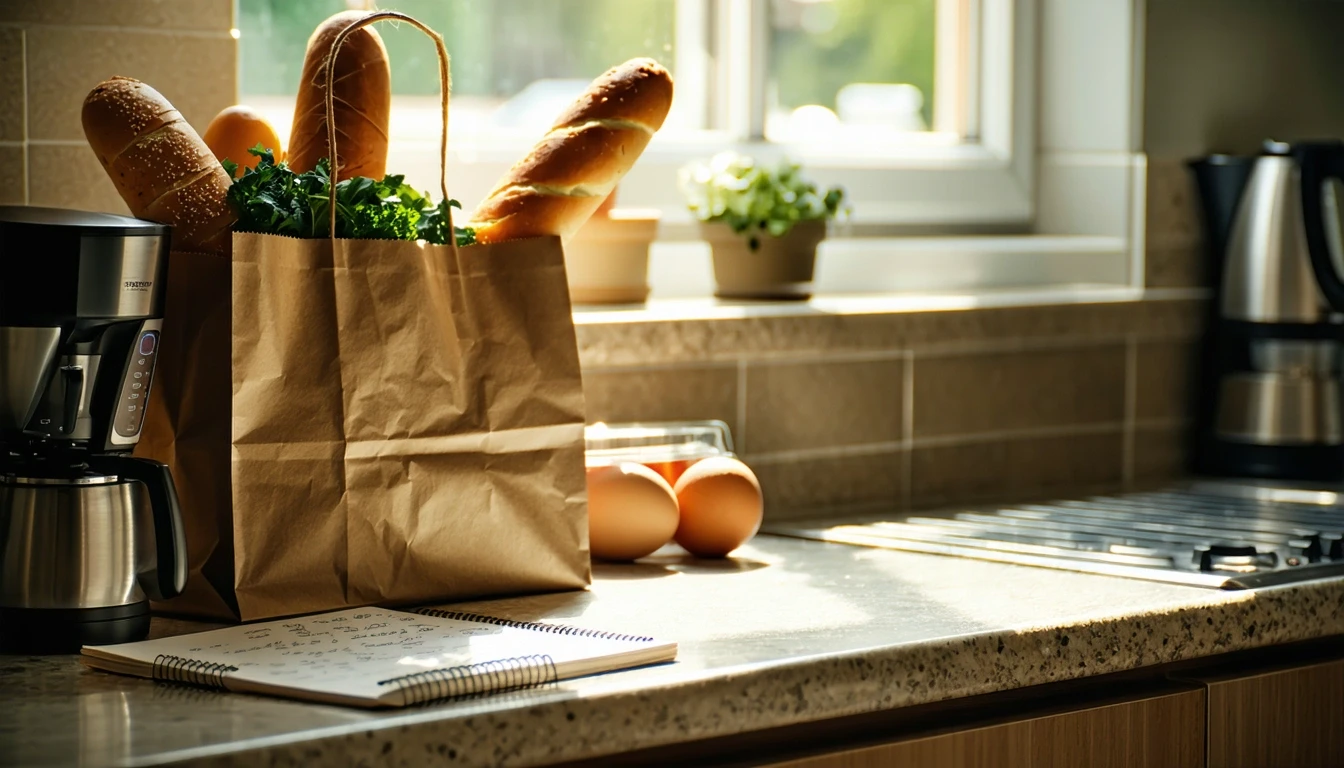
How Grocery Costs Feel in Rochester Hills
Grocery prices in Rochester Hills reflect a suburban cost structure common across Oakland County: not cheap, but not punishing either. The city’s relative affordability compared to metro Detroit’s inner-ring suburbs shows up in housing and utilities more than in food. Grocery pricing tends to track regional distribution networks and store competition, which means Rochester Hills residents face similar item costs to neighboring communities, even as their housing expenses diverge. That creates a disconnect for newcomers who expect lower grocery bills to accompany lower rent or mortgage payments. It doesn’t work that way. Food costs compress across metro areas, while housing pressure varies sharply by ZIP code.
Who notices grocery costs most? Singles and young couples without children feel the per-trip impact more acutely, because they’re buying smaller quantities and can’t absorb fixed costs—like a $6.37/lb package of ground beef—across multiple meals as easily. Families with children face a different problem: volume. Even modest per-item prices multiply across gallons of milk, dozens of eggs, and pounds of chicken each week. A family of four buying twice the volume of a couple doesn’t just double their bill—they lose the flexibility to wait for sales or substitute freely. Grocery costs in Rochester Hills aren’t prohibitive for most households, but they’re not negligible either. They require attention.
In addition to public economic data, this article incorporates location-based experiential signals derived from anonymized geographic patterns—such as access density, walkability, and land-use mix—to reflect how day-to-day living actually feels in Rochester Hills. Grocery access here follows a corridor-clustered pattern: stores concentrate along major commercial roads rather than spreading evenly across neighborhoods. That structure creates meaningful differences in how people shop. Households near these corridors can compare prices across multiple grocers within a few minutes’ drive. Those farther out may default to the nearest option, sacrificing price optimization for convenience. The city’s grocery density is high, meaning options exist, but reaching them requires a car and intentional routing. Spontaneous walk-up errands aren’t part of the texture here. Shopping trips are planned, not impromptu.
Grocery Price Signals (Illustrative)
These prices illustrate how staple items tend to compare locally—not a full shopping list. They’re derived estimates based on national baselines adjusted for regional price parity, not observed checkout data. They help explain relative positioning, not predict your receipt.
| Item | Price |
|---|---|
| Bread | $1.72/lb |
| Cheese | $4.54/lb |
| Chicken | $1.93/lb |
| Eggs | $2.23/dozen |
| Ground Beef | $6.37/lb |
| Milk | $3.86/half-gallon |
| Rice | $1.01/lb |
Ground beef stands out as the highest-cost item per pound, while rice and bread anchor the low end. Eggs and milk fall in the middle, sensitive to seasonal and supply-chain shifts but generally stable. Cheese and chicken hover in a zone where brand and store tier create wide spreads—premium organic chicken might run double the baseline, while discount store rotisserie chicken undercuts it. These aren’t prices you’ll see on every shelf in every store. They’re reference points that help explain why two households buying similar items can walk out with very different totals.
The pressure isn’t uniform. A household buying chicken, rice, and eggs as staples will feel less strain than one relying on ground beef, cheese, and prepared foods. Protein costs drive the biggest swings. Families who rotate between chicken, beans, and eggs smooth out volatility. Those who default to beef and deli meat absorb more exposure. Rochester Hills doesn’t penalize either approach with unusually high prices, but it doesn’t reward carelessness either. Price-conscious shopping pays off here, not because costs are extreme, but because the baseline is just high enough to matter.
Store Choice & Price Sensitivity
Grocery price pressure in Rochester Hills varies more by store tier than by neighborhood. The city’s corridor-clustered grocery access means most households can reach discount, mid-tier, and premium grocers within a reasonable drive, but the price gap between them is significant. Discount grocers—no-frills chains focused on private-label staples and limited selection—offer the lowest per-item costs, often 15–25% below mid-tier competitors on basics like milk, eggs, bread, and canned goods. Mid-tier stores—regional and national supermarkets with broader selection, frequent sales, and loyalty programs—sit in the middle, balancing price and convenience. Premium grocers—organic-focused, specialty, or upscale chains—charge a meaningful markup for quality, sourcing, and experience, sometimes 30–50% above discount pricing on comparable items.
For households earning near or below the median income, store tier isn’t a preference—it’s a lever. Shifting staple purchases from mid-tier to discount stores doesn’t require coupons or extreme effort; it just requires driving to a different parking lot. The savings compound quickly across milk, eggs, chicken, and rice. Families with children feel this most acutely, because volume amplifies every percentage point. A household buying eight gallons of milk a month saves measurably by choosing the $2.89 store over the $3.86 one, even if the quality difference is minimal.
Higher earners face less pressure but still make tier-based tradeoffs. Many split their shopping: discount stores for pantry staples, mid-tier for sales and variety, premium for specific items like organic produce or specialty proteins. That approach requires time and mobility, which is why Rochester Hills’ car-dependent grocery access matters. Households with flexible schedules and reliable transportation can optimize across tiers. Those without default to the nearest store, sacrificing savings for simplicity. The city’s high grocery density helps, but only if you can navigate it strategically.
What Drives Grocery Pressure Here
Income interaction explains much of the variation in how grocery costs feel across Rochester Hills households. The city’s median household income of $115,968 per year sits well above the national median, meaning many residents absorb grocery volatility without adjusting behavior. For these households, groceries aren’t a budget constraint—they’re a convenience question. Premium stores, organic options, and prepared foods fit comfortably within discretionary spending. But that high median masks a range. Households earning $60,000 or $70,000 annually—still respectable incomes—experience grocery costs differently. They notice price swings on beef and cheese. They compare unit prices. They plan around sales. The same city, the same stores, but entirely different financial texture.
Household size amplifies everything. A single person buying for one can absorb a $6.37/lb ground beef purchase as a single meal’s splurge. A family of four buying the same item three times a week faces a recurring cost that adds up fast. Larger households lose flexibility. They can’t wait for sales as easily, because they need volume now. They can’t substitute as freely, because preferences multiply across people. And they can’t ignore waste, because a spoiled gallon of milk or a forgotten bag of chicken represents a bigger financial hit. Grocery costs in Rochester Hills aren’t prohibitive for families, but they’re not trivial either. Size turns modest per-item prices into meaningful monthly exposure.
Regional distribution patterns also shape costs. Rochester Hills sits within the Detroit metro’s grocery supply network, which means pricing reflects regional competition and logistics rather than hyper-local factors. That’s why grocery costs here track closely with neighboring suburbs, even as housing and tax costs diverge. It also means seasonal variability—like winter produce premiums or summer berry abundance—follows predictable regional rhythms rather than city-specific quirks. Shoppers can’t escape these patterns, but they can anticipate them. Households who buy seasonally and stock up during abundance windows reduce exposure to peak pricing.
Practical Ways People Manage Grocery Costs
The most effective strategy isn’t couponing or extreme planning—it’s store tier awareness. Households who recognize that staples cost measurably less at discount grocers, and shift even half their routine purchases accordingly, reduce their baseline without sacrificing quality on items that don’t vary much by brand. Milk, eggs, rice, canned goods, and frozen vegetables perform nearly identically across tiers. Buying them at premium prices is a choice, not a necessity.
Bulk buying works, but only for households with storage space and upfront cash flow. Buying a 10-lb bag of rice or a flat of canned tomatoes cuts per-unit costs significantly, but requires the ability to spend more in a single trip and the space to store it. Families with pantries and freezers benefit most. Singles in small apartments face tighter constraints. The strategy isn’t universal, but for those who can execute it, bulk buying smooths out volatility and reduces frequency of high-margin purchases.
Seasonal shopping and flexible meal planning reduce exposure to price spikes. Households who build meals around what’s on sale—chicken one week, ground beef the next—avoid paying peak prices for proteins. Those who buy produce seasonally, when supply is high and prices drop, stretch their budgets further than those who insist on strawberries in January. This doesn’t require obsessive deal-hunting. It just requires noticing what’s cheap this week and adjusting accordingly.
Cooking from scratch instead of buying prepared foods or meal kits cuts costs substantially, though it trades money for time. A rotisserie chicken costs more than raw chicken breasts per pound, but saves 30 minutes of prep. Pre-cut vegetables, bagged salads, and marinated proteins all carry convenience premiums. Households with time and cooking skills can avoid these markups. Those juggling work and children often pay them willingly. The tradeoff isn’t right or wrong—it’s a deliberate choice between money and time, and both are finite.
Groceries vs Eating Out (Directional)
Without specific dining cost data for Rochester Hills, the comparison between groceries and eating out remains directional. Nationally, restaurant meals cost roughly three to four times the equivalent home-cooked meal when accounting for ingredients alone, though that ratio compresses when factoring in time, effort, and waste. In Rochester Hills, where median incomes support discretionary spending, many households treat dining out as a regular expense rather than a special occasion. That doesn’t make it cheaper—it just means the cost is absorbed more easily.
The tradeoff isn’t purely financial. Eating out saves time and eliminates cleanup, which matters for dual-income households or parents managing tight schedules. Cooking at home saves money but requires planning, shopping, prep, and cleanup. For high earners, the time saved by eating out often justifies the cost. For budget-conscious households, the money saved by cooking at home outweighs the convenience loss. Rochester Hills supports both approaches, with a mix of fast-casual chains, mid-tier restaurants, and premium dining options clustered along the same commercial corridors as grocery stores. The choice isn’t binary—most households blend the two, cooking staples at home and dining out selectively.
FAQs About Grocery Costs in Rochester Hills (2026)
Is it cheaper to shop in bulk in Rochester Hills? Bulk buying reduces per-unit costs on shelf-stable staples like rice, canned goods, and frozen items, but only if you have the upfront cash and storage space. Families with pantries and freezers benefit most; singles in small apartments face tighter constraints.
Which stores in Rochester Hills are best for low prices? Discount-tier grocers offer the lowest prices on staples, often 15–25% below mid-tier supermarkets. Mid-tier stores balance price and selection, while premium grocers charge markups for organic and specialty items. Store tier matters more than location for price-conscious shoppers.
How much more do organic items cost in Rochester Hills? Organic and specialty items typically carry premiums, sometimes adding significantly to the cost of comparable conventional products. The gap varies by item and store tier, with premium grocers charging the highest markups and discount stores offering fewer organic options overall.
How do grocery costs for households in Rochester Hills tend to compare to nearby cities? Grocery pricing in Rochester Hills tracks closely with surrounding Oakland County suburbs, reflecting regional distribution networks rather than city-specific factors. Differences emerge more in housing and utilities than in food costs, which compress across metro areas.
How do households in Rochester Hills think about grocery spending when cooking at home? Many households treat grocery shopping as a controllable expense, adjusting store choice, buying seasonally, and cooking from scratch to manage costs. Higher earners prioritize convenience and quality, while budget-conscious families focus on staples and bulk purchases to stretch dollars further.
Does Rochester Hills’ car-dependent layout affect grocery costs? Indirectly, yes. The corridor-clustered grocery access rewards households who can drive between discount, mid-tier, and premium stores to optimize pricing. Those without reliable transportation or flexible schedules often default to the nearest option, sacrificing savings for convenience.
Are grocery costs in Rochester Hills rising faster than income? Grocery price trends follow national and regional patterns rather than city-specific dynamics. While prices fluctuate with supply-chain conditions and seasonal factors, Rochester Hills households with incomes near or above the median generally absorb volatility without major lifestyle changes. Lower earners feel pressure more acutely, especially when protein and dairy costs spike.
How Groceries Fit Into the Cost of Living in Rochester Hills
Groceries represent a smaller share of monthly expenses than housing or transportation for most Rochester Hills households, but they’re more controllable. You can’t negotiate your rent mid-lease or cut your property tax bill in half, but you can shift grocery spending by 20% or more through store choice and habit changes alone. That makes groceries a key lever for households managing tight budgets or adjusting to income changes. The city’s relatively modest cost baseline—reflected in the RPP of 95—helps, but it doesn’t eliminate the need for intentional shopping.
For a full picture of how groceries interact with rent, utilities, transportation, and other recurring costs, see A Month of Expenses in Rochester Hills: What It Feels Like. That article breaks down where money goes each month and how different household types prioritize spending across categories. Groceries are one piece of a larger financial puzzle, and understanding their role within the total cost structure helps clarify whether Rochester Hills fits your budget and lifestyle.
Grocery costs in Rochester Hills won’t make or break affordability for most movers, but they will shape daily routines. Households who treat store choice as a strategic decision, buy seasonally, and cook from scratch will find the city’s pricing manageable. Those who default to convenience or premium options will pay more, but not prohibitively so. The key is recognizing that grocery costs here reward attention without punishing inattention. You don’t need to be extreme to keep costs reasonable—you just need to be deliberate.
How this article was built: In addition to public economic data, this article incorporates location-based experiential signals derived from anonymized geographic patterns—such as access density, walkability, and land-use mix—to reflect how day-to-day living actually feels in Rochester Hills, MI.