
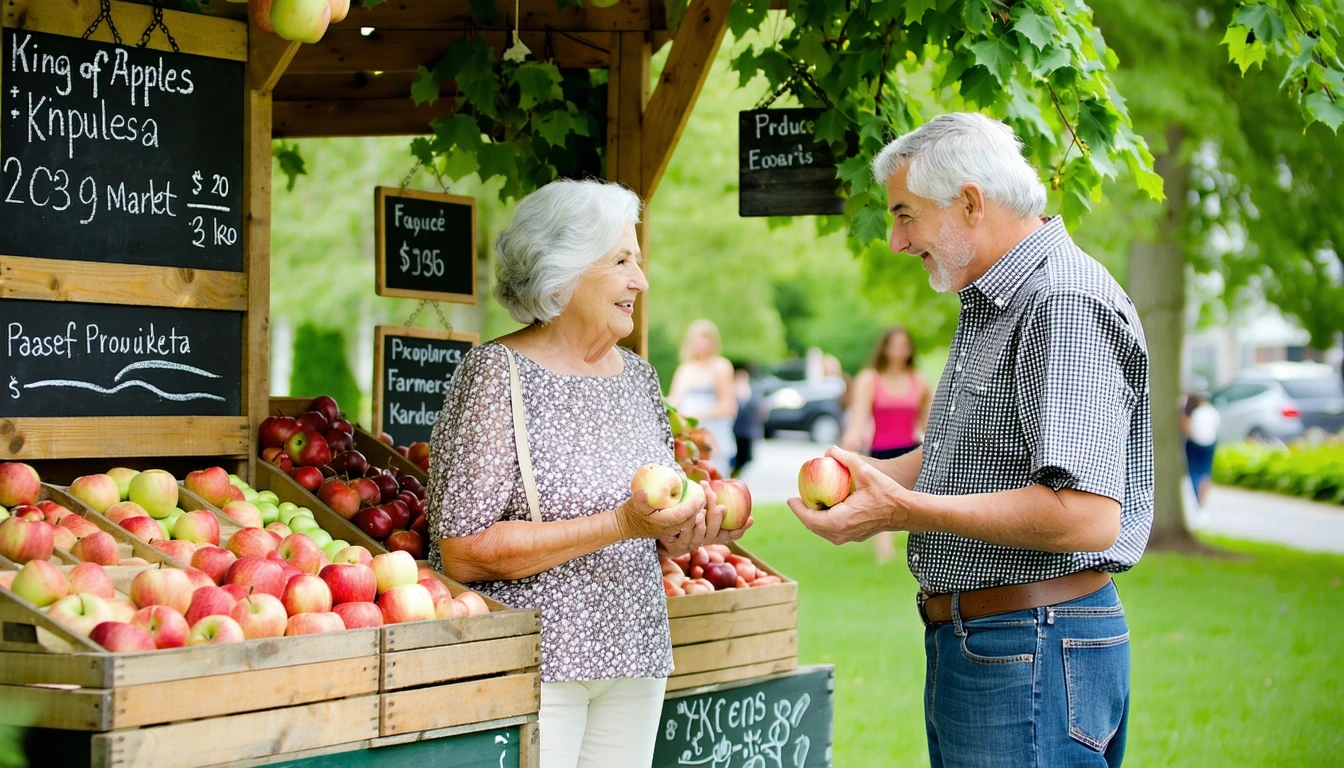
How Grocery Costs Feel in King of Prussia
Grocery prices in King of Prussia sit noticeably above the national baseline, reflecting the broader cost structure of the Philadelphia metro suburbs. With a regional price parity index of 104—meaning goods and services here run about 4% higher than the U.S. average—food shopping carries a modest but persistent premium. That premium doesn’t hit every household the same way. For families earning near or above the area’s median household income of $107,139, the difference feels manageable, absorbed into weekly routines without major adjustments. But for singles, younger renters, or households earning below the median, that 4% compounds across every shopping trip, turning what looks like a small gap on paper into a meaningful monthly pressure point.
The experience of grocery costs here isn’t just about prices—it’s about access and choice. King of Prussia benefits from high grocery establishment density, with food and grocery options widely distributed across the area. That density means households can realistically choose between discount chains, mid-tier supermarkets, and premium grocers without adding significant drive time or logistical friction. The ability to shop across tiers isn’t just convenience; it’s a practical cost management tool. A family that splits staples between a discount grocer and a mid-tier store for specialty items can soften the regional premium without sacrificing variety or quality. Singles and smaller households, meanwhile, notice grocery costs more acutely—not because prices are wildly higher, but because smaller baskets leave less room to absorb incremental premiums, and because buying in bulk often isn’t practical.
Grocery pressure in King of Prussia is less about sticker shock and more about cumulative weight. Staples cost a bit more, produce runs slightly higher, and even everyday items like bread and eggs carry that regional markup. Over the course of a month, those small differences add up, especially for households managing tighter budgets or feeding multiple people. The key question isn’t whether groceries are expensive here—it’s whether your income and household size give you enough flexibility to navigate store choice, adjust habits, and keep food costs predictable.
Grocery Price Signals (Illustrative)
These prices illustrate how staple items tend to compare locally—not a full shopping list. They’re derived estimates based on national baselines adjusted for regional price parity, useful for understanding relative cost positioning rather than exact checkout totals. Actual prices vary by store tier, brand, sales cycles, and season, but these figures provide a reasonable anchor for what everyday staples cost in King of Prussia.
| Item | Illustrative Price |
|---|---|
| Bread (per pound) | $1.92 |
| Cheese (per pound) | $4.87 |
| Chicken (per pound) | $2.13 |
| Eggs (per dozen) | $2.60 |
| Ground beef (per pound) | $7.01 |
| Milk (per half-gallon) | $4.19 |
| Rice (per pound) | $1.12 |
Derived estimate based on national baseline adjusted by regional price parity; not an observed local price.
What stands out in this snapshot is the variance across categories. Proteins—especially ground beef—carry the steepest premiums, while pantry staples like rice remain relatively affordable. Eggs and milk sit in the middle, sensitive to seasonal and supply-chain shifts but generally stable. For households planning meals around cost, these differences matter. A family that builds dinners around chicken, beans, and rice will experience grocery costs very differently than one buying ground beef and cheese weekly. The regional premium doesn’t flatten everything equally; it amplifies certain categories while leaving others closer to baseline.
Store Choice & Price Sensitivity
Grocery costs in King of Prussia vary significantly by store tier, and understanding that range is essential for managing food spending. Discount grocers—no-frills chains focused on private-label staples and high-turnover inventory—offer the lowest price floor. These stores strip out amenities like extensive deli counters, specialty sections, and brand-name variety, passing those savings directly to shoppers. For households prioritizing cost control, discount grocers provide a reliable way to cut 15–25% off a typical grocery bill compared to mid-tier or premium options. The tradeoff is selection: fewer organic options, limited prepared foods, and a more utilitarian shopping experience.
Mid-tier supermarkets dominate the local landscape, balancing price and convenience. These stores carry national brands alongside store labels, offer broader produce and meat selections, and include bakery, deli, and pharmacy services. Prices here reflect the regional premium more directly—staples cost more than at discount chains but less than premium grocers. For many King of Prussia households, mid-tier stores represent the default: accessible, familiar, and flexible enough to handle weekly shopping without requiring multiple stops. Families often anchor their routines here, supplementing with discount runs for bulk staples or premium stops for specific items.
Premium grocers—whether organic-focused chains or upscale independents—cater to households prioritizing quality, sourcing, and specialty products over price. Costs here run 20–40% higher than mid-tier stores, driven by organic and local offerings, prepared meal sections, and curated selections. For high-income households in King of Prussia, premium grocers offer convenience and alignment with dietary preferences without financial strain. For others, these stores function as occasional destinations rather than weekly anchors. The key insight is that store tier isn’t just about affordability—it’s about where households choose to allocate their grocery dollars based on income, priorities, and household size.
What Drives Grocery Pressure Here
Income plays the defining role in how grocery costs feel in King of Prussia. With a median household income well above the national average, many families here absorb the regional premium without restructuring their shopping habits. Higher earners treat grocery costs as a fixed, predictable expense, focusing on convenience and quality over price optimization. But for households earning below the median—especially singles, younger renters, or families with one income—the 4% regional markup becomes a persistent friction point. These households feel grocery pressure not because prices are extreme, but because their income leaves less margin to absorb incremental costs across every category.
Household size amplifies cost sensitivity in predictable ways. A single person buying for one might spend $250–$350 monthly on groceries depending on habits and store choice, but a family of four can easily double or triple that figure. Volume magnifies the regional premium: every pound of chicken, gallon of milk, and dozen eggs adds up faster when you’re feeding multiple people. Families also face less flexibility in timing purchases around sales or substituting cheaper alternatives—when you’re cooking for four, you need what you need, and delaying a grocery run isn’t always practical. This is where store-tier strategy becomes critical: families that split shopping between discount and mid-tier stores can soften the volume effect without sacrificing variety.
Access and distribution patterns also shape grocery pressure, though less visibly. King of Prussia’s high grocery density means most households live within a short drive of multiple store options, reducing the logistical cost of comparison shopping. That accessibility matters—it means switching between a discount grocer for staples and a mid-tier store for fresh items doesn’t require an extra 20 minutes of driving or crossing into another town. In areas with sparse grocery infrastructure, households often default to the nearest store regardless of price. Here, density creates real optionality, and households that use it strategically can reduce monthly food costs without major lifestyle changes.
Practical Ways People Manage Grocery Costs
Store-tier splitting is one of the most effective behavioral strategies for managing grocery costs in King of Prussia. Households that buy shelf-stable staples—canned goods, pasta, rice, frozen vegetables—at discount grocers while purchasing fresh produce, meat, and dairy at mid-tier stores can reduce monthly spending without feeling like they’re compromising quality. The key is recognizing that not every item benefits from premium sourcing. A can of beans or a bag of rice performs the same regardless of where you buy it, but fresh produce and proteins often show noticeable quality differences across tiers. Splitting trips takes slightly more planning, but the cost savings compound quickly, especially for families buying in volume.
Seasonal and sales-cycle awareness also reduces grocery pressure. Proteins, fresh produce, and dairy fluctuate in price throughout the year based on supply, weather, and demand cycles. Households that adjust meal planning around what’s on sale or in season—buying chicken when it’s discounted, stocking up on canned tomatoes during promotions, choosing root vegetables in winter—can smooth out cost spikes without rigid budgeting. This doesn’t require extreme couponing or spreadsheet tracking; it’s about noticing patterns and building flexibility into weekly routines. Many mid-tier grocers also run loyalty programs that offer targeted discounts on frequently purchased items, effectively lowering per-unit costs for regular shoppers.
Cooking from scratch and reducing convenience purchases represent another cost-control lever. Pre-cut vegetables, meal kits, rotisserie chickens, and prepared foods carry significant markups compared to raw ingredients. A household that buys whole chickens, chops its own vegetables, and batch-cooks staples like beans or grains can cut grocery costs meaningfully without sacrificing nutrition or variety. The tradeoff is time—cooking from scratch requires more active meal prep—but for households with flexibility in their schedules, it’s one of the most reliable ways to reduce per-meal costs. Even small shifts, like making coffee at home instead of buying it daily or baking bread occasionally, create cumulative savings over time.
Groceries vs Eating Out (Directional)
The cost gap between cooking at home and eating out in King of Prussia is substantial, though the exact magnitude depends on household size, restaurant choice, and meal complexity. A home-cooked dinner for two using mid-tier grocery ingredients might cost $10–$15 in raw materials, while the same meal at a casual restaurant runs $35–$50 before tip. That gap widens further at premium or full-service restaurants. For families, the math becomes even more pronounced: feeding four people at home costs a fraction of a restaurant meal, making dining out a discretionary expense rather than a routine option for cost-conscious households.
The tradeoff isn’t purely financial—it’s also about time, convenience, and mental load. Cooking at home requires planning, shopping, prep, and cleanup, all of which take time and energy. For dual-income households or families managing complex schedules, eating out occasionally or relying on takeout during busy weeks can feel worth the premium. The key is recognizing when convenience justifies the cost and when it’s simply habit. Households that treat dining out as an intentional choice rather than a default tend to keep food costs more predictable, using restaurants strategically rather than reflexively.
Takeout and delivery add another layer of cost. Delivery fees, service charges, and tips can push a $30 takeout order to $45 or more, eroding the value proposition quickly. For households trying to manage grocery and food costs tightly, limiting delivery to occasional use and picking up takeout directly when needed helps control spending. The broader point is that grocery costs and dining costs exist on a spectrum—households have significant control over where they land on that spectrum based on how often they cook, where they shop, and how they think about convenience.
FAQs About Grocery Costs in King of Prussia (2026)
Is it cheaper to shop in bulk in King of Prussia? Bulk buying can reduce per-unit costs on shelf-stable staples like rice, pasta, canned goods, and frozen items, especially at discount or warehouse-style grocers. The savings are most meaningful for larger households that can use volume before expiration, while singles or couples may find bulk purchases lead to waste unless they have adequate storage and meal-planning discipline.
Which stores in King of Prussia are best for low prices? Discount grocery chains offer the lowest price floor, focusing on private-label staples and high-turnover inventory with minimal frills. Mid-tier supermarkets balance price and selection, while premium grocers prioritize quality and specialty items at higher costs. Households that split shopping across tiers—buying staples at discount stores and fresh items at mid-tier grocers—often achieve the best cost-to-quality balance.
How much more do organic items cost in King of Prussia? Organic products typically carry a noticeable premium over conventional equivalents, with the gap widest on fresh produce, dairy, and meat. The exact difference varies by item and store tier, but households prioritizing organic selections should expect meaningfully higher grocery bills unless they focus organic spending on high-impact categories and buy conventional for others.
How do grocery costs for two adults in King of Prussia tend to compare to nearby cities? King of Prussia’s regional price parity sits slightly above the national baseline, meaning grocery costs here run modestly higher than the U.S. average but remain comparable to other Philadelphia metro suburbs. Costs feel more manageable than in urban cores like Center City Philadelphia, where density and real estate costs push food prices higher, but less affordable than more rural or lower-cost Pennsylvania regions.
How do households in King of Prussia think about grocery spending when cooking at home? Many households treat groceries as a controllable expense, adjusting store choice, shopping frequency, and meal complexity based on income and priorities. Higher earners often prioritize convenience and quality, while cost-conscious households focus on discount tiers, sales cycles, and cooking from scratch to keep spending predictable without sacrificing nutrition or variety.
Do seasonal price swings affect grocery costs noticeably in King of Prussia? Yes—fresh produce, proteins, and dairy fluctuate throughout the year based on supply and demand cycles. Households that adjust meal planning around seasonal availability and sales can smooth out cost spikes, while those buying the same items year-round may notice more variability in weekly grocery bills.
Does grocery delivery make sense for managing food costs in King of Prussia? Delivery adds fees, service charges, and tips that can increase total costs significantly compared to shopping in person. For households managing tight grocery budgets, limiting delivery to occasional use and picking up orders directly when possible helps control spending, though the convenience may justify the premium for time-constrained or mobility-limited households.
How Groceries Fit Into the Cost of Living in King of Prussia
Grocery costs represent a meaningful but secondary component of the overall cost structure in King of Prussia. Housing—whether rent or mortgage—dominates household budgets here, followed by transportation, utilities, and insurance. Groceries sit in the middle tier of expenses: noticeable, recurring, and somewhat controllable, but rarely the primary driver of financial pressure. For most households, the regional premium on food adds up to a few hundred dollars annually compared to lower-cost areas, a gap that feels manageable when income is strong but becomes more acute when budgets are tight.
The interaction between grocery costs and other expenses matters more than the absolute price of food. A household paying $1,854 per month in rent and managing higher-than-average utility bills may feel grocery pressure more intensely than one with lower fixed costs, even if both shop at the same stores. Similarly, families with long commutes and high gas costs have less budget flexibility to absorb grocery premiums, while those working from home or living close to work can allocate more toward food without strain. Understanding how groceries fit into your broader cost structure helps clarify where to focus cost-control efforts and where to accept regional pricing as part of the tradeoff for living here.
For a complete picture of how grocery costs interact with rent, utilities, transportation, and other recurring expenses, see the full breakdown in A Month of Expenses in King of Prussia: What It Feels Like. That article walks through the cumulative weight of all major cost categories and explains how different household types experience financial pressure across the full budget. Grocery costs are one piece of a larger puzzle—understanding the whole picture makes it easier to decide where to tighten spending, where to invest in quality or convenience, and whether King of Prussia’s overall cost structure aligns with your income and priorities.
How this article was built: In addition to public economic data, this article incorporates location-based experiential signals derived from anonymized geographic patterns—such as access density, walkability, and land-use mix—to reflect how day-to-day living actually feels in King of Prussia, PA.