
King of Prussia is considered expensive in 2026, with a median home value of $375,700 and median rent of $1,854 per month. The value proposition depends on housing entry cost versus transportation flexibility—rail access exists, but car ownership remains the dominant pattern for most households.
When Sarah Chen accepted a job offer at one of King of Prussia’s corporate campuses, she assumed the hardest part would be finding an apartment. Three weeks in, she realized the real challenge wasn’t rent—it was understanding which costs would define her monthly rhythm and which were one-time hurdles she could plan around.
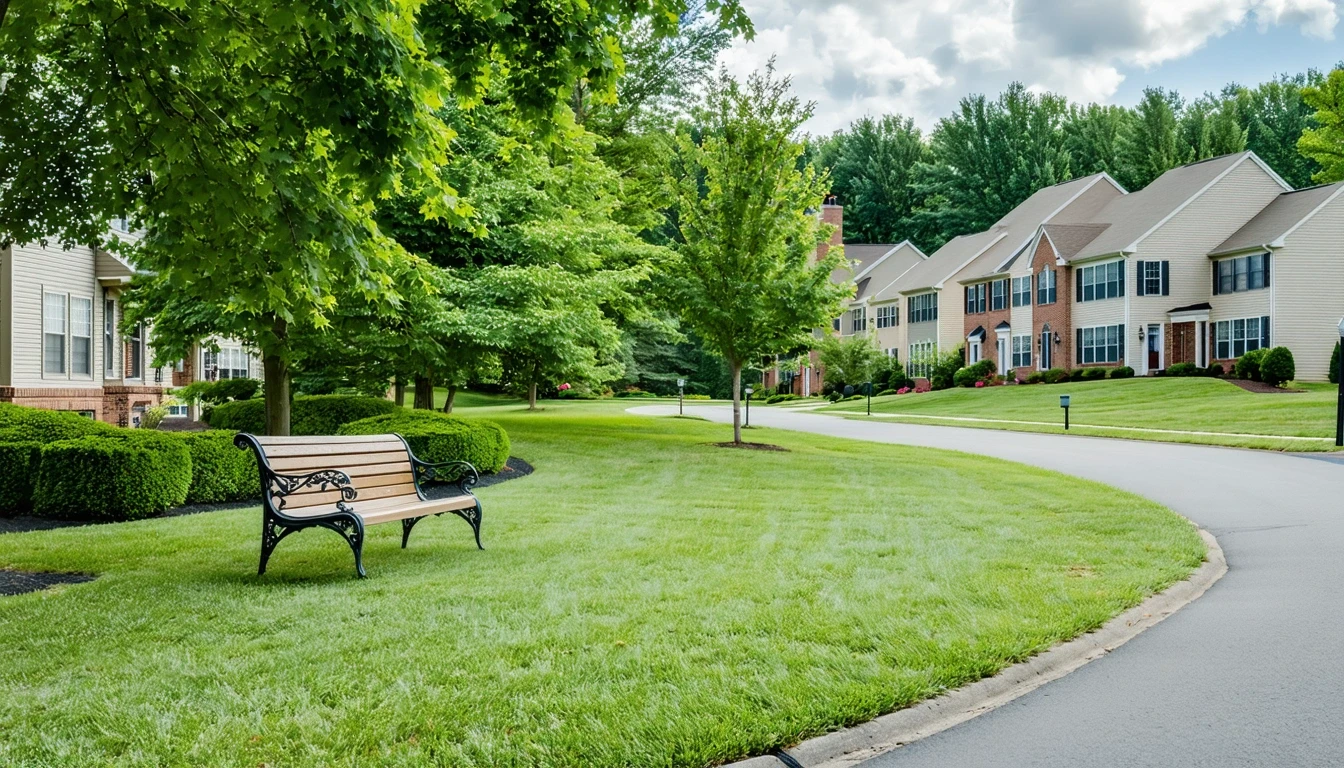
Overall Cost of Living Snapshot
King of Prussia sits 4% above the national baseline for regional price parity, reflecting moderate upward pressure across most categories. Housing dominates the cost structure—both for renters facing nearly $1,900 monthly obligations and buyers navigating a mid-to-high entry threshold. Transportation adds recurring exposure, shaped less by fuel prices than by the structural need for a vehicle in most household configurations.
The regional price index of 104 signals that groceries, services, and everyday purchases carry a slight premium, but the gap isn’t wide enough to redefine budgets on its own. What matters more is the interaction: high housing costs compress flexibility, making transportation and utility swings feel more consequential than they would in isolation.
Compared to more affordable Pennsylvania markets, King of Prussia’s cost profile reflects its role as a commercial and retail hub with convenient highway access and proximity to Philadelphia. The tradeoff is clear—accessibility and job density come with higher fixed costs, particularly in housing and vehicle dependency.
Driver verdict: Housing sets the floor, transportation determines mobility, and utilities add seasonal variability. Surprises come less from day-to-day prices and more from the compounding effect of car dependency and ownership-related expenses that aren’t always visible upfront.
Housing Costs (Primary Driver)
With a median home value of $375,700, King of Prussia presents a significant entry barrier for buyers. Ownership here isn’t just about the mortgage—it’s about property taxes, insurance, and maintenance on properties that tend toward more vertical construction and mixed-use density. The building form reflects a denser suburban core, not sprawling single-family subdivisions, which shapes both cost and lifestyle.
Renters face a median gross rent of $1,854 per month, a figure that includes some utilities but rarely all of them. This isn’t a transitional market where renters vastly outnumber owners—both pathways are common, and the choice hinges more on timeline and liquidity than on a clear cost advantage.
The renting-versus-owning calculus here doesn’t favor one side decisively. Renting offers flexibility and eliminates exposure to property tax increases and repair volatility. Owning builds equity and stabilizes the largest line item over time, but it requires substantial upfront capital and tolerance for maintenance unpredictability.
Conclusion: King of Prussia is a buying-and-renting city. Neither path is obviously cheaper; the right choice depends on how long you plan to stay and whether you value cost predictability or asset accumulation.
| Housing Type | Cost Anchor | What That Buys You |
|---|---|---|
| Median Home Purchase | $375,700 | Entry into ownership with equity-building potential, exposure to property tax and maintenance volatility, fixed monthly principal and interest |
| Median Gross Rent | $1,854/month | Flexibility and predictable monthly obligations, landlord-covered major repairs, no equity accumulation |
Utilities & Energy Risk
Electricity in King of Prussia runs 20.08¢ per kWh, a rate that sits above many regional peers and reflects Pennsylvania’s mixed energy grid. For a household using around 1,000 kWh per month—typical for a multi-bedroom unit with standard appliances and seasonal air conditioning—the illustrative monthly cost before fees and taxes would be roughly $200. Actual bills vary with usage, efficiency, and whether heating relies on electric resistance or gas.
Natural gas is priced at $13.91 per MCF (approximately 100 therms). In heating months, a household using around 1 MCF per month for space heating and hot water might see an illustrative gas bill near $14 before distribution charges and fees. The Mid-Atlantic climate brings cold winters and warm, humid summers, so energy demand shifts sharply by season—heating dominates in winter, cooling in summer.
Utility volatility here is moderate. The swings aren’t extreme, but they’re noticeable enough to affect monthly cash flow, particularly for renters in older buildings without modern insulation or efficient HVAC systems. Homeowners have more control through efficiency upgrades, programmable thermostats, and weatherization, all of which reduce exposure without eliminating it.
Groceries & Daily Costs
Grocery prices in King of Prussia reflect the regional price parity index—about 4% above the national baseline. Staples like bread ($1.92/lb), chicken ($2.13/lb), and rice ($1.12/lb) carry modest premiums, while items like ground beef ($7.01/lb) and cheese ($4.87/lb) sit higher on the cost spectrum. A half-gallon of milk runs $4.19, and a dozen eggs costs $2.60.
For a household buying fresh protein, dairy, and produce weekly, the cumulative pressure is real but not severe. The bigger factor is access: King of Prussia benefits from broadly accessible food and grocery options, with both national chains and regional stores distributed throughout the area. High food and grocery density means most residents can reach multiple shopping options without long drives, reducing the hidden cost of time and fuel that compounds grocery expenses in less accessible markets.
The 4% regional premium doesn’t rewrite a shopping list, but it does mean that households accustomed to lower-cost markets may notice the difference over time, particularly in categories like meat, prepared foods, and organic selections.
Transportation Reality
The average commute in King of Prussia is 24 minutes, and 32.1% of workers face longer trips—a sign that many residents work outside the immediate area. Only 6.2% work from home, meaning the vast majority depend on some form of regular transportation.
Rail transit is present, offering a viable option for commuters heading into Philadelphia or other regional employment centers. But the area’s mixed mobility texture—moderate pedestrian infrastructure relative to roads—means that most daily errands, grocery runs, and non-commute trips still require a car. Broadly accessible food and grocery options help, but they’re distributed across corridors and commercial nodes, not within walking distance for most residents.
Gas prices sit at $3.88 per gallon. For a typical commuter driving 25 miles round trip in a vehicle averaging 25 MPG, the illustrative daily fuel cost before any other vehicle expenses would be around $3.88. Over a month, that’s roughly $85 in fuel alone—before insurance, maintenance, registration, or parking.
Transportation here isn’t just a commute question—it’s a recurring exposure shaped by vehicle count, trip frequency, and whether your household can consolidate errands or relies on multiple daily car trips. Rail access provides an alternative for some, but car ownership remains the dominant pattern, and the costs extend well beyond the pump.
How Place Structure Shapes Daily Logistics
King of Prussia’s infrastructure reflects a denser suburban core with more vertical building forms and mixed residential and commercial land use. That means apartments, condos, and townhomes sit closer to retail and office clusters than in sprawling single-family subdivisions. The result: shorter distances to stores and services, but not always walkable ones.
The rail presence matters most for commuters with predictable schedules and destinations along the line. For everyone else, the moderate pedestrian-to-road ratio and medium-band bike infrastructure mean that running errands, getting to appointments, or managing household logistics still defaults to driving. Food and grocery density is high, so once you’re in the car, options are plentiful and nearby—but the car is still the starting point.
Families benefit from strong infrastructure: schools and playgrounds meet density thresholds across the area, and park access is well-integrated, with water features adding to outdoor options. But getting kids to those parks, schools, or activities typically requires a vehicle. The urban form supports convenience once you’re mobile, but it doesn’t eliminate the need for mobility itself.
This structure creates a specific cost texture: less time spent driving than in far-flung exurbs, but similar vehicle dependency. The savings come from trip efficiency, not trip elimination.
Cost Exposure Profiles
Cost pressure in King of Prussia varies sharply depending on housing tenure, commute pattern, and vehicle count—not income level or household size.
Low-exposure situations: A single professional renting a one-bedroom near a rail stop, commuting by train, and consolidating errands into weekly car trips faces predictable monthly obligations. Rent is fixed, utilities are modest in a smaller unit, and transportation costs stay contained. The main risk is rent renewal, but month-to-month volatility is minimal.
High-exposure situations: A family owning a home with two working adults commuting by car in opposite directions faces compounding costs—mortgage, property taxes, insurance, maintenance, two vehicles, two sets of fuel and insurance bills, and higher utility usage in a larger home. Seasonal utility swings, unexpected repairs, and vehicle maintenance all hit the same budget, and there’s little room to defer or substitute.
The difference isn’t about who can or cannot afford King of Prussia—it’s about which costs are fixed, which are variable, and how much control a household has over the largest line items. Renters trade equity for flexibility and lower exposure to property-level volatility. Owners accept that exposure in exchange for long-term stability and asset growth. Commuters with rail access can avoid some vehicle costs; those without it cannot.
Transportation dependence is the wildcard. A household that can function with one vehicle or rely on rail for the primary commute operates in a fundamentally different cost structure than one requiring two cars and daily driving for all trips.
Frequently Asked Questions
Is King of Prussia more affordable than nearby Philadelphia in 2026? King of Prussia tends to have lower housing costs than many Philadelphia neighborhoods, particularly those close to Center City, but it requires higher transportation spending due to car dependency. The tradeoff depends on commute destination and whether rail access aligns with your work location.
What does a typical cost profile look like in King of Prussia? Housing dominates, whether renting near $1,850/month or buying around $375,700. Transportation adds significant recurring costs due to vehicle dependency for most households. Utilities and groceries sit slightly above national averages but aren’t the primary cost drivers.
Do utilities cost more in King of Prussia than in other Pennsylvania suburbs? Electricity rates here are higher than in some neighboring areas, and natural gas prices reflect statewide trends. Seasonal swings are moderate—winters require heating, summers require cooling—but the volatility is manageable with efficiency measures.
What costs tend to surprise newcomers in King of Prussia? Transportation expenses beyond fuel—insurance, maintenance, registration, and parking—add up quickly, especially for households needing two vehicles. Property taxes and homeowner insurance can also exceed initial estimates for buyers unfamiliar with local assessment practices.
Are property taxes higher in King of Prussia than in nearby towns? Property tax rates vary across Montgomery County municipalities. King of Prussia’s taxes reflect its infrastructure, school funding, and commercial base, but direct comparisons require looking at effective rates and assessed values in specific townships.
Can you live in King of Prussia without a car? Rail access makes car-free commuting possible for some, particularly those working along transit lines. But most daily errands, grocery shopping, and household logistics still require a vehicle due to the area’s mixed walkability and corridor-based retail layout.
How does King of Prussia compare to other Philadelphia suburbs for overall cost of living? King of Prussia sits in the mid-to-high range among Philadelphia suburbs—less expensive than Main Line towns, more expensive than outer townships. The cost reflects proximity, job density, and retail access, with housing pressure and transportation dependency as the defining factors.
Is King of Prussia a good value for families? Families benefit from strong school and playground infrastructure, well-integrated parks, and broadly accessible grocery options. The value depends on whether the household can manage housing entry costs and vehicle dependency, both of which are higher than in more affordable Pennsylvania markets.
How this article was built: In addition to public economic data, this article incorporates location-based experiential signals derived from anonymized geographic patterns—such as access density, walkability, and land-use mix—to reflect how day-to-day living actually feels in King of Prussia, PA.
—