
“I take the train into the city three days a week, but I still need my car for everything else,” says a King of Prussia resident who’s lived here for six years. “The rail line works great for my commute, but groceries, kids’ activities, weekend errands—that’s all driving.”
That split captures how transportation works in King of Prussia: rail transit exists and serves specific travel patterns well, but daily life here still revolves around car access for most households. Understanding transportation options in King of Prussia means recognizing both what transit can do and where it falls short, and how the community’s layout shapes who benefits from each mode.
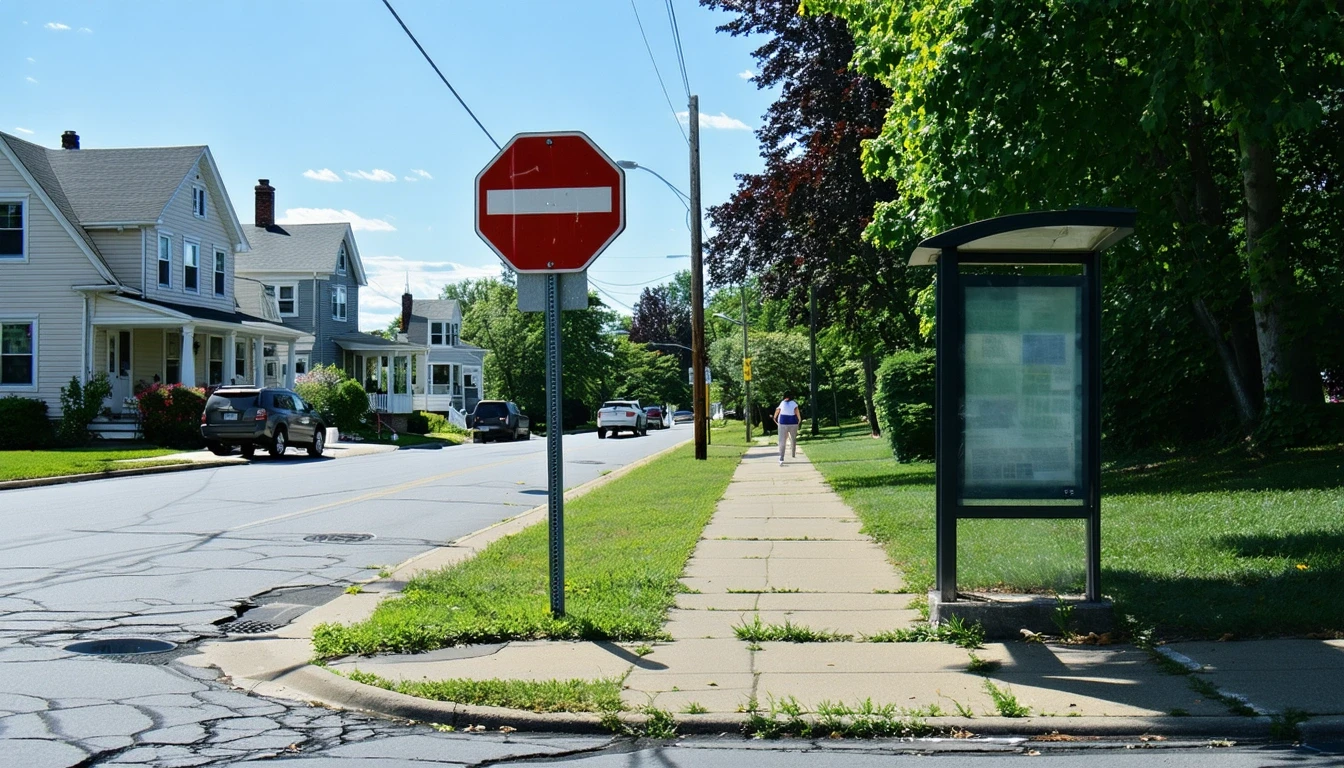
How People Get Around King of Prussia
King of Prussia operates as a car-supported community with rail transit serving as a viable option for certain commute patterns. The area’s development pattern—characterized by taller buildings, mixed residential and commercial land use, and moderate pedestrian infrastructure—creates pockets where transit works alongside areas where driving remains the only practical choice.
What newcomers often misunderstand is that rail access doesn’t eliminate car dependence here. Even households near stations typically maintain vehicles for errands, since the community’s errands infrastructure, while broadly accessible with high food and grocery density, is structured around driving to reach multiple destinations efficiently. The pedestrian-to-road ratio sits in a medium band, meaning sidewalks and walking paths exist but don’t always connect seamlessly to daily destinations.
The result is a transportation landscape where most residents use both modes: rail for specific commutes, cars for everything else. Only 6.2% of workers operate from home, meaning the vast majority must physically travel to work, and how they make that trip depends heavily on where they live within King of Prussia and where their job is located.
Public Transit Availability in King of Prussia
Public transit in King of Prussia centers around rail service, with systems such as SEPTA providing connections to Philadelphia and surrounding areas. The presence of rail infrastructure is definitive—stations exist and trains run—but coverage is corridor-based rather than comprehensive.
Transit works best for households living near station areas and commuting to destinations along the rail line. For these residents, rail offers a predictable, car-free option for work trips, particularly into Philadelphia’s center city. The community’s mixed land use and moderate pedestrian infrastructure near transit nodes support this pattern, making it possible to walk to the station from nearby housing.
Where transit falls short is in serving dispersed destinations, late-hour travel, and multi-stop daily patterns. King of Prussia’s layout includes areas well beyond walking distance from rail stations, and reaching grocery stores, schools, medical appointments, or social activities typically requires a car even for transit-commuting households. The bike infrastructure exists in pockets with a medium bike-to-road ratio, but cycling remains a supplementary option rather than a primary transportation mode for most residents.
Driving & Car Dependence Reality
Driving is essential for daily life in King of Prussia for most households. Even with rail transit present, the community’s structure—how destinations are distributed, how errands cluster, how family infrastructure like schools and playgrounds spread across medium-density areas—makes car ownership the baseline assumption for household planning.
Parking availability generally supports this car-oriented pattern. The taller building profile and more vertical development don’t eliminate parking; they incorporate it into residential and commercial structures. Households expect to park at home, at work, at stores, and at recreational destinations without the friction common in denser urban cores.
The tradeoff is flexibility and control. Car-dependent households absorb fuel costs, maintenance, insurance, and depreciation, but gain the ability to structure their days around multiple stops, irregular schedules, and destinations not served by transit. For families managing school drop-offs, activity shuttles, and grocery runs, driving isn’t a preference—it’s the only mode that makes the logistics work.
Commuting Patterns & Daily Mobility
The average commute in King of Prussia runs 24 minutes, suggesting many residents work relatively close to home or have access to efficient routes. But averages obscure the split: 32.1% of workers face long commutes, indicating a substantial portion of the community travels well beyond King of Prussia for employment.
This creates two distinct commuting realities. Households with short commutes—whether by car to nearby office parks or by rail to accessible job centers—experience transportation as a manageable daily cost in time and money. Households facing long commutes absorb significantly more of both, and their transportation mode choice becomes a tradeoff between time flexibility (driving) and cost predictability (transit, if their destination is rail-accessible).
Daily mobility extends beyond work trips. The broadly accessible errands infrastructure, with high food and grocery density, means residents don’t travel far for basics, but they do travel frequently. Multi-stop patterns—work, daycare, grocery, pharmacy, gym—favor car use even when individual destinations are nearby, because transit doesn’t efficiently connect multiple dispersed points.
Proximity benefits accrue to households living near both their workplace and their daily destinations. For these residents, King of Prussia’s layout reduces transportation friction significantly. For those commuting out or managing complex household logistics, transportation becomes a larger structural factor shaping daily life.
Who Transit Works For — and Who It Doesn’t
Transit fits households with straightforward commutes along rail corridors and the flexibility to drive for non-work trips. A single professional commuting to Philadelphia, living within walking distance of a station, and willing to drive or arrange delivery for groceries and errands can function with transit as their primary commute mode while maintaining a car for everything else.
Families with school-age children face harder tradeoffs. School and playground density sits in the medium band, meaning family infrastructure exists but requires intentional travel to access. Coordinating multiple daily trips—school, activities, appointments—by transit isn’t realistic in King of Prussia’s layout. These households depend on cars regardless of commute mode.
Renters in core areas near stations have the best shot at reducing car dependence, but “reducing” doesn’t mean eliminating. The community’s structure supports car-light living for a narrow slice of households, not car-free living for any significant population.
Households in peripheral areas, away from rail stations and outside the walkable pockets, face full car dependence. For these residents, transit isn’t a viable option for any regular trip, and transportation planning centers entirely on vehicle access, fuel exposure, and route efficiency.
Transportation Tradeoffs in King of Prussia
Choosing between transit and driving in King of Prussia isn’t about affordability math—it’s about control, predictability, and flexibility.
Transit offers schedule predictability and eliminates direct fuel and parking costs for covered trips, but it locks households into fixed routes and timetables. Driving offers complete flexibility and the ability to structure complex daily patterns, but it exposes households to fuel price volatility, maintenance unpredictability, and the ongoing cost burden of vehicle ownership.
For commutes, the tradeoff often comes down to destination. Rail-accessible jobs favor transit; dispersed or suburban employment centers favor driving. For errands and family logistics, driving dominates because King of Prussia’s errands infrastructure, while broadly accessible, is structured around car-based multi-stop patterns rather than walkable neighborhood retail.
The community’s integrated green space access and water features create recreational destinations, but reaching parks and outdoor areas typically requires driving for most households. The moderate pedestrian infrastructure supports walking within limited zones, not across the full community.
Households must decide whether they’re optimizing for commute cost, daily convenience, or time flexibility, because King of Prussia’s transportation structure rarely delivers all three simultaneously.
FAQs About Transportation in King of Prussia (2026)
Is public transit usable for daily commuting in King of Prussia?
Rail transit is usable for commutes to destinations along the line, particularly into Philadelphia. It works best for households living near stations with straightforward work trips. For commutes to dispersed suburban job centers or for daily patterns involving multiple stops, driving remains the practical choice.
Do most people in King of Prussia rely on a car?
Yes. Even households using transit for commuting typically own cars for errands, family logistics, and non-work travel. The community’s layout and errands structure make car ownership the baseline for most residents, with transit serving as a supplementary option for specific trip types.
Which areas of King of Prussia are easiest to live in without a car?
Areas within walking distance of rail stations offer the most viable car-light living, but even these areas present challenges for households managing groceries, family activities, or irregular schedules. True car-free living is not practical for most household types in King of Prussia.
How does commuting in King of Prussia compare to nearby cities?
King of Prussia’s 24-minute average commute is relatively short, but the long-commute share of 32.1% indicates significant variation. Compared to denser urban cores, King of Prussia offers more driving flexibility and less transit coverage. Compared to fully car-dependent suburbs, it provides more rail access but still requires car ownership for daily life.
Does King of Prussia have bike infrastructure for commuting?
Bike infrastructure exists in pockets, with a bike-to-road ratio in the medium band. Cycling is viable for some recreational trips and short errands, but it’s not a primary commuting mode for most residents due to distances, route connectivity, and weather exposure.
How Transportation Fits Into the Cost of Living in King of Prussia
Transportation in King of Prussia functions as a structural factor shaping housing choice, time allocation, and household flexibility. Households near rail stations pay a proximity premium in housing costs but gain commute options. Households in peripheral areas face lower housing costs but absorb higher transportation exposure through mandatory car dependence.
The decision isn’t just about monthly expenses—it’s about how transportation mode shapes daily life. Car-dependent households gain schedule control but lose cost predictability. Transit-using households gain commute stability but lose errand flexibility.
King of Prussia’s transportation landscape rewards households who can align their housing location, employment destination, and daily patterns with either rail corridors or efficient driving routes. Misalignment—living far from work, working in a transit-inaccessible location while living near a station, or needing frequent multi-stop trips—creates friction that compounds over time.
Understanding how you’ll actually move through King of Prussia daily, not just how you’ll commute, is essential to evaluating whether the community’s transportation structure fits your household’s needs. The infrastructure exists to support both modes, but it rarely supports both equally for the same household in the same season of life.
How this article was built: In addition to public economic data, this article incorporates location-based experiential signals derived from anonymized geographic patterns—such as access density, walkability, and land-use mix—to reflect how day-to-day living actually feels in King of Prussia, PA.