
How much is enough to feel at ease? In Homestead, the answer depends less on hitting a specific number and more on understanding where income pressure shows up first — and whether your household can absorb it without constant recalculation.
This article explains how comfort actually works in Homestead: which costs dominate stress, how the same income feels different depending on household composition, and what separates households that feel stable from those living paycheck to paycheck.
It won’t tell you exactly how much you need. It will help you judge whether what you earn matches how Homestead actually works.
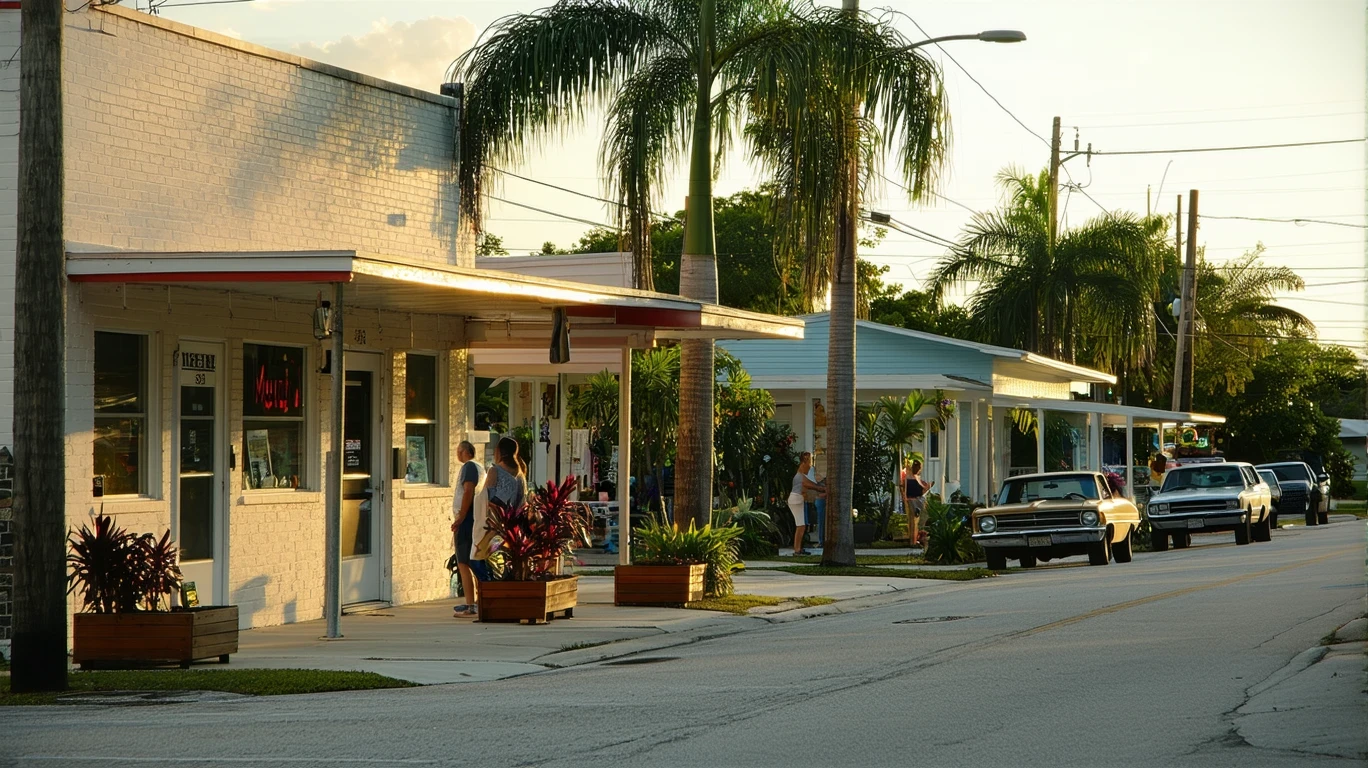
What “Living Comfortably” Means in Homestead
Comfort in Homestead isn’t about luxury. It’s about predictability: knowing your rent or mortgage won’t force you into a smaller place or a longer commute, that summer cooling bills won’t derail other spending, and that getting to work won’t consume hours you’d rather spend at home.
For many households, comfort also means having enough left over after housing, utilities, and transportation to make choices — dining out occasionally, replacing a worn appliance without panic, or saving incrementally rather than hoping nothing breaks.
Homestead sits in a climate zone where air conditioning isn’t optional. Homes here are shaped by heat and humidity, and utility bills reflect that reality year-round. Expectations around space, cooling capacity, and access to errands are baked into what “normal” feels like — and those expectations carry costs that don’t always show up in generic budgeting advice.
The median household income in Homestead is $57,739 per year. That figure provides context, not a target. Some households above that line still feel stretched. Others below it find stability by making deliberate tradeoffs. Comfort is less about where you land relative to the median and more about whether what drives expenses in Homestead aligns with how you actually live.
Where Income Pressure Shows Up First
In Homestead, housing cost is the first and most persistent source of pressure. The median gross rent is $1,527 per month. The median home value is $316,200. Both figures are high enough that they shape every other financial decision a household makes.
For renters, that monthly figure doesn’t include utilities, which add meaningful volatility. For owners, the home value translates into mortgage payments, property taxes, insurance (which has climbed steeply in Florida in recent years), and maintenance — all of which resist downward adjustment once committed.
Housing tradeoffs in Homestead often come down to space, age, or location. Paying less usually means accepting an older unit, a smaller footprint, or a spot farther from the corridors where grocery stores and services cluster. Each tradeoff has downstream effects: older homes may cost less upfront but demand more in cooling and repair. More distant locations reduce rent but extend commutes, which are already long here.
Utility costs in Homestead are driven overwhelmingly by cooling. Electricity rates sit at 15.02¢ per kWh, and usage is high throughout the year. Homes here don’t get a break season — even winter months require intermittent air conditioning. Summer bills can spike sharply depending on unit efficiency, insulation quality, and thermostat discipline. Households that can’t absorb a $50–$80 swing between low and high months often find themselves adjusting behavior around temperature rather than comfort.
Transportation pressure in Homestead is less about fuel cost and more about time and dependency. The average commute is 38 minutes, and nearly 60% of workers face what’s classified as a long commute. Gas prices currently sit at $3.93 per gallon, but the bigger cost is the hours spent in transit and the lack of viable alternatives. Public transit here is bus-only, and while some neighborhoods have walkable pockets with strong pedestrian infrastructure, errands and grocery access are corridor-clustered — meaning a car is functionally required for most households, even in areas where walking is possible.
For families, pressure multiplies. Homestead has strong family infrastructure — school density is high, and playgrounds are present throughout the city — but that doesn’t reduce the cost of raising children. Larger housing needs, higher utility usage, and the logistical complexity of managing long commutes while coordinating school and childcare schedules all compress the margin between income and expenses.
How the Same Income Feels Different by Household
A single adult earning $50,000 per year in Homestead faces a different set of constraints than a couple earning the same amount combined, and both experience pressure differently than a family of four at that income level.
Single adults often have lower absolute housing pressure — a one-bedroom apartment or shared housing arrangement costs less than a family-sized unit — but they absorb the full weight of rent, utilities, and transportation alone. In Homestead, where car ownership is nearly essential and commutes are long, that creates friction. A single income also means less flexibility to adjust when unexpected costs arise, and the corridor-clustered layout of grocery and errands access requires planning and time that can’t easily be split with a partner.
Couples without children can divide costs, which eases baseline pressure, but they still face the same transportation lock-in and long commutes. If both partners work, they may need two vehicles, doubling insurance, maintenance, and fuel costs. If one stays home or works part-time, the household loses that income cushion while still facing the same housing and utility baseline. Couples in Homestead often find that their combined income buys more stability than a single earner, but not necessarily more discretionary freedom — the cost structure here is high enough that even two incomes can feel tight if housing or commute expenses are elevated.
Families with children face the most complex pressure. Homestead’s strong school density and playground access ease some logistical burdens, but housing costs climb steeply with bedroom count, utility usage rises with more people at home, and the time cost of long commutes cuts directly into family availability. Families here often find themselves choosing between proximity to work (which shortens commutes but raises rent) and affordability (which extends commutes and increases transportation time). The presence of family infrastructure helps, but it doesn’t offset the financial weight of raising children in a place where baseline costs are already high.
The Comfort Threshold (Qualitative)
Comfort in Homestead begins when housing stops dictating every other decision. That means being able to choose a place based on fit rather than maximum affordability, absorbing a high utility month without cutting back elsewhere, and having enough margin that a car repair or medical bill doesn’t cascade into other tradeoffs.
It also means reaching a point where commute time becomes tolerable rather than crushing — either because income supports living closer to work, or because the household has enough flexibility that long transit hours don’t eliminate all discretionary time.
For families, comfort often hinges on whether both parents can work without childcare costs erasing one income, and whether the household can cover the higher housing, utility, and transportation costs that come with children without constantly recalculating.
Comfort isn’t about abundance. It’s about predictability and choice. Households that feel comfortable in Homestead typically have enough income that they’re not forced into the cheapest option in every category, and enough margin that normal volatility — a summer cooling spike, a tank of gas, a grocery run — doesn’t require behavioral adjustment.
There’s no single income figure that guarantees this. It depends on household size, commute tolerance, housing expectations, and sensitivity to cost swings. But the transition point is recognizable: it’s when bills stop dictating behavior, and discretionary spending becomes possible without monthly recalculation.
Why Online Cost Calculators Get Homestead Wrong
Most cost-of-living calculators reduce Homestead to a set of averages: median rent, typical utilities, estimated transportation. They produce a total, imply that total is what you’ll spend, and leave out everything that actually determines whether a household feels stable or stretched.
They don’t account for the fact that commute time in Homestead isn’t just a transportation cost — it’s a time cost that affects job flexibility, family logistics, and quality of life. They don’t explain that grocery and errands access is corridor-clustered, meaning some neighborhoods require far more driving than others despite having walkable infrastructure. They don’t capture the reality that cooling costs here aren’t seasonal — they’re year-round, with sharp summer peaks that vary widely depending on housing quality and efficiency.
Calculators also assume walkability and car dependency are binary, when in Homestead they’re neighborhood-specific. Some areas have high pedestrian infrastructure density and feel navigable on foot for daily life; others require a car for nearly every errand despite being part of the same city. Where you live within Homestead changes the cost structure significantly, and calculators don’t differentiate.
Most importantly, calculators don’t explain how lifestyle assumptions shape costs. A household that expects central air conditioning, a two-car setup, and a single-family home will spend far more than one willing to accept a smaller unit, moderate cooling, and a longer commute. Both can work in Homestead, but the income required to feel comfortable differs dramatically.
People often feel surprised after moving because the totals they saw online didn’t prepare them for the tradeoffs they’d actually face. The issue isn’t that the numbers were wrong — it’s that the numbers alone don’t explain how living here actually feels.
How to Judge Whether Your Income Fits Homestead
Rather than asking “Is my income high enough?”, ask whether your income and expectations align with how Homestead actually works.
How sensitive are you to housing tradeoffs? If you need a certain amount of space, a newer unit, or a specific location, your housing cost will be higher. If you’re willing to accept an older place, a smaller footprint, or a longer commute in exchange for lower rent, you’ll have more margin elsewhere. Homestead rewards flexibility here, but punishes rigidity.
Can you absorb seasonal utility swings? Cooling costs in Homestead are high and variable. If a $60 difference between a mild month and a hot month would force you to adjust spending elsewhere, you’ll feel that pressure regularly. If you can absorb it without recalculating, it becomes background noise.
Is time or money your limiting factor? Long commutes are the norm in Homestead. If your income allows you to live closer to work, you’ll spend more on housing but gain hours. If you’re willing to trade time for affordability, you’ll spend less on rent but more on transportation and transit hours. Neither is wrong, but the tradeoff is unavoidable.
How much do you rely on transit or walkability? Homestead has bus service and walkable pockets, but car ownership is functionally required for most households. If you’re expecting to live car-free or car-light, your options will be limited, and your logistics will be more complex. If you’re planning for one or two vehicles, you’ll have far more flexibility — but also higher costs.
How much flexibility do you expect month to month? If your budget requires every dollar to be allocated in advance, Homestead’s cost volatility — utility swings, transportation variability, occasional maintenance — will create constant friction. If you have enough margin to handle normal fluctuations without stress, the same volatility becomes manageable.
Do you have children, or are you planning to? Homestead’s family infrastructure is strong, but the cost of raising children here is high. Larger housing, higher utilities, and the logistical complexity of managing long commutes with school-age kids all add pressure. If your income can cover those costs without eliminating discretionary spending, Homestead works well for families. If not, the margin disappears quickly.
FAQs About Living Comfortably in Homestead
Is Homestead affordable for single-income households?
It depends on the income level and expectations. Single-income households in Homestead face the full weight of housing, utilities, and transportation costs without the ability to split them. If the income is high enough to cover median rent, absorb utility swings, and maintain a vehicle without constant tradeoffs, it can work. If the income is closer to the lower end of the range, affordability requires accepting smaller housing, older units, or longer commutes — and even then, margin is tight.
Does living farther from downtown Homestead make it more affordable?
Sometimes, but not always. Rent may be lower in more distant areas, but transportation costs rise — both in fuel and time. Homestead’s corridor-clustered errands layout means that living farther from central corridors often requires more driving for groceries and services, even in neighborhoods with walkable infrastructure. The affordability gain from cheaper rent can be offset by higher transportation costs and longer commutes, especially if both partners in a household work.
How much do utilities actually vary in Homestead?
Cooling costs dominate utility spending here, and they vary significantly depending on housing quality, insulation, and thermostat settings. A household in an older, less efficient unit can see summer bills climb steeply, while a newer, well-insulated place with efficient AC may stay more stable. The difference between a low month and a high month can easily be $50–$80 or more, and there’s no true “off season” — even winter months require occasional cooling.
Can you live in Homestead without a car?
Technically yes, but it’s difficult. Homestead has bus service and some neighborhoods with strong pedestrian infrastructure, but grocery stores and services are corridor-clustered, meaning most errands require intentional routing and time. Without a car, job options narrow, commute times lengthen significantly, and daily logistics become far more complex. Most households here treat car ownership as non-negotiable.
Is Homestead a good fit for families on a median income?
Homestead has strong family infrastructure — high school density, accessible playgrounds, and parks — which eases some logistical burdens. But the cost of raising children here is high. Housing costs climb with bedroom count, utility usage rises, and long commutes reduce family time. Families at or near the median household income often find themselves making deliberate tradeoffs: older housing, longer commutes, or reduced discretionary spending. It can work, but it requires discipline and flexibility. Families above the median typically have more breathing room; those below it face persistent pressure.
How this article was built: In addition to public economic data, this article incorporates location-based experiential signals derived from anonymized geographic patterns—such as access density, walkability, and land-use mix—to reflect how day-to-day living actually feels in Homestead, FL.
Homestead can work well for some households — but only if expectations match reality. Comfort here isn’t guaranteed by income alone. It’s earned by understanding where pressure shows up, making deliberate tradeoffs, and ensuring that what you earn aligns with how the city actually functions.