
Can you live in Homestead without a car? For most residents, the honest answer is no—not comfortably, not for long. Homestead sits at the southern edge of Miami-Dade County, where suburban sprawl meets agricultural land and the infrastructure reflects a car-first reality. Public transit exists, but it plays a supporting role rather than anchoring daily life. Understanding how people actually move through Homestead—and what that means for time, flexibility, and household logistics—matters more than transit maps or route numbers ever will.
How People Get Around Homestead
Homestead operates primarily as a driving city. The layout is suburban and spread out, with residential neighborhoods, commercial corridors, and employment centers separated by distances that make walking or biking impractical for most daily needs. While parts of the city show substantial pedestrian infrastructure—sidewalks, crosswalks, and pathways that exceed typical suburban densities—these walkable pockets don’t connect into a citywide network. Instead, they serve localized errands: a grocery run, a school drop-off, a walk to a nearby park.
What newcomers often misunderstand is that Homestead’s walkability exists in fragments, not as a continuous experience. You might live in a neighborhood where you can walk to a corner store or a bus stop, but getting to work, accessing healthcare, or running a full day of errands almost always requires a car. The pedestrian-to-road ratio in certain areas signals genuine walkable design, but that design doesn’t extend across the entire city. It’s localized, and it’s not enough to replace driving for most households.
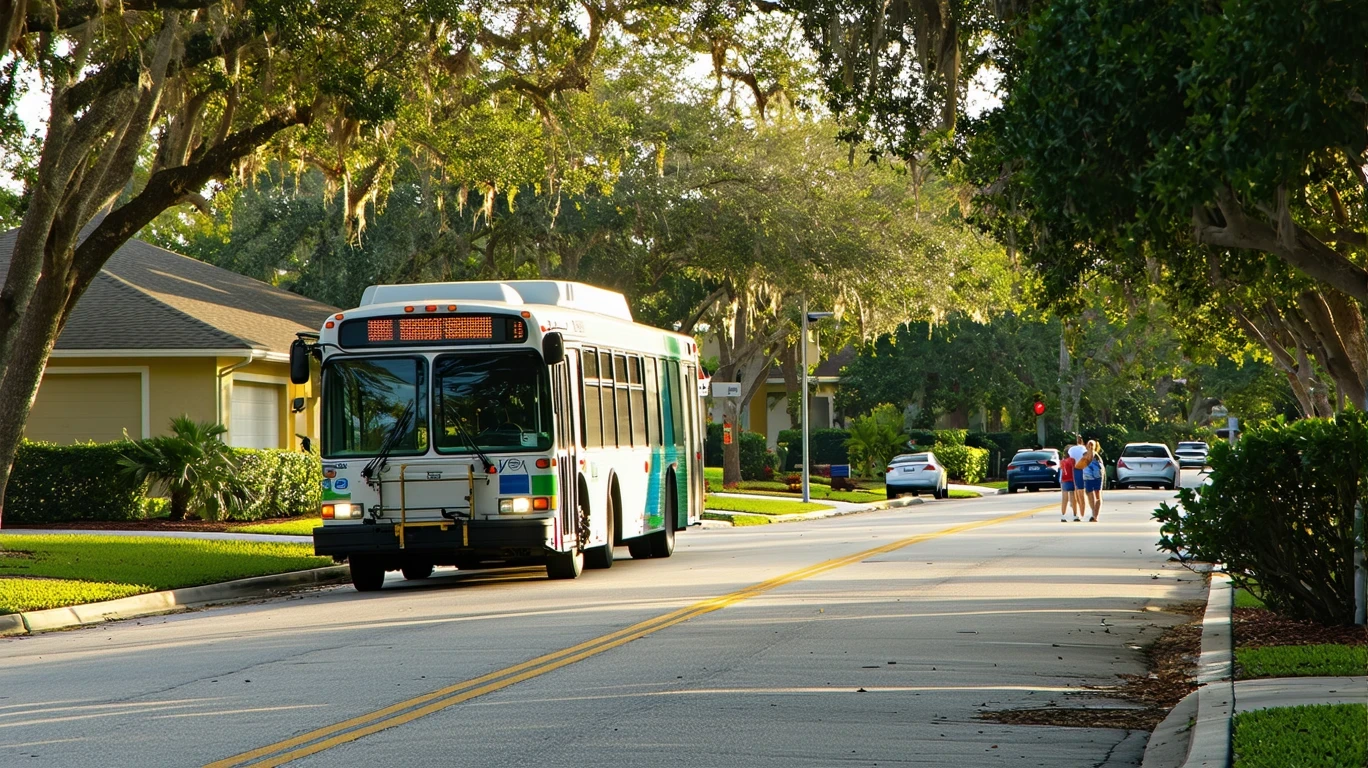
Bus service is present and provides a baseline level of public transit, but without rail connections, regional mobility remains limited. For residents who work locally or have flexible schedules, the bus can handle specific trips. For everyone else—especially those commuting to Miami, Kendall, or other job centers—driving is the default, and often the only practical option.
Public Transit Availability in Homestead
Public transit in Homestead often centers around systems such as Miami-Dade Transit, which operates bus routes connecting the city to surrounding areas. These routes provide access to grocery stores, schools, medical facilities, and employment hubs, particularly along major corridors where commercial and residential land use overlap. In these areas, transit can work for routine errands and predictable schedules.
But transit coverage is uneven. The bus network serves main roads and denser corridors effectively, but residential neighborhoods farther from these arteries see limited service. Late-night and weekend options are typically sparse, which constrains shift workers, service industry employees, and anyone whose schedule doesn’t align with standard commute hours. If you live off a primary route or need to make multi-stop trips across town, transit quickly becomes impractical.
Transit works best for residents who live near high-frequency corridors, work along those same corridors, and have schedules that align with service hours. It works less well—or not at all—for households in peripheral neighborhoods, for parents managing school and daycare logistics, or for anyone whose job requires flexibility, speed, or reliability that the bus network can’t consistently provide.
Driving & Car Dependence Reality
Driving isn’t just common in Homestead—it’s structurally necessary for most households. The city’s layout, the distance between home and work, and the limited reach of public transit all push residents toward car ownership. Parking is generally accessible and free in most residential and commercial areas, which removes one of the friction points that might otherwise discourage driving in denser cities.
For families, driving becomes even more essential. Dropping kids at school, getting to daycare, running errands across multiple locations, and managing weekend activities all require the flexibility and speed that only a car provides. Even in neighborhoods with decent pedestrian infrastructure, the distances involved and the lack of connected transit make car-free living a logistical challenge rather than a realistic choice.
Commuters face a similar reality. The average commute in Homestead is 38 minutes, and nearly 60% of workers experience long commutes—a signal that many residents are traveling significant distances or navigating congestion to reach job centers. These aren’t quick trips down the street; they’re sustained drives that require reliable transportation and absorb time daily.
Commuting Patterns & Daily Mobility
Most Homestead residents structure their commutes around single-job, car-based travel. The 38-minute average reflects a mix of local workers and those commuting north toward Miami, Kendall, or other employment hubs. For some, the commute is straightforward—highway access is decent, and traffic is predictable. For others, especially those traveling during peak hours or navigating surface streets, the commute becomes a daily friction point that compounds over time.
About 23.5% of Homestead workers operate from home, which offers a way out of the commute grind entirely. Remote workers can leverage the city’s lower housing costs without absorbing the time and fuel costs of a daily drive. They also benefit more from the walkable pockets that do exist, since they can handle errands on foot or by bike without needing to commute separately.
For everyone else, proximity to work matters more than transit access. Living near your job—or near a direct route to your job—reduces commute time and increases predictability. Living farther out, or in areas poorly served by major roads, means longer drives and more exposure to congestion, accidents, and delays.
Who Transit Works For—and Who It Doesn’t
Public transit in Homestead works for a narrow slice of residents: those who live along major bus corridors, work along those same corridors, and have schedules that align with service hours. This might include students, retirees, or workers with fixed shifts at accessible job sites. For these households, the bus provides a functional, low-cost way to handle routine trips without owning a car.
But transit doesn’t work for most families, especially those with children. School schedules, daycare pickups, grocery runs, and weekend activities require the flexibility and speed that transit can’t provide. It also doesn’t work well for shift workers, healthcare employees, or anyone whose hours fall outside standard service times. And it doesn’t work for residents in peripheral neighborhoods, where bus routes are sparse or nonexistent.
Renters in core areas closer to transit corridors have the best chance of reducing car dependence, but even then, it’s a tradeoff. You gain access to transit, but you lose flexibility and time. Homeowners in suburban neighborhoods farther from main roads face a different reality: transit isn’t a viable option at all, and car ownership becomes non-negotiable.
Transportation Tradeoffs in Homestead
Choosing between transit and driving in Homestead isn’t really a choice for most households—it’s a matter of whether transit is even available and practical. But for those who do have the option, the tradeoffs are clear.
Transit offers lower direct costs and removes the need for car ownership, insurance, and maintenance. But it sacrifices speed, flexibility, and convenience. Trips take longer, schedules are rigid, and multi-stop errands become logistically complex. For households with tight schedules or multiple responsibilities, those tradeoffs often tip the scale toward driving.
Driving offers control, predictability, and the ability to move freely across the city and region. But it comes with exposure to fuel prices, maintenance costs, and the time burden of long commutes. In Homestead, where nearly 60% of workers face long commutes, that time burden is significant and affects daily quality of life.
The real tradeoff isn’t just financial—it’s structural. Transit limits where you can live and work. Driving expands those options but locks you into a cost structure that includes fuel, insurance, and vehicle upkeep. Neither option is objectively better; the right choice depends on where you live, where you work, and how much flexibility your household needs.
FAQs About Transportation in Homestead (2026)
Is public transit usable for daily commuting in Homestead?
Public transit can work for daily commuting if you live and work along major bus corridors and your schedule aligns with service hours. For most residents, especially those commuting to job centers outside Homestead or working non-standard hours, transit alone isn’t practical. The bus network provides baseline connectivity, but it doesn’t replace the flexibility and speed of driving for the majority of households.
Do most people in Homestead rely on a car?
Yes. The city’s layout, the distance between residential and employment areas, and the limited reach of public transit all make car ownership the norm. Even in neighborhoods with walkable infrastructure, most residents still need a car for commuting, errands, and family logistics. Transit serves a supporting role, but it doesn’t anchor daily mobility for most households.
Which areas of Homestead are easiest to live in without a car?
Areas near major bus corridors and commercial centers offer the best chance of reducing car dependence. Neighborhoods with higher pedestrian infrastructure density and proximity to grocery stores, schools, and transit stops make car-free living more feasible, though still challenging. Peripheral neighborhoods farther from main roads and transit routes require car ownership for practical daily living.
How does commuting in Homestead compare to nearby cities?
Homestead’s 38-minute average commute and high percentage of long commutes reflect its position at the southern edge of the Miami metro area. Residents often travel significant distances to reach job centers, which increases commute times and exposure to congestion. Compared to more centrally located cities in the metro, Homestead commuters typically face longer drives and fewer transit alternatives.
Can you bike for transportation in Homestead?
Biking is possible in certain areas where cycling infrastructure exists, but it’s not a citywide solution. Some neighborhoods and corridors have bike lanes and pathways that support short trips, but the distances involved, the heat and humidity, and the car-oriented road design make biking impractical for most commutes and errands. Biking works best as a supplement to driving, not a replacement.
How Transportation Fits Into the Cost of Living in Homestead
Transportation in Homestead isn’t just about getting from point A to point B—it’s a structural factor that shapes where you can live, where you can work, and how much time and money you spend managing daily logistics. The city’s car-dependent layout means most households absorb the costs of vehicle ownership, fuel, insurance, and maintenance as baseline expenses, not optional ones.
For households evaluating Homestead, understanding transportation means understanding tradeoffs. Lower housing costs can be offset by longer commutes and higher transportation expenses. Walkable pockets exist, but they don’t eliminate the need for a car. Transit provides a baseline option, but it doesn’t serve most neighborhoods or schedules effectively.
The key is aligning your housing choice with your commute and daily mobility needs. Living near work, near major corridors, or with remote work flexibility reduces transportation friction and gives you more control over time and costs. Living farther out or in areas poorly served by transit increases dependence on driving and expands the time and financial burden of getting around.
Transportation isn’t a line item you can optimize away—it’s a structural reality that affects every other decision you make about living in Homestead. The households that manage it best are the ones who plan for it early, choose locations strategically, and build their routines around the infrastructure that actually exists, not the infrastructure they wish were there.
How this article was built: In addition to public economic data, this article incorporates location-based experiential signals derived from anonymized geographic patterns—such as access density, walkability, and land-use mix—to reflect how day-to-day living actually feels in Homestead, FL.