
Is Homestead the kind of place you grow roots—or just pass through? That question tends to split people cleanly. For families drawn to strong schools, accessible playgrounds, and homes with actual yards, Homestead often feels like exactly what they were looking for. For those hoping to ditch the car, walk to dinner, or find urban texture, it can feel like a daily negotiation with distance and car dependency.
The city sits at the southern edge of the Miami metro, where suburban growth meets agricultural heritage. That duality shows up everywhere: in the mix of older neighborhoods and newer planned communities, in the tension between small-town identity and big-city commute times, and in the way people talk about what Homestead is becoming versus what it used to be.
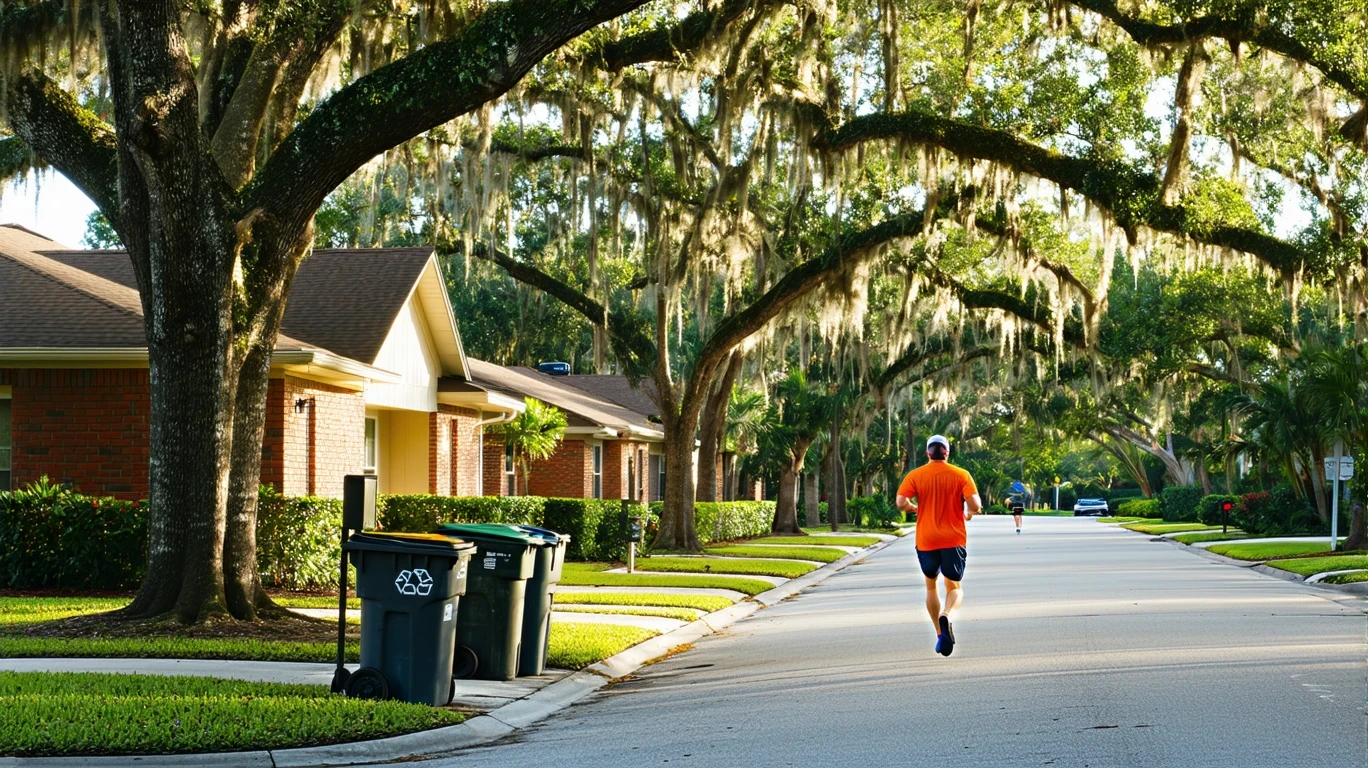
The Emotional Landscape of Homestead
Homestead’s vibe is shaped by tradeoffs that feel very concrete. Housing costs tend to run lower than much of the metro, which creates real relief for families stretching toward homeownership or renters trying to avoid Miami-Dade’s tightest markets. But that affordability comes with a commute—often a long one. The average trip to work here runs 38 minutes, and nearly 60% of workers face what counts as a long commute by regional standards.
That time-versus-money calculus defines a lot of the emotional experience. People who feel good about Homestead tend to frame it as a place where you can still get space, stability, and strong family infrastructure without being priced out. People who feel friction tend to focus on isolation, drive time, and the feeling that everything requires planning ahead.
The city’s structure reinforces that split. Walkable pockets exist—pedestrian infrastructure is notably strong in some areas—but they’re not evenly distributed. Errands and groceries cluster along certain corridors, which means convenience depends heavily on where you land within the city. For households that value being able to walk to a park or school, Homestead can deliver. For those hoping to run daily errands on foot, the experience is much more car-dependent.
What People Are Talking About Online
Social media discussion around Homestead tends to circle a few recurring themes: commute frustration, pride in community growth, concern about overdevelopment, and appreciation for the slower pace compared to northern Miami-Dade.
On local Facebook groups and regional Reddit threads, you’ll see comments like:
- “We moved here for the schools and the yard. Zero regrets, but yeah, we drive everywhere.”
- “It’s quiet, it’s affordable, and my kids can actually play outside. That’s worth the commute for us.”
- “If you’re used to walkable neighborhoods, this is going to feel isolating. Everything is 15 minutes away by car.”
There’s also a protective tone when newcomers compare Homestead unfavorably to more urban parts of the metro. Long-time residents push back on the idea that the city is “too far” or “nothing to do,” often pointing to parks, local events, and the agricultural roots that still shape the area’s identity. But that defensiveness itself reflects the tension: Homestead is aware it doesn’t fit the urban mold, and opinions split on whether that’s a feature or a limitation.
How Local Coverage Frames the City
Local news and community outlets tend to frame Homestead through the lens of growth, change, and infrastructure catch-up. The tone is rarely negative, but it’s not celebratory either—it’s more observational, focused on the mechanics of a city adjusting to population growth and evolving expectations.
Recurring headline-style themes include:
- “New Retail and Dining Options Arrive as Homestead Expands”
- “Residents Debate Development Pace and Neighborhood Character”
- “Commute Times Remain a Central Tradeoff for Homestead Families”
- “Schools and Parks See Investment as Population Grows”
- “Community Grapples with Identity: Suburban Hub or Small-Town Roots?”
The framing reflects a city in transition. There’s acknowledgment of improvement—more amenities, better infrastructure—but also awareness of what’s been lost or strained in the process. It’s not a story of decline or boom; it’s a story of adjustment.
Review-Based Public Perception
On platforms like Google Reviews, Yelp, and Nextdoor-style community boards, Homestead’s reputation is split along expectation lines.
People who wanted suburban structure, family amenities, and housing tradeoffs that favor space over location tend to leave positive reviews. They highlight responsive schools, accessible parks, safe neighborhoods, and the ability to afford a single-family home. The praise is practical, not passionate—it’s about fit, not excitement.
People who expected more walkability, dining variety, or urban texture tend to express disappointment. The complaints aren’t about danger or decay; they’re about monotony, car dependency, and the feeling that social life requires driving to other parts of the metro. Newer planned areas get credit for being clean and well-maintained, but also criticism for feeling generic. Older pockets get praised for character but sometimes dinged for fewer amenities nearby.
Healthcare access is a quiet but recurring concern. Clinics and pharmacies are present, but the absence of a local hospital means serious medical needs require travel. For families with young kids or aging parents, that’s a friction point that doesn’t always show up until it matters.
How Homestead Compares to Nearby Cities
| Dimension | Homestead | Florida City | Cutler Bay |
|---|---|---|---|
| Overall Vibe | Suburban, family-focused, transitional | Smaller, quieter, more rural feel | Planned, polished, closer to metro core |
| Commute Tradeoff | Long but tolerable for affordability | Similar distance, fewer direct routes | Shorter commute, higher housing costs |
| Walkability | Pockets exist, mostly car-dependent | Very car-dependent | More consistent pedestrian infrastructure |
| Family Infrastructure | Strong schools and playgrounds | Limited, fewer options | Strong, newer facilities |
| Dining and Retail | Growing, corridor-clustered | Sparse, requires travel | More variety, chain-heavy |
If you’re deciding between these three, the choice often comes down to how much commute time you’ll tolerate and what you need within 10 minutes of home. Homestead offers more infrastructure than Florida City and better housing value than Cutler Bay, but it asks you to accept distance as part of the deal. Cutler Bay shortens the commute and adds walkability, but you’ll pay more for less space. Florida City maximizes affordability but minimizes convenience.
None of these cities will feel urban. If that’s the goal, you’re looking in the wrong zone. But if you’re trying to balance family needs, space, and day-to-day costs, Homestead tends to land in the middle—not the cheapest, not the closest, but functional for households willing to drive.
What Locals Are Saying
“We bought here three years ago and honestly, it’s been great for our kids. Good schools, parks we actually use, and we’re not drowning in rent. The commute is rough, but we knew that going in.”
— Family with two school-age children
“I thought I could make it work without a car. I was wrong. Everything requires driving, and the bus system just doesn’t cover enough to be reliable for work.”
— Young professional, renter
“It’s not exciting, but it’s stable. I like that it’s not overrun yet, that you can still find parking, that people know their neighbors. It feels like a real community, not just a place people sleep.”
— Long-time resident
“We moved from Kendall and the difference in housing cost was huge. But now we spend that savings on gas and car maintenance. It’s a tradeoff, and some days it feels worth it, other days not so much.”
— Couple in their 30s
“If you work remote, this is actually a pretty solid spot. You get space, it’s quieter, and you’re not paying Miami prices. But if you’re commuting daily, think hard about what that hour-plus round trip does to your life.”
— Remote worker, homeowner
“I grew up here and it’s changed a lot. More people, more traffic, more development. Some of it’s good—better stores, nicer parks—but it’s also losing some of what made it feel like a small town.”
— Longtime local, retired
“The lack of a hospital is a real issue. When my daughter had an emergency, we had to drive 20 minutes. That’s not something you think about until you need it.”
— Parent, homeowner
Does Homestead Feel Like a Good Fit?
Homestead works best for people who know exactly what they’re trading and feel good about the exchange. If you want strong family infrastructure, more house for your money, and a community that still has room to breathe, the city delivers. If you need walkability, short commutes, or immediate access to urban amenities, you’ll feel the friction daily.
The city’s structure creates real convenience in some areas—walkable pockets, clustered errands, accessible schools—but it’s not evenly distributed. Where you land within Homestead matters as much as the decision to move here in the first place.
This isn’t a place people tend to romanticize. It’s a place people choose because the math works, because the schools are solid, because they can afford to own instead of rent. The satisfaction comes from alignment, not excitement. If that fits your priorities, Homestead will likely feel like a smart, stable choice. If it doesn’t, the distance and car dependency will wear on you quickly.
For a clearer picture of how housing, transportation, and lifestyle needs interact here, exploring the financial and logistical details can help sharpen the decision.
How this article was built: In addition to public economic data, this article incorporates location-based experiential signals derived from anonymized geographic patterns—such as access density, walkability, and land-use mix—to reflect how day-to-day living actually feels in Homestead, FL.
The perspectives shown reflect commonly expressed local sentiment and recurring themes in public discussion, rather than individual accounts.