
A first-time renter moving to Homestead faces a monthly rent near $1,527, electricity bills that spike hard during summer cooling months, and a commute structure that often requires a car even in neighborhoods with decent pedestrian infrastructure. A first-time buyer entering at the median home value of $316,200 takes on predictable mortgage payments but unpredictable exposure: property insurance in a hurricane zone, year-round cooling costs, and exterior maintenance in relentless humidity. Both paths require understanding how Homestead’s position—south of Miami, shaped by agriculture and suburban growth—creates a housing market where proximity to metro employment doesn’t eliminate tropical cost intensity.
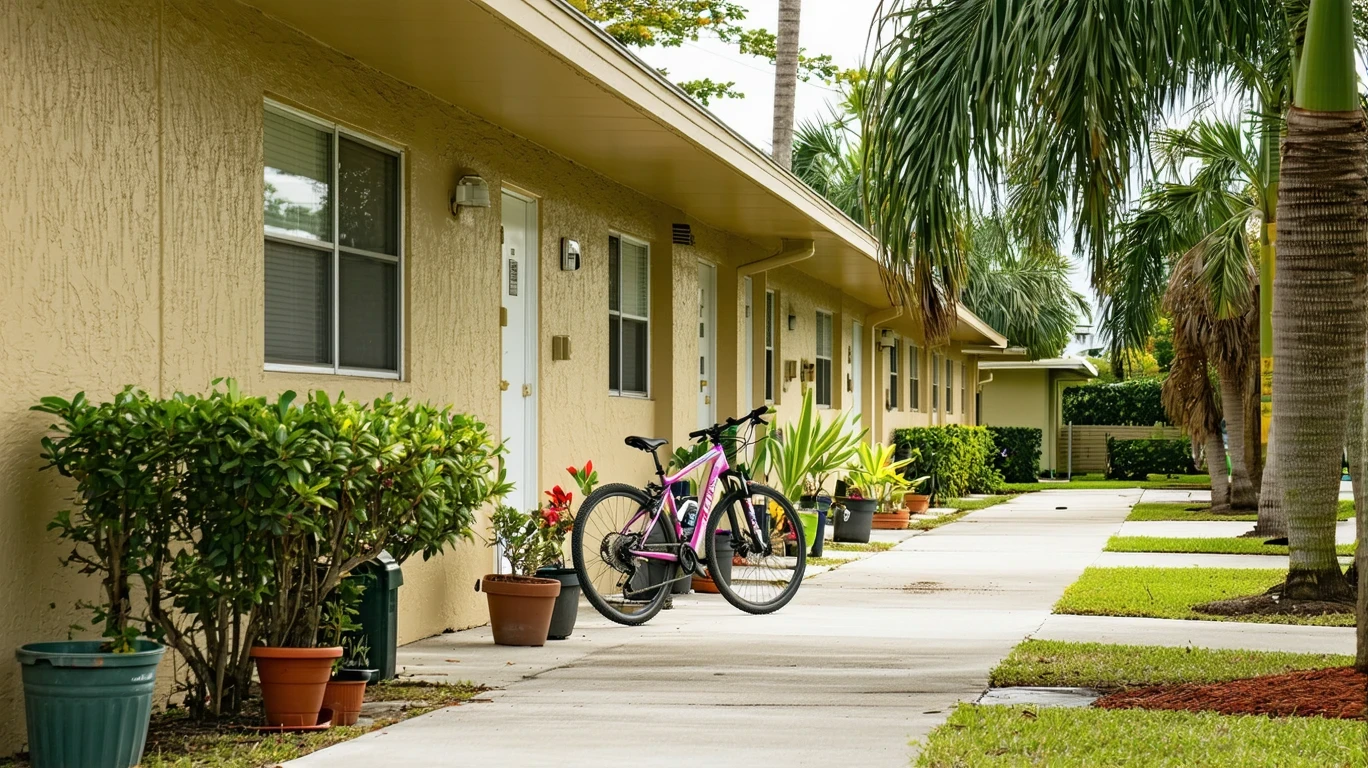
The Housing Market in Homestead Today
Homestead sits at the southern edge of the Miami-Fort Lauderdale metro, where suburban development meets agricultural land and Everglades proximity. The housing market reflects this duality: it’s more affordable than Miami proper, but it’s not insulated from metro-wide demand. Commuters willing to drive 38 minutes on average can access employment throughout Miami-Dade County while living in a city with a median household income of $57,739 per year—well below the income levels that dominate closer-in suburbs.
What newcomers often misunderstand is that Homestead’s affordability comes with trade-offs that aren’t immediately visible in listing prices. The housing stock is heavily single-family, with apartments clustered along commercial corridors rather than distributed throughout neighborhoods. Walkable pockets exist—pedestrian infrastructure exceeds typical suburban ratios in parts of the city—but errands and groceries still tend to cluster along corridors, meaning most households rely on cars for daily logistics even if they can walk within their immediate area. The city’s strong school density and family-oriented infrastructure make it attractive to households with children, but the tropical climate and hurricane exposure shape the cost experience in ways that don’t show up in rent or purchase price alone.
Renting in Homestead
At $1,527 per month, median gross rent in Homestead represents a significant share of the local median household income. Renters here are often service workers, younger families, or commuters who prioritize proximity to employment over neighborhood walkability. Rental availability is tightest in areas with mixed land use and better pedestrian access; most rental housing sits along major corridors or in apartment complexes rather than scattered single-family rentals.
Rental pressure in Homestead is shaped by its role as a commuter city. People who work in Miami or other parts of the metro but can’t afford closer-in rents end up here, creating steady demand even as the local economy remains anchored in agriculture, retail, and service industries. The unemployment rate of 2.4% signals a tight labor market, but wages don’t always keep pace with housing costs driven by metro-wide competition.
Renters should expect utilities to vary sharply by season. Electricity at 15.02¢/kWh becomes a dominant expense during the long cooling season, and older apartment buildings without updated insulation or efficient AC systems can see summer bills climb steeply. Renters in single-family homes face the same cooling exposure plus responsibility for yard care or irrigation costs, depending on lease terms. The rental experience in Homestead is less about neighborhood walkability—though pockets exist—and more about managing the friction between commute length, utility volatility, and the limited availability of housing near daily errands.
Owning a Home in Homestead
A median home value of $316,200 makes ownership accessible compared to Miami-Dade’s closer-in markets, but it requires dual income at the local median or a single earner well above it. Ownership in Homestead exposes buyers to a set of costs that are predictable in category but volatile in magnitude: property insurance in a hurricane zone, year-round cooling, and exterior maintenance in a climate that accelerates wear on roofs, stucco, and landscaping.
Property taxes in Florida don’t include state income tax, but homeowners face insurance costs that fluctuate with storm seasons and carrier availability. Hurricane preparedness isn’t optional—it’s a recurring expense that includes both premiums and episodic costs like storm shutters, generator fuel, or evacuation. These aren’t annual averages; they’re exposures that hit irregularly but with intensity.
HOAs are common in newer subdivisions, and they often bundle services like lawn care, irrigation, or community amenities. This can simplify maintenance but adds a fixed monthly cost that doesn’t decline with the mortgage. Older single-family homes outside HOA governance give owners more control but require direct management of tropical landscaping, pest control, and exterior upkeep in humidity that doesn’t relent.
Ownership in Homestead rewards households who can absorb volatility and plan for episodic costs. It’s not a market where the mortgage is the only number that matters. The cost experience is shaped by how well a household manages cooling, insurance, and the ongoing maintenance demands of a tropical climate.
Apartment vs House in Homestead — Cost Behavior Comparison
| Expense Category | Apartment | House |
|---|---|---|
| Cooling Costs | Lower square footage reduces total usage, but older buildings with poor insulation can spike bills during summer months | Larger footprint and often higher ceilings increase cooling load; single-family homes in full sun without shade trees face dominant summer exposure |
| Exterior Maintenance | Landlord or HOA handles roof, stucco, and building envelope; tenant exposure limited to interior | Owner responsible for roof replacement (accelerated by tropical storms), stucco repair, and exterior paint in humidity; episodic but significant |
| Yard & Landscaping | Not applicable or minimal; some complexes include small patios | Irrigation, mowing, pest control, and tropical plant management required year-round; drought or water restrictions can increase cost or effort |
| Hurricane Preparedness | Building-level prep managed by property owner; tenant handles interior securing and evacuation only | Owner bears full cost of storm shutters, generator, and exterior securing; prep is recurring and non-negotiable |
| Parking & Storage | Assigned or shared parking common; limited storage for tools, outdoor equipment, or hurricane supplies | Garage or carport typical; space for generator, storm supplies, and lawn equipment; adds utility but requires management |
Methodology note: This table includes only categories where cost behavior differs meaningfully in Homestead due to climate, housing stock, or infrastructure. Generic differences (e.g., “houses are bigger”) were excluded. Rows reflect how tropical exposure, storm seasons, and suburban housing patterns shape the ownership and rental experience locally.
Utilities & Upkeep Differences
Utility exposure in Homestead is dominated by cooling. The long, hot summer season drives electricity usage far above what heating would require in colder climates, and the difference between an efficient AC system and an aging one can be the difference between manageable and punishing summer bills. Apartments with shared walls and smaller square footage have lower total cooling loads, but they’re also more likely to have older HVAC systems and less control over insulation upgrades. Houses offer more control—owners can invest in better insulation, programmable thermostats, or newer AC units—but they also expose to larger spaces, higher ceilings, and direct sun on roofs and walls.
Upkeep in Homestead’s climate is relentless. Humidity accelerates mold, mildew, and exterior paint degradation. Roofs take a beating from intense sun and seasonal storms. Landscaping isn’t optional; without regular mowing and irrigation, yards become overgrown or brown quickly. Pest control is a recurring cost, not a one-time fix. Apartment renters avoid most of this, though they may still face higher rent to cover the landlord’s cost of building-level maintenance. Homeowners face it directly, and the episodic nature—roof replacement after a storm, AC compressor failure in July—means the cost experience is less about averages and more about whether a household has reserves to handle spikes.
The difference between renting and owning in Homestead isn’t just monthly payment size. It’s about who absorbs the volatility of tropical maintenance and utility exposure, and whether a household has the flexibility to manage irregular, high-intensity costs.
Rent vs Buy: Long-Term Exposure in Homestead
Renting in Homestead keeps housing costs more predictable month-to-month but exposes tenants to rent increases at lease renewal and limits control over cooling efficiency or maintenance quality. Renters avoid property insurance volatility and storm prep costs, but they also can’t build equity or lock in a fixed mortgage payment. In a market where rental demand is driven partly by metro-wide commuters, rent pressure doesn’t necessarily ease even if local wages stay flat.
Owning shifts the cost structure entirely. The mortgage payment is fixed (for most buyers), but property insurance, taxes, and maintenance are not. Insurance costs in hurricane zones can swing with carrier availability and storm history. Cooling costs fluctuate with summer intensity and system efficiency. Maintenance expenses arrive episodically—roof work, AC replacement, exterior repair—and their timing is unpredictable. Ownership rewards households who can absorb this volatility and plan for irregular expenses, but it punishes those who assume the mortgage is the only number that matters.
The long-term tradeoff in Homestead isn’t about which option costs less in total. It’s about which risk profile fits a household’s income stability, savings cushion, and tolerance for managing tropical climate exposure. Renters trade equity for simplicity and flexibility. Owners trade predictability for control and the chance to stabilize their largest housing cost—but only if they can handle everything else that comes with it.
FAQs About Housing Costs in Homestead
Is renting or buying more affordable in Homestead, FL?
Renting at $1,527 per month avoids property insurance, storm prep, and maintenance volatility, but it doesn’t build equity and exposes to rent increases. Buying at a median home value of $316,200 offers a fixed mortgage but requires managing cooling costs, hurricane-related expenses, and tropical upkeep. Affordability depends on whether a household can absorb ownership’s episodic costs, not just the monthly mortgage.
How do utilities affect housing costs in Homestead?
Cooling dominates utility costs during Homestead’s long, hot summer. Electricity at 15.02¢/kWh becomes a major expense for both renters and owners, but homeowners have more control over efficiency upgrades. Apartments use less total energy due to smaller size, but aging systems and poor insulation can still drive bills up. Utility exposure is seasonal but intense, and it shapes the cost experience as much as rent or mortgage.
What makes Homestead’s housing market different from other Miami-area suburbs?
Homestead offers lower home values and rent than closer-in Miami-Dade suburbs, but it comes with longer commutes (averaging 38 minutes) and a housing stock that’s heavily single-family rather than apartment-dense. The city has walkable pockets and strong school infrastructure, but errands cluster along corridors, and most households still rely on cars. Tropical climate exposure—cooling, storms, humidity-driven maintenance—is more intense than in northern suburbs and shapes long-term cost behavior.
Do apartments or houses cost more to maintain in Homestead?
Houses expose owners to yard care, irrigation, exterior maintenance, and hurricane prep costs that apartments don’t. Apartment renters avoid most maintenance but may face higher rent to cover the landlord’s building-level costs. The difference isn’t just total expense—it’s about who manages the volatility of tropical upkeep and whether a household has the time, tools, and reserves to handle it.
How does Homestead’s climate affect long-term housing costs?
The tropical climate creates year-round cooling demand, accelerates exterior wear (roofs, stucco, paint), and requires recurring pest control and landscaping. Hurricane seasons bring episodic costs for prep, insurance, and potential repair. These aren’t averaged into monthly budgets—they arrive irregularly but with intensity. Homeowners bear the full exposure; renters avoid most of it but lose the ability to invest in efficiency or control maintenance quality.
Making Housing Choices in Homestead
Housing costs in Homestead are shaped by the city’s position at the southern edge of the Miami metro, where suburban affordability meets tropical climate exposure and commuter demand. Renters face significant monthly costs but avoid the volatility of ownership in a hurricane zone. Buyers gain equity and control but take on cooling, insurance, and maintenance expenses that don’t decline with the mortgage. The city’s strong family infrastructure and walkable pockets make it attractive to households with children, but the cost experience depends on how well a household can manage irregular, high-intensity expenses rather than just monthly averages.
For readers weighing monthly expenses or comparing Homestead’s overall cost structure, the housing decision is less about finding the lowest number and more about matching cost behavior to household capacity. Renters who value flexibility and want to avoid storm prep and maintenance volatility will find the rental market serves that need, even at $1,527 per month. Buyers who can absorb episodic costs and want to lock in a mortgage payment will find ownership accessible, but only if they plan for everything that comes after the down payment.
Homestead’s housing market rewards households who understand that proximity to Miami employment, tropical climate exposure, and suburban infrastructure create a cost experience that’s distinct from both urban Miami and northern Florida suburbs. The numbers matter, but the structure behind them matters more.
How this article was built: In addition to public economic data, this article incorporates location-based experiential signals derived from anonymized geographic patterns—such as access density, walkability, and land-use mix—to reflect how day-to-day living actually feels in Homestead, FL.