
Is Homestead expensive to live in? Homestead is considered moderately priced in 2026, with a median home value of $316,200 and median rent of $1,527 per month. The value proposition depends less on day-to-day prices than on housing entry cost versus mandatory car ownership and commute exposure—transportation dependence and long commutes shape total cost pressure as much as rent or mortgage.
You’re trying to figure out whether Homestead pencils, but the numbers alone don’t tell you where the money actually goes. A place can look affordable on paper and still drain your budget if the structure underneath—commute length, cooling bills, car dependency—works against you. Homestead sits in that middle zone: not cheap, not prohibitive, but shaped by exposures that don’t show up in a rent quote.
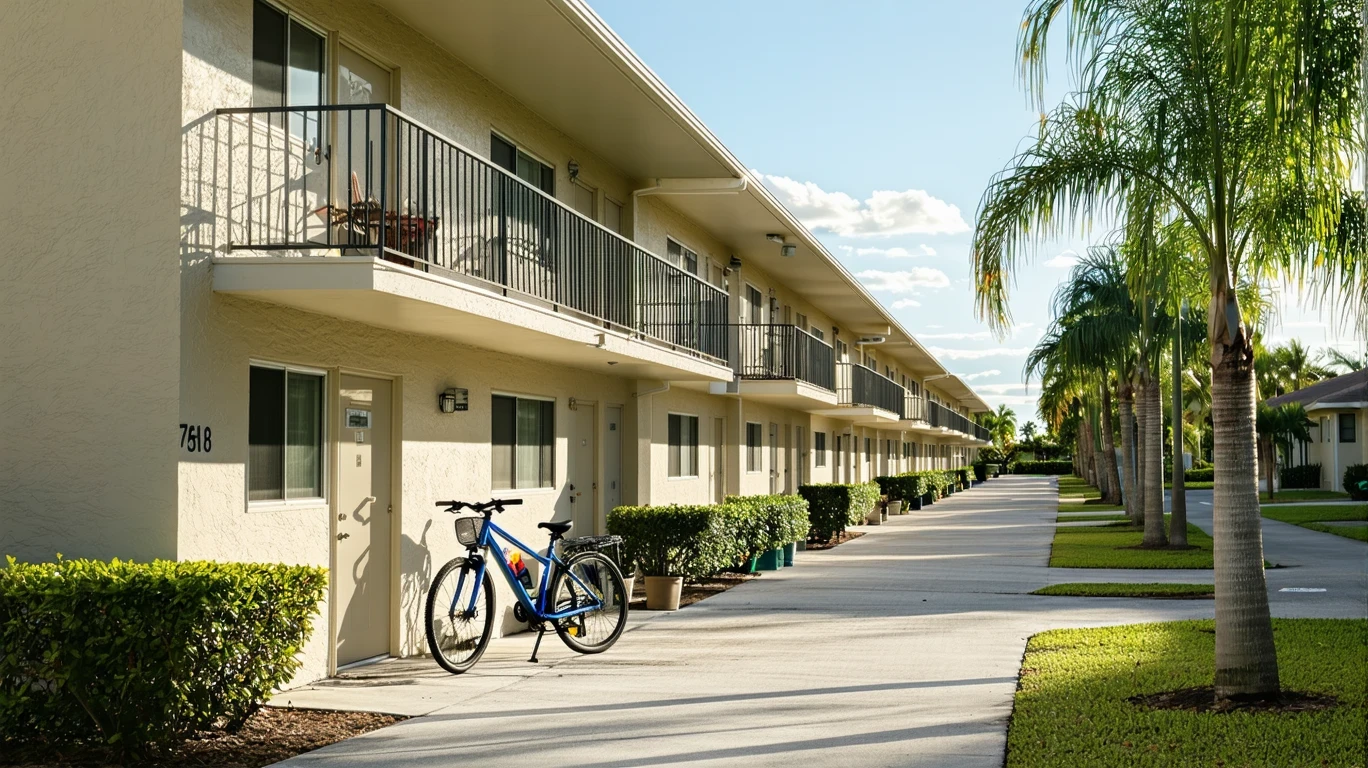
Overall Cost of Living Snapshot
Homestead’s cost structure reflects a regional price level slightly above the national baseline, with a regional price parity index of 103. That means the same basket of goods and services costs about 3% more here than in the average U.S. metro. But the real story isn’t the index—it’s which categories drive pressure and which ones stay quiet.
Housing and transportation dominate. The median home value of $316,200 and median rent of $1,527 per month represent the largest fixed expense for most households. But transportation isn’t optional here: the average commute runs 38 minutes, and nearly 60% of workers face long commutes. Only 23.5% work from home, meaning most residents are on the road daily. Gas sits at $3.93 per gallon, and the city’s structure—bus service present but no rail, with errands clustered along corridors rather than distributed evenly—makes car ownership a practical necessity for most households.
Utilities add a third layer of exposure. Electricity costs 15.02¢ per kWh in a climate where cooling season stretches across most of the year. Natural gas is available at $23.62 per MCF, but in a tropical climate, heating needs are minimal. The cost driver is air conditioning, and it’s relentless.
Groceries and daily costs track close to regional norms, with some upward pressure from the regional price index. The unemployment rate of 2.4% signals a tight labor market, which can support wage growth but also reflects limited slack in the local economy.
Driver verdict: Housing sets the floor, transportation determines flexibility, and utilities create seasonal swings. The surprises come from commute length and cooling exposure, not from grocery receipts or gas bills in isolation—it’s the combination of distance, heat, and car dependence that compounds.
Housing Costs (Primary Driver)
Housing is the anchor. The median home value of $316,200 positions Homestead in the middle tier for South Florida—not Miami-level pricing, but not rural-market accessibility either. For buyers, this represents a meaningful but not insurmountable entry cost, especially for households with stable income and long-term plans. Ownership here makes sense if you’re committed to the area and can absorb the upfront cost and ongoing maintenance, insurance, and property tax exposure that comes with a home in a hurricane-prone region.
Renters face a median gross rent of $1,527 per month, which includes some utilities but rarely all of them. That figure reflects the cost of flexibility: you’re not locked into a mortgage, but you’re also not building equity, and you remain exposed to lease renewals and rent adjustments in a market where housing pressure is real. Renting works for households navigating commute tradeoffs, uncertain job tenure, or those who want to test the area before committing.
The renting-versus-owning decision here isn’t clear-cut. Ownership offers stability and equity accumulation, but it also ties you to a specific location in a city where commute length varies dramatically by neighborhood. Renting preserves mobility, but it doesn’t insulate you from cost increases. Homestead functions as a transitional market: some households use it as a stepping stone, others settle in for the long haul.
| Housing Type | Cost Anchor | What That Buys You |
|---|---|---|
| Ownership | $316,200 median home value | Equity-building, fixed housing cost (excluding insurance/tax volatility), long-term stability in a commuter-oriented market |
| Rental | $1,527/month median gross rent | Flexibility, no maintenance burden, ability to relocate as commute or job situation changes |
Conclusion: Homestead is neither a pure renter’s market nor a pure buyer’s market. It’s a city where the right choice depends on your timeline, commute tolerance, and ability to absorb the secondary costs—insurance, cooling, vehicle expenses—that come with living here.
Utilities & Energy Risk
Electricity is the dominant utility expense, and it’s driven entirely by climate. At 15.02¢ per kWh, the rate itself sits in the middle range for Florida, but the usage pattern is what matters. Homestead’s tropical location means air conditioning runs for months on end—not just peak summer, but extended shoulder seasons where heat and humidity make cooling non-negotiable. A household running central AC through a long cooling season will see electricity bills swing significantly higher than winter months, when heating is rarely needed.
Natural gas is available at $23.62 per MCF, but in practice, most households use little to none. Heating demand is minimal, and many homes rely on electric appliances. Gas becomes relevant only for specific setups—gas ranges, water heaters, or pool heating—but it’s not a structural cost driver the way electricity is.
The risk here is seasonal volatility. Summer bills can spike well above winter baselines, and households without efficient cooling systems or weatherization face steeper exposure. Utility assistance programs and efficiency incentives exist at the state and federal level, but the baseline reality remains: if you live in Homestead, you’re paying to cool your home for a large portion of the year.
Risk classification: Major. Electricity is not optional, cooling season is long, and rate exposure is compounded by usage intensity. This isn’t a minor line item—it’s a recurring, weather-driven cost that shapes monthly cash flow.
Groceries & Daily Costs
Grocery costs in Homestead reflect the regional price environment, with modest upward pressure from the area’s overall cost index. Derived estimates suggest bread around $1.91 per pound, chicken near $2.11 per pound, and ground beef at $6.94 per pound—figures that track close to regional norms but slightly above national averages. These are not observed local prices, but rather modeled estimates adjusted for regional price parity, and they should be understood as directional indicators rather than guarantees.
The practical impact depends on household size and shopping habits. A family buying fresh produce, meat, and staples weekly will feel the difference compared to lower-cost regions, but it’s not extreme. The bigger factor is access: grocery density in Homestead is high along certain corridors, meaning some neighborhoods have convenient options while others require longer drives. That access pattern—corridor-clustered rather than evenly distributed—adds friction for households farther from commercial zones.
Daily costs beyond groceries—personal care, household supplies, occasional dining—follow similar regional pricing. There’s no dramatic markup, but there’s also no discount. Homestead sits in the middle: not a bargain market, not a premium one, but shaped by the same regional cost pressures that affect housing and transportation.
Transportation Reality
Transportation in Homestead is less about choice and more about necessity. The average commute is 38 minutes, and nearly 60% of workers face long commutes—a clear signal that many residents travel significant distances for work. Only 23.5% work from home, meaning the majority are on the road daily, and the city’s infrastructure reflects that reality.
Bus service is present, but there’s no rail transit. The city has walkable pockets—areas where pedestrian infrastructure is strong relative to road networks—but errands and daily needs are clustered along corridors rather than distributed evenly. That means even in neighborhoods with sidewalks and crosswalks, you’re likely driving to the grocery store, the clinic, or the pharmacy. Cycling infrastructure exists in some areas, but it’s limited and not a primary mobility solution for most households.
Gas prices sit at $3.93 per gallon, and for a household commuting daily, that adds up. A typical round-trip commute of 25 miles in a vehicle getting 25 MPG translates to regular fuel purchases, and those costs don’t include maintenance, insurance, or the time cost of long commutes. Vehicle ownership isn’t just a convenience here—it’s a structural requirement, and the costs associated with it are recurring and unavoidable for most residents.
The transportation exposure in Homestead isn’t about a single expensive tank of gas. It’s about the cumulative burden of distance, time, and car dependency. If you work locally or from home, that exposure drops significantly. If you’re commuting to Miami or another regional hub, transportation becomes one of your largest monthly cost categories, even if it doesn’t show up on a rent statement.
Cost Exposure Profiles
Living in Homestead means navigating a specific set of cost exposures, and those exposures vary dramatically depending on your situation. The city doesn’t have a single cost profile—it has several, shaped by housing choice, commute length, and household structure.
Low-exposure households are those who own or rent close to work, have efficient cooling systems, and manage vehicle use strategically. For them, Homestead offers relative stability: fixed or predictable housing costs, manageable utility bills with seasonal planning, and minimal transportation burden. These households benefit from the city’s strong family infrastructure—high school density and accessible playgrounds—and can take advantage of walkable pockets and clustered grocery access without daily driving.
High-exposure households face a different reality. Long commutes—especially those requiring daily drives to Miami or other regional employment centers—turn transportation into a dominant cost driver. Renters without lease stability face potential rent increases in a market where housing pressure is real. Households in older homes or units without efficient AC systems see summer electricity bills spike well above baseline. And families relying on local healthcare face the limitation of routine-only services: clinics are present, but hospital care requires travel.
The difference isn’t about income sufficiency—it’s about structural fit. A household with one vehicle, a short commute, and a well-insulated rental will experience Homestead very differently than a two-car household commuting 40 minutes each way in an older home with high cooling costs. The city’s cost structure rewards proximity, efficiency, and planning. It penalizes distance, inefficiency, and reactive decision-making.
Homestead’s value proposition depends on whether your situation aligns with the city’s structural realities. If you can minimize commute exposure, manage cooling costs, and navigate the corridor-clustered errands without constant driving, the city becomes manageable. If those factors work against you, the cost pressure compounds quickly—not from any single line item, but from the interaction of housing, transportation, and utilities all pulling in the same direction.
How this article was built: In addition to public economic data, this article incorporates location-based experiential signals derived from anonymized geographic patterns—such as access density, walkability, and land-use mix—to reflect how day-to-day living actually feels in Homestead, FL.
Frequently Asked Questions
Is Homestead more affordable than Miami in 2026? Homestead generally offers lower housing costs than Miami, with a median home value of $316,200 compared to higher Miami pricing, but the tradeoff often comes in the form of longer commutes and greater car dependency. The savings on rent or mortgage can be offset by transportation and time costs if you’re commuting to Miami for work.
What does a typical cost profile look like in Homestead? A typical household in Homestead faces moderate housing costs (either $1,527/month rent or mortgage payments on a $316,200 home), significant transportation expenses driven by a 38-minute average commute and $3.93/gallon gas, and elevated summer electricity bills due to extended cooling season. The profile shifts dramatically based on commute length and housing efficiency.
Do utilities cost more in Homestead than in other South Florida cities? Electricity rates in Homestead (15.02¢/kWh) are in line with regional averages, but total utility costs depend heavily on cooling efficiency and home insulation. The extended cooling season means usage intensity, not just the rate, drives the bill—making utilities a major recurring exposure regardless of comparison to nearby cities.
What costs tend to surprise newcomers in Homestead? Newcomers are often surprised by the combination of long commutes and car dependency, even in neighborhoods with sidewalks and some walkability. The clustering of errands along corridors means you’re driving more than you might expect, and summer electricity bills can spike significantly higher than winter months due to relentless air conditioning demand.
Are property taxes higher in Homestead than in nearby cities? Property tax rates vary by jurisdiction and are not included in the median home value figure, but South Florida generally has moderate property tax levels compared to high-tax states. Homeowners should verify local millage rates and factor in homeowner’s insurance, which can be elevated in hurricane-prone areas, as part of total ownership cost.
Is Homestead a good fit for families on a budget? Homestead offers strong family infrastructure, with high school density and accessible playgrounds, which supports family life structurally. However, budget fit depends on commute tolerance and vehicle costs—families with one working parent commuting long distances will face higher transportation exposure, while those working locally or from home can benefit from the city’s moderate housing costs and family-friendly amenities.
Can you live in Homestead without a car? While bus service is present and some neighborhoods have walkable pockets with strong pedestrian infrastructure, the corridor-clustered layout of errands and the prevalence of long commutes make car-free living difficult for most households. A car is effectively a structural requirement unless your work and daily needs are concentrated in a very limited area.
How much does commuting add to the cost of living in Homestead? Commuting costs depend on distance and frequency, but with 59.8% of workers facing long commutes and gas at $3.93/gallon, transportation becomes a significant recurring expense. The time cost—38 minutes average each way—also affects quality of life and flexibility, even if it doesn’t appear as a dollar figure on a budget.