

Median rent in Miramar sits at $1,840 per month while Fort Lauderdale’s median is $1,627—but homeownership entry tells the opposite story, with Fort Lauderdale’s median home value at $417,600 compared to Miramar’s $378,200. That split defines the core tradeoff between these two South Florida cities in 2026: renters face higher ongoing costs in Miramar, while buyers confront steeper entry barriers in Fort Lauderdale.
Both cities sit within the Miami-Fort Lauderdale metro area and share the same regional price environment, with identical electricity rates (15.92¢/kWh) and gas prices ($3.99/gal). The unemployment rate stands at 3.2% across the region. What separates them isn’t broad economic conditions—it’s how cost pressure concentrates differently depending on housing choice, commute patterns, and daily logistics. Families prioritizing school density and predictable suburban rhythms weigh Miramar’s strengths differently than professionals valuing walkable errands access and rail transit in Fort Lauderdale.
The decision between these cities hinges on which costs dominate your household budget and which tradeoffs you’re equipped to manage. Housing structure, transportation dependence, and access to daily necessities create distinct cost experiences even when gross income remains constant. Understanding where pressure shows up—and for whom—matters more than chasing an elusive “cheaper” option that doesn’t exist uniformly across household types.
Housing Costs: Entry Barrier vs Ongoing Obligation
Miramar’s median home value of $378,200 creates a lower entry threshold for buyers compared to Fort Lauderdale’s $417,600, a difference that translates directly into down payment requirements, mortgage approval hurdles, and monthly principal-and-interest obligations. First-time buyers and households stretching to enter ownership face less front-loaded pressure in Miramar, where the gap of nearly $40,000 in median value reduces the cash needed at closing and the income documentation required by lenders. This structural advantage matters most for households where liquidity—not ongoing payment capacity—is the binding constraint.
Renters, however, encounter the opposite dynamic. Miramar’s median gross rent of $1,840 per month exceeds Fort Lauderdale’s $1,627, creating higher recurring obligations for those not yet ready or willing to buy. The difference isn’t trivial for single adults or younger couples managing student loans, car payments, or irregular income streams. Fort Lauderdale’s rental market offers more breathing room on a monthly basis, though availability and competition for units near transit or walkable corridors can compress that advantage depending on neighborhood and timing.
Housing stock composition also shapes cost behavior. Miramar’s mixed building profile—average building levels fall in the medium range—supports a suburban pattern where single-family homes and townhomes dominate, often with yard maintenance, HOA dues, and higher utility exposure tied to larger square footage. Fort Lauderdale’s more vertical character, with average building levels exceeding the high threshold, concentrates more residents in mid-rise and high-rise structures where per-unit costs for utilities, insurance, and upkeep can behave differently. Renters in Fort Lauderdale may find more apartment-style options with bundled services, while Miramar renters often navigate single-family or duplex arrangements with separate utility accounts and lawn care responsibilities.
| Housing Type | Miramar | Fort Lauderdale |
|---|---|---|
| Median Home Value | $378,200 | $417,600 |
| Median Gross Rent | $1,840/month | $1,627/month |
| Building Height Character | Mixed (medium range) | More vertical (high threshold) |
Housing takeaway: Buyers sensitive to entry costs and down payment liquidity find Miramar more accessible, while renters managing monthly cash flow face lower recurring pressure in Fort Lauderdale. Families planning to own long-term and prioritizing yard space may accept Miramar’s higher rent as a temporary cost before buying, whereas professionals or couples prioritizing flexibility and lower monthly obligations may prefer Fort Lauderdale’s rental structure even as they defer ownership.
Utilities and Energy Costs: Predictability vs Exposure
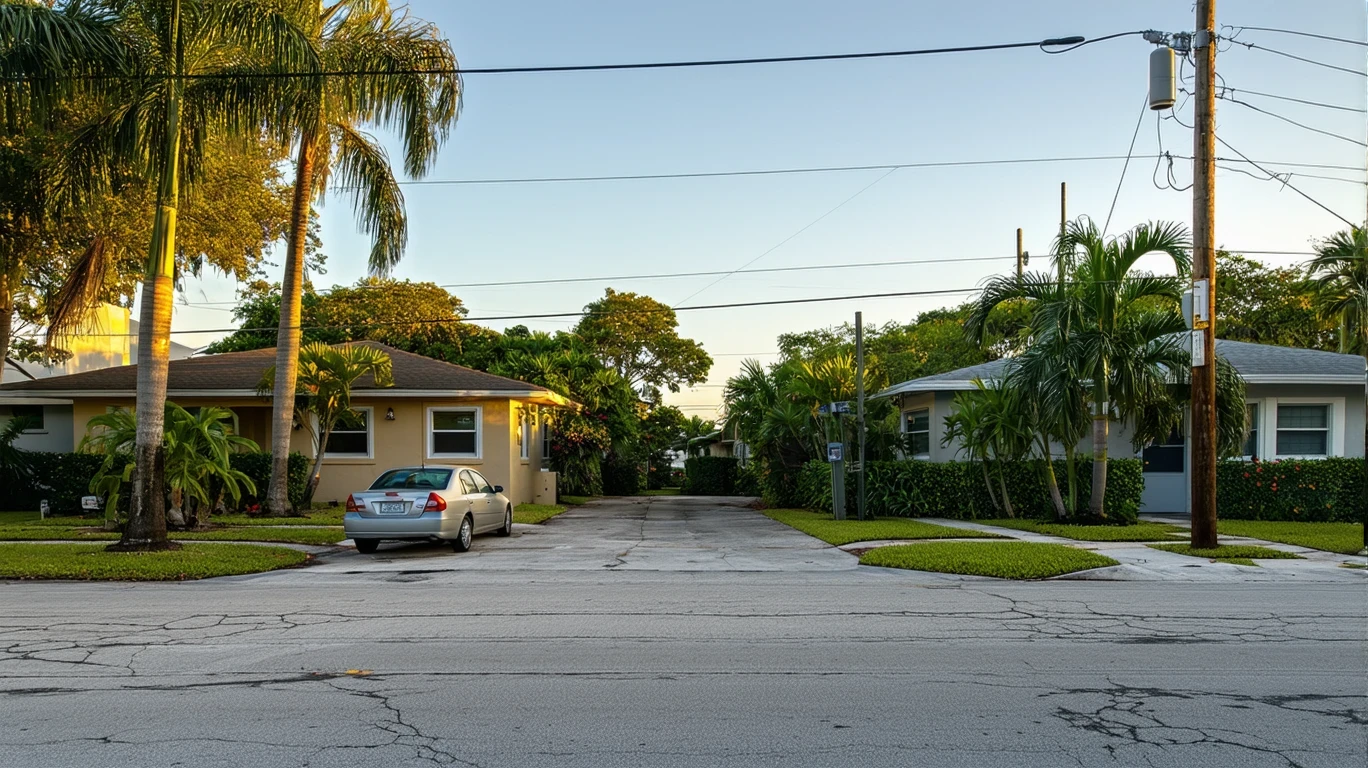
Both cities share the same electricity rate of 15.92¢/kWh, reflecting their position within the same regional utility service area. What differs is how housing form and square footage translate that rate into actual monthly exposure. Miramar’s prevalence of single-family homes with larger footprints, private yards, and detached structures increases cooling load during South Florida’s extended hot season, where air conditioning dominates household energy use. Families in three-bedroom homes with vaulted ceilings and multiple thermostats face higher baseline consumption than couples in Fort Lauderdale’s mid-rise apartments with shared walls and centralized HVAC systems.
Fort Lauderdale’s more vertical building profile introduces a different cost dynamic. Residents in multi-story buildings benefit from thermal buffering—units sandwiched between other conditioned spaces experience less direct sun exposure and reduced cooling demand. However, older high-rise buildings with single-pane windows, outdated insulation, and inefficient central systems can erode that advantage, particularly for units on upper floors or west-facing exposures. Newer construction in both cities incorporates better insulation and energy-efficient windows, but the age and condition of individual buildings matter more than city-level averages.
Utility billing structures also affect predictability. Some Fort Lauderdale apartment complexes bundle water, sewer, and trash into rent or charge flat monthly fees, reducing variability and simplifying budgeting. Miramar households in single-family rentals or owned homes typically manage separate accounts for electricity, water, trash, and sometimes HOA fees that cover landscaping or community amenities. This fragmentation doesn’t necessarily increase total costs, but it does increase the number of bills to track, due dates to manage, and opportunities for seasonal spikes to disrupt cash flow.
Households sensitive to utility volatility—those with tight monthly budgets or irregular income—benefit from Fort Lauderdale’s apartment-style arrangements where costs are more predictable and less tied to individual behavior. Families in Miramar with larger homes and higher baseline usage gain more control over consumption through behavioral changes (thermostat discipline, appliance timing, LED upgrades) but also carry more exposure to rate changes, equipment failures, and seasonal extremes. Older homes in either city amplify exposure, but Miramar’s housing stock skews toward detached structures where inefficiency compounds faster.
Utility takeaway: Fort Lauderdale’s more vertical housing and bundled billing structures offer greater predictability and lower baseline exposure for smaller households, while Miramar’s single-family orientation increases both consumption and control for families willing to manage usage actively. Households in older homes face higher volatility in either city, but the impact is more pronounced in Miramar where larger square footage and detached construction magnify inefficiency.
Groceries and Daily Expenses: Access Density vs Planning Burden
Fort Lauderdale’s food and grocery infrastructure exceeds high-density thresholds for both categories, creating broadly accessible options that reduce the need for advance planning, bulk shopping, or long drives to restock essentials. High grocery density means more stores per square mile, shorter distances between home and multiple shopping options, and greater likelihood that a quick errand can be completed on foot, by bike, or as part of an existing commute. This accessibility reduces both time costs and the pressure to own a second vehicle or coordinate complex shopping trips around work schedules.
Miramar’s grocery density also exceeds the high threshold, but food establishment density falls in the medium band, signaling a more corridor-clustered pattern. Grocery staples remain accessible, but prepared food options, specialty markets, and convenience dining concentrate along specific commercial strips rather than distributing evenly across neighborhoods. Households that cook most meals at home and plan weekly shopping trips experience little friction, but those relying on grab-and-go meals, last-minute ingredients, or frequent small purchases face more logistical burden. The difference isn’t about price—it’s about how much time and planning daily errands require.
Price sensitivity plays out differently depending on household size and shopping habits. Single adults and couples who eat out frequently or value walkable coffee shops, bakeries, and casual dining benefit from Fort Lauderdale’s denser food landscape, where competition and proximity keep convenience spending from requiring a car trip. Families managing larger grocery volumes and batch-cooking routines find Miramar’s big-box access and suburban parking more practical, even if it means fewer options for spontaneous meals or specialty ingredients.
Convenience spending creep—the gradual accumulation of coffee runs, takeout lunches, and impulse purchases—accelerates in environments where options are always visible and accessible. Fort Lauderdale’s walkable commercial corridors and mixed-use blocks make it easier to spend without noticing, particularly for professionals working near downtown or beach-adjacent neighborhoods. Miramar’s car-oriented errands structure imposes a small friction cost on each transaction, which can either curb impulse spending or create frustration for households juggling tight schedules.
Grocery takeaway: Fort Lauderdale’s broadly accessible food and grocery infrastructure reduces logistical burden and supports car-light living, but increases exposure to convenience spending for households without strong budgeting discipline. Miramar’s corridor-clustered pattern works well for families who plan ahead and prioritize bulk shopping, but adds time costs and car dependence for those managing irregular schedules or preferring frequent small purchases.
Taxes and Fees: Predictability and Structural Differences
Both cities operate within Florida’s tax structure, which eliminates state income tax but relies heavily on property taxes, sales taxes, and local fees to fund services. Property tax exposure scales with home value and assessment practices, meaning Fort Lauderdale homeowners face higher baseline obligations tied to the city’s elevated median home value of $417,600 compared to Miramar’s $378,200. Annual property tax bills reflect not just the purchase price but also millage rates set by county, city, and special districts, which can vary even within the same metro area.
Renters don’t pay property taxes directly, but landlords pass through a portion of that cost in monthly rent. Fort Lauderdale’s lower median rent of $1,627 doesn’t necessarily mean lower embedded tax costs—it may reflect different housing stock, older buildings with lower assessed values, or competitive rental markets where landlords absorb more of the tax burden to keep units occupied. Miramar’s higher median rent of $1,840 may include newer construction with higher assessments, HOA fees covering community amenities, or single-family rentals where property taxes are more transparent and directly passed through.
HOA fees introduce another layer of cost variability. Miramar’s suburban development pattern often includes planned communities with monthly or quarterly HOA dues covering landscaping, pool maintenance, gate access, and trash removal. These fees range widely depending on the community, but they add a predictable recurring cost that doesn’t fluctuate with usage or behavior. Fort Lauderdale’s condo and high-rise buildings also charge HOA or condo association fees, sometimes higher due to elevator maintenance, parking garage upkeep, and building insurance, but often bundling utilities or services that would otherwise appear as separate line items.
Sales tax applies uniformly across both cities, but spending patterns differ. Households that dine out frequently, purchase prepared foods, or rely on services rather than DIY solutions face higher cumulative sales tax exposure. Fort Lauderdale’s denser commercial environment and walkable access to restaurants, cafes, and retail increases the frequency of taxable transactions, while Miramar’s car-oriented errands and big-box shopping may concentrate spending into fewer, larger purchases with the same effective tax rate but different behavioral friction.
Tax and fee takeaway: Fort Lauderdale homeowners face higher property tax obligations tied to elevated home values, while Miramar homeowners encounter lower baseline taxes but often higher HOA fees in planned communities. Renters in Fort Lauderdale benefit from lower monthly obligations that may partially reflect older housing stock with lower assessments, while Miramar renters pay higher rent that may include embedded HOA costs or newer construction premiums. Predictability favors homeowners in either city who can budget for annual tax bills, while renters face more variability depending on landlord pass-through practices and lease renewal terms.
Transportation and Commute Reality
Miramar’s average commute time of 29 minutes exceeds Fort Lauderdale’s 26 minutes, and the share of workers facing long commutes—defined as exceeding typical thresholds—reaches 47.8% in Miramar compared to 37.6% in Fort Lauderdale. That ten-percentage-point gap signals a structural difference in how residents access employment centers, whether they can work close to home, and how much time they surrender to transportation logistics each week. Longer commutes don’t just mean more time in the car—they increase fuel consumption, vehicle wear, and the likelihood that a household needs a second car to manage overlapping schedules.
Transit infrastructure shapes those patterns. Fort Lauderdale benefits from rail service presence, offering a fixed-route, higher-capacity option that connects to regional employment hubs and reduces car dependence for workers whose jobs align with station locations. Miramar relies on bus-only service, which provides coverage but typically involves longer travel times, more transfers, and less predictable schedules. For households managing tight budgets, the difference between rail and bus isn’t just convenience—it’s whether transit can realistically replace a second vehicle or whether car ownership remains non-negotiable.
Both cities show pedestrian-to-road ratios exceeding the high threshold, indicating substantial pedestrian infrastructure in parts of each city. Fort Lauderdale’s walkable pockets carry high confidence, meaning the infrastructure is definitive and well-distributed, while Miramar’s signal carries medium confidence, suggesting coverage exists but may be less consistent across neighborhoods. Bike-to-road ratios fall in the medium band for both cities, signaling some cycling infrastructure but not enough to make biking a primary commute mode for most residents. Gas prices sit at $3.99/gal in both cities, so fuel cost differences come down to miles driven, not price per gallon.
Work-from-home rates remain low in both cities—8.7% in Miramar and 7.6% in Fort Lauderdale—indicating that most workers still commute regularly. That makes transportation cost exposure a daily reality rather than an occasional inconvenience. Households in Miramar face more frequent long commutes, which compounds vehicle depreciation, maintenance schedules, and the risk that a car breakdown disrupts income. Fort Lauderdale’s shorter average commute and rail access reduce that exposure, though the benefit concentrates among workers whose jobs and housing align with transit corridors.
Transportation takeaway: Fort Lauderdale’s rail presence and shorter average commute reduce car dependence and time costs for households whose work and housing align with transit, while Miramar’s bus-only service and higher long-commute share increase reliance on personal vehicles and magnify fuel, maintenance, and time exposure. Families managing multiple work schedules or school drop-offs face greater logistical complexity in Miramar, while professionals in Fort Lauderdale gain more flexibility to reduce or eliminate car ownership if they live near rail stations.
Cost Structure Comparison
Housing pressure concentrates differently depending on whether you’re renting or buying. Miramar’s lower median home value of $378,200 reduces the entry barrier for ownership, making it more accessible for first-time buyers or families ready to transition from renting. Fort Lauderdale’s higher median home value of $417,600 raises that threshold, but renters benefit from lower median gross rent of $1,627 compared to Miramar’s $1,840. Buyers feel less pressure in Miramar; renters feel less pressure in Fort Lauderdale. That split defines the primary housing tradeoff between these cities.
Utilities introduce more volatility in Miramar due to the prevalence of single-family homes with larger square footage and detached construction. Cooling costs dominate in both cities given South Florida’s extended hot season, but Fort Lauderdale’s more vertical housing stock and shared-wall construction buffer individual units from direct sun exposure and reduce baseline consumption. Families in Miramar managing larger homes face higher seasonal swings and more opportunities to control usage through behavior, while smaller households in Fort Lauderdale benefit from greater predictability and lower baseline exposure.
Daily errands and grocery access favor Fort Lauderdale’s broadly accessible pattern, where high food and grocery density reduce the need for advance planning, long drives, or car dependence. Miramar’s corridor-clustered food options work well for households that batch-shop and cook at home, but add logistical friction for those managing irregular schedules or relying on grab-and-go meals. The difference isn’t price—it’s how much time and planning daily life requires, and whether that burden feels manageable or exhausting.
Transportation patterns matter more in Miramar, where longer average commutes and higher long-commute exposure increase fuel consumption, vehicle wear, and the likelihood that a household needs multiple cars. Fort Lauderdale’s rail presence and shorter commutes reduce car dependence for workers whose jobs align with transit, though the benefit concentrates in specific corridors rather than spreading uniformly across the city. Households sensitive to time costs and vehicle depreciation face more exposure in Miramar, while those able to live car-light or car-free find more structural support in Fort Lauderdale.
The better choice depends on which costs dominate your household and which tradeoffs you’re equipped to manage. Families prioritizing homeownership entry, school density, and predictable suburban routines may accept Miramar’s higher rent and longer commutes as temporary costs before buying. Professionals or couples prioritizing lower monthly obligations, walkable errands, and transit access may prefer Fort Lauderdale’s rental structure and urban infrastructure even as they defer ownership. Neither city is universally cheaper—they distribute cost pressure differently across housing tenure, household size, and transportation dependence.
How the Same Income Feels in Miramar vs Fort Lauderdale
Single Adult
Rent becomes the first non-negotiable cost, and Miramar’s higher median of $1,840 consumes more of gross monthly income than Fort Lauderdale’s $1,627 before any other expenses enter the picture. Flexibility exists in dining and entertainment, but Miramar’s corridor-clustered food options require more planning and car trips, adding time costs that compress evening schedules. Fort Lauderdale’s walkable errands access and rail transit reduce car dependence, freeing up cash otherwise spent on fuel, parking, and vehicle maintenance. Commute friction matters less for remote-friendly jobs, but Miramar’s longer average commute and higher long-commute share increase exposure for those reporting to an office daily.
Dual-Income Couple
Housing costs stabilize when split between two incomes, but the rent-versus-buy decision sharpens. Fort Lauderdale’s higher home values delay ownership entry unless both partners contribute to down payment savings, while Miramar’s lower median home value makes buying more achievable on a shorter timeline. Transportation becomes non-negotiable if both partners commute, and Miramar’s bus-only service and longer average commute increase the likelihood that two cars are required. Fort Lauderdale’s rail presence and shorter commutes create more flexibility to share a vehicle or rely on transit, reducing insurance, fuel, and maintenance exposure. Grocery and dining costs rise with two people, but Fort Lauderdale’s broadly accessible food options reduce the time burden of errands, while Miramar’s big-box access favors couples who batch-shop and cook at home.
Family with Kids
School density and family infrastructure become primary drivers, and Miramar’s strong family infrastructure—with school density exceeding the high threshold and playground density in the medium band—supports households prioritizing educational access and outdoor play. Housing space needs push families toward single-family homes, where Miramar’s lower median home value reduces entry costs but increases utility exposure tied to larger square footage. Fort Lauderdale’s higher home values and more vertical housing stock create less alignment with families seeking yards and multiple bedrooms, though school density also exceeds the high threshold. Transportation logistics compound with multiple drop-offs, pickups, and activity schedules, and Miramar’s longer commutes and bus-only service increase car dependence. Grocery costs rise with household size, and Miramar’s corridor-clustered food pattern requires more planning but supports bulk shopping, while Fort Lauderdale’s broadly accessible options reduce friction for last-minute needs.
Decision Matrix: Which City Fits Which Household?
| Decision Factor | If You’re Sensitive to This… | Miramar Tends to Fit When… | Fort Lauderdale Tends to Fit When… |
|---|---|---|---|
| Housing entry + space needs | Down payment liquidity and yard space for families | You’re ready to buy and prioritize lower entry costs and single-family layouts | You’re renting longer-term and value lower monthly obligations over ownership timing |
| Transportation dependence + commute friction | Time costs, fuel exposure, and vehicle wear | You work locally or accept longer commutes in exchange for housing affordability | Your job aligns with rail corridors and you can reduce or eliminate car ownership |
| Utility variability + home size exposure | Seasonal bill swings and baseline consumption | You manage a larger home and can control usage through active behavioral changes | You prefer smaller, more vertical housing with predictable bundled costs |
| Grocery strategy + convenience spending creep | Time spent on errands and impulse purchase exposure | You batch-shop weekly and cook most meals at home with advance planning | You value walkable access to food and dining without requiring a car for every errand |
| Fees + friction costs (HOA, services, upkeep) | Predictability of recurring non-rent obligations | You accept HOA fees in exchange for maintained communities and family amenities | You prefer older buildings or rentals where fees are bundled or lower |
| Time budget (schedule flexibility, errands, logistics) | Coordination complexity and daily planning burden | You have flexible schedules and can absorb longer commutes and car-dependent errands | You manage tight schedules and need walkable access and shorter commutes to reduce friction |
Lifestyle Fit: Suburban Rhythms vs Urban Access
Miramar’s strong family infrastructure—with school density exceeding the high threshold and playground density in the medium band—creates a suburban environment where parks, schools, and recreational spaces are woven into daily life. Water features add outdoor appeal, and the city’s mixed building height character supports neighborhoods where single-family homes, townhomes, and low-rise multifamily buildings coexist. Commute times average 29 minutes, and nearly half of workers face long commutes, signaling that many residents travel outside the city for work. The pedestrian-to-road ratio exceeds the high threshold in parts of the city, but the overall texture remains car-oriented for errands, school drop-offs, and weekend activities.
Fort Lauderdale’s more vertical building profile and rail transit presence create a different rhythm. Average commute times of 26 minutes and a lower long-commute share of 37.6% suggest more workers can access jobs locally or via transit. The city’s broadly accessible food and grocery infrastructure supports walkable daily routines, and park density exceeds the high threshold with water features integrated into the outdoor environment. School density also exceeds the high threshold, though playground density doesn’t reach the same level as Miramar, signaling that family infrastructure exists but may be less concentrated in residential neighborhoods. The urban form supports mixed residential and commercial land use, meaning coffee shops, restaurants, and services sit closer to where people live.
Recreation and outdoor access differ in character rather than availability. Both cities benefit from South Florida’s warm climate and proximity to beaches, but Miramar’s park density and family-oriented amenities favor households with young children seeking playgrounds, sports fields, and community pools. Fort Lauderdale’s waterfront access and denser commercial corridors attract professionals, couples, and retirees who prioritize dining, nightlife, and cultural events over structured family activities. Neither city lacks green space, but the way residents use outdoor environments reflects different lifestyle priorities.
Commute patterns indirectly shape lifestyle costs. Miramar’s longer average commute and higher car dependence reduce time available for cooking, exercise, or household maintenance, potentially increasing reliance on convenience spending, takeout meals, and paid services. Fort Lauderdale’s shorter commutes and walkable access to errands free up time that can be redirected toward cost-saving behaviors like meal prep, walking instead of driving, or managing home upkeep without hiring help. The time-versus-money tradeoff plays out differently depending on household structure and work flexibility.
Miramar’s median household income: $81,812 per year
Fort Lauderdale’s median household income: $75,376 per year
Miramar’s higher median income reflects a suburban household composition skewed toward dual-income families and homeowners, while Fort Lauderdale’s lower median may include more single adults, renters, and younger workers earlier in their careers. Income alone doesn’t determine cost burden—how that income aligns with housing tenure, transportation needs, and daily logistics matters more. A household earning the median in Miramar but renting and commuting long distances may feel more financial pressure than a household earning the median in Fort Lauderdale who owns a condo near rail and walks to work.
Frequently Asked Questions
Is it cheaper to rent in Miramar or Fort Lauderdale in 2026?
Fort Lauderdale’s median gross rent of $1,627 per month is lower than Miramar’s $1,840, creating less recurring pressure for renters managing monthly cash flow. The difference matters most for single adults, younger couples, or households juggling other fixed obligations like student loans or car payments. Miramar’s higher rent reflects a housing stock that includes more single-family rentals and newer construction, often with HOA fees or larger square footage that increases baseline costs.
Which city is better for first-time homebuyers comparing Miramar and Fort Lauderdale?
Miramar’s median home value of $378,200 creates a lower entry barrier than Fort Lauderdale’s $417,600, reducing down payment requirements and making mortgage approval more achievable for buyers with limited liquidity. First-time buyers prioritizing single-family homes, yard space, and family-oriented neighborhoods find more alignment in Miramar, while those willing to consider condos or townhomes in exchange for walkable access and transit proximity may accept Fort Lauderdale’s higher entry costs.
How do commute times and transportation costs differ between Miramar and Fort Lauderdale?
Miramar’s average commute of 29 minutes exceeds Fort Lauderdale’s 26 minutes, and 47.8% of Miramar workers face long commutes compared to 37.6% in Fort Lauderdale. Fort Lauderdale’s rail transit presence reduces car dependence for workers whose jobs align with station locations, while Miramar relies on bus-only service that typically requires longer travel times and more transfers. Households managing multiple work schedules or school drop-offs face greater logistical complexity and higher fuel exposure in Miramar.
Do utilities cost more in Miramar or Fort Lauderdale in 2026?
Both cities share the same electricity rate of 15.92¢/kWh, so differences come down to housing form and square footage rather than price per kilowatt-hour. Miramar’s prevalence of single-family homes with larger footprints increases cooling load and baseline consumption, while Fort Lauderdale’s more vertical housing stock and shared-wall construction buffer individual units and reduce exposure. Families in larger homes face higher utility costs in either city, but the impact is more pronounced in Miramar where detached construction and private yards amplify inefficiency.
Which city offers better access to groceries and daily errands in 2026?
Fort Lauderdale’s food and grocery density both exceed high thresholds, creating broadly accessible options that reduce the need for advance planning or long drives. Miramar’s grocery density also exceeds the high threshold, but food establishment density falls in the medium band, signaling a corridor-clustered pattern where prepared food and dining options