
Housing in Milford operates in a price environment shaped by its position in the Cincinnati metro—home values sit comfortably below $212,000, and rents hold under $900 a month, both reflecting the city’s regional price parity of 88. But the cost experience here isn’t just about sticker prices. Milford’s mixed building character, corridor-clustered errands pattern, and integrated park access create distinct tradeoffs between renting and owning that don’t show up in median figures alone.
For newcomers weighing overall living costs, the question isn’t whether Milford is affordable in the abstract—it’s whether the housing structure here matches how you actually live. Renters gain simplicity and lower upfront exposure. Owners take on maintenance discretion and long-term tax uncertainty. And both groups navigate a place where walkable pockets exist but errands often require intentional trips, shaping how housing location affects day-to-day friction.
The Housing Market in Milford Today
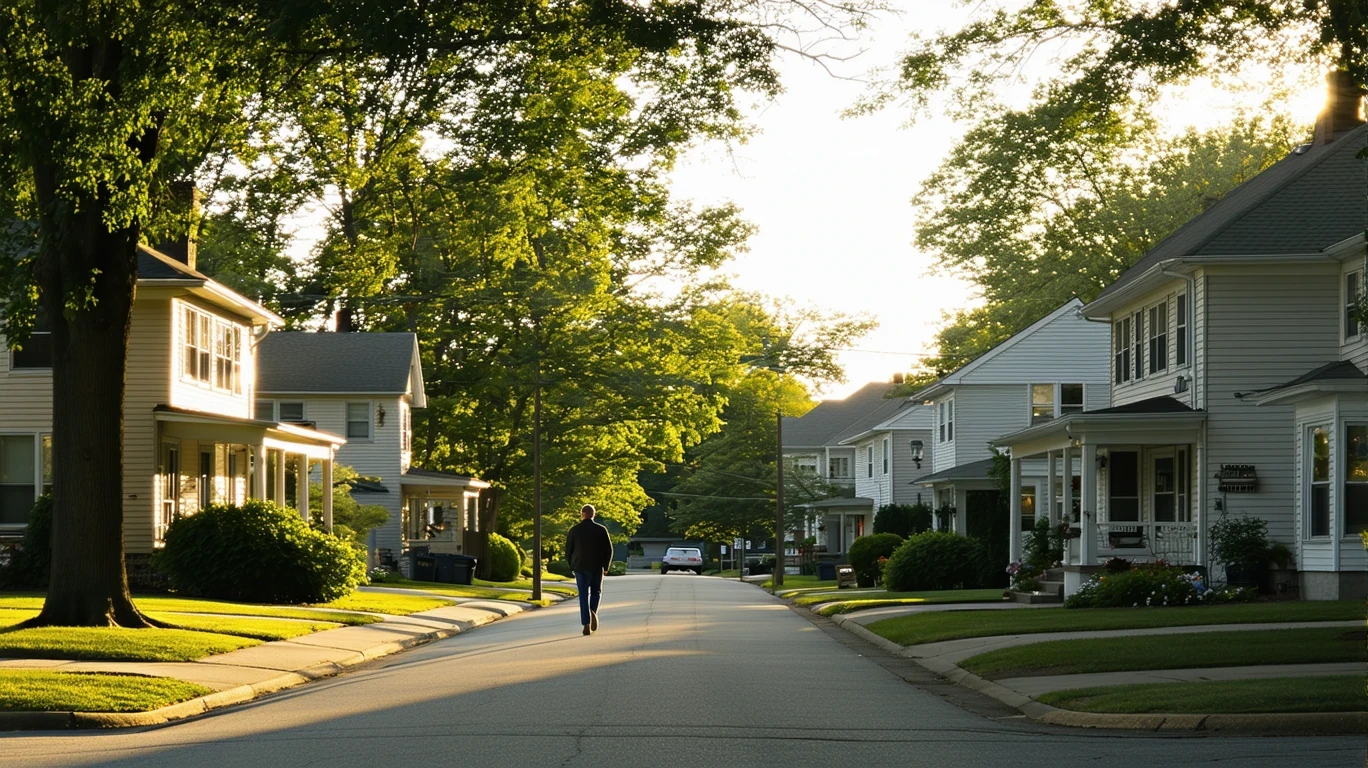
Milford’s housing market reflects its role as a smaller city within the broader Cincinnati region, where median home values of $211,900 position it as accessible without being bargain-tier. The regional price parity index of 88 confirms that costs here run below the national baseline, but that discount doesn’t mean uniformity. The city’s mixed building heights and landuse patterns—both residential and commercial uses detected throughout—signal a housing stock that varies by age, form, and maintenance demand.
What newcomers often misunderstand is that Milford isn’t a single-texture suburb. Walkable pockets with substantial pedestrian infrastructure exist alongside areas where car dependency dominates. This creates meaningful differences in housing desirability that aren’t captured by median figures. A home near integrated park space and corridor-clustered grocery access behaves differently—in convenience, resale appeal, and long-term cost exposure—than one requiring a car for every errand.
The unemployment rate of 4.1% suggests stable local demand, and median household income of $69,141 per year supports the existing price structure. But the limited school density detected in experiential signals may affect family buyers’ willingness to pay premiums for certain neighborhoods, while integrated green space access could reduce the perceived need for large private lots.
Renting in Milford
Median gross rent of $879 per month positions Milford as accessible for single earners and small households, particularly those prioritizing lower upfront costs and flexibility. But the rental experience here is shaped by more than monthly payments. Because food and grocery options cluster along corridors rather than distributing evenly, renters need to consider proximity to those corridors when evaluating convenience. A unit near a walkable pocket with bus service offers a fundamentally different daily experience than one requiring a car for every trip.
Renters in Milford typically face landlord-controlled utility arrangements in multi-unit buildings, which can simplify budgeting but also limit control over efficiency upgrades. The city’s moderate building heights suggest a mix of small apartment complexes and single-family rentals, each with distinct cost behaviors. Apartments often bundle water and trash, while single-family rentals expose tenants to full utility volatility and yard maintenance expectations.
The corridor-clustered errands pattern detected in experiential signals means that renters who don’t live near those corridors will rely heavily on cars, adding transportation costs that can rival or exceed the savings from lower rent. This isn’t a flaw—it’s a structural reality that affects how rental affordability actually plays out over time.
Owning a Home in Milford
Median home values of $211,900 make ownership accessible for households with stable income, but the cost structure extends well beyond the purchase price. Owners in Milford take on property tax exposure, maintenance discretion, and the long-term risk of assessment changes—none of which are predictable from the sale price alone. The mixed building character detected in experiential signals suggests that homes vary widely in age, form, and upkeep needs, meaning two properties at similar prices can carry very different ongoing costs.
Ownership here also means navigating Milford’s specific infrastructure and governance patterns. While integrated park density reduces the need for large private yards, it doesn’t eliminate maintenance exposure—lawns, HVAC systems, roofs, and driveways still demand periodic investment. And because the city’s landuse mix includes both residential and commercial zones, owners near commercial corridors may face different tax treatment or zoning-related constraints than those in purely residential pockets.
The absence of rail transit and reliance on bus service means most homeowners will need at least one car, adding insurance, registration, and fuel costs to the ownership equation. But the presence of walkable pockets and bike infrastructure in some areas allows owners who prioritize location to reduce transportation dependency, a tradeoff that renters have less ability to control.
Apartment vs House in Milford — Cost Behavior Comparison
| Expense Category | Apartment | House |
|---|---|---|
| Heating & Cooling | Shared-wall insulation reduces exposure; landlord may control system efficiency | Full envelope exposure; owner controls upgrades but absorbs all volatility |
| Water & Sewer | Often bundled into rent or billed collectively; limited tenant control | Direct metered billing; owner pays for all irrigation, leaks, and seasonal variation |
| Outdoor Maintenance | Managed by landlord or property management; tenant exposure near zero | Lawn care, snow removal, and landscaping fall entirely on owner; ongoing labor or contractor cost |
| Access to Walkable Pockets | Renters can prioritize proximity to corridors and bus stops without long-term commitment | Owners lock in location; walkable pocket access affects resale appeal and daily convenience |
| Property Tax Exposure | None; landlord absorbs and may pass through indirectly via rent adjustments | Direct annual obligation; subject to reassessment and levy changes over time |
Why these categories: The distinctions above reflect Milford’s mixed building character, corridor-clustered errands pattern, and integrated park access. Heating and cooling differences matter because of the city’s four-season climate. Water and outdoor maintenance differ because of the prevalence of single-family homes with yards. Walkable pocket access appears because experiential signals confirm that pedestrian infrastructure concentrates in specific areas, making location choice more consequential. Property tax exposure is included because it represents the largest ongoing cost difference between renting and owning, even without specific rate data.
Categories like trash collection and internet service were excluded because they don’t vary meaningfully by housing type in Milford’s context—both apartments and houses typically arrange these services similarly.
Utilities & Upkeep Differences
Utility and maintenance costs in Milford behave differently depending on housing type, driven by the city’s climate, building stock, and infrastructure patterns. Electricity rates of 17.59¢/kWh and natural gas prices of $11.03/MCF set the baseline, but exposure depends on building envelope, system efficiency, and occupant control.
Apartments benefit from shared-wall insulation, which moderates heating and cooling loads during Milford’s cold winters and warm summers. Tenants in multi-unit buildings often see lower absolute utility bills, but they sacrifice control over efficiency upgrades and thermostat settings. Houses, by contrast, expose owners to full seasonal volatility—heating costs rise noticeably during extended cold periods, and cooling costs climb during summer heat. Owners can invest in insulation, programmable thermostats, or HVAC upgrades to reduce long-term exposure, but those improvements require upfront capital and time.
Outdoor maintenance is where the cost gap widens most. Apartment tenants face near-zero exposure—landlords handle landscaping, snow removal, and exterior repairs. Homeowners in Milford absorb all of it: lawn care, gutter cleaning, driveway maintenance, and seasonal tasks like leaf removal. The integrated park density detected in experiential signals may reduce the perceived need for large private yards, but even modest lots require ongoing labor or contractor expense.
Water and sewer costs also split by housing type. Apartments often bundle these into rent or bill collectively, smoothing volatility. Houses are metered individually, and owners pay for all irrigation, leaks, and seasonal variation. In a city with detectable water features and park access, outdoor water use can add noticeable costs during dry months.
Rent vs Buy: Long-Term Exposure in Milford
The structural difference between renting and owning in Milford isn’t about which costs less today—it’s about which risks and controls each path assigns to the household. Renters face annual lease renewal volatility, where landlords adjust rents based on market conditions, property tax changes, and maintenance costs. Owners face property tax reassessment risk, major system replacement costs, and the possibility that home values don’t appreciate as expected. Neither path is inherently safer; they simply distribute uncertainty differently.
Renters in Milford retain flexibility and avoid capital risk. If the corridor-clustered errands pattern becomes inconvenient, or if a household’s transportation needs change, renters can relocate without transaction costs. But that flexibility comes with limited control over rent increases and no equity accumulation. Over time, renters may find that their housing costs rise while owners’ principal and interest payments remain fixed, though owners still face rising tax and maintenance exposure.
Owners gain equity and control but take on concentration risk—most of their net worth may sit in a single asset whose value depends on Milford’s economic stability, school quality, and infrastructure investment. The mixed building character and landuse patterns detected in experiential signals suggest that resale appeal will vary significantly by location. Homes near walkable pockets, integrated parks, and bus service may hold value better than those requiring car dependency for all errands, but that advantage only materializes if future buyers share those priorities.
Maintenance and tax exposure also compound over time. While rent increases are visible and predictable in direction, ownership costs can spike unexpectedly—a roof replacement, HVAC failure, or assessment increase can demand thousands of dollars in a single year. Owners build equity through these payments, but the timing and magnitude of those costs remain uncertain.
FAQs About Housing Costs in Milford
Is renting or buying more affordable in Milford, OH?
Renting offers lower upfront costs and flexibility, with median gross rent of $879 per month. Buying requires capital for a down payment and closing costs, but median home values of $211,900 remain accessible for households with stable income. Affordability depends on how long you plan to stay and whether you value equity accumulation over mobility.
How do property taxes affect homeownership costs in Milford?
Property taxes represent a significant ongoing cost for owners, though specific rates aren’t available in current data. Taxes are subject to reassessment and levy changes over time, meaning owners face long-term exposure that renters avoid. Location within Milford may also affect tax treatment, particularly for homes near commercial corridors.
Do apartments in Milford include utilities?
Some apartments bundle water, sewer, and trash into rent, while others bill separately. Electricity and natural gas are typically tenant-paid. Renters should clarify utility arrangements before signing a lease, as bundled utilities simplify budgeting but may limit control over usage and efficiency.
What maintenance costs should homeowners in Milford expect?
Homeowners face ongoing costs for lawn care, HVAC servicing, roof and gutter maintenance, and seasonal tasks like snow removal. The mixed building character in Milford means older homes may require more frequent repairs, while newer construction may carry HOA or warranty-related obligations. Owners should budget for both routine upkeep and unexpected system failures.
Does Milford’s walkability affect housing costs?
Walkable pockets with pedestrian infrastructure and proximity to corridor-clustered errands may command higher prices or rents, as they reduce car dependency and improve daily convenience. Homes and apartments farther from these areas typically cost less upfront but require transportation investment, which can offset the initial savings.
Making Housing Choices in Milford
Housing costs in Milford aren’t just about rent or mortgage payments—they’re about how the city’s structure, climate, and infrastructure shape your monthly expenses and long-term exposure. Renters gain flexibility and lower upfront costs but sacrifice equity and control. Owners build wealth and discretion but absorb maintenance volatility and tax risk. And both groups navigate a place where walkable pockets, corridor-clustered errands, and integrated parks create meaningful differences in convenience and cost behavior.
The right choice depends on how long you plan to stay, how much control you need over your living environment, and whether you value predictability or equity accumulation. Milford’s housing market offers accessible entry points for both paths, but the long-term cost experience will vary significantly based on location, housing type, and how well your household’s needs align with the city’s infrastructure patterns.
For more context on how housing fits into broader financial planning, see Milford Affordability: What’s Easy, What’s Expensive. And if you’re planning a move, understanding moving company costs and options can help you budget for the transition.
How this article was built: In addition to public economic data, this article incorporates location-based experiential signals derived from anonymized geographic patterns—such as access density, walkability, and land-use mix—to reflect how day-to-day living actually feels in Milford, OH.