
How Grocery Costs Feel in Garland
Grocery prices in Garland track slightly above the national baseline, shaped by a regional price parity index of 103—modest upward pressure that most households notice over time rather than at checkout. For a city where median household income sits at $71,044 per year, food costs occupy a meaningful but manageable share of the budget, particularly for families managing multiple dependents or singles absorbing full per-person exposure without the efficiency gains larger households enjoy. The pressure isn’t dramatic, but it’s persistent: staple items cost a bit more here than in lower-cost metros, and that difference compounds across weekly trips, seasonal shifts, and household size.
Who feels grocery costs most? Singles and small households face the highest per-person burden, lacking the volume discounts and bulk purchasing leverage that benefit families. A single adult buying for one can’t split a multi-pack or justify warehouse club membership fees as easily, and spoilage risk limits how much can be stocked during sales. Families, meanwhile, spend more in absolute terms but spread costs across more people—each additional household member adds to the cart, but incremental per-person cost drops. Seniors on fixed incomes occupy a third category: total spending may be lower, but price sensitivity runs higher, and the tradeoff between proximity (fewer trips, less fuel) and savings (driving farther to discount stores) becomes a recurring calculation.
In Garland, grocery accessibility clusters along corridors rather than spreading evenly across neighborhoods. Grocery density exceeds typical thresholds, but food establishment density sits in the medium band, and the overall pattern is corridor-clustered rather than broadly accessible. That means store choice and trip planning carry more weight here than in cities where options sit within easy reach of most residential blocks. If your nearest discount grocer is a ten-minute drive instead of a five-minute walk, the decision to shop there—or settle for a pricier nearby option—shapes your effective cost of food in ways that price tags alone don’t capture.
Grocery Price Signals (Illustrative)
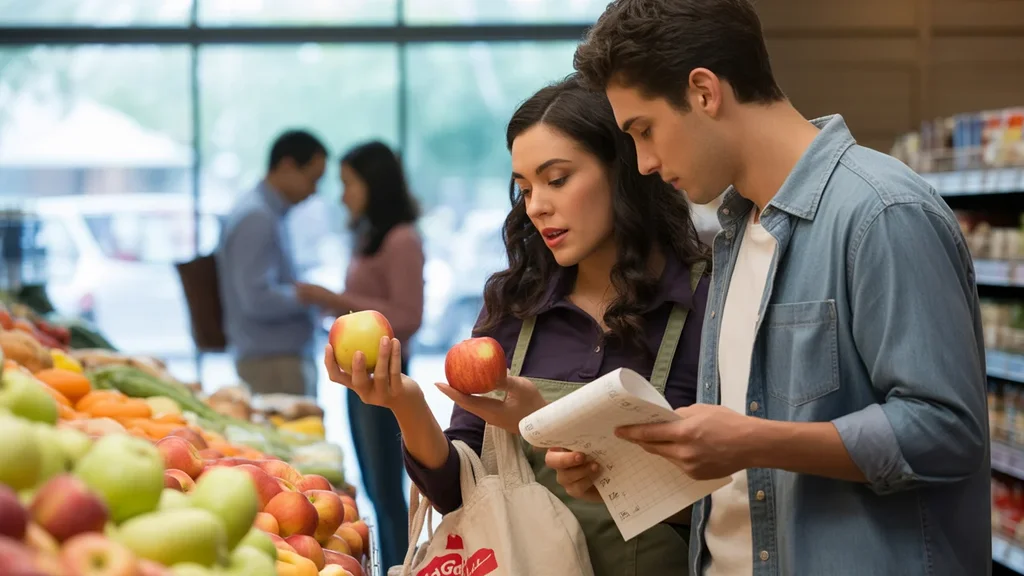
These prices illustrate how staple items tend to compare locally—not a full shopping list, and not a guarantee of what any specific store charges this week. They’re derived estimates, adjusted for regional price parity, and they serve as anchors for understanding relative cost positioning rather than checkout-accurate pricing. Treat them as directional signals, not as substitutes for your own price checks.
| Item | Illustrative Price |
|---|---|
| Bread (per pound) | $1.90/lb |
| Cheese (per pound) | $4.99/lb |
| Chicken (per pound) | $2.10/lb |
| Eggs (per dozen) | $2.65/dozen |
| Ground beef (per pound) | $6.95/lb |
| Milk (per half-gallon) | $4.22/half-gallon |
| Rice (per pound) | $1.09/lb |
Ground beef and cheese carry the highest per-pound cost, while rice and bread anchor the low end—a pattern that holds across most U.S. markets but matters more in cities where the baseline sits above 100. A household that leans heavily on protein will feel Garland’s pricing more acutely than one built around grains, beans, and seasonal produce. Eggs and chicken offer relative value, but both are subject to supply-side volatility that can push prices up sharply and unpredictably, particularly during disease outbreaks or feed cost spikes.
Store Choice & Price Sensitivity
Grocery price pressure in Garland varies more by store tier than by any single “average” experience. Discount grocers—no-frills formats, limited selection, house brands—deliver the lowest per-item costs, but they require willingness to drive farther, tolerate fewer choices, and plan around what’s in stock rather than what’s on a list. Mid-tier chains offer predictability, broader selection, and more convenient locations, but you pay for that convenience in higher per-unit pricing. Premium grocers—organic emphasis, prepared foods, specialty imports—serve a different value proposition entirely, trading cost efficiency for quality signals, variety, and shopping experience.
Because grocery options in Garland cluster along corridors rather than spreading evenly, the friction cost of reaching a discount store can be higher than in cities with more distributed access. If the nearest budget option sits fifteen minutes away and the mid-tier chain is five minutes closer, the time-versus-savings tradeoff becomes a recurring decision point. Families with flexible schedules and vehicles can optimize around weekly bulk trips to discount stores; singles with tight schedules may find that the time and fuel cost of driving farther erodes the per-item savings. Seniors and households without reliable transportation face a sharper tradeoff: proximity often wins, even when it means paying more per pound.
Store tier also determines how much control you have over cost volatility. Discount grocers tend to hold prices steadier on staples, while mid-tier and premium stores adjust more frequently in response to supplier costs, seasonal shifts, and competitive positioning. If your budget is tight and your household composition is stable, locking into a discount store routine reduces exposure to week-to-week price swings. If variety and convenience matter more than marginal savings, mid-tier stores offer a smoother experience at a predictable premium.
What Drives Grocery Pressure Here
Income interaction is the clearest driver. At $71,044 median household income, Garland households sit above the national median but not by enough to render grocery costs negligible. A regional price parity of 103 means food costs run roughly 3% above the national baseline, and that gap compounds across a year of shopping. For a household spending even a moderate share of income on groceries, that 3% difference translates to hundreds of dollars annually—not catastrophic, but enough to make store choice, waste reduction, and meal planning meaningful levers rather than minor optimizations.
Household size amplifies sensitivity in both directions. A single adult might spend less in absolute terms but faces the highest per-person cost and the least flexibility to absorb price swings. A family of four spreads fixed costs (trips, fuel, membership fees) across more people and can justify bulk purchases that singles can’t, but total spending rises sharply, and any disruption—job loss, medical expense, vehicle repair—can push grocery costs from manageable to strained. Larger households also face more rigid demand: you can’t easily skip meals or substitute away from staples when feeding multiple people with different preferences and nutritional needs.
Regional distribution patterns matter because Garland’s corridor-clustered grocery accessibility means not everyone faces the same effective cost structure. Households near major commercial corridors enjoy more store choices within a short drive, which increases competitive pressure and makes it easier to comparison-shop or switch stores when prices rise. Households in less-served residential pockets face longer drives to reach discount options, and that distance acts as a friction cost that can lock them into higher-priced nearby stores. The result is a city where grocery costs vary as much by where you live and how far you’re willing to drive as by what you buy.
Seasonal variability adds another layer. Produce prices swing with growing seasons, weather disruptions, and fuel costs. Protein costs respond to feed prices, disease outbreaks, and export demand. Dairy and eggs face their own supply-side volatility. In Garland, where the regional price baseline already runs slightly high, those swings hit harder than in lower-cost metros, and households without the flexibility to substitute or stock up during low-price windows absorb more of the volatility.
Practical Ways People Manage Grocery Costs
Store loyalty programs and digital coupons reduce per-item costs without requiring extreme couponing or hours of planning. Most mid-tier and discount grocers offer app-based discounts that stack with in-store promotions, and signing up costs nothing but an email address. The savings per trip may be modest, but they compound over time, and the programs often surface deals on items you’d buy anyway rather than pushing you toward products you don’t need.
Meal planning around sales and seasonal availability shifts spending toward lower-cost windows without requiring a rigid menu. If chicken is on sale, plan three meals around it. If strawberries are in season and cheap, buy extra and freeze them. This approach requires more flexibility than cooking from a fixed weekly menu, but it reduces waste, smooths out price volatility, and keeps you from paying peak prices for out-of-season or supply-constrained items.
Buying staples in bulk—rice, beans, pasta, canned goods—lowers per-unit cost and reduces trip frequency, which cuts fuel and time costs. Bulk buying works best for non-perishables and households with storage space, but even small apartments can accommodate a few extra bags of rice or boxes of pasta. The key is to buy only what you’ll actually use before expiration; bulk purchases that spoil or go stale don’t save money.
Shopping discount grocers for staples and mid-tier stores for perishables or specialty items splits the difference between cost and convenience. Staples—grains, canned goods, frozen vegetables—are nearly identical across store tiers, so paying a premium for them at a mid-tier grocer delivers no added value. Perishables—produce, meat, dairy—vary more in quality and freshness, and mid-tier stores often offer better selection and turnover. This hybrid approach requires two stops instead of one, but it captures most of the savings from discount pricing without sacrificing quality on items where it matters.
Reducing food waste—using leftovers, freezing excess, planning portions—lowers effective cost per meal without cutting nutritional quality. A household that throws away 10% of what it buys is effectively paying 10% more for groceries than the price tags suggest. Simple habits—storing produce properly, labeling leftovers, cooking smaller portions—cut waste and stretch the same grocery budget further.
Groceries vs Eating Out (Directional)
Cooking at home in Garland costs less per meal than eating out, but the gap depends on what you cook, where you shop, and what kind of restaurant you’re comparing against. A home-cooked meal built around rice, beans, and seasonal vegetables might cost a few dollars per serving; a comparable meal at a fast-casual restaurant runs two to three times that, and a sit-down restaurant adds another layer of markup plus tip. The tradeoff isn’t just financial—it’s also time, effort, and flexibility.
Households that cook most meals at home retain the most control over grocery costs, because they can substitute ingredients, adjust portions, and respond to price signals in real time. Households that eat out frequently face less day-to-day volatility (restaurant prices change slowly) but lose the ability to optimize around sales, seasons, or store choice. The middle ground—cooking staples at home and eating out selectively—offers a balance between cost control and convenience, but it requires discipline to avoid letting occasional restaurant meals become a default habit that erodes grocery savings.
For singles and small households, the cost gap between cooking and eating out narrows, because home cooking loses some of its efficiency advantage when you’re preparing small portions and can’t buy in bulk. A single adult cooking for one might spend nearly as much per meal as a fast-casual option once you account for spoilage, variety limits, and the time cost of cooking. Families, by contrast, see a much wider gap: cooking at home for four costs far less per person than taking four people to a restaurant, and the savings compound across every meal.
FAQs About Grocery Costs in Garland (2026)
Is it cheaper to shop in bulk in Garland? Bulk buying lowers per-unit cost on staples like rice, beans, pasta, and canned goods, and it reduces trip frequency, which cuts fuel and time costs. It works best for non-perishables and households with storage space, but even small households can benefit by stocking a few key items during sales.
Which stores in Garland are best for low prices? Discount grocers offer the lowest per-item costs, but they require willingness to drive farther and tolerate limited selection. Mid-tier chains cost more but offer broader variety and more convenient locations. The best choice depends on how much time and flexibility you have to optimize around store tier.
How much more do organic items cost in Garland? Organic products typically carry a premium over conventional equivalents, and that gap tends to be wider in mid-tier and premium stores than in discount grocers. The premium varies by item—produce and dairy show larger gaps than shelf-stable goods—but expect to pay meaningfully more if organic is a priority.
How do grocery costs for two adults in Garland tend to compare to nearby cities? Garland’s regional price parity of 103 places it slightly above the national baseline, so grocery costs run modestly higher than in lower-cost metros but lower than in high-cost coastal cities. Nearby cities in the Dallas metro area face similar pricing, though specific costs vary by store density and competitive pressure.
How do households in Garland think about grocery spending when cooking at home? Most households treat grocery spending as a controllable cost category where store choice, meal planning, and waste reduction offer meaningful levers. Families focus on bulk buying and discount stores to manage high absolute spending; singles prioritize trip efficiency and spoilage avoidance to control per-person costs.
Does shopping at different stores for different items actually save money? Shopping discount grocers for staples and mid-tier stores for perishables captures most of the cost savings from discount pricing without sacrificing quality on items where freshness and selection matter. It requires an extra stop, but the savings compound over time, especially for households with flexible schedules.
How does Garland’s grocery accessibility affect what people actually spend? Because grocery options cluster along corridors rather than spreading evenly, the friction cost of reaching a discount store varies by neighborhood. Households near commercial corridors can comparison-shop easily; those in less-served areas face longer drives, which can push them toward pricier nearby options even when they’d prefer to save.
How Groceries Fit Into the Cost of Living in Garland
Groceries occupy a smaller share of household budgets than housing or utilities, but they’re more controllable and more sensitive to behavior. Where you live determines your rent or mortgage; groceries depend on where you shop, what you buy, and how much you waste. That makes food costs a category where active management—store choice, meal planning, waste reduction—delivers measurable results without requiring major lifestyle changes or long-term commitments.
For a complete picture of monthly expenses, budget planning, cost breakdown, groceries are one input among many, and their relative weight depends on household size, income, and priorities. A family spending $800 per month on groceries faces different tradeoffs than a single adult spending $300, and both face different tradeoffs than a household prioritizing organic or specialty foods. The key is understanding where grocery costs sit relative to fixed expenses like rent and utilities, and where you have the most leverage to adjust spending without sacrificing nutritional quality or convenience.
Garland’s corridor-clustered grocery accessibility means that where you live within the city affects your effective cost structure as much as what you buy. Households near major commercial corridors enjoy more store choices, more competitive pricing, and shorter drives to discount options. Households in less-served residential areas face longer trips and fewer nearby alternatives, which can lock them into higher-cost stores or force them to trade time and fuel for savings. That geographic dimension doesn’t show up in average price indices, but it shapes the lived experience of grocery shopping in ways that matter for day-to-day budgeting and long-term financial planning.
How this article was built: In addition to public economic data, this article incorporates location-based experiential signals derived from anonymized geographic patterns—such as access density, walkability, and land-use mix—to reflect how day-to-day living actually feels in Garland, TX.