
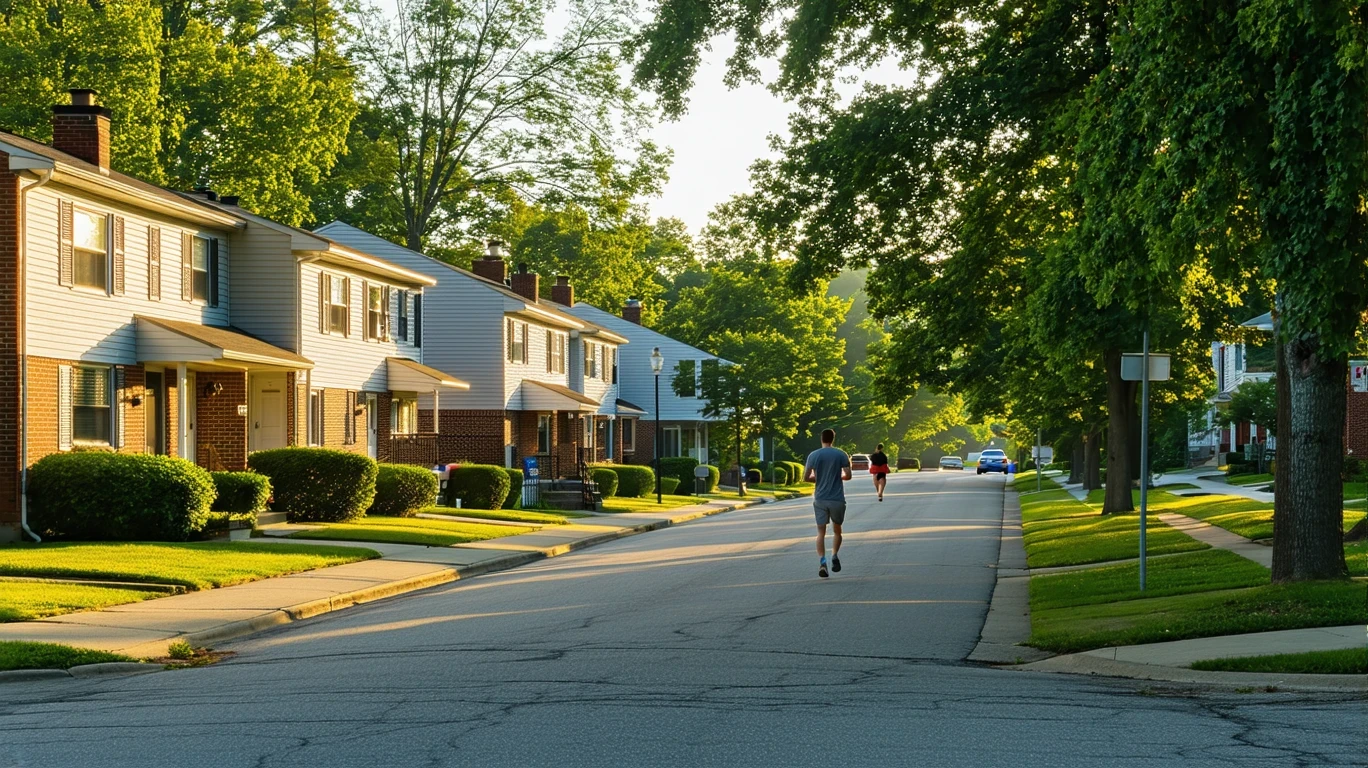
Reynoldsburg and Dublin sit in the same Columbus metro area, share the same regional price environment, and face the same unemployment rate—but the way cost pressure shows up in daily life differs sharply between them. Families comparing these two cities in 2026 aren’t choosing between cheap and expensive; they’re choosing between different cost structures that favor different household priorities. Dublin’s housing market reflects a different entry point and ongoing obligation than Reynoldsburg’s, while transportation, utilities, and healthcare access create distinct friction points that matter more to some households than others.
The Martinezes—a couple with two school-age kids—have been debating this exact choice for months. They can afford either city on paper, but they’re trying to figure out where their monthly routine will feel more predictable and where unexpected costs are more likely to surface. Housing dominates the conversation, but utilities, commute patterns, and daily errands all play a role in determining which place fits their actual life better.
This comparison explains where cost pressure concentrates in each city, which households feel those differences most acutely, and how the same gross income can create very different day-to-day financial experiences depending on which trade-offs a household is willing to make.
Housing Costs
Housing is where Reynoldsburg and Dublin diverge most visibly. Reynoldsburg’s median home value sits at $217,200, while Dublin’s reaches $478,400—a difference that changes the entire entry experience for buyers. Renters face a similar gap: Reynoldsburg’s median gross rent is $1,172 per month, compared to Dublin’s $1,541 per month. These aren’t just numbers on a listing; they represent fundamentally different housing markets with different availability patterns, different competition levels, and different ongoing obligations once you’re in.
For first-time buyers, Reynoldsburg’s lower entry point means smaller down payments, lower monthly mortgage obligations, and less pressure to stretch income just to qualify. Dublin’s higher home values reflect a market where single-family homes dominate, lot sizes tend to be larger, and newer construction is more common—but that comes with a front-loaded cost that affects cash reserves and limits flexibility early on. Renters in Dublin face tighter availability in the lower price bands, meaning households looking for budget flexibility often find fewer options that don’t require trade-offs in location or unit size.
The difference isn’t just about purchase price or monthly rent—it’s about what happens after you move in. Higher home values in Dublin typically mean higher property tax bills, higher insurance premiums, and more expensive maintenance when systems need replacement. Reynoldsburg’s housing stock includes more older homes and a wider mix of housing types, which can mean lower baseline costs but also more variability in upkeep needs depending on the specific property. For families prioritizing space and willing to take on higher fixed costs, Dublin’s housing market offers predictability and access to newer infrastructure. For households prioritizing lower entry barriers and more flexibility in their monthly budget, Reynoldsburg’s housing market provides more room to absorb unexpected expenses without immediately feeling stretched.
Housing takeaway: Buyers and renters sensitive to entry costs and ongoing fixed obligations will find Reynoldsburg’s housing market easier to navigate, while households prioritizing newer construction, larger lots, and access to a specific housing form may find Dublin’s higher entry point worth the trade-off. The decision hinges on whether front-loaded costs or ongoing flexibility matters more to your household’s financial strategy.
Utilities and Energy Costs

Utility costs in Reynoldsburg and Dublin look nearly identical on the electricity side—17.59¢/kWh in Reynoldsburg and 17.66¢/kWh in Dublin—but natural gas pricing tells a very different story. Reynoldsburg’s natural gas price sits at $11.25/MCF, while Dublin’s reaches $23.03/MCF. That difference matters most during heating months, when households relying on natural gas for heat face meaningfully different exposure depending on which city they’re in. Both cities experience cold winters typical of central Ohio, so heating isn’t optional—it’s a baseline cost that every household has to plan for.
The natural gas price gap affects single-family homeowners more than apartment renters, since larger homes with older furnaces or less insulation amplify the impact of higher per-unit costs. In Dublin, where newer construction is more common, homes may have better insulation and more efficient HVAC systems, which can offset some of the higher natural gas pricing—but that efficiency advantage isn’t universal, and older homes in Dublin still face the same rate structure. Reynoldsburg’s lower natural gas costs provide more breathing room for households in older homes or larger floor plans, where heating a full house through January and February can otherwise become a significant monthly line item.
Electricity costs remain steady and predictable in both cities, meaning cooling season doesn’t introduce the same variability that heating does. Households running central air through summer will see similar usage-driven bills regardless of location. The real difference shows up in winter, when natural gas pricing determines whether utility bills feel manageable or start creeping into territory that requires active management. For families with young kids at home all day, or for remote workers keeping the thermostat steady, that seasonal swing can shift the entire budget’s predictability.
Utility takeaway: Households in single-family homes, especially older or larger properties, will feel Dublin’s higher natural gas pricing more acutely during heating months. Reynoldsburg offers lower heating cost exposure, which matters most for families prioritizing predictable winter bills and households with less control over home efficiency upgrades.
Groceries and Daily Expenses
Grocery and daily spending pressure in Reynoldsburg and Dublin reflects the same regional price environment—both cities share a 95 RPP index—but the structure of access and the density of options create different experiences for households managing weekly shopping and routine errands. Dublin’s experiential signals show broadly accessible food and grocery density, meaning households can reach multiple grocery options without long drives or significant detours. Reynoldsburg also shows broadly accessible grocery density, so neither city forces households into long trips or limited choices when stocking a pantry.
The difference shows up more in how households navigate convenience spending and prepared food access. Dublin’s walkable pockets and mixed land use mean some neighborhoods support errands on foot or by bike, reducing the friction cost of picking up a few items or grabbing takeout without a dedicated car trip. Reynoldsburg’s mixed mobility texture means most errands still require a car, which doesn’t add direct costs but does add time and planning friction—especially for dual-income households trying to coordinate pickups, drop-offs, and grocery runs around work schedules.
For single adults and couples, grocery costs tend to be more about price sensitivity and shopping strategy than access. Both cities offer big-box options and discount grocers, so households willing to plan around sales and buy in bulk can manage costs effectively. Families with kids face a different calculus: larger cart sizes, more frequent trips, and less flexibility to chase deals across multiple stores. In that context, Dublin’s denser access and walkable pockets reduce the time cost of errands, while Reynoldsburg’s lower housing costs free up budget room to absorb convenience spending when time gets tight.
Grocery takeaway: Neither city imposes grocery access barriers, but Dublin’s walkable pockets reduce errand friction for households prioritizing time savings, while Reynoldsburg’s lower fixed costs provide more budget flexibility for families managing larger grocery volumes and convenience spending.
Taxes and Fees
Property taxes, local fees, and recurring municipal costs in Reynoldsburg and Dublin follow the same regional tax structure, but the way those costs scale with housing values creates different ongoing obligations for homeowners. Dublin’s higher median home values mean property tax bills will be proportionally higher, even if the millage rate is identical. For a household buying in Dublin, that higher assessed value translates directly into a larger annual tax obligation—one that doesn’t fluctuate with usage or behavior and can’t be reduced through efficiency measures.
Renters in both cities face indirect exposure to property taxes through rent pricing, but the more immediate cost difference comes from how landlords structure leases and what fees get passed through. In Dublin, where newer developments and managed communities are more common, HOA fees and amenity charges may be bundled into rent or assessed separately, adding predictability but also raising baseline costs. Reynoldsburg’s older housing stock and more varied ownership patterns mean fewer HOA-heavy developments, which can reduce recurring fees but also shift maintenance responsibility more directly onto tenants or owners.
Sales taxes and consumption-based fees remain consistent across both cities, so households won’t see differences at the register or when paying for municipal services like trash collection. The real distinction is in how property-related costs accumulate over time. Homeowners planning to stay several years in Dublin need to account for higher property tax exposure as a fixed, non-negotiable cost that grows with assessed value. In Reynoldsburg, lower home values mean lower tax bills, which frees up cash flow for other priorities or provides a buffer when other costs rise unexpectedly.
Tax takeaway: Homeowners in Dublin face higher property tax exposure due to higher home values, making ongoing fixed costs less flexible. Reynoldsburg’s lower home values reduce that baseline obligation, which matters most for households prioritizing cash flow predictability and long-term budget stability.
Transportation and Commute Reality
Transportation costs in Reynoldsburg and Dublin reflect different gas prices—$3.91/gal in Reynoldsburg and $2.83/gal in Dublin—but the bigger difference comes from how each city’s infrastructure shapes daily mobility and commute friction. Both cities offer bus service, but neither has rail transit, so most households rely on cars for commuting, errands, and family logistics. The question isn’t whether you need a car—it’s how much you’ll use it and whether the city’s layout reduces or amplifies the time and fuel costs of getting around.
Dublin’s walkable pockets and notable bike presence mean some neighborhoods support short trips without a car, reducing the frequency of cold starts, parking hassles, and fuel consumption for routine errands. Reynoldsburg’s mixed mobility texture means most trips still require driving, even for nearby destinations. That difference doesn’t just show up in fuel costs—it shows up in time spent coordinating logistics, managing parking, and planning routes around traffic patterns. For dual-income households or families managing school drop-offs and extracurricular schedules, those friction costs accumulate quickly.
Gas price differences between the two cities matter most for households with long commutes or multiple drivers. A household commuting 25 miles round trip daily will feel the gap between Reynoldsburg’s higher gas prices and Dublin’s lower ones, especially when fuel costs stack on top of other transportation expenses like insurance, maintenance, and registration. But for households working from home or commuting shorter distances, the gas price difference becomes less significant than the overall car dependency and time cost of navigating daily errands.
Transportation takeaway: Households with long commutes or high mileage will feel Reynoldsburg’s higher gas prices more acutely, while Dublin’s walkable pockets and lower gas prices reduce both fuel costs and errand friction for households prioritizing time savings and reduced car dependency.
Cost Structure Comparison
Housing pressure dominates the cost experience in both cities, but the nature of that pressure differs. Dublin’s higher home values and rents create a front-loaded cost structure that requires more income just to enter the market, while Reynoldsburg’s lower entry point provides more flexibility for households managing other obligations or building cash reserves. That difference cascades into property taxes, insurance, and maintenance costs, all of which scale with home value and create ongoing fixed obligations that can’t be reduced through behavior changes.
Utilities introduce more volatility in Dublin due to higher natural gas pricing, which matters most during heating months when households in single-family homes face larger bills that can swing unpredictably based on weather and usage. Reynoldsburg’s lower natural gas costs provide more predictable winter utility bills, which helps households avoid seasonal budget crunches. Electricity costs remain nearly identical, so cooling season doesn’t create the same divergence.
Transportation patterns matter more in Reynoldsburg for households with long commutes or high mileage, since higher gas prices amplify the cost of car dependency. Dublin’s lower gas prices and walkable pockets reduce both fuel costs and the time friction of daily errands, which benefits households juggling complex schedules or trying to minimize car trips. For families with multiple drivers or long commutes, that difference compounds over time.
Daily living costs—groceries, dining, and convenience spending—don’t differ sharply in price between the two cities, but access patterns and errand friction create different experiences. Dublin’s denser layout and mixed land use reduce the time cost of running errands, while Reynoldsburg’s lower housing costs free up budget room to absorb convenience spending when time gets tight. Households sensitive to time pressure may prefer Dublin’s layout; households sensitive to budget flexibility may prefer Reynoldsburg’s lower fixed costs.
The better choice depends on which costs dominate your household’s financial experience. For households where housing entry barriers, property taxes, and heating costs create the most pressure, Reynoldsburg offers lower exposure and more flexibility. For households where commute costs, errand friction, and access to walkable infrastructure matter more, Dublin’s layout and lower gas prices provide meaningful advantages—but only if the higher housing costs don’t eliminate the budget room needed to benefit from those features.
How the Same Income Feels in Reynoldsburg vs Dublin
Single Adult
For a single adult, housing becomes the first non-negotiable cost, and the difference between Reynoldsburg’s lower rent and Dublin’s higher rent determines how much flexibility remains for everything else. In Reynoldsburg, lower rent and lower natural gas costs create more breathing room for discretionary spending, building savings, or absorbing unexpected expenses without immediately feeling stretched. In Dublin, higher rent and higher heating costs reduce that flexibility, but walkable pockets and lower gas prices can offset some of that pressure if the individual works nearby or can manage errands without constant car trips. The trade-off is between lower fixed costs and more budget control in Reynoldsburg versus better access and reduced commute friction in Dublin.
Dual-Income Couple
For a dual-income couple, transportation and commute patterns become more significant, since both partners may be driving separately or coordinating schedules around shared vehicles. In Dublin, lower gas prices and walkable pockets reduce the time and fuel cost of daily logistics, which matters more when both partners are working full-time and trying to minimize errand friction. In Reynoldsburg, higher gas prices and more car-dependent errands add time and fuel costs, but lower housing costs and lower heating exposure free up budget room to absorb those expenses. The decision hinges on whether time savings and reduced commute friction outweigh the higher fixed costs of living in Dublin.
Family with Kids
For families with kids, housing space, school access, and healthcare availability become non-negotiable, and the cost structure shifts toward managing ongoing obligations rather than optimizing flexibility. In Reynoldsburg, lower home values and lower natural gas costs provide more budget room to handle larger grocery bills, extracurricular fees, and unexpected expenses, but limited healthcare access and more car-dependent errands add friction to daily logistics. In Dublin, higher home values and higher heating costs reduce budget flexibility, but hospital presence, integrated green space, and walkable pockets make family logistics easier to manage—especially for households with young kids or complex schedules. The trade-off is between lower fixed costs and more financial flexibility in Reynoldsburg versus better infrastructure and reduced logistics friction in Dublin.
Decision Matrix: Which City Fits Which Household?
| Decision factor | If you’re sensitive to this… | Reynoldsburg tends to fit when… | Dublin tends to fit when… |
|---|---|---|---|
| Housing entry + space needs | You need lower down payments, smaller monthly obligations, or more budget flexibility after moving in | You prioritize lower entry barriers and want more cash flow room for other expenses | You prioritize newer construction, larger lots, and are willing to accept higher fixed costs for that access |
| Transportation dependence + commute friction | You drive long distances daily, manage multiple drivers, or want to reduce car dependency for errands | You can absorb higher gas prices in exchange for lower housing costs and don’t mind car-dependent errands | You benefit from lower gas prices and walkable pockets that reduce fuel costs and errand time |
| Utility variability + home size exposure | You live in a single-family home, have less control over efficiency upgrades, or want predictable winter bills | You prioritize lower natural gas costs and more predictable heating bills during winter months | You live in newer construction with better insulation or can absorb higher heating costs without budget strain |
| Grocery strategy + convenience spending creep | You manage large grocery volumes, frequent trips, or want to minimize time spent on errands | You prioritize budget flexibility to absorb convenience spending when time gets tight | You benefit from denser access and walkable errands that reduce the time cost of routine shopping |
| Fees + friction costs (HOA, services, upkeep) | You want to avoid recurring fees, minimize baseline obligations, or prefer direct control over maintenance | You prioritize lower property taxes and fewer HOA-heavy developments that add fixed monthly costs | You accept higher property taxes and potential HOA fees in exchange for newer infrastructure and managed amenities |
| Time budget (schedule flexibility, errands, logistics) | You juggle complex schedules, manage family logistics, or want to reduce the time cost of daily routines | You can absorb more car-dependent errands in exchange for lower fixed costs and more financial flexibility | You benefit from walkable pockets, hospital presence, and denser access that simplify family logistics |
Lifestyle Fit
Reynoldsburg and Dublin offer different lifestyle textures shaped by their infrastructure, density, and access patterns. Reynoldsburg’s mixed mobility texture and broadly accessible grocery density mean most households can handle daily errands efficiently, but the layout still requires a car for nearly all trips. Parks and outdoor spaces are present, and water features add recreational variety, but the overall experience leans toward car-oriented suburban living with moderate pedestrian infrastructure in some areas. For families prioritizing lower fixed costs and willing to manage more driving, Reynoldsburg provides a straightforward suburban environment without significant friction in daily routines.
Dublin’s walkable pockets, notable bike presence, and integrated green space create a different experience—one where some neighborhoods support errands and recreation without constant car trips. The city’s higher pedestrian-to-road ratio and mixed land use mean households in certain areas can walk to parks, bike to nearby shops, or handle short trips without starting the car. Hospital presence and higher school density add infrastructure that matters for families managing healthcare needs and school-age kids. For households prioritizing time savings, reduced car dependency, and access to denser amenities, Dublin’s layout provides meaningful lifestyle advantages—but only if the higher housing costs don’t eliminate the budget flexibility needed to enjoy those features.
Both cities sit in the Columbus metro, so access to regional employment, entertainment, and cultural amenities remains similar. The difference is in how daily life feels within each city’s boundaries. Reynoldsburg’s lower costs and moderate infrastructure suit households prioritizing financial flexibility and straightforward suburban living. Dublin’s denser layout and better pedestrian infrastructure suit households prioritizing time savings, walkability, and access to integrated green space—especially families with kids or dual-income couples managing complex schedules.
Quick facts: Dublin’s park density exceeds high thresholds, while Reynoldsburg’s parks fall in the moderate range. Dublin has a hospital present; Reynoldsburg shows limited healthcare access with pharmacies but no hospital or clinics detected.
Frequently Asked Questions
Is Reynoldsburg or Dublin more affordable for families in 2026?
Neither city is universally more affordable—it depends on which costs dominate your household’s budget. Reynoldsburg offers lower home values, lower rent, and lower natural gas costs, which benefits families prioritizing budget flexibility and predictable winter utility bills. Dublin’s higher housing costs and higher heating exposure reduce flexibility, but lower gas prices and walkable pockets can offset some of that pressure for families managing long commutes or complex schedules. The better choice depends on whether your family is more sensitive to fixed housing costs or to transportation and errand friction.
How do housing costs in Reynoldsburg compare to Dublin in 2026?
Reynoldsburg’s median home value sits at $217,200, while Dublin’s reaches $478,400. Renters face a similar gap: Reynoldsburg’s median rent is $1,172 per month, compared to Dublin’s $1,541 per month. That difference changes the entire entry experience for buyers and renters, affecting down payments, monthly obligations, property taxes, and insurance costs. Households prioritizing lower entry barriers and more cash flow flexibility will find Reynoldsburg easier to navigate, while households prioritizing newer construction and larger lots may find Dublin’s higher costs worth the trade-off.
Which city has lower utility bills, Reynoldsburg or Dublin?
Electricity costs are nearly identical—17.59¢/kWh in Reynoldsburg and 17.66¢/kWh in Dublin—but natural gas pricing differs sharply. Reynoldsburg’s natural gas price is $11.25/MCF, while Dublin’s is $23.03/MCF. That difference matters most during heating months, when households in single-family homes face larger bills in Dublin. Reynoldsburg offers lower heating cost exposure, which benefits families in older or larger homes prioritizing predictable winter utility bills.
Do I need a car to live in Reynoldsburg or Dublin in 2026?
Both cities require a car for most households, but the degree of car dependency differs. Reynoldsburg’s mixed mobility texture means nearly all errands and commutes require driving. Dublin’s walkable pockets and notable bike presence mean some neighborhoods support short trips on foot or by bike, reducing the frequency of car trips for routine errands. Both cities offer bus service, but neither has rail transit, so households relying on public transportation will face limited options. For most families, a car remains essential in both cities, but Dublin’s layout reduces the time and fuel costs of daily logistics more than Reynoldsburg’s does.
Which city is better for families with kids, Reynoldsburg or Dublin?
Families with kids face different trade-offs in each city. Reynoldsburg offers lower housing costs, lower natural gas costs, and more budget flexibility, which helps families manage larger grocery bills, extracurricular fees, and unexpected expenses. Dublin offers hospital presence, integrated green space, and walkable pockets that simplify family logistics—especially for households with young kids or complex schedules. The decision depends on whether your family prioritizes financial flexibility or infrastructure that reduces the time and friction cost of managing daily routines.
Conclusion
Reynoldsburg and Dublin sit in the same metro, share the same regional price environment, and offer access to the same employment and cultural amenities—but the way cost pressure shows up in daily life differs sharply. Reynoldsburg’s lower housing costs, lower natural gas pricing, and moderate infrastructure create a cost structure that favors households prioritizing budget flexibility, predictable utility bills, and straightforward suburban living. Dublin’s higher housing costs and higher heating exposure reduce that flexibility, but walkable pockets, lower gas prices, hospital presence, and integrated green space provide infrastructure advantages that matter most for households managing long commutes, complex schedules, or family logistics that benefit from denser access.
The Martinezes ultimately chose Reynoldsburg, prioritizing lower fixed costs and more budget room to handle unexpected expenses as their kids grow. Another family might choose Dublin, valuing the time savings from walkable errands and the peace of mind that comes with hospital access nearby. Neither city is cheaper overall—they’re structured differently, and the better choice depends on which costs dominate your household’s financial experience and which trade-offs you’re willing to make. For households sensitive to housing entry barriers, heating costs, and ongoing fixed obligations, Reynoldsburg offers lower exposure and more flexibility. For households sensitive to commute friction, errand logistics, and access to denser infrastructure, Dublin’s layout provides meaningful advantages—but only if the higher housing costs don’t eliminate the budget room needed to benefit from them.
How this article was built: In addition to public economic data, this article incorporates location-based experiential signals derived from anonymized geographic patterns—such as access density, walkability, and land-use mix—to reflect how day-to-day living actually feels in Reynoldsburg, OH.