
“It’s not flashy, but it works—close enough to Columbus to feel connected, far enough out that you’re not paying city prices for a shoebox.”
That’s the emotional center of Reynoldsburg: a low-rise, car-friendly suburb where the tradeoff between affordability and access feels manageable to many, and limiting to others. It’s a place where grocery runs are easy, commutes are common, and the texture of daily life leans heavily on planning, driving, and knowing what you’re trading away.
If you’re weighing a move to Reynoldsburg, the question isn’t whether people here are happy in some absolute sense. It’s whether the things that feel rewarding here—practical convenience, lower housing costs, family-oriented infrastructure—align with what you actually need, and whether the things that feel limiting—sparse transit, minimal walkability, limited local healthcare—are tradeoffs you’re willing to make.
What Defines the Reynoldsburg Vibe
Reynoldsburg sits in the Columbus metro orbit, offering suburban affordability without the density, noise, or housing pressure of the urban core. The median home value is $217,200, and median rent is $1,172 per month—figures that feel accessible to households earning around the local median income of $68,778 per year. The regional price parity index of 95 suggests costs here run slightly below the national baseline, reinforcing the city’s reputation as a practical, budget-conscious choice for families and commuters.
But the emotional experience of living here isn’t shaped by affordability alone. It’s shaped by how you move, how you access what you need, and how much friction you encounter in the everyday rhythms of household life. Reynoldsburg is a place where day-to-day costs feel predictable, but where spontaneity—grabbing dinner on foot, catching a train downtown, walking to a park—requires more intention.
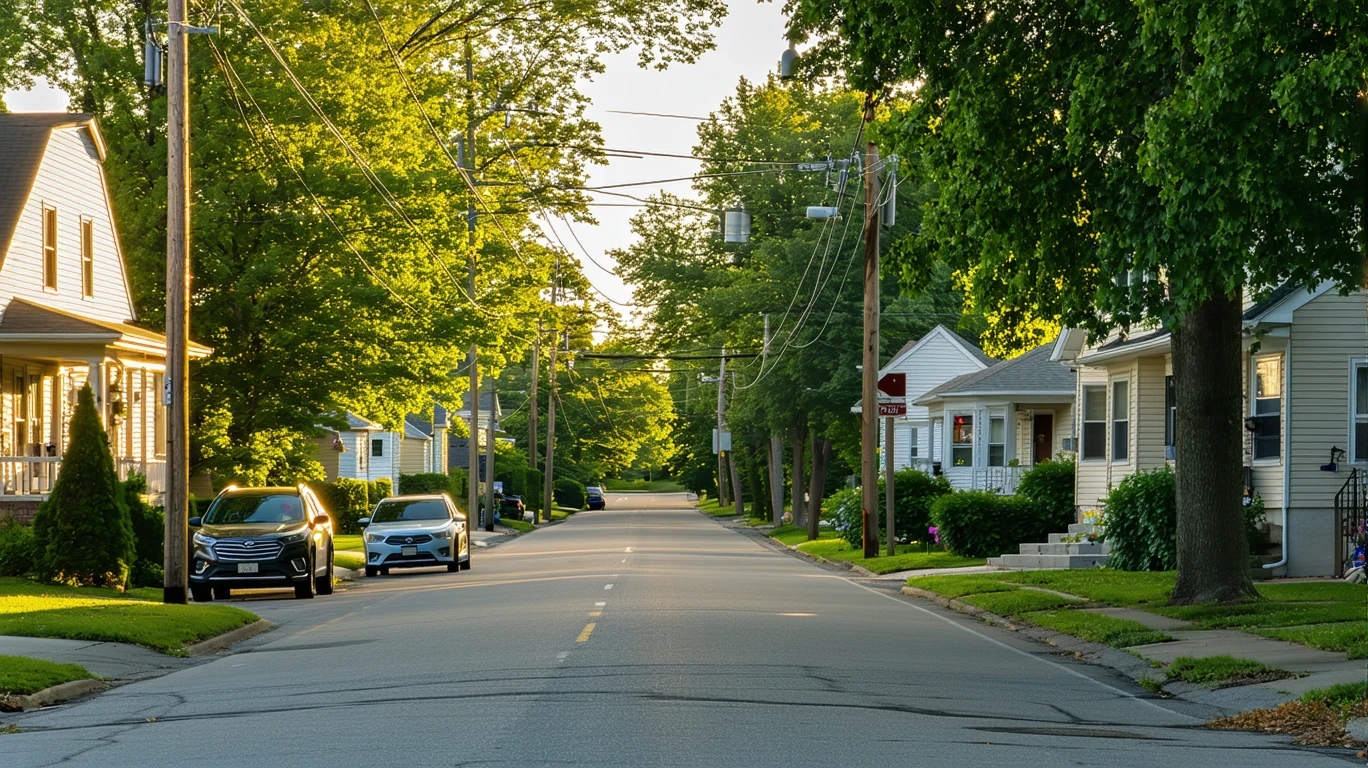
The city’s structure reflects classic suburban form: low-rise buildings, mixed residential and commercial land use, and a pedestrian-to-road ratio that supports some walking but doesn’t eliminate car dependency. Grocery and food establishments are broadly accessible, meaning errands don’t require long drives or careful route planning. But the transit network is bus-only, and cycling infrastructure is minimal. For households who’ve built their lives around driving, this feels normal. For those who hoped to reduce car reliance or raise kids with walkable independence, it feels like a limitation.
Social Media Buzz in Reynoldsburg
On platforms like Facebook neighborhood groups and regional Reddit threads, Reynoldsburg discussions tend to cluster around a few recurring themes: affordability relative to Columbus, the convenience of having grocery options nearby, frustration with limited transit, and a protective pride in the city’s family-friendly reputation.
The tone is rarely celebratory, but it’s also rarely bitter. It’s pragmatic, sometimes defensive, and often focused on managing expectations:
“If you’re looking for walkable neighborhoods and light rail, this isn’t it. But if you want a yard, decent schools, and a Kroger you can actually get to, Reynoldsburg delivers.”
“I wish there was better access to healthcare here—having to drive to Gahanna or Columbus for anything serious gets old.”
“It’s quiet, it’s safe, and it’s not trying to be something it’s not. That’s honestly refreshing.”
There’s also tension around growth and change. Some residents express concern that new development will erode the small-town feel, while others welcome amenities and investment. The conversation reflects a city in transition—not dramatically, but enough that long-time locals and newcomers don’t always share the same vision.
Local News Tone
Local coverage of Reynoldsburg tends to frame the city through themes of steady growth, infrastructure investment, and community identity. Headlines don’t typically focus on crisis or controversy, but rather on incremental change and the tension between preservation and progress.
Common topic buckets include:
- “Community Debates What Growth Should Look Like”
- “New Retail and Dining Options Arrive in Suburban Corridor”
- “Residents Weigh Convenience Against Small-Town Character”
- “Schools and Playgrounds Remain Central to Family Appeal”
- “Transit Access and Healthcare Gaps Draw Ongoing Discussion”
The tone is generally neutral to mildly optimistic, emphasizing civic participation and gradual improvement rather than dramatic transformation. For readers trying to gauge the city’s trajectory, the takeaway is: Reynoldsburg is evolving, but slowly, and not in ways that fundamentally alter its suburban, car-oriented character.
Review-Based Public Perception
On platforms like Google Reviews, Yelp, and Nextdoor-style community boards, Reynoldsburg earns praise for what it delivers reliably—and criticism for what it doesn’t.
Positive sentiment clusters around:
- Affordability compared to Columbus proper and inner-ring suburbs
- Convenient access to groceries and everyday errands
- Family-friendly amenities like playgrounds and parks
- Quiet, low-density residential streets
Critical or mixed sentiment focuses on:
- Limited healthcare access (pharmacies present, but no hospital or clinics detected)
- Bus-only transit with no rail options
- Minimal walkability outside of specific pockets
- Lack of nightlife, cultural venues, or dense entertainment districts
Neighborhood variation exists, though it’s often described in broad terms: newer planned developments versus older, established pockets. The former tend to feel more uniform and amenity-rich; the latter offer more character but sometimes fewer modern conveniences. Neither extreme dominates the city’s identity.
Expectation matching is key. People who moved here seeking suburban comfort, yard space, and housing tradeoffs that favor ownership tend to feel satisfied. People who hoped for walkable texture, transit variety, or urban energy tend to feel let down.
Comparison to Nearby Cities
| Dimension | Reynoldsburg | Columbus | Gahanna |
|---|---|---|---|
| Housing Affordability | More accessible, lower pressure | Higher costs, competitive market | Moderate, slightly above Reynoldsburg |
| Walkability & Transit | Car-dependent, bus-only | More walkable pockets, some rail | Similar car reliance, limited transit |
| Errands & Groceries | Broadly accessible, convenient | Highly accessible, denser options | Accessible, comparable convenience |
| Healthcare Access | Limited (no hospital locally) | Comprehensive, multiple hospitals | Better local access than Reynoldsburg |
| Nightlife & Culture | Minimal, quiet suburban feel | Vibrant, diverse, dense options | Moderate, family-oriented |
Reynoldsburg, Columbus, and Gahanna each serve different household priorities. Columbus offers urban texture, transit variety, and cultural density, but at higher housing costs and with more competition. Gahanna shares Reynoldsburg’s suburban character but with slightly better healthcare access and a bit more polish. Reynoldsburg offers the most affordable entry point and solid errands convenience, but asks households to accept limited transit, minimal walkability, and the need to travel for hospital care.
If you value affordability and don’t mind driving, Reynoldsburg makes sense. If you need walkable independence or frequent healthcare access, Columbus or Gahanna may feel less frustrating. If you want suburban calm with better local medical infrastructure, Gahanna edges ahead.
What Locals Are Saying
Young professional, renting: “I moved here because rent was cheaper than downtown Columbus, and I work remotely anyway. It’s fine, but I do miss being able to walk to coffee or grab dinner without getting in the car every single time.”
Family with elementary-age kids: “The playgrounds are great, and we love having a yard. The schools feel solid, and groceries are easy. My only complaint is that we have to drive to Gahanna anytime someone needs more than a pharmacy.”
Retiree, longtime resident: “Reynoldsburg used to feel like a real small town. It’s grown, but it hasn’t lost its roots. I appreciate that it’s still quiet and that I can get what I need without dealing with city traffic.”
Commuter to Columbus: “The drive isn’t bad, and the savings on housing make it worth it. I just wish there were better transit options for days when I don’t want to deal with parking downtown.”
Newcomer from out of state: “I expected more walkability based on the Columbus metro reputation, but Reynoldsburg is definitely car country. Once I adjusted my expectations, it’s been a good fit.”
Parent of teenagers: “My kids complain there’s not much to do here, and honestly, they’re not wrong. We end up driving to Columbus for most activities. But the tradeoff is a safer, quieter environment.”
Remote worker, mid-30s: “I like that it’s affordable and that I’m not crammed into an apartment. But the lack of coffee shops, coworking spaces, or walkable spots to break up the day does get isolating.”
Does Reynoldsburg Feel Like a Good Fit?
Reynoldsburg doesn’t try to be something it’s not. It’s a low-rise, car-oriented suburb where affordability, errands convenience, and family-friendly infrastructure create a foundation that works well for households who value predictability and space over spontaneity and texture.
This tends to work for:
- Families seeking suburban stability with accessible groceries and parks
- Commuters willing to drive in exchange for lower housing costs
- Households comfortable with car dependency and bus-only transit
- People who prioritize quiet, low-density living over walkable urban energy
This tends to frustrate:
- People seeking walkable neighborhoods or transit variety
- Households needing local hospital access without a drive
- Renters looking for dense nightlife, cultural venues, or cycling infrastructure
- Individuals who value spontaneous, car-free daily routines
If you’re considering Reynoldsburg, the question isn’t whether it’s objectively “good” or “happy.” It’s whether the tradeoffs it offers—affordability and convenience in exchange for limited transit and walkability—match the life you’re trying to build. For some households, that exchange feels like relief. For others, it feels like compromise.
To explore how these tradeoffs translate into quality of life factors or understand what financial pressures feel like here, dig deeper into the city’s cost structure and household dynamics. Reynoldsburg’s vibe is shaped as much by what it doesn’t try to be as by what it delivers reliably.
How this article was built: In addition to public economic data, this article incorporates location-based experiential signals derived from anonymized geographic patterns—such as access density, walkability, and land-use mix—to reflect how day-to-day living actually feels in Reynoldsburg, OH.
The perspectives shown reflect commonly expressed local sentiment and recurring themes in public discussion, rather than individual accounts.