
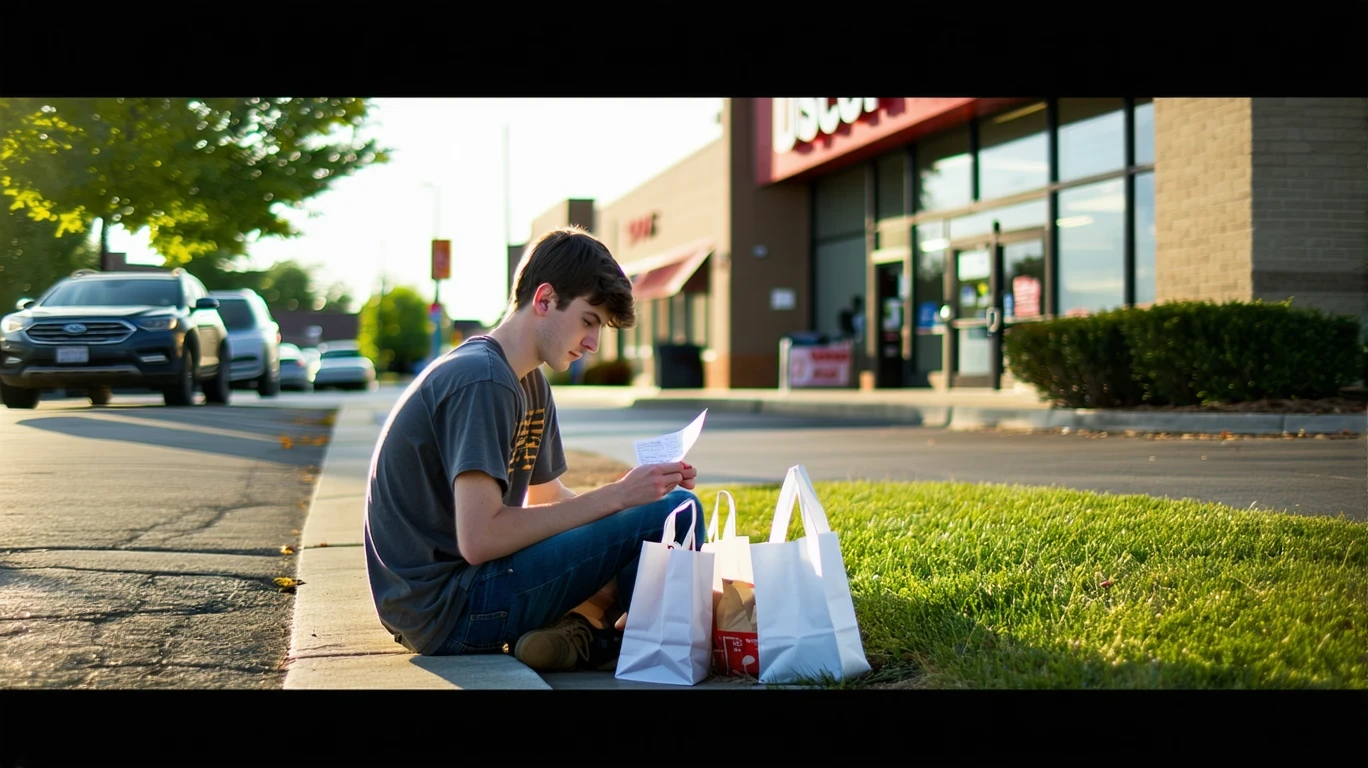
How Grocery Costs Feel in Reynoldsburg
Grocery prices in Reynoldsburg sit slightly below the national baseline, reflecting a regional price environment that runs about 5% under the U.S. average. For most households, that translates to modest relief at checkout—not dramatic savings, but enough to notice over time, especially for families buying in volume. The difference shows up most clearly in staples: bread, eggs, dairy, and proteins that make up the core of weekly shopping. Singles and couples without children often find grocery costs manageable here, with flexibility to choose mid-tier or premium stores without significant strain. Families with children, however, feel the pressure differently. Volume amplifies every price point, and the gap between discount and premium store tiers becomes a meaningful part of where money goes each month.
With a median household income of $68,778, Reynoldsburg households occupy a middle band where grocery spending is rarely the dominant cost driver, but it’s also not negligible. For a two-adult household, food costs typically fall somewhere in the range that allows for regular home cooking without constant tradeoff decisions—but that comfort depends heavily on store choice and shopping habits. Families with multiple children or those on fixed incomes face tighter margins. In those cases, grocery costs become a category that requires active management, not passive spending. The city’s broadly accessible food and grocery infrastructure—with high density of options spread across commercial corridors—means most residents can reach multiple store tiers without long drives, giving households real leverage to control costs through intentional choice.
Who notices grocery costs most in Reynoldsburg? Families with three or more people feel the pressure earliest. A household buying for four or five people moves through staples quickly, and even small per-item price differences compound across a cart. Fixed-income households, including retirees, also experience grocery costs as a more rigid constraint, especially when other essentials like housing and utilities are already fixed. Singles and younger couples without dependents typically have the most flexibility, able to absorb occasional premium purchases or shop less strategically without immediate consequence. But even in that group, grocery costs still matter—they’re just easier to adjust when other financial priorities shift.
Grocery Price Signals (Illustrative)
These prices illustrate how staple items tend to compare locally—not a full shopping list. They’re derived estimates based on national baseline data adjusted by regional price parity, and they reflect typical pricing patterns rather than store-specific or week-specific accuracy. Use them as anchors to understand relative cost positioning in Reynoldsburg, not as a guarantee of what you’ll pay at any given checkout.
| Item | Typical Price |
|---|---|
| Bread (per pound) | $1.76/lb |
| Cheese (per pound) | $4.45/lb |
| Chicken (per pound) | $1.95/lb |
| Eggs (per dozen) | $2.38/dozen |
| Ground beef (per pound) | $6.40/lb |
| Milk (per half-gallon) | $3.82/half-gallon |
| Rice (per pound) | $1.02/lb |
These numbers sit in a range that feels neither punishing nor exceptionally cheap. Ground beef and cheese carry the highest per-pound costs, which is typical, but they’re not outliers compared to similar Midwest markets. Eggs, rice, and chicken remain affordable anchors for budget-conscious meal planning. Families building meals around these staples can keep per-plate costs reasonable, especially when buying in bulk or choosing store brands. The key takeaway isn’t any single price—it’s the overall texture of the cost environment, which leans accessible but still rewards intentional shopping.
Store Choice & Price Sensitivity
Grocery price pressure in Reynoldsburg varies more by store tier than by any single “average” experience. Discount-tier stores—those emphasizing private label, limited selection, and no-frills environments—offer the lowest per-item costs and the most predictable pricing. For families buying in volume or households on fixed incomes, discount stores provide the most control. Mid-tier stores balance selection, convenience, and price, often featuring weekly promotions and loyalty programs that reward regular shoppers. Premium stores emphasize organic options, specialty items, and prepared foods, with corresponding price premiums that can run 20–40% higher on comparable staples.
In Reynoldsburg, the high density of food and grocery establishments means most households can access multiple tiers without long commutes. That accessibility gives residents real leverage: a family can anchor weekly staples at a discount store and supplement with mid-tier or premium options for specific needs. The mixed pedestrian-to-road ratio and presence of both residential and commercial land use mean that errands often cluster naturally, reducing the friction of multi-stop shopping. For households managing tight budgets, the ability to reach a discount store without adding significant drive time is a meaningful cost advantage. For those with more flexibility, the choice becomes about convenience and preference rather than necessity.
Store tier choice also shapes how households experience price volatility. Discount stores tend to hold prices steadier, with fewer promotions but also fewer sudden spikes. Mid-tier stores cycle promotions more aggressively, which can create savings opportunities but also requires more active tracking. Premium stores rarely compete on price, so households shopping there are effectively opting out of price sensitivity in favor of selection or quality. Understanding which tier aligns with your household’s volume, flexibility, and priorities is the most direct lever for controlling grocery costs in Reynoldsburg.
What Drives Grocery Pressure Here
Income interaction is the clearest driver of grocery pressure in Reynoldsburg. At $68,778 median household income, groceries typically represent a manageable share of monthly spending for two-adult households without children. But as household size increases, that ratio tightens. A family of four or five buying the same staples at the same store will see grocery costs claim a larger percentage of take-home income, even if per-item prices remain constant. The pressure isn’t about prices rising—it’s about volume amplifying every decision. A household buying three gallons of milk per week instead of one feels every ten-cent difference in a way that singles don’t.
Household size sensitivity also shows up in the types of items that dominate spending. Families with children move through proteins, dairy, and snacks faster, and those categories carry higher per-pound costs than grains or produce. A two-adult household can build meals around rice, beans, and seasonal vegetables with minimal pressure. A family with teenagers needs more calorie-dense, protein-heavy options, and those items don’t scale down in price the way grains do. The result is that larger households face not just higher absolute costs, but also a less flexible cost structure.
Regional distribution and access patterns also matter. Reynoldsburg’s broadly accessible grocery infrastructure—evidenced by high food and grocery density—means most households aren’t paying a “convenience tax” for proximity. In cities where grocery access is sparse or concentrated in premium-only zones, households face either long drives or inflated prices. Here, the density of options keeps competition active and gives households the ability to switch stores without major logistical friction. That accessibility doesn’t lower prices directly, but it prevents the kind of structural cost inflation that happens when access is limited.
Practical Ways People Manage Grocery Costs
The most effective strategy for managing grocery costs in Reynoldsburg is intentional store tier selection. Anchoring staples at a discount store and supplementing selectively at mid-tier or premium stores gives households the most control without sacrificing variety. This approach works especially well in Reynoldsburg, where high grocery density means multi-stop shopping doesn’t require long detours. Families buying in volume see the biggest impact from this strategy, as even small per-item savings compound quickly across a full cart.
Meal planning around sale cycles and seasonal availability also reduces costs, though it requires more active management. Mid-tier stores often rotate promotions on proteins, dairy, and packaged goods, and households that track those cycles can time purchases to capture lower prices. Buying proteins in bulk during promotions and freezing portions spreads the savings across multiple weeks. Seasonal produce—when available locally—tends to cost less and taste better than out-of-season imports, making it both a cost and quality win.
Store brands and private-label products offer another reliable lever. In most categories, store brands deliver comparable quality at 15–30% lower prices than national brands. Discount stores build entire inventories around private label, while mid-tier stores increasingly offer tiered private-label options (value, standard, premium). Households willing to experiment with store brands in staple categories—dairy, grains, canned goods—can reduce costs meaningfully without noticeable quality loss. The key is testing selectively rather than assuming all store brands perform equally.
Reducing food waste also matters, though it’s harder to quantify. Households that plan meals around what they already have, store perishables properly, and repurpose leftovers stretch grocery dollars further without changing what they buy. This strategy works best for smaller households or those with predictable schedules, where meal timing and portion control are easier to manage. Larger families with variable schedules face more waste risk, making bulk purchasing and freezer management more important.
Groceries vs Eating Out (Directional)
The tradeoff between cooking at home and eating out in Reynoldsburg is less about absolute cost and more about time, convenience, and household rhythm. Cooking at home consistently delivers lower per-meal costs, especially for families, but it requires time, planning, and energy that not all households have in equal measure. A home-cooked meal built around staples—chicken, rice, vegetables—might cost a few dollars per plate, while a comparable restaurant meal runs several times that, even at casual dining spots. For families feeding multiple people, that gap compounds quickly, making eating out a occasional luxury rather than a routine option.
For singles and couples, the math shifts. Cooking for one or two people reduces the per-meal cost advantage of home cooking, especially when factoring in food waste, prep time, and the need for variety. A single person cooking at home might spend less per meal than eating out, but the time and effort investment feels heavier when the savings are modest. In those cases, eating out becomes a more frequent choice, and grocery spending drops accordingly. The decision isn’t purely financial—it’s about how much control and predictability a household wants over daily routines.
Households managing tight budgets typically find that cooking at home is non-negotiable. Eating out, even occasionally, claims a disproportionate share of discretionary income, and the cost difference is too large to ignore. For those with more financial flexibility, the tradeoff becomes about convenience and preference. The presence of mixed land use and accessible commercial corridors in Reynoldsburg means dining options are nearby for most residents, reducing the friction of choosing to eat out. But proximity doesn’t change the cost structure—it just makes the choice easier to act on when the budget allows.
FAQs About Grocery Costs in Reynoldsburg (2026)
Is it cheaper to shop in bulk in Reynoldsburg? Bulk purchasing typically reduces per-unit costs, especially for non-perishables and proteins that freeze well. Discount-tier stores and warehouse clubs offer the steepest bulk discounts, but the strategy works best for larger households that can use volume before spoilage becomes a risk.
Which stores in Reynoldsburg are best for low prices? Discount-tier stores deliver the lowest per-item costs and the most predictable pricing. Mid-tier stores offer competitive pricing on promoted items but require more active tracking. Premium stores rarely compete on price, focusing instead on selection and specialty items.
How much more do organic items cost in Reynoldsburg? Organic items typically carry premiums that range widely depending on category and store tier. Premium stores stock the broadest organic selection but at the highest prices, while mid-tier stores increasingly offer organic options at more moderate premiums. Discount stores carry limited organic inventory.
How do grocery costs for two adults in Reynoldsburg tend to compare to nearby cities? Reynoldsburg’s regional price environment runs slightly below the national average, which generally translates to modest relief compared to higher-cost metros. The difference is most noticeable in staples and proteins, though store tier choice still dominates the experience more than city-level averages.
How do households in Reynoldsburg think about grocery spending when cooking at home? Most households treat grocery spending as a category that rewards intentional management—choosing store tiers strategically, planning meals around sales, and reducing waste. Families and fixed-income households feel the most pressure to manage actively, while singles and couples have more flexibility to prioritize convenience.
Does Reynoldsburg’s grocery infrastructure make it easier to control costs? Yes. The high density of food and grocery establishments means most households can access multiple store tiers without long drives, giving residents real leverage to switch stores based on price or need. That accessibility reduces the friction of cost-conscious shopping.
Are there seasonal patterns in grocery costs in Reynoldsburg? Seasonal patterns affect produce availability and pricing, with locally available items typically costing less during peak harvest. Proteins and dairy show less seasonal variation, though holiday demand can create short-term price spikes. Tracking these patterns helps households time purchases for better value.
How Groceries Fit Into the Cost of Living in Reynoldsburg
Grocery costs in Reynoldsburg occupy a middle position in the overall cost structure—less dominant than housing, more flexible than utilities, and more controllable than transportation for most households. For two-adult households without children, groceries rarely create financial strain, especially when paired with the city’s below-average regional price environment. Families with children or those on fixed incomes experience groceries as a more active pressure point, requiring intentional store choice and planning to keep costs manageable. The high density of grocery options and the presence of multiple store tiers give Reynoldsburg households real tools to control this category, but those tools require engagement.
Understanding grocery costs in isolation is useful, but it’s only part of the picture. Housing costs, utilities, transportation, and discretionary spending all interact to shape how tight or loose a household’s budget feels. A family that saves aggressively on groceries but faces high rent or long commutes may still feel financial pressure. Conversely, a household with low housing costs and short commutes can afford more flexibility in grocery spending without strain. The relationships between these categories matter more than any single line item.
For a complete view of how groceries fit into monthly expenses—and how different household types experience the full cost structure in Reynoldsburg—the Monthly Budget article provides the integrated breakdown. That’s where you’ll see how grocery costs interact with housing, utilities, transportation, and discretionary spending to shape overall affordability. Use this article to understand grocery price pressure and the levers you control. Use the budget guide to see how those levers fit into the larger financial picture and what tradeoffs make sense for your household.
How this article was built: In addition to public economic data, this article incorporates location-based experiential signals derived from anonymized geographic patterns—such as access density, walkability, and land-use mix—to reflect how day-to-day living actually feels in Reynoldsburg, OH.